Citroën C5 Aircross Hybrid Returns With a New Generation
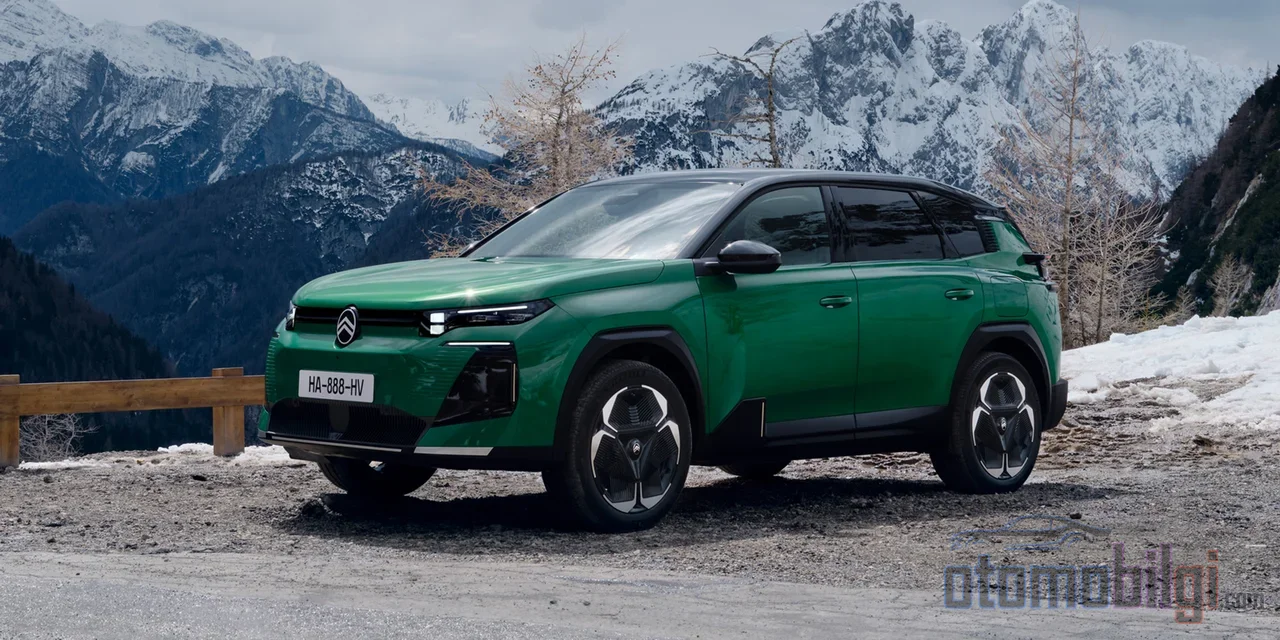
Citroën is back in the C-SUV segment with the second-generation C5 Aircross, and at the heart of this return is an electrified powertrain that requires no charging plug: the Hybrid 145. The system combines a 1.2-liter three-cylinder turbocharged petrol engine with a 48-volt electrical system, promising a range exceeding 950 km on the official WLTP cycle. The figures look impressive at first glance; but the real question is: How much does this system actually save in daily use, especially in the city, and what kind of character does it portray against rivals like the Peugeot 3008 or Kia Sorento?
On this page, we take a single-model-focused look at the new C5 Aircross's hybrid version, from technical data to consumption character, from interior practicality to equipment level.
New Generation C5 Aircross: Platform and Dimensions
The series production version of the second-generation C5 Aircross was unveiled in April 2025; pre-orders opened in June 2025, and deliveries began in the last quarter of the year. Production has been underway at the Rennes factory in France since October 2025. The vehicle uses Stellantis's STLA Medium platform; the same platform is shared with the Jeep Compass, Opel Grandland, and Peugeot 3008/5008 models.
The generational change in dimensions is noticeable: At 4,652 mm in length, the new vehicle is 152 mm longer than the previous generation. Width is 1,970 mm, height 1,650 mm, wheelbase 2,784 mm, and ground clearance 200 mm. For the first time, a 20-inch alloy wheel option is also offered. The product lineup consists of four equipment levels, and pricing is positioned below that of the previous generation. A seven-seat configuration is not offered; Citroën attributes this decision to preserving rear seat comfort and the vehicle's fastback roofline.
Highlights
- A promised WLTP combined range exceeding 950 km, a system that requires no charging
- 1.2-liter turbo petrol engine + 48V electric motor, with a combined 135 hp
- 0-100 km/h in 9.6 seconds
- 651 liters of cargo volume in all versions
- STLA Medium platform shared with the Peugeot 3008 and Opel Grandland
How Does the Hybrid 145 System Work?
First, we need to draw a technically honest framework: Unlike Toyota-style full hybrid systems, the Hybrid 145 is based on a 48-volt mild hybrid architecture. That means it is not a hybrid capable of traveling long distances on the electric motor alone; the electric motor takes on a supporting role and short-duration fully electric maneuvering.
At the heart of the system is a 1.2-liter three-cylinder turbocharged petrol engine: It produces 107 kW (143 PS) of power at 5,500 rpm and 230 Nm of torque at 1,750 rpm. The engine is optimized for thermal efficiency with the Miller cycle and a chain-driven design. Alongside it works a permanent magnet synchronous electric motor producing 21 kW and 55 Nm; the energy source is a 48V lithium-ion battery with a capacity of 432 Wh (0.432 kWh). Transmission is handled by a six-speed dual-clutch automatic gearbox (e-DCS6). The combined system output is reported as 135 hp and 230 Nm.
The operating logic is based on fully automatic management of the two engines: At low speeds the electric motor assists the internal combustion engine, and at steady speeds the two engines work together. If the battery is sufficient, a short-duration 100% electric mode engages in city use and during maneuvers; during deceleration the battery is automatically replenished through regenerative charging. The user does not need to charge it from an outlet.
Performance Figures
The Hybrid 145 completes 0-100 km/h acceleration in 9.6 seconds; 0-60 mph takes 9 seconds. For comparison, the previous generation's 1.2 PureTech 130 version had a figure of 10.5 seconds, while the 1.6 PureTech 180 version had 8.2 seconds. So the new hybrid system sits ahead of the old 130-horsepower gasoline engine but behind the 180-horsepower version.
| Feature | Value |
|---|---|
| Gasoline engine | 1.2 L three-cylinder turbo, 143 PS / 230 Nm |
| Electric motor | 21 kW / 55 Nm |
| Battery | 432 Wh, 48V lithium-ion |
| Transmission | 6-speed dual-clutch automatic (e-DCS6) |
| Combined power | 135 hp |
| 0-100 km/h | 9.6 seconds |
| Length / wheelbase | 4,652 mm / 2,784 mm |
| Cargo capacity | 651 L (up to 1,985 L) |
Real-World City and Highway Consumption
The official WLTP figure corresponds to consumption of approximately 5.4 L/100 km and a combined range exceeding 950 km. Real-world measurements make the picture a bit more realistic: Around 45 mpg (approximately 6.3 L/100 km) values were recorded in independent tests; a long-term test's average was recorded as 40.3 mpg (approximately 7.0 L/100 km). An owner who used the vehicle long-term reported a remarkable economy averaging 53 mpg over more than 11,000 miles.
According to Citroën's own calculation, thanks to the electric motor, fuel savings of up to 15% in general use and up to 30% on average in city use are achieved. However, there is also a gray side to the picture: The measured value of 28.7 mpg (approximately 9.8 L/100 km) under an intense city-heavy usage profile shows that the vehicle is not a hybrid designed entirely for the city. Over short distances and cold starts, the small battery's contribution remains limited; on long steady-speed roads, the turbo gasoline engine engages instead.
The engine's character also requires striking a balance: In long-term tests, while the 1.2-liter three-cylinder engine was found to be smooth in the city, it was not considered fully convincing across every speed range. Having 230 Nm of torque available at 1,750 rpm makes daily use easier, but the decisive factor in the system is efficiency balance rather than comfort.
Interior and Cargo Practicality
In the new generation, cargo capacity is independent of the engine choice: The hybrid, plug-in hybrid, and electric versions all have 651 liters. With the seats folded, this figure rises to 1,985 liters; the seats fold in a 40:20:40 ratio. There is 75 liters of storage space under the adjustable boot floor and 40 liters of additional storage inside the cabin. Note: It should not be confused with the previous generation's 565-liter figure; 651 liters applies only to the new generation.
There is also a structural change at the rear seats: The previous generation's three independent sliding and reclining rear seats have been replaced by a fixed bench. In return, the backrests can be adjusted between 21° and 33°, and the 40/20/40 folding is retained. While it may seem like practicality has been sacrificed, this is an engineering choice prioritizing seating comfort and boot capacity.
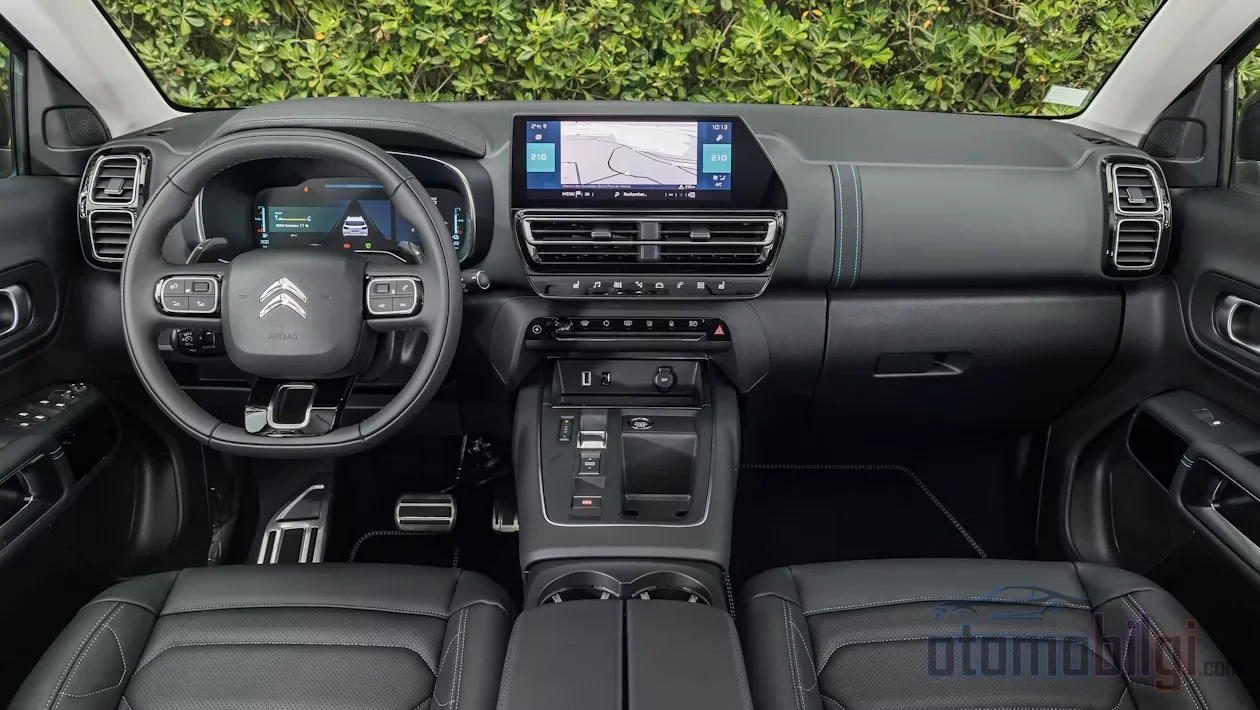
The cabin is designed with the C-Zen Lounge concept: A sofa-style foam-fabric covered front panel, electrically adjustable Advanced Comfort seats with side bolstering, eight-color ambient lighting (a first for Citroën), a large touchscreen with wireless Android Auto and Apple CarPlay support, an expanded Head-Up Display, Hello Citroën voice recognition with ChatGPT integration, a panoramic roof, and heated rear seats offered for the first time in a Citroën. On the sustainability side, part of the door and console plastics contains 20% grapevine shoots from the organic vineyards of Burgundy; the vehicle uses 160 kg of recycled metal and 47 kg of eco-friendly plastic.
The brand's signature continues in ride comfort: The Advanced Comfort suspension with two progressive cushions in each front shock absorber delivers a soft springing character that gives a gliding feel over carpet-like surfaces. In terms of safety, the Drive Assist 2.0 package covers Level 2 autonomous driving capability, semi-automatic lane changing, extended blind spot detection, and 360° surround view with four cameras. In the current trim range, heated front seats, a heated steering wheel, and a high-resolution head-up display have become standard on all versions. However, it should be noted that the large screen and lounge cabin are not available on every trim depending on the equipment level, and entry-level versions remain simpler.
The Plug-in Hybrid Alternative: Hybrid 195
For those who want a chargeable option, the Hybrid 195 comes into play: The combination of a 1.6-liter four-cylinder turbo petrol engine (192 hp) and a 125 hp electric motor delivers a total output of 195 hp. The 21.5 kWh battery offers an electric range exceeding 100 km in the city; the drivetrain is provided by a seven-speed dual-clutch transmission. There are three driving modes: Hybrid, Electric, and Sport. It is known that consumption rises noticeably when the plug-in version's battery is left uncharged, reaching 9.6-11.3 L/100 km in previous generation experiences; at this point, the Hybrid 145's charge-free architecture stands out as a more sensible choice for users without a regular charging habit.
What Sets It Apart from Its Rivals: Against the 3008 and Sorento
Comparison with the Peugeot 3008 Hybrid
Using a shared platform with the 3008 does not eliminate the difference in character. The Peugeot 3008 offers a more sporty suspension and steering setup and a different cockpit concept (i-Cockpit), while; the C5 Aircross has tuned its suspension entirely for comfort and appears clearly ahead in terms of ride comfort. Citroën remains limited to front-wheel drive, while the 3008 offers a wider range of power and traction options; according to manufacturer data, the 3008 Hybrid, with its 225 PS output, is ahead of the new C5 Aircross in 0-100 km/h acceleration. In terms of dimensions, the new C5 Aircross has a body several centimeters longer than the current 3008.
Positioning Difference with the Kia Sorento Hybrid
The comparison with the Sorento is actually a cross-segment comparison: the Sorento is a larger, seven-seat vehicle in the D-SUV class. The difference is evident on the price side; based on UK data, the C5 Aircross, with an entry price of 31,000 pounds, is significantly more accessible than the Sorento, which starts at 43,700 pounds. As an interesting technical detail, the Sorento's hybrid version can tow only 2,000 pounds, compared to the 3,500-pound towing capacity of the non-hybrid version; this picture is meaningful for users with towing needs. The strongest card the C5 Aircross holds is an interior larger than expected for its segment, a 651-liter trunk, and the low running costs of a hybrid system that requires no charging.
Conclusion: Which Vehicle Is Right for Whom?
The new C5 Aircross Hybrid 145 is a coherent package for users who do not want to deal with plugging in but want to benefit from the contribution of electric assistance to fuel economy: with 135 hp of system power, a 0-100 km/h time of 9.6 seconds, a 651-liter trunk, and an official range exceeding 950 km, it covers all the requirements of daily family use. It is not a full city hybrid; in heavy urban use, consumption rises noticeably, and its 48V architecture does not offer the electric driving flexibility of Toyota-style full hybrid systems. On the other hand, with its comfort-focused suspension, spacious and flexible interior, and accessible price positioning, it stands apart in the dimensions of comfort versus the Peugeot 3008 and value and compactness versus the Sorento. In summary: A solid candidate for those looking for a C-SUV that prioritizes ride comfort and ease of use over showing off, and takes a low-effort step toward electrification.
Sources
- Stellantis Media - All New C5 Aircross press release
- Stellantis Media - Citroën C5 Aircross Hybrid introduction
- Citroën C5 Aircross - Wikipedia
- 2026 Citroën C5 Aircross Hybrid 145 performance data
- Citroen C5 Aircross Review 2026 - Carwow
- Citroen C5 Aircross Hybrid long-term test - Top Gear
- Citroen C5 Aircross Hybrid long-term test - Fleet News
- Citroen C5 Aircross Emerald launch - AutoExpress