Will the 2026 MG HS Plug-in Hybrid Be a Budget-Friendly Plug-in SUV?
Share This Page
The MG HS Plug-in Hybrid is one of the most accessible plug-in hybrid SUVs sold in Türkiye: it covers most daily city driving fully electric on a single charge, and once the battery runs out, it continues on its way with the petrol engine. On this page, we examine its range, its character that translates into fuel consumption, the battery's cost in trunk space, and the real burden of plug-in practice with concrete data.
Highlights
- 52 km WLTP electric range, one-touch EV mode (previous-generation E-HS)
- 16.6 kWh battery; home charging takes approximately 6-7 hours
- PHEV trunk 448 L; in the non-plug-in Hybrid+ version 507 L
- 0-100 km/h: 6.9 seconds (PHEV), 7.9 seconds (Hybrid+)
MG HS Plug-in Hybrid or Hybrid+? Telling the Two Technologies Apart
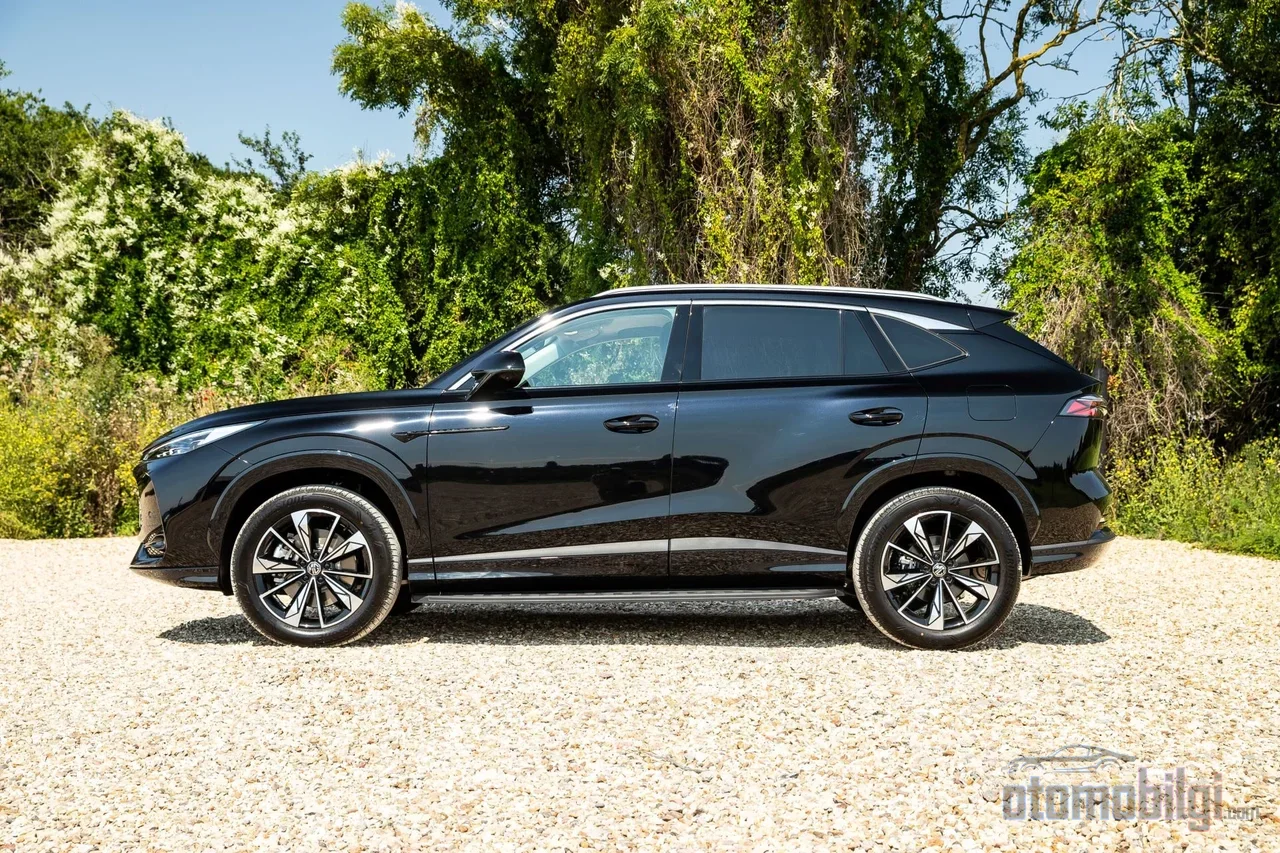
The MG HS is sold in Türkiye through two separate electrification paths, and confusing the two is the most common source of confusion readers have about this model. Hybrid+ is a non-plug-in full hybrid: 224 PS of system power, 340 Nm of torque, a small 1.83 kWh battery, and a Toyota-style usage habit that requires no charging. The E-HS, on the other hand, is a plug-in hybrid, i.e. a PHEV: its battery can be charged from a home outlet or charging station, and the vehicle can also run on electricity alone.
The difference is not just battery size, but a philosophy of use. In the Hybrid+, the harmony between the petrol engine and the electric motor is managed automatically; you do nothing. With the PHEV, however, charging is your decision, and the vehicle's efficiency depends directly on that decision. That is why, when evaluating the MG HS PHEV, the question to ask is not "what kind of car is it?" but "will you be able to charge it?"
| Feature | HS Hybrid+ (non-plug-in) | HS PHEV (E-HS) |
|---|---|---|
| System power | 224 PS / 340 Nm | 258 PS / 480 Nm (official blog data) |
| 0-100 km/h | 7.9 s | 6.9 s |
| Battery | 1.83 kWh | 16.6 kWh |
| Electric range | None (no charging required) | 52 km (WLTP) |
| WLTP consumption | 5.5 L/100 km | Based on charging assumption |
| Trunk | 507 L | 448 L |
A note must be added about the power figures in the table: while the total system power of the PHEV version is listed as 258 PS / 480 Nm in the official blog, some test content separately gives the petrol engine as 162 PS and the electric motor as 185 PS. The two figures have different definitions; one is the total system, the other is the stated output per motor. Knowing this distinction when researching the model makes it easier to compare technical specifications.
Does 52 km of Electric Range Cover City Use?
In Türkiye, a city dweller's average daily vehicle use usually stays within the 30-40 km band. The E-HS's 52 km WLTP electric range is enough in this calculation to cover a full day on a single charge; MG also positions this in its official communications as the argument for "the transition to zero-emission driving in daily life." Short trips such as school, grocery shopping, and commuting are completed entirely on electricity.
What makes this possible is the control logic that separates the PHEV from a classic hybrid: with the EV Mode button you lock the car into fully electric driving, and you have the option of running the two motors separately or together. Toyota Corolla or RAV4 hybrids don't offer this choice; there, the system always makes its own decision. In the MG, this is exactly the difference that plug-in practice brings: part of the energy management has been handed over to the driver.
The Real Burden of Plug-In Practice
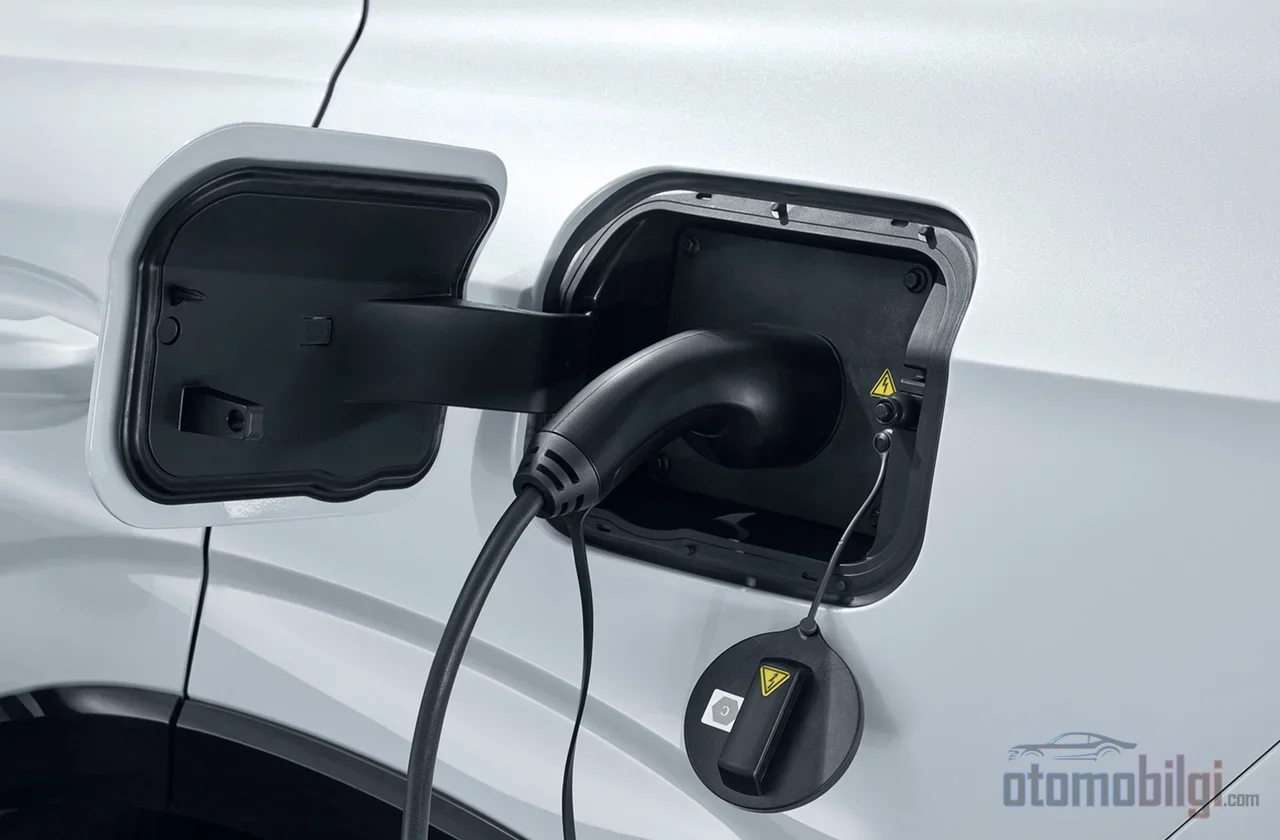
The PHEV's promise materializes if you charge the battery regularly. According to user experiences, charging an empty battery at home takes about 6-7 hours ; you plug it in at night and leave in the morning with a full battery. For someone with a parking spot at home, this is almost zero effort; for someone parking on the street, it is the model's weakest link. Buying a PHEV without charging access means carrying the battery's weight and the cost in its trunk for free.
What Happens When the Battery Drains: A Character That Turns to Petrol Consumption
The core assurance of the PHEV concept is this: when the battery runs out, the car behaves like a full hybrid and the journey continues on petrol. You don't experience range anxiety; the charging station planning found in electric vehicles doesn't exist here. On long journeys, the tank (55 L) and the petrol engine kick in, and the vehicle's identity gradually turns into that of a conventional hybrid.
But what is consumption in reality? It should be known from the outset that official consumption figures are misleading for PHEVs: these figures are calculated assuming usage where the battery is regularly charged. That's why the number you see in the catalog appears much lower than real hybrid mode consumption. Speaking with user data is more honest: 1.7-ton E-HS, forum user reports give petrol figures of around 1.8 L/100 km in charged use, while for the never-plugged-in Hybrid+ there is a user report of 5.3 L/100 km on long journeys fully loaded, and the WLTP value of 5.5 L can climb to a 6-7 L band in the real world. The difference between the fuel bills of a highly disciplined charging user and one who never charges determines the entire economic calculation of the PHEV.
Transmission and Shift Feel: No Boundary Between the Two Motors
The interesting engineering aspect of the HS hybrid family is hidden in the transmission architecture. In the Hybrid+ version, a 2-speed hybrid automatic transmission combines the 1.5 turbo petrol engine with the 146 kW / 198 PS electric motor. Two gears may sound few, but the purpose of this architecture is not the number of gears, but making the transition between the petrol engine and the electric motor as seamless as possible. Test content emphasizes that it progresses largely electrically in the city and that transitions are smooth; the dual-clutch structure being found smooth is also among the general impressions.
It is also worth conveying the opposing voice: some users report feeling hesitation in the transmission in the first gears. From an engineering standpoint, this is the region where torque matching between the two power sources is strained the most at low speeds; it becomes noticeable in dense stop-and-go traffic. Quietness and comfort, on the other hand, stand out in overall assessments. Since the electric motor in the PHEV is more powerful (185 PS), quietness and torque response in EV mode are a notch more pronounced than in the non-plug-in drive.
Trunk and Interior: The Price Paid for the Battery
The tangible cost of the plug-in hybrid shows up in the trunk. In the previous-generation E-HS, the 16.6 kWh battery was placed under the rear seats and trunk capacity dropped to 448 L; when the seats are folded, it opens up to 1375 L. In the non-plug-in Hybrid+ version, the trunk in the same body is 507 L. The 59-liter difference between the two electrifications of the same model is directly the price of the battery. For a buyer in the C-SUV class expecting more than 500 L of trunk space, this is a measurable loss that could affect the purchase decision. (Note: a value of 441 L also appears on some sales pages; a small deviation that could be attributed to differences in measurement standards.)
Inside, however, the picture reverses: in the Hybrid+ version, the 12.3-inch instrument cluster + 12.3-inch touchscreen one-piece display, Apple CarPlay / Android Auto, vegan leather seats, and, including a center airbag, 7 airbags, a 360-degree camera, and MG Pilot driver assistance systems are listed as standard. The PHEV version also offers equipment such as a power tailgate, ISOFIX, adaptive cruise control, blind spot warning, and forward collision warning. In terms of equipment, both versions are above what their class expects.
What Sets It Apart from the Corolla and RAV4 Hybrids?
Toyota hybrids are the market's reference, but they do not offer plug-in practice; the RAV4's hybrid versions are marketed as "self charging" systems. The distinguishing feature of the MG HS PHEV lies exactly in this gap: real electric range, one-touch EV/hybrid mode selection, and a serious range advantage compared to the full hybrid class. The power figures are also interesting in the comparison context: while the Corolla Cross 1.8 Hybrid reaches 100 km/h in 9.9 seconds with 140 HP / 142 Nm, the MG HS's gasoline 1.5 does the same job in 9.6 seconds with 170 HP / 275 Nm.
There is also the generation question, which is the most confused topic in questions: the old E-HS and the new HS PHEV are not the same vehicle. The difference between generations materializes in the battery: the old generation had 16.6 kWh and 52 km, while the new-generation HS Super Hybrid has 24.7 kWh and 120 km of WLTP electric range, being part of the wave that new-generation PHEVs carry into the 100-120 km band. The new generation is expected to deliver performance similar to the RAV4 PHEV; the RAV4 PHEV also produces 200-227 kW of combined power with a 2.5-liter engine and 22.7 kWh battery. So knowing which HS PHEV is being discussed changes both expectations and the price-performance calculation.
So Is the MG HS PHEV a Budget-Friendly Plug-In SUV?
The answer is a conditional yes, depending on your usage profile. If you have charging facilities at home and your daily driving is under 50 km, the E-HS's 52 km electric range effectively turns the city into electric-vehicle territory; its character of switching back to hybrid mode once the battery runs out eliminates long-distance anxiety. If you have no chance to charge at home, the same model's non-plug-in Hybrid+ version is a more consistent choice, both with its 507 L trunk and without the responsibility of charging.
In Türkiye, plug-in hybrids are still a category that most readers are not closely familiar with. The MG HS PHEV's contribution is to turn this category from an abstract technology into a measurable experience: 52 km of range, a 6-7 hour home charge, a 59-liter trunk penalty, and a hybrid that continues seamlessly once the battery is depleted. We have all the numbers needed to make a decision; the only remaining question is whether you will plug it in at night.
Sources
- MG HS Hybrid | Spacious Hybrid SUV Delivering Strong Performance
- Why the MG E-HS Plug-in Hybrid? (MG Türkiye official blog)
- Ultimate PHEV guide 2026 (Driven Car Guide)
- New MG E-HS SUV page (Tugmaner MG dealer)
- MG's New Plug-in Hybrid Car HS PHEV Is Coming to Türkiye (Webtekno)
- What You Need to Know About the MG E-HS (Oggusto)
- MG HS EHS 1.5T GDI PHEV technical specifications (UltimateSpecs)
- MG's plug-in hybrid model is coming soon to Türkiye (DonanımHaber)
- Pros and Cons of the New Generation MG HS (Arabalar.com)
- MG HS hybrid review (Highmotor)
- MG 2025 HS PHEV to be better than new RAV4 (Carsales)
- MG HS vs Corolla Cross comparison (ArabaVS)
- mg ehs phev thread (Ekşi Sözlük - user opinions)
- MG E-HS Plug-in Hybrid Information (OtoClub Türkiye forum)
- MG HS User Reviews (DonanımHaber forum)
- Should You Buy the MG HS? 2026 (Araclo blog)
- MG HS Hybrid+ 2026 technical specifications (ArabaKarşılaştırma)
- Behind the Wheel // New 2024 MG HS PHEV review (YouTube)
- MG HS Hybrid+ long-distance test (Instagram)