Mercedes Delays GLC Production for the US Market
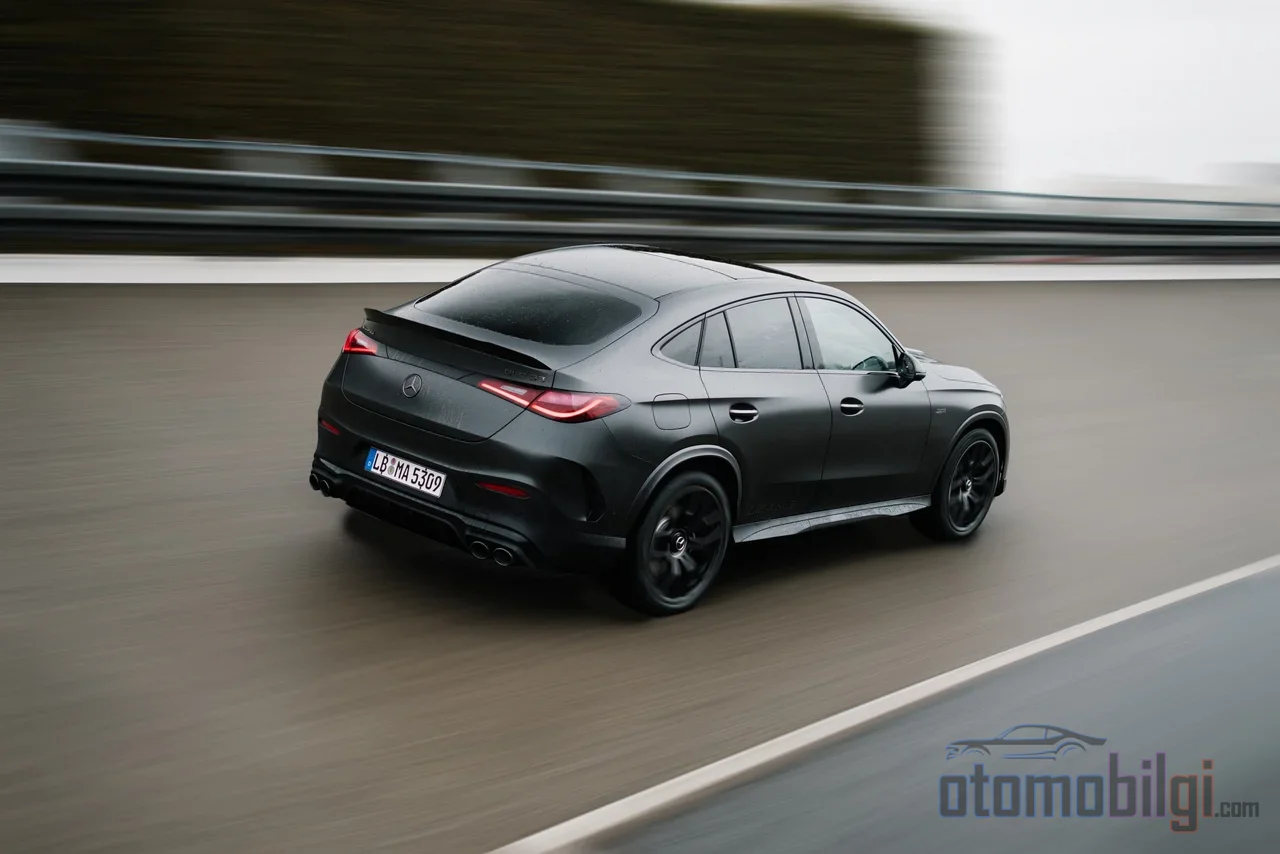
Three years in the automotive industry is nearly half of a product cycle. The confirmation that Mercedes-Benz has pushed back the date for starting GLC production in Alabama, planned for the US market, from November 2027 to May 2030, represents a shift on exactly this scale. A delay of more than two years could, on its own, have been a straightforward production planning story; but in the tariff environment we are in, the calculation is far more complex. Every GLC imported from the city of Bremen in Germany currently faces a 15 percent US import tariff. Domestic production, meanwhile, will now not arrive until 2030. So why did the brand pull back the very investment that would provide tariff protection, precisely at the peak of tariff pressure?
The answer has too many layers to be given in a single sentence. We need to look first at the details of the postponement decision, then at the investment plan in Alabama, and finally at the uncertainty in tariff policy; because when these three are read together, the meaning of the decision emerges.
Where Did the GLC's Alabama Journey Begin?
The GLC is one of the most critical models in Mercedes-Benz's global sales volume. For this reason, production location decisions carry strategic importance for the brand. The idea of US production for the GLC is not new: It had long been planned for the facility in Vance, Alabama, to make room for the GLC. Planning reaching back to 2023 foresaw that EQS SUV production in Alabama would be ended and its place taken by the new-generation GLC, including its electric version.
The official step was taken in May 2025. Mercedes-Benz confirmed that GLC production would be assigned to the factory in Vance. The period when the decision was announced coincides with the days when US tariffs were making imports from Germany increasingly expensive. In other words, the move of the GLC to Alabama was shaped less by demand planning than by the reality of costs. By April 2026, the plan had become even clearer: GLCs produced in Vance would be allocated primarily to the US market, while the possibility of exports would be kept on the agenda. The start date being discussed was November 2027.
Highlights
- The start of GLC production in Alabama was postponed from November 2027 to May 2030; the delay exceeds two years.
- The GLC imported from Germany is currently paying a 15 percent US import tariff; the rate is planned to be raised to 25 percent.
- Mercedes-Benz announced an investment of 4 billion dollars in its Tuscaloosa facility by 2030, and a total of 7 billion dollars in US production investment.
- The US list price of the 2026 GLC 300 is approximately 50,900 dollars.
- The electric GLC became the most-ordered electric vehicle in the first quarter in the brand's history.
What Does the Postponement Decision Mean?
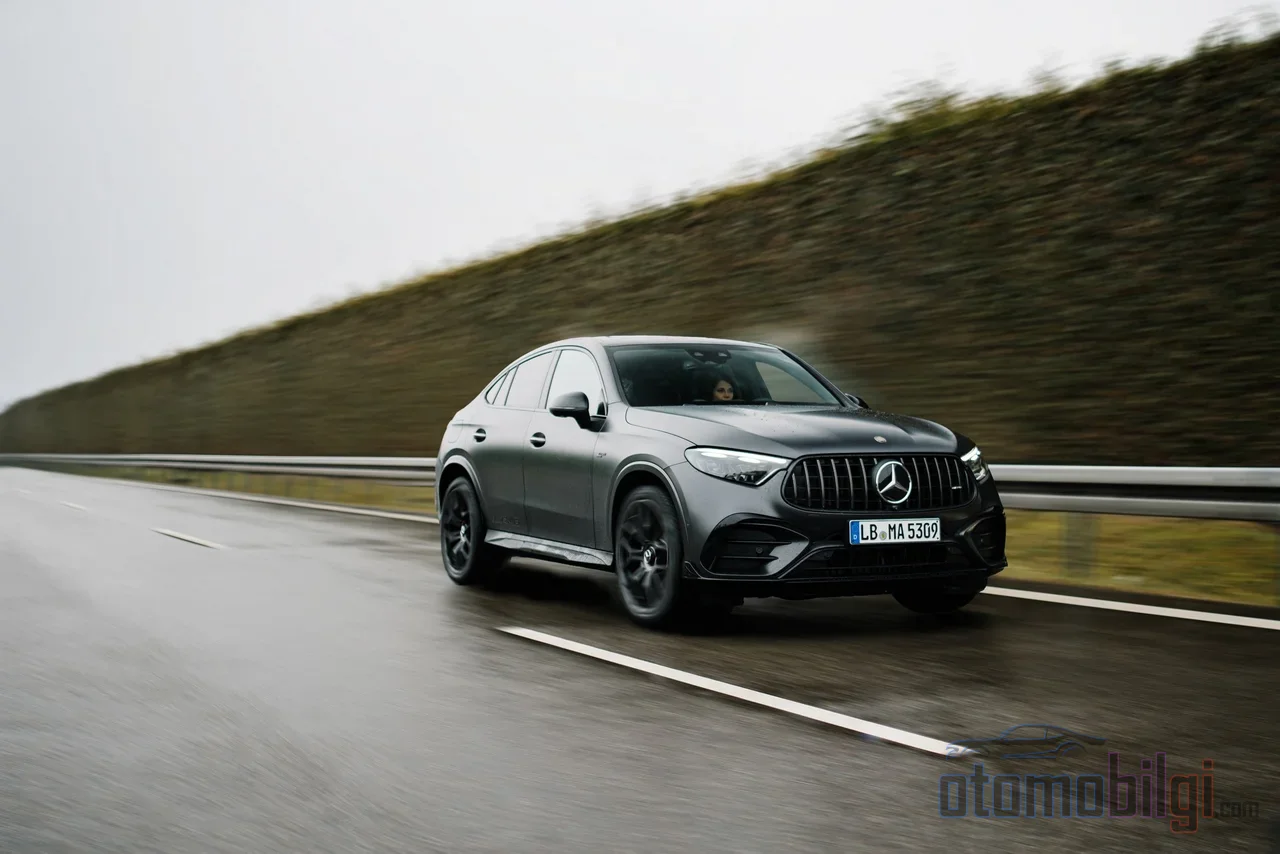
Mercedes-Benz AG confirmed the postponement decision. Accordingly, GLC production in Vance will begin in May 2030. This shift, splitting a four-year window in two, means in practice that every GLC sent to the US from 2027 until 2030 will continue to be imported from Germany. The model will spend these three years carrying the tariff burden on its back.
The contradiction here is striking: On one hand, the brand is seeking a lasting response to tariff pressure by committing a total of $7 billion to US production, while on the other hand it is pushing back the GLC localization - the most concrete piece of that response - by more than two years. The industry reads this decision as a move that extends, rather than solves, the tariff problem; the cost-side impact of a decision taken at a time when factory utilization rates are declining is also being debated.
The Alabama Plant and the $7 Billion Investment
Vance is Mercedes-Benz's production heart in the US. The GLE, GLS, GLE Coupe and Maybach GLS are produced at this facility; the plant effectively serves as the brand's SUV center. The brand announced that it plans an additional $4 billion investment in its facilities in the Tuscaloosa region by 2030; the majority of this amount is allocated to localizing production. The overall picture is broader: The total of US production investments was announced as $7 billion.
In light of these figures, the GLC delay becomes even harder to understand. The money is on the table, the factory is ready, the intent has been declared; but the timeline has been pushed back. This picture indicates that the decision has more to do with capacity planning and market projections than with investment will. Mercedes-Benz USA's top management had warned that 2026 would be a more difficult market year due to high interest rates and the tariff burden straining demand, despite the $4 billion investment and the increase in sales. For a manufacturer expecting demand to slow, loosening the schedule for moving a new model line into the factory is understandable behavior from a cost logic standpoint.
Tariff Uncertainty: 15 Percent or 25 Percent?
The main factor making the three years of GLC imports difficult is the two-way uncertainty in tariff policy. The US announced that it plans to raise the rate to 25 percent, arguing that the EU failed to comply with the tariff agreement fixed at 15 percent last year. Such an increase would seriously disrupt the cost structure of imported vehicles in the luxury segment; the blow is felt even more sharply for brands like Mercedes-Benz, whose weight lies in products imported to the US.
On the other hand, the picture in Washington is not entirely one-sided. The Democrats' midterm victory brought to the agenda the potential for Congress to investigate tariff orders and revive the $7,500 electric vehicle tax credit. So one week there may be preparation for 25 percent tariffs, while the next week the entire tariff architecture could be called into question. For an automotive company doing production planning, this is an environment that makes calculations impossible; five-year capacity decisions are being made on political ground that can change direction several times within a single year.
The industry's cost ledger also makes the bill of this uncertainty concrete: The three German giants - Volkswagen, BMW and Mercedes-Benz - lost $6 billion to US tariffs in 2025 alone. Stellantis announced its forecast that the 15 percent tax applied to EU-built vehicles would cost it approximately 1.6 billion euros in 2026.
Prices Are Holding Steady For Now: Mercedes Partly Absorbed the Tariff Burden
From the consumer's point of view, the most curious question is this: Will this delay be reflected on the price tag? For now, no. Mercedes-Benz announced that it is covering part of the tariff impact itself in order to keep the list price (MSRP) of Model Year 2025 vehicles; the prices of the new 2025 models have not changed. The US list price of the 2026 GLC 300 is at a level of roughly $50,900.
However, this stability is not a permanent commitment; it is a balance that can be sustained only as long as the balance sheet can bear it. If the imported GLC from Germany faces tariff exposure until 2030 and the rate rises to 25 percent, it becomes increasingly difficult for the manufacturer to keep bearing the full burden. The choice between a price increase, an equipment strategy, or squeezing profit margins will inevitably come to the agenda.
The Demand Side: The Electric GLC Is Breaking Records, but Supply Is Struggling
The demand side of the GLC story is independent of the production schedule, yet just as striking. In its first three months, the new electric GLC became the most-ordered electric vehicle in Mercedes-Benz history. Deliveries in Europe began on May 14, and customers who placed orders are facing a waiting period of roughly six months. On the US side, GLC 400 4Matic deliveries are expected to begin at the end of 2026, with GLC 300+ sales starting in early 2027.
On the other hand, the production line does not flow smoothly every month. In July 2026, the electric GLC production in Bremen experienced pauses caused by battery and wiring harness supply; the problem had stemmed from battery supply from CATL and wiring harness supply from Kromberg & Schubert. The brand reported that the problems have been resolved, but the picture clearly shows the fragility in production planning. In a model where record demand meets a fragile supply chain, it is not surprising that US localization is also being shaped by realities rather than the calendar.
How Should This Postponement Be Read?
The short and clear answer is this: By pushing GLC production in Alabama to May 2030, Mercedes-Benz left the model alone with the 15 percent - and possibly a 25 percent - US import tariff from late 2027 until the spring of 2030; this is a capacity decision made at the cost of shouldering the tariff cost for at least three more years.
Looking at it through the eyes of someone who has been in this business for more than thirty years, the landscape is familiar: Automotive history is full of factory calendars blown about by political winds. In the past, a production decision was made and the next ten years were written down in advance; now tariffs swinging between 15 and 25 percent and a Congressional balance that can shift direction with a single election are squeezing five-year plans into a one-year observation window. Mercedes-Benz's $7 billion US investment intent looks sincere; the GLC postponement is not a withdrawal of that intent, but a stretching of the calendar according to current demand and cost realities. However, the bill is not being deferred: Until 2030, every imported GLC will keep paying the price of the trade climate between Washington and Brussels.
Sources
- Mercedes pushes back start of U.S. GLC production 2 years
- Mercedes pauses GLC production amid battery and wiring shortages
- Mercedes plans $4 billion U.S. production expansion
- Mercedes-Benz to pour $4B into Alabama plant
- Mercedes commits $7bn to its US manufacturing future
- Mercedes to add GLC SUV production at Alabama plant
- VW, BMW, Mercedes lost $6 billion to U.S. tariffs in 2025
- US plans to hike tariffs on EU cars to 25% will hit luxury market the most
- Mercedes-Benz USA CEO warns of tougher 2026 market
- Mercedes-Benz & Tariff FAQs