Mitsubishi Pajero Returns With 5,000 Pre-Orders
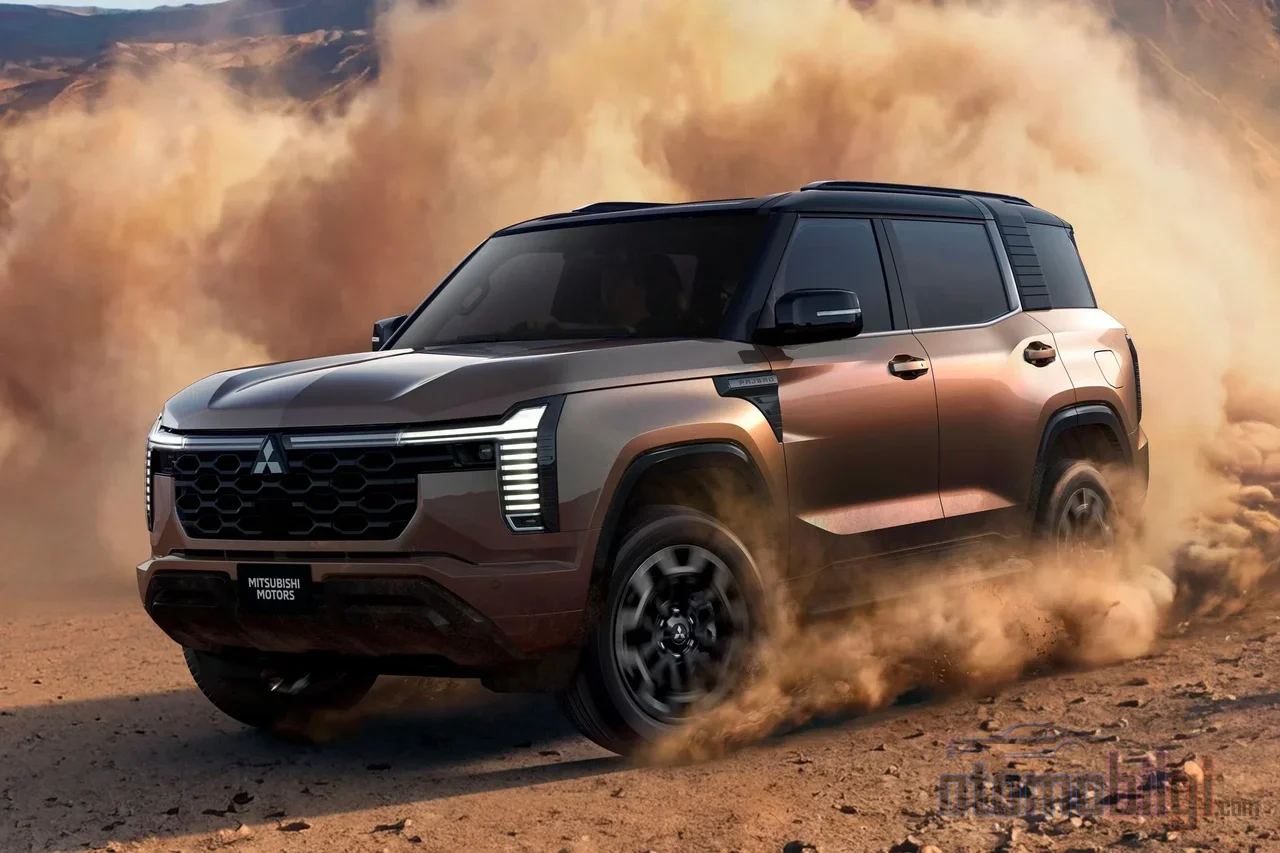
The pre-order process that began in Japan on October 1 saw Mitsubishi surpass its entire fiscal year target within just four weeks. The reborn Pajero had gathered approximately 5,500 pre-orders as of October 28; about seven weeks before the official sales launch on December 17, 2026, and before the vehicle even reached dealers. For a model that was discontinued five years ago - and whose namesake plant had its doors locked - this is no trivial picture.
What is truly striking about the figure lies in the identity of the orders. According to industry data, 80% of Pajero buyers in Japan are coming from rival brands; Mitsubishi had clearly designed this comeback with a premium positioning aimed at the Toyota Land Cruiser customer. So did that target hold, and to what extent did it change the balance in the segment?
What Does the Pre-Order Figure Tell Us?
Mitsubishi Motors' official announcement dated October 29 lays out the picture clearly: The pre-order book opened on October 1 reached approximately 5,500 units as of October 28, and this figure alone surpassed the 4,000-unit sales target set for fiscal year 2026 (April 2026 – March 2027). In other words, before the car even went on sale, a full year's target had been exceeded by a wide margin.
Automotive history has witnessed the comebacks of legendary names often ending as promises left on paper. The Pajero's difference is that demand translated directly into its sales target. The groundwork prepared after the model's world premiere in Tokyo on September 2 with a promotional campaign focused on off-road capability, launched on August 4, paid off beyond expectations.
Highlights
- ~5,500 pre-orders: as of October 28; above the fiscal year target of 4,000 units
- Sales launch in Japan on December 17, 2026; base price 6,193,000 yen (approximately 39,300 dollars)
- 80% of buyers have switched from rival brands
- Ladder chassis derived from the Triton pickup platform; 2.4-liter turbo diesel, 150 kW / 480 Nm
- Launch planned in approximately 100 countries starting from fiscal 2027
Why Was the Land Cruiser Customer Targeted?

Production of the fourth-generation Pajero ended in 2021 after a lifespan of roughly 15 years; weak fuel economy was behind the decline in sales. The historic Sakahogi plant where the old model was produced was closed in 2020, and the site was sold to another company. So Mitsubishi had to build this comeback from scratch, leaning on its own heritage.
During development, the Pajero was benchmarked against the Nissan Patrol and especially the Land Cruiser 300; it was positioned at a price point roughly 30,000 dollars lower than those models. The base price of 6,193,000 yen in Japan sits slightly below the diesel Land Cruiser 300. Moreover, it is known that it was compared one-on-one with an actual Land Cruiser 300 during testing; the result is a stance that is slightly lower but solid and upright.
The summary of the strategy is this: Mitsubishi brought the Pajero into the game in a proven segment with an established customer base, armed with price and equipment advantages. Four out of five Japanese buyers coming from other brands shows this strategy is not just on paper.
What Does the New Pajero Promise?
On the technical side, the new model follows a path that sets it apart from the past: A ladder chassis (body-on-frame) derived from the Triton pickup platform, reinforced with high-strength steel. The fourth generation's monocoque body was loved for its lightness; now Mitsubishi emphasizes durability and off-road capability.
| Feature | Value |
|---|---|
| Engine | 2.4 L turbo diesel, 8-speed automatic |
| Power / Torque | 150 kW / 480 Nm |
| Fuel consumption (WLTC) | 12.1 km/L |
| Length / Width / Height | 4,920 / 1,925 / 1,910 mm |
| Ground clearance | 230 mm (with 20-inch tires) |
| Approach / Ramp breakover / Departure angle | 30.4° / 22.6° / 25.8° |
On the all-wheel drive side, the Super Select 4WD-II system comes with 2H, 4H, 4HLc and 4LLc modes, while S-AWC dynamic control and seven drive modes from Normal to Rock serve as a buffer. The front suspension is double wishbone, with a new five-link rigid axle at the rear. Among the safety equipment, the MI-PILOT highway driving assistant, the 3D Multi Around Monitor, and eight airbags including a center airbag stand out, along with Emergency Lane Assist, a first for Mitsubishi.
Four equipment levels are offered in Japan: the luxury-focused Super Exceed and Exceed, and the off-road-focused GSR and GLS. The 12-speaker sound system developed with Yamaha in the Super Exceed won the 2026 Good Design Award. In the design, C-pillars inspired by the first generation's roll bar and a hexagonal rear face referencing earlier generations' rear-mounted spare tire create a deliberate bridge between nostalgia and the new era.
How Is the Balance in the Segment Shifting?
The Land Cruiser has long been the de facto reference point of the ladder-frame SUV segment in Japan and global markets. The Pajero's return means a serious second Japanese player that, for the first time in this segment, also brings a price advantage with it. 80% of buyers in Japan coming from rival brands is the clearest proof that Mitsubishi has gone beyond its loyal customer base.
However, the picture is not the same in every market. In Australia, the Pajero, offered in three equipment levels, is positioned above the Land Cruiser with a pre-road price starting at 68,490 Australian dollars; a strategy distinctly different from the Japanese pricing. On the off-road side, its 230 mm ground clearance is 15 mm more than the Prado despite its smaller-diameter tires.
The model is already on sale in Thailand; in the process that began with the Australian launch this year, it will be on the roads in around 100 countries including ASEAN from fiscal 2027 onwards. The US side has not yet been confirmed; Mitsubishi has previewed a ladder-frame flagship SUV to dealers under the Montero name, but US emissions regulations require a different engine.
What 5,000 Pre-Orders Mean: The Short Answer
The redesigned Mitsubishi Pajero collected approximately 5,500 pre-orders within a month of its launch, surpassing its fiscal year target ahead of schedule and succeeding in drawing four out of five buyers in Japan away from rival brands - largely from the Toyota Land Cruiser camp. The vehicle goes on sale at Japanese dealerships on December 17, 2026; the base price is 6,193,000 yen.
What's Next?
The pre-order success is, for now, a story of a single market: Japan. The real test will be the results achieved with its higher price tag across a sales network spreading to around 100 countries, especially in markets where the Land Cruiser is deeply established, such as Australia. The ladder-frame SUV segment has been a one-polar structure for years; the Pajero's return has, at least according to Japanese data, opened a visible crack in that structure.
Sources
- Mitsubishi Motors Begins Sales of the All-New Pajero in Japan
- Mitsubishi Motors Unveils the All-New Pajero Cross-Country SUV
- Mitsubishi Pajero revival lures 80% of Japan buyers from rivals
- Mitsubishi Pajero Has 5500 Pre-Orders Before It Goes on Sale
- New Pajero benchmarked against Patrol and LandCruiser
- Mitsubishi Pajero Finally Going Out Of Production In 2021