Modern Brakes on a Classic Car: Is It Sensible?
Say you are coming down a long hill in a classic from the 1960s. Your foot is on the brake, the pedal keeps getting softer, and the car feels like it just won't stop. This is a story many of us know in the classic car world: drum brakes fall short not because the car is bad, but because the world has changed. So is fitting modern brakes to a classic car really sensible, or are we dismissing originality? On this page we will look for the answer to exactly this question.
How Do Drum Brakes Work and Why Do They Struggle?
Let's start with a simple analogy: A drum brake is like pressing your palm against the edge of a spinning saucer from the outside. A small hydraulic part called the wheel cylinder pushes the brake shoes outward; the shoes rub against the inner surface of the cast-iron drum, slowing the car down. On paper it is a flawless system, and under the right conditions it still does its job.
The problem lies in the fact that the system is a closed box. Friction generates heat, and the drum struggles to dissipate that heat. Under repeated hard braking, the system overheats and first enters a condition known as brake fade: the pedal softens, the response weakens, and the stopping distance grows. If the heat rises further, the resins and binders in the brake lining vaporize; these high-pressure gases, trapped inside the closed drum, have nowhere to escape, and braking power drops even more.
There is also the rain issue. The drum's closed structure collects water, and braking is seriously compromised on wet surfaces. In fact, even though the systems in most classics have been serviced for over 40 years, they cannot be expected to deliver their day-one factory performance. And if you are a driver used to modern cars with ABS that stop in short distances, the difference is both visible and felt underfoot.
Highlights
- Since the front brakes handle about 70% of the stopping work, a front disc conversion is the most sensible first step in most classics.
- In a measured test, the 60-0 mph braking distance of a 1968 Camaro SS dropped from 246 ft to 146 ft with a disc conversion.
- Front disc conversion kits start at around USD 1,199.
- Measured, vehicle-specific conversions rarely lower resale value and often make the car easier to sell.
- Disc brakes perform better in the wet and are far more resistant to heat fade than drums.
What Does a Disc Brake Add?
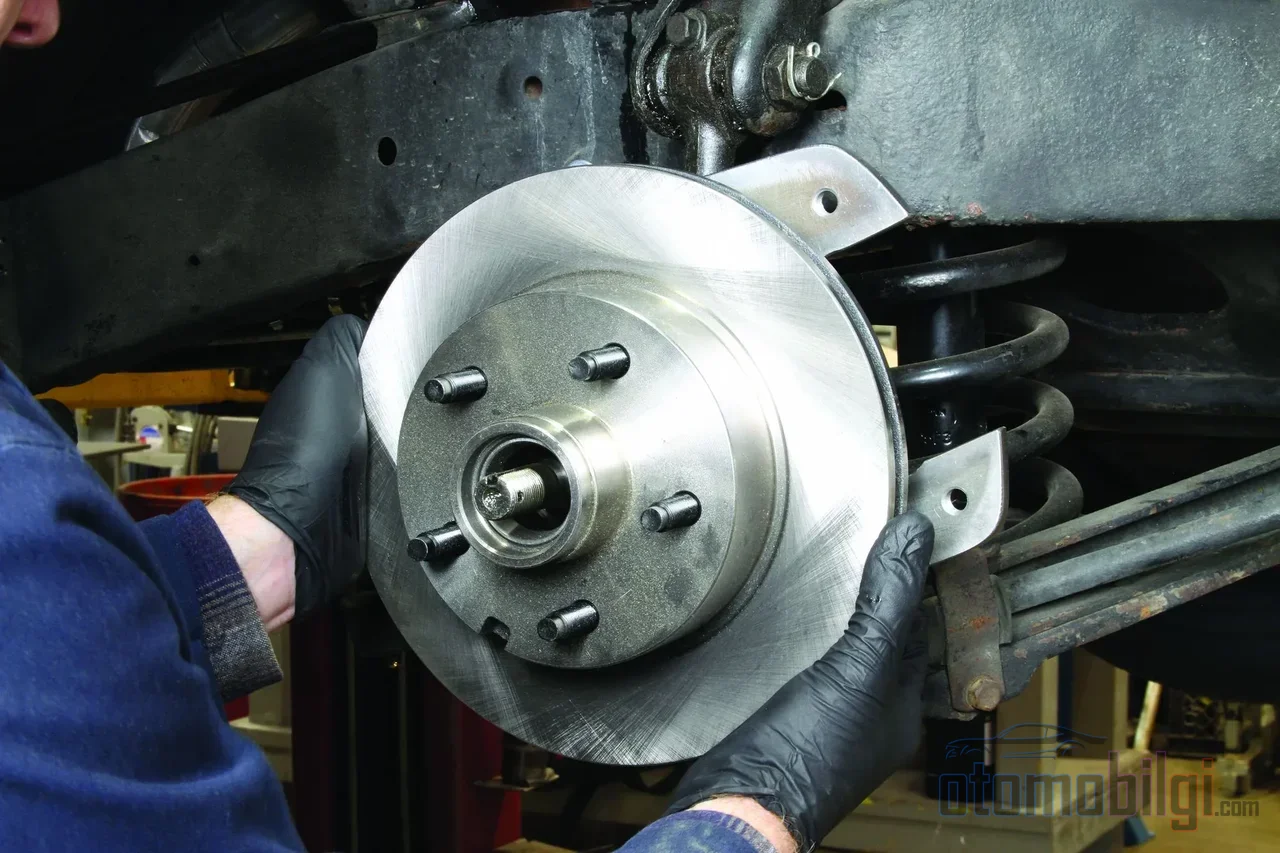
A disc brake is like squeezing that same saucer from both sides with your fingers instead of your palm. The exposed rotor releases heat into the air far more quickly; that is why it stays consistent under repeated hard braking. The story is the same after rain, too: the rotor's open design sheds water quickly, and pad friction dries the rotor on its own. So even in wet weather, the feeling of confidence under the pedal is preserved.
It is also friendly in terms of daily use: the pads can be inspected from the outside without removing the wheel, and they are less prone to lockup than drums. It shows its real difference on long descents and in stop-and-go traffic - the two scenarios where heat is precisely the enemy.
How Much Difference Does the Conversion Really Make? A Measured Test
Now let's set the talk aside and look at the numbers, because the best example of this is a measured test performed on a 1968 Camaro SS. The car was first stopped from 60 mph (approximately 97 km/h) with its original drum brakes, then the front disc brake conversion was applied and the test was repeated. The results speak for themselves:
| Measurement | With drum brakes | After disc conversion |
|---|---|---|
| First stop (60-0 mph) | 246 ft (approximately 75 m) | 146 ft (approximately 45 m) |
| Second stop | 252 ft (approximately 77 m) | 147 ft (approximately 45 m) |
| Stop with warmed-up brakes | 284 ft (approximately 87 m) | 147-157 ft range (5 tests) |
Did you see that? In the first stop, it was shortened by exactly 100 ft (about 30 meters) from the best old value. Even more importantly, in five consecutive tests after the conversion, the distance barely changed: the new disc brakes stayed consistent despite heating up. Also, the car's 15-inch rally wheels were preserved in this conversion, meaning no compromise on the exterior look. And let's not forget this: while today's modern car can stop from a similar speed in about 140 ft, the old setup stayed around 200 ft. That gap is the essence of the conversion debate.
When Is It Necessary, When Is It Unnecessary?
So should every classic owner rush to the brake shop right away? No, and let's be honest here: drum brake components are generally cheap, rebuildable, and many parts are still being produced. In a car that goes to weekend meetups and is driven gently around town, a solid drum brake setup can do the job. Drums are struggling today not because they are bad, but because traffic and driver expectations have changed.
Situations that should make you seriously consider the conversion
- If you use the car regularly in traffic or on long trips: fade resistance saves lives.
- If long, steep hills are on your route: this is exactly where drums give up.
- If you have increased the car's power or are thinking about a restomod project: if the engine is modernized, the brakes should be modernized too.
- If you drive often in wet weather: the disc's ability to shed water is a real safety difference.
That is the essence of the restomod approach anyway: for those who love the classic look but don't want to give up modern safety, updating the engine, brakes, suspension, and electrical system is a strong alternative. While a full restomod project can reach serious figures like 50,000-70,000 USD, a simple restoration starts from 20,000-50,000 USD; even just an engine rebuild ranges between 2,500-10,500 USD. In this picture, the brake conversion is one of the most sensible investment items within the project budget.
Bolt-On Kits or Piece by Piece?
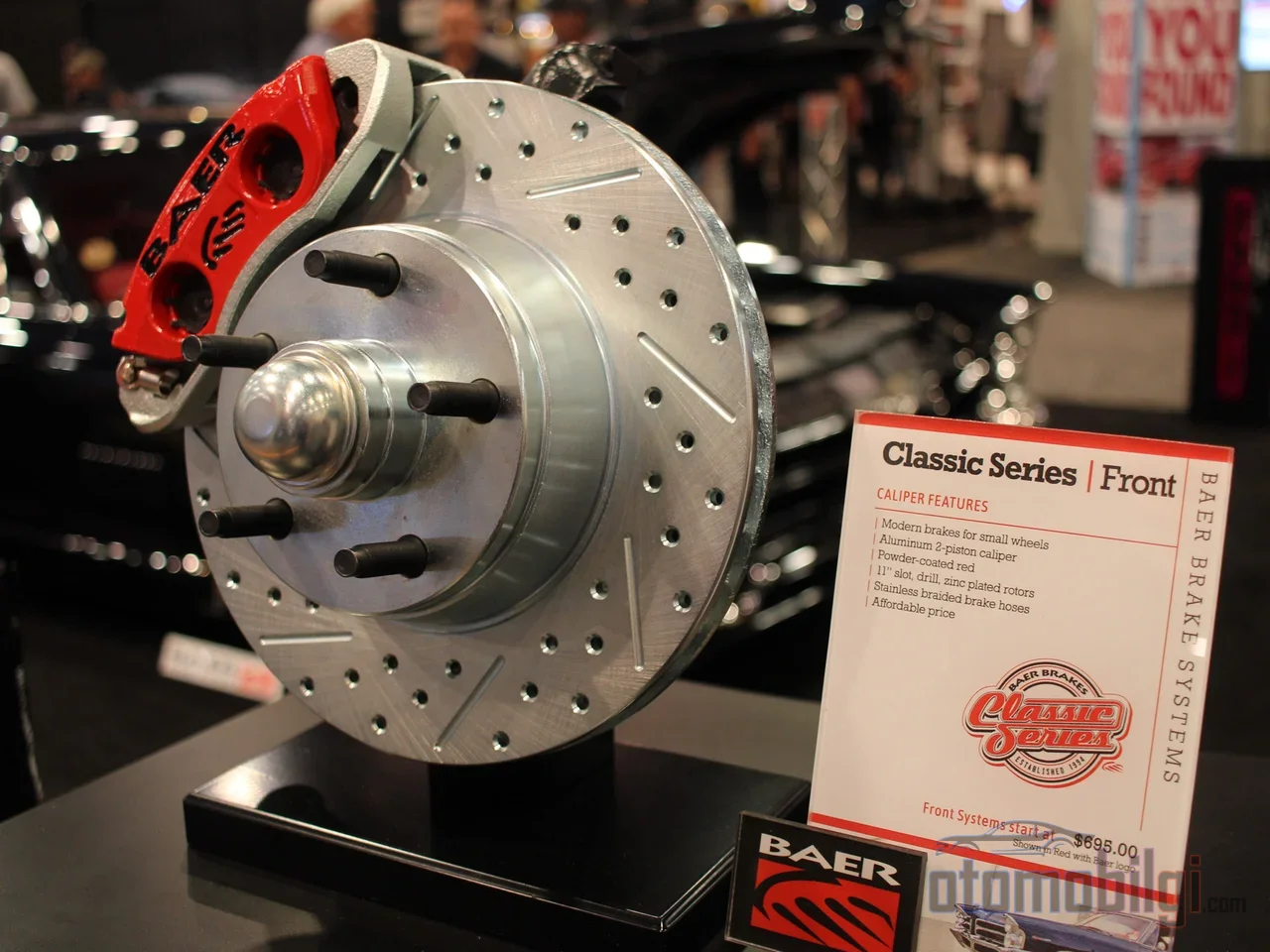
Good news: almost every classic car's drum brakes can be upgraded to discs. There are ready-made conversion kits on the market, and the good news is that most of them are bolt-on, meaning the type that installs with bolts. These kits bolt directly onto the original spindles; the suspension geometry is untouched. What comes in the box is also extensive: rotors (solid, vented, drilled or slotted), calipers (single or multi-piston), mounting brackets, hoses and lines, master cylinder, proportioning valve and hardware. Even entry-level kits can be found with 11-inch drilled/slotted rotors and a single-piston caliper.
A concrete example on the price side: a manufacturer's drum-to-disc conversion kit sells for $1,199 and also includes brake booster parts for a 1968 Camaro. In other words, this is a budget that most classic car enthusiasts can reach.
Front only, or all four wheels?
This is one of the most frequently asked questions. The answer is reassuring in most cases: a front disc conversion alone is enough. Since the front brakes handle roughly 70% of the stopping work, the smartest move in terms of the performance-to-cost balance is to start at the front. The rear drums can stay; what matters is that the rear brakes work, not that they are discs.
But be careful: when moving to a front disc/rear drum setup, re-establishing the hydraulic balance is a must. Disc brakes require more hydraulic volume than drums; that's why most conversions are done with a dual-reservoir master cylinder and a proportioning valve. The wrong valve choice can cause the rear wheels to lock up or a pedal that feels like a sponge. This job is far more serious engineering than simply changing brake pads.
Pitfalls to watch out for
- Some front disc conversions push the front wheel outward by about 5/8 inch; wheel and tire clearance problems can arise. Measuring before installation is essential.
- Part combinations assembled from different years and different models, lacking factory accuracy, are risky both in terms of safety and value.
- Post-conversion maintenance should not be neglected: brake fluid should be changed every 1-2 years, and pad and rotor condition should be checked regularly.
Originality and Value: Does a Brake Conversion Reduce Value?
Here is the most sensitive point of the debate. There are two camps, and both have valid points.
The safety-first camp speaks clearly: even on a car with its original engine and transmission preserved, a front disc conversion is an upgrade owners don't regret - in fact, they often call it the best modification they've made. On the value side, the picture isn't gloomy either: carefully and sensibly done conversions with kits designed specifically for the vehicle rarely reduce the sale value, and often make the sale easier.
On the other hand, the factory-accuracy camp's warning is not without merit: conversions done with improvised brackets and rotors from foreign donor vehicles don't increase the car's value, and can actually reduce it. The practical middle path is this: use a quality bolt-on kit and keep the original parts you remove. That way you can drive safely and also offer a future buyer the option of returning the car to its factory condition.
What about a car that's 100% original, with matching-numbers value? That's where the math changes: the value of such a vehicle comes from its originality, and the decision to convert is a balancing decision that should be made according to your personal usage plan. A collection car living in the garage on weekends and a classic driven every day cannot be weighed on the same scale.
A practical note for drivers in Turkiye: classic vehicle modification falls under the Regulation on the Manufacturing, Modification and Assembly of Vehicles. If the brake system does not meet the standards at inspection, there is an oil leak, or the braking difference between the left and right wheels exceeds 30%, this counts as a serious defect. So doing the conversion cleanly and balanced also makes the official process easier for you.
Conclusion: Does it make sense?
Short and clear answer: if you actually drive your vehicle, yes, it makes sense and is even necessary. Drum brakes collect water in the wet, fade when hot, and fall far behind the stopping distances of modern vehicles. Front disc conversion closes this gap: in the measured test, the stopping distance shortened by about 30 meters, and the brakes remained consistent even when heated. Bolt-on kits do not touch the suspension, vehicle-specific kits preserve resale value, and if the removed original parts are kept, the door to going back always stays open. The essence of the matter is this: the conversion is not an intervention that ruins the vehicle's character; it is one of the most popular and most justified upgrades in the classic world, making it safely drivable in today's traffic.
Sources
- Disc Brake Conversion - MotorTrend/HOT ROD
- CPP Disc Brake Conversion Guide
- Front vs Rear Disc Brakes - MPB Brakes
- Drum Brakes vs Disc Brakes - Daily Motoring
- Disc vs. Drum Brakes: Pros and Cons - NAPA Know How
- Drum to Disc Brake Conversion - Speedway Motors
- How Much Does It Cost To Restomod A Car - Restomod Academy
- What is a restomod? - Otohaber
- Do Disc Brake Conversions Impact the Resale Value - CPP Blog
- List of Serious Defects in Vehicle Inspection - Acamar