Jaguar E-Type Value Guide: Prices by Series
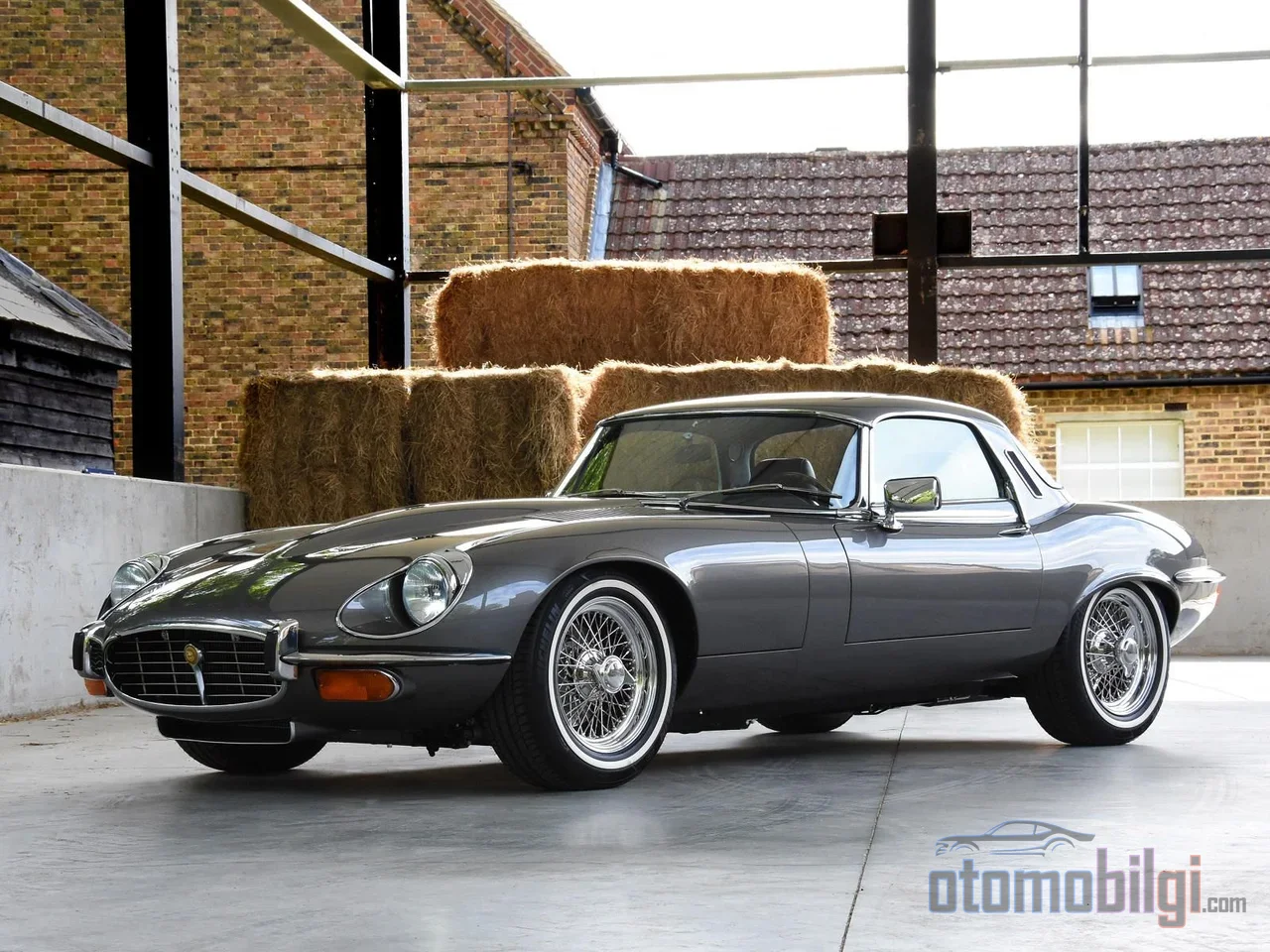
When the doors of the 1961 Geneva Motor Show opened, a crowd had gathered in front of Jaguar's stand; everyone was asking the same thing: could a car really be this beautiful? Sixty-five years later, the question has changed: why does this car keep gaining value? While the Mustang and the Mercedes 190 SL get all the talk, the E-Type remains somewhat in the shadows, but the numbers speak for themselves: Series 1 3.8 roadsters change hands at the median level of £105,000, and the finest early examples exceed £150,000. So what is the logic behind this premium? Production numbers, engine choice, and series distinctions. Let's break down all three by model.
How Do Production Numbers Shape Value?
The E-Type was produced in a total of 72,528 units from March 1961 to June 1974. The real issue lies in how this total is distributed: Series 1 38,419, Series 2 18,809, and Series 3 15,287 units. As you can see, the oldest series is the most numerous; meaning the scarcity premium alone doesn't tell the whole story. So why are the most expensive cars always Series 1?
The answer lies partly in its birth story. The car's aerodynamic body was drawn by designer Malcolm Sayer, who had an aviation background; independent rear suspension, disc brakes on all four wheels, and a monocoque body were ambitious engineering for 1961. The design was so admired that the car entered the permanent collection of New York's Museum of Modern Art. The launch price of £2,000 in 1961, adjusted for inflation, comes to about £44,000 today; meaning today's sales above £100,000 have come a long way beyond the original price.
Highlights
- Total production of 72,528 units; Series 1 only 38,419
- Series 1 3.8: 265 hp, 325 Nm, 241 km/h top speed
- Series 3 V12: 5,343 cc, 272 hp, four Zenith carburetors
- 2026 market range: verified auction average between $55,770-$83,587
- The price gap between Series 1 and Series 2 remains open in 2026
Series 1: The Homeland of the Collector Premium
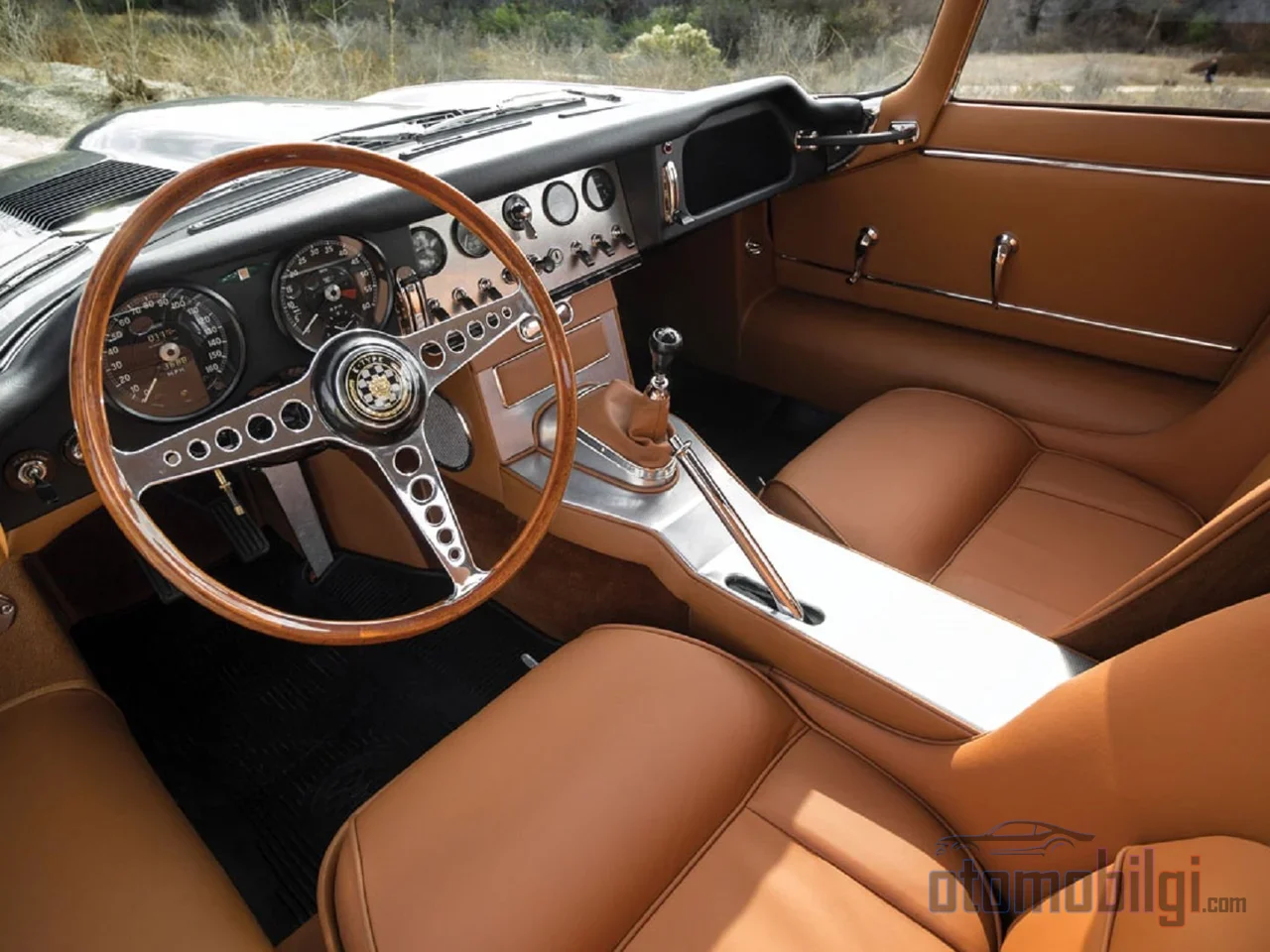
Series 1 sits at the top of the list in terms of both historical significance and purity. There are two sub-periods: 3.8-liter from 1961-1964 and 4.2-liter from 1964-1968. Among enthusiasts, the 1967-1968 transition cars known as Series 1.5 is not an official Jaguar designation; it is an informal term describing an interim period recognized by the headlights moving out of the plexiglass covers and the toggle switches being replaced with rocker switches.
3.8 or 4.2?
The 3.8-liter engine carries a sweet character that delights at high revs; the 4.2 keeps the same 265 hp but produces about 18% more traction with 283 lb-ft of torque, that is 384 Nm at 4,000 rpm, and comes with a fully synchronized 4-speed manual gearbox. In practice, a well-tuned 4.2 is probably faster on the road thanks to the extra torque. On the market side, the 4.2-liter Series 1 is generally considered the car's most valuable form today; on the other hand, early 3.8 flat-floor cars with toggle switches command a separate premium in collector circles. So both engines have their admirers; the wallet difference lies in the details.
Series 2: Paying a Premium for the E-Type
US emissions regulations dropped the 4.2-liter engine's output to around 246 hp and its torque to 263 lb-ft; top speed also fell to around 210 km/h. But here's the negotiating side of things: The Series 2, with its cooling improvements and twin fans, is more reliable in daily use and more reasonable to maintain. While the 2026 market benchmark sits at approximately $59,749, the average Series 1 sale is $156,830. A solid Series 2 can be found in the £50,000-70,000 range, while roadsters can exceed £100,000. It's a sensible door for those who don't want to pay the Series 1 premium but want an authentic E-Type.
Series 3 and the V12: The Price of Comfort
The Series 3, built between 1971 and 1974, replaced the legendary XK inline-six with a 5,343 cc V12. Fed by four Zenith carburetors, the engine produces roughly 272 hp and 304 lb-ft of torque; at launch, this torque gives the Series 3 a distinct advantage over the six-cylinder versions. Power steering became standard, and body options were limited to just the roadster and the 2+2. So why is this the least valuable series?
The reasons come down to three headings: The abandonment of the XK engine, the altered silhouette caused by flared fenders and bulky bumpers, and the 2+2's extended wheelbase. The car gained gran turismo comfort but lost agility. Still, the figures are not to be dismissed: examples awaiting restoration go for £40,000-60,000, while a fully restored roadster can reach up to £120,000. As for the 2+2, even in restored condition it barely passes £70,000-80,000; in the collector world, the original roadster silhouette is still king.
Technical Specifications Comparison
| Version | Engine | Power | Torque | 0-100 km/h | Top speed |
|---|---|---|---|---|---|
| Series 1 3.8 (1961-1964) | 3,781 cc inline 6 | ~265 hp | 325 Nm | ~7 s (0-60 mph) | 241 km/h |
| Series 1 4.2 (1964-1968) | 4,235 cc inline 6 | 265 hp | 384 Nm | ~7 s (0-60 mph) | 241 km/h |
| Series 2 4.2 (1968-1971) | 4,235 cc inline 6 | ~246 hp | ~357 Nm | ~7.2 s | ~210-225 km/h |
| Series 3 V12 (1971-1974) | 5,343 cc V12 | ~272 hp | ~412 Nm | under 7 s | ~217-233 km/h |
As for dimensions: The Series 1 and 2 roadster is approximately 4,445 mm long, with a wheelbase of 96 inches, i.e. about 2,438 mm, and a weight of around 1,270-1,315 kg. From 1966 onward, the 2+2 body grew to 185 inches in length and a 105-inch wheelbase; the Series 3 is of similar size, weighing around 1,540 kg. As for fuel consumption, it does not appear in the source set as an official manufacturer figure; this value was not disclosed by the manufacturer.
Pre-Purchase Inspection: Avoiding Expensive Surprises
When buying an E-Type, the most critical risk is rust. The rear fender mounts and the points where the sill meets the floor are corrosion's favorite addresses; the body's mild steel and the soldered front assembly frame are not generous when it comes to long-term durability. Vehicles shipped by sea to the US can carry traces of the journey in the form of rust. If you see a mayonnaise-like substance under the oil cap on the engine, consider the possibility of a head gasket or cylinder head problem; After warming up, oil pressure in the V12 should be in the 45-55 psi band at 2,500 rpm. Depending on use, the XK engine may need a rebuild every 130,000-160,000 km; early 3.8s had a gearbox without first-gear synchromesh, so double-clutching may be necessary.
On the budget side, the picture is clear: basic mechanical and cosmetic restoration starts from $20,000-50,000, while comprehensive projects climb into an average band of $40,000-120,000. Goodwood's suggested realistic starting point is £50,000; that budget means a Series 1 roadster awaiting restoration, a Series 2 coupe, or a decent V12 roadster. And the golden rule: no classic should be bought purely as an investment; restoration costs easily exceed short-term gains. For this reason, commissioning an independent pre-purchase inspection with 200 photos is a smart move.
So, Is It Still Appreciating?
As of November 2026, the market band based on 109 verified auction sales ranges between $55,770-$83,587; in other words, there is a steady trajectory. Hagerty states that it sees the E-Type as the barometer of the classic market; inflation-adjusted prices follow the typical rise-and-correct wave of prestige cars. In 2020, average values rose by about 10%; although in 2026 some observers comment that values have softened, the gap between Series 1 and Series 2 remains open. The summary of the summary is this: the E-Type is not a quick-return asset, but rarity, design history, and series hierarchy create a solid value base.
In addition, Jaguar Classic's E-Type Reborn program makes it possible to buy the model restored directly from the manufacturer; this is both a guarantee of originality and a sign of the value the brand places on the model. On the record side, one of the Lightweight versions changed hands at auction for a price of £5.86 million.
The short answer: the engine of appreciation is not scarcity, but hierarchy. The purity of early Series 1 cars, the torque and usability of the 4.2, the reasonable price of the Series 2, the comfort of the V12... Each series has its own audience and its own price band. If you buy the right version in the right condition, you have both driven and preserved this piece of history. Could it get any better than that?