Mercedes-Benz 190 SL: A Calm But Solid Investment Classic
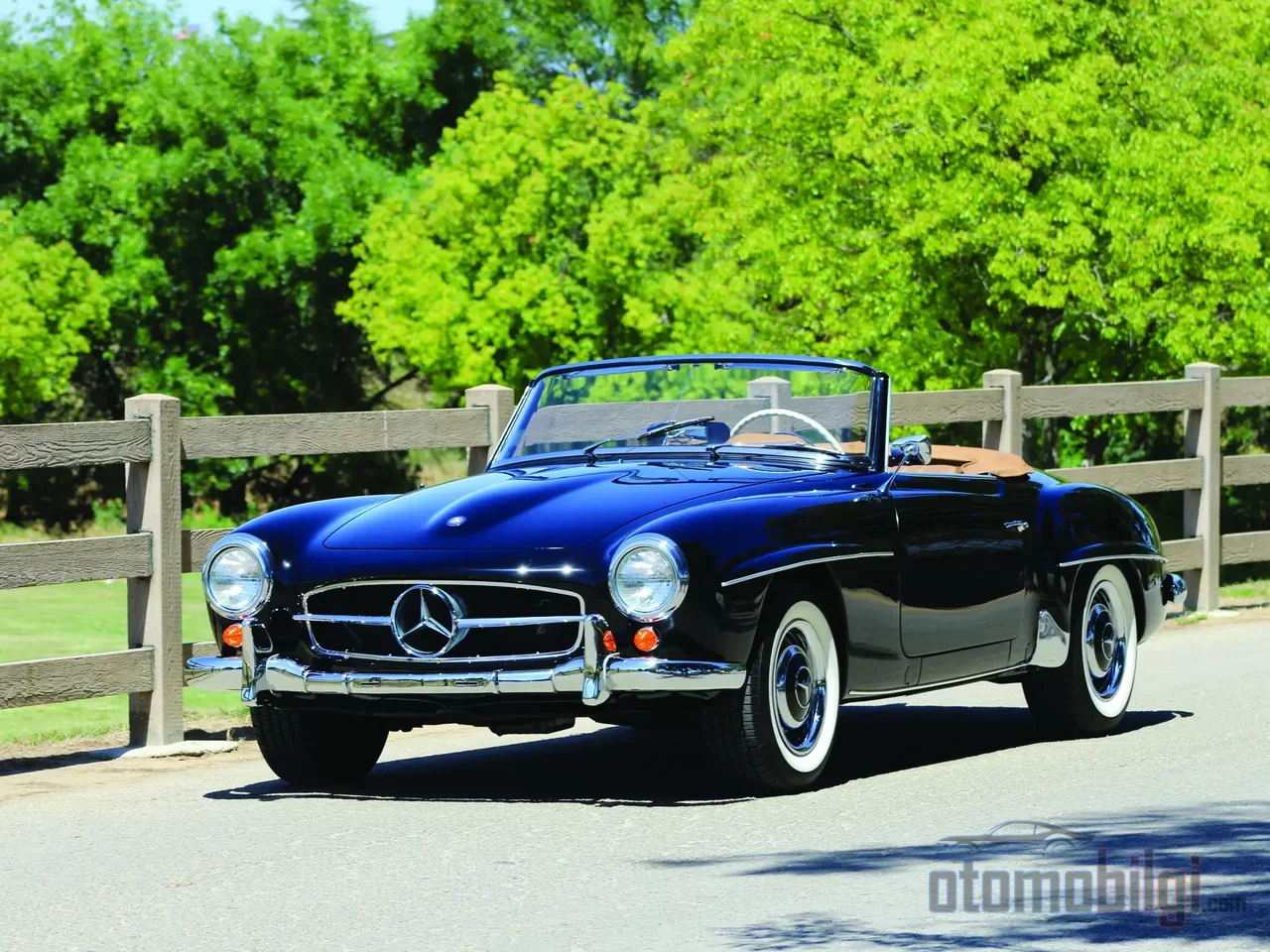
Say you have 300,000 dollars and you're going to buy a classic car. The first name that comes to most people's minds is the 300 SL, that legendary gullwing-door Mercedes. But what if you spent the same money on a 190 SL instead of a 300 SL? You'd still have almost 270,000 dollars left in your pocket and still own that elegant Mercedes silhouette of the 1950s. Sounds a bit odd, doesn't it? That's exactly what this article is about: Whether the Mercedes-Benz 190 SL is the quiet but extremely disciplined value-preservation machine of the classic car market.
When we talk about investing in a classic car, most people picture prices soaring in the short term, hyped models in the media, and figures that double by the end of an article. The 190 SL tells the opposite story: slow but steady value appreciation, a solid brand foundation, and a long-term ownership economy. In this article, we laid everything on the table, from its production period to technical data, from market prices to restoration math. If you're ready, let's begin.
What Kind of Car Is the 190 SL? A Brief History
The 190 SL was produced by Daimler-Benz between May 1955 and February 1963; its internal code is W121 BII. Its first prototype was displayed at the 1954 New York Auto Show, and the reason the car exists at all was actually a marketing move: American importer Max Hoffman wanted a more affordable sports car to sit alongside the legendary 300 SL. So from the very beginning, the 190 SL was designed to live in the shadow of its big sister, but to offer her style at a much more accessible price. The design bears the signatures of Karl Wilfert and Walter Häcker.
A total of 25,881 units were produced; the peak year was 1956, with 4,032 vehicles rolling off the line in that single year. Around 10,000 units were sold to the US market, which explains why we see so many 190 SLs at Gooding and similar auctions today. In 1963, it was succeeded by the legendary W113 230SL, nicknamed the Pagoda.
Key Highlights
- Production: 25,881 units (1955-1963), peak year 1956 with 4,032 units
- Engine: 1,897 cc naturally aspirated inline 4-cylinder, 105 PS, 142 Nm
- 0-100 km/h: 14.5 seconds, top speed ~170-173 km/h
- Market: project cars from ~60,000 USD, concours examples above 250,000 USD
- Restoration: between ~40,000 EUR (user level) and 220,000 EUR (professional)
190 SL Technical Specifications: What Do the Numbers Say?
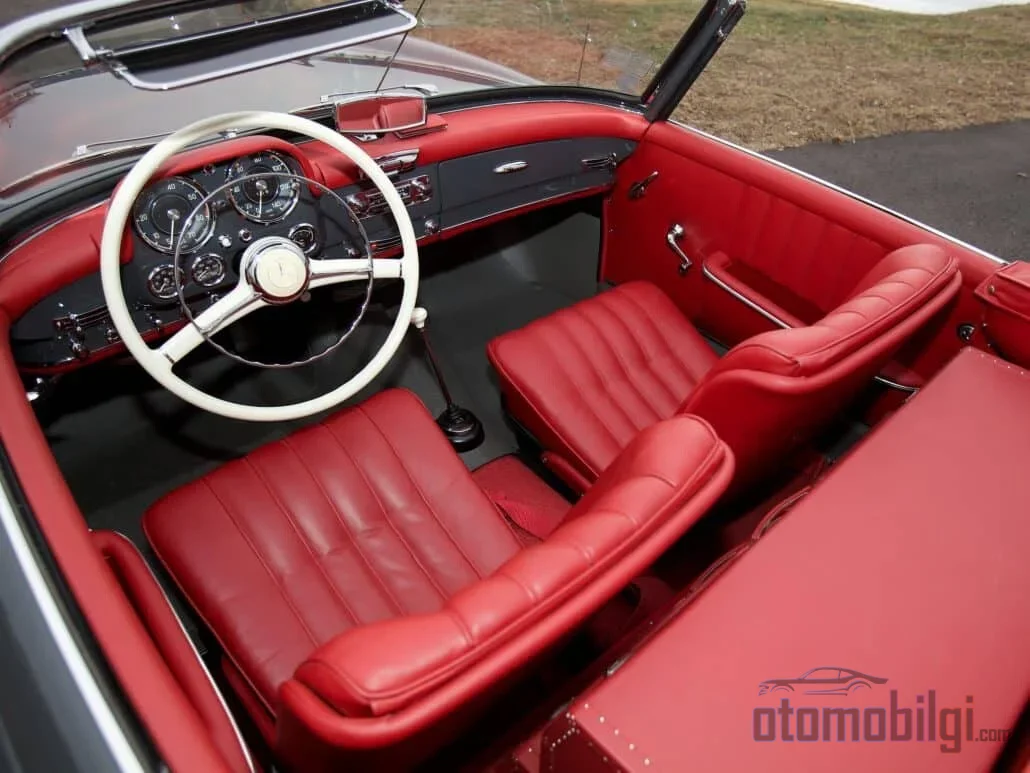
Now let's get into the technical side, because with investment classics, the underlying product itself matters. At the heart of the 190 SL is an engine coded M121 BII, 1,897 cc in displacement, water-cooled, an inline 4-cylinder with SOHC (single overhead camshaft). It's a naturally aspirated unit, fed by Solex 44PHH twin dual-throat carburetors. By the measurement standards of the era, it produces 105 PS (77 kW) of power at 5,700 rpm and 142 Nm of torque at 3,200 rpm.
So how do these figures translate to the road? According to Mercedes-Benz's official data, 0-100 km/h acceleration takes 14.5 seconds, with a top speed of around 170 km/h (the manufacturer's page says 170, catalog figures go up to 173 km/h; the gross-net power definition difference explains this small gap). Power is delivered through a 4-speed fully synchronized manual transmission and rear-wheel drive. On the weight side, things look good: since the hood, doors and trunk lid are aluminum, dry weight is only 1,160 kg.
| Specification | Value |
|---|---|
| Engine | M121 BII, 1,897 cc, inline 4-cylinder, SOHC |
| Power | 105 PS (77 kW) @ 5,700 rpm (net) |
| Torque | 142 Nm @ 3,200 rpm |
| 0-100 km/h | 14.5 seconds |
| Top speed | 170-173 km/h |
| Transmission | 4-speed fully synchronized manual, rear-wheel drive |
| Dry weight | 1,160 kg (+20 kg with the hardtop) |
| Length / width / height | 4,290 / 1,740 / 1,320 mm |
| Wheelbase | 2,400 mm |
| Average consumption / fuel tank | ~12.5 L/100 km / 65 L |
Let's be honest: even for the 1950s this performance was not impressive. The Porsche 356 1600S of the era offered similar performance with 87 hp and 850 kg, around 3,000 marks cheaper, and this criticism has haunted the 190 SL ever since. In fact, Mercedes' own legendary engineer Rudolf Uhlenhaut had developed six-cylinder prototypes in 1956, but instead of series production, the 230SL arrived in 1963. So if its performance was weak, why is it so valuable today? The answer to that question is in the next section.
Why Does the 190 SL Hold Its Value? The Investment Logic
The 190 SL's value formula has four main items, and none of them are about hype:
- Brand trust: The Mercedes-Benz star always commands a premium in the classic market. The Mercedes of the 1950s is an era that went down in history for its engineering quality.
- The 300 SL connection: It offers the same independent suspension layout (double wishbone at the front, swing axle at the rear), the same design language and the same glamour. For the collector who cannot reach a 300 SL, the 190 SL is the closest door. At launch, the 300 SL was roughly twice the price of the 190 SL; today that ratio is 10 to 1. As this gap widens, the 190 SL's position as the "reasonable cousin" grows stronger.
- Convertible appeal: Open-top classics are far more resilient to market cycles than closed versions. Driven in summer, waiting for value in the garage in winter.
- Parts and service infrastructure: A production run of 25,881 units is widespread enough for dedicated classic Mercedes services to offer model-specific maintenance packages. A classic that can be owned without fear of scarcity.
The strongest determinants of value, however, are originality, documentation and restoration quality. So-called matching numbers, where the engine and transmission match the car from birth, push the price up significantly. In short, what makes money on the 190 SL is not a crazy trend; it's a solid product, a solid brand and a shrinking supply.
190 SL Market Prices: How Much, in What Condition?
Now let's get to the numbers. 190 SL prices move across a wide band depending on condition classification, and that band takes shape as follows according to the car's condition:
| Condition | Approximate Price Band |
|---|---|
| Project / unrestored | starts from around USD 60,000 |
| Mid condition, drivable | USD 90,000-150,000 |
| Excellent, restored | 150,000-220,000 USD |
| Concours level | Above 250,000-300,000 USD |
| Auction average | 120,000-180,000 USD |
There are also concrete examples: At an auction in Monterey, a restored 1961 190 SL found a buyer for 269,500 dollars. In the UK, as of October 2026, the median listing price is around 139,945 pounds, and a fully restored car has reached up to 220,000 pounds at auction. Valuation tools point to a value of approximately 74,500 dollars for a 1955 model in "good" condition.
Looking at the big picture, the main message is this: The 190 SL belongs to an asset class that will not make you rich overnight, but also does not crash hard on the downside. Steady demand, limited production and brand prestige keep the price floor thick. So how expensive is it really to buy this car and keep it? Before moving on to that, let's solve the most critical puzzle, namely the restoration math.
Does the Restoration Cost Pay Off in Value Growth?
The most classic mistake in the classic car world is this: Buying a project car for 60,000 dollars and assuming a 150,000-dollar restoration will bring it up to finished-car value. Unfortunately, that math usually does not work. For the 190 SL specifically, restoration cost varies greatly depending on the level.
A restoration you carry out yourself (DIY) takes about three years, and the materials and labor can add up to around 90,000 euros. A ground-up, chassis-off restoration at a professional classic workshop can reach up to 220,000 euros. If you want to reach a more modest goal, namely a nice daily-driver level, packages starting from 40,000 euros are available at a specialist restoration firm in Romania. If we look at workshop cost items in Türkiye: original fabric or leather interior upholstery runs 20,000-50,000 TL, while hand-crafted paintwork is in the 50,000-100,000 TL range.
The math is clear: the restoration must not exceed the car's market value in finished condition. That is why the healthiest strategy is to buy a car that is already in good, documented condition and eliminate restoration risk at the moment of purchase. The most common mistakes during purchase are misjudging the technical condition, not budgeting for repairs, and choosing a car that does not match your goal. A photo of a rusty 190 SL is romantic; its state in your garage is anything but.
Realistic Entry Scenarios for the Beginner Collector
So what should you do if your budget is limited and you want to get into a 190 SL? There are three realistic paths:
- A "driven and loved" good-condition car: drivable, well-maintained examples in the 90,000-150,000 USD band are the most sensible entry point. You nearly eliminate restoration risk, and you preserve the car's value while using it. Inspection and documentation checks are a must.
- Project car + realistic budget: a starting point around 60,000 USD looks tempting, but calculate the total budget from the very beginning: restoration items quickly run into six figures. Only choose this scenario if you have the time and workshop access.
- Wait and buy a fully maintained one: Waiting through market fluctuations for a car whose price has dropped, with matching numbers and a complete service history, is the patient collector's game. Few cars are worth this, but the 190 SL is exactly on that list.
As for the annual cost of ownership, the items are as follows: routine maintenance on Mercedes classics in general runs in an annual range of 600-1,200 dollars; the independent suspension setup the 190 SL shares with the 300 SL requires periodic servicing. In Türkiye, the 2026 passenger vehicle periodic inspection fee is 3,288.84 TL. On the insurance side, standard comprehensive coverage may fall short for classics; a classic car insurance policy that covers original parts and restoration costs (for example, one with an agreed value) should be preferred. Don't forget items like a garage, a battery maintainer, and periodic starts.
Conclusion: Is the 190 SL Really a Good Investment?
The summary of the summary is this: The Mercedes-Benz 190 SL is not a vehicle for short-term speculation, but one for long-term value preservation. With its 105 PS engine and 14.5-second 0-100 km/h acceleration, it is not aimed at speed enthusiasts; but thanks to its limited production run of 25,881 units, its position offering 300 SL aesthetics, its convertible body, and the market prestige of the Mercedes-Benz brand, it rests on a stable base of demand. In this market, where project cars start from around 60,000 dollars and concours examples climb above 250,000 dollars, the winner is the collector who buys a documented car in the right condition and plans their budget from the start.
So the clear answer to the question is: yes, the 190 SL is a calm but solid classic investment car. If you don't like the noise of the hype but want to see 1950s elegance in your garage, this little brother quietly appreciating in its big sister's shadow is among the top candidates on the list.