Why Was the Citroën DS Chosen as the Car of the Century?
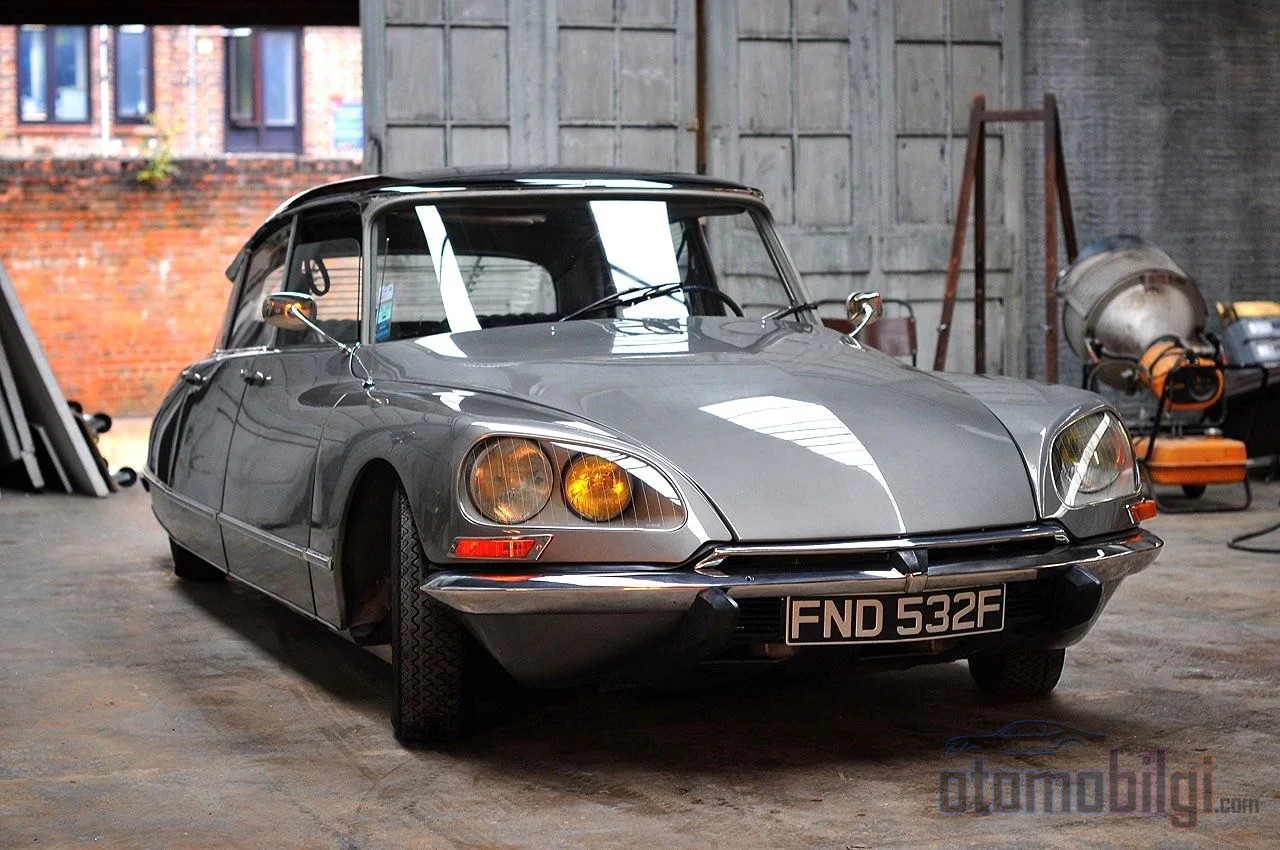
October 6, 1955, the Paris Motor Show. The curtains open at the Citroën stand, and a car that seems to have arrived from outer space appears before the crowd: the DS. 743 orders in the first 15 minutes, 12,000 orders on the first day, 80,000 deposits in the 10 days of the show. That record went unbroken for more than 60 full years; it was only surpassed by the Tesla Model 3 in March 2016. So what made this car drive people into such a frenzy? And why is the DS still, to this day, one of the most respected names in the classic car community? If you're ready, let's dive into the story of the goddess; because in French, DS sounds just like déesse, which means goddess.
Why Is the Citroën DS Considered a Revolution?
If there was everything you'd expect to see in a 1955 car, the DS did the exact opposite. It was the first production car to carry both hydropneumatic suspension and disc brakes; the disc brake's first successful application in series production also belongs to the DS. Stop now and think about this: while its rivals mostly rode on leaf springs and drum brakes, Citroën was selling the disc brake, considered aviation technology, to the ordinary customer.
Hydropneumatic suspension - let me explain with a simple analogy: if a normal car's suspension is like a stiff sneaker, the DS's was like a walking carpet. The system worked on spheres filled with oil and gas, automatically balanced the car, and even allowed the driver to adjust its height if desired. Operating at a pressure of 17.2 MPa, this system fed not only the suspension; it also powered the clutch, gearbox, steering, and brakes. In other words, the car had a single hydraulic nervous system circulating through its veins.
The innovations didn't end there: a fiberglass roof that lowered the center of gravity, independent front suspension, inboard disc brakes mounted close to the drivetrain, and from autumn 1967, four headlights under a glass cover; the inner headlights pivoted up to 80 degrees via cables linked to the steering. Headlights turning with you through a corner at night was practically science fiction in the late 1950s.
Highlights
- Production period: 1955-1975, a total of 1,455,746 units
- The first production car with hydropneumatic suspension and disc brakes
- 12,000 orders on the first day at the 1955 Paris Motor Show; the record went unbroken for more than 60 years
- Victories at the Monte Carlo Rally in 1959 and 1966
- A sedan in good condition typically falls in the £20,000-30,000 range in 2026
Who were the inventors?
The car's silhouette was drawn by the Italian sculptor and industrial designer Flaminio Bertoni, its technical backbone was shaped by the French aeronautical engineer André Lefèbvre, and the hydropneumatic system was developed by Paul Magès. The third-series facelift in 1967 bears Robert Opron's signature. A team from the aviation world brought the comfort of an airplane seat to the roads; that's also where the DS's remarkably flowing design language comes from.
The Reasoning Behind the Car of the Century Title
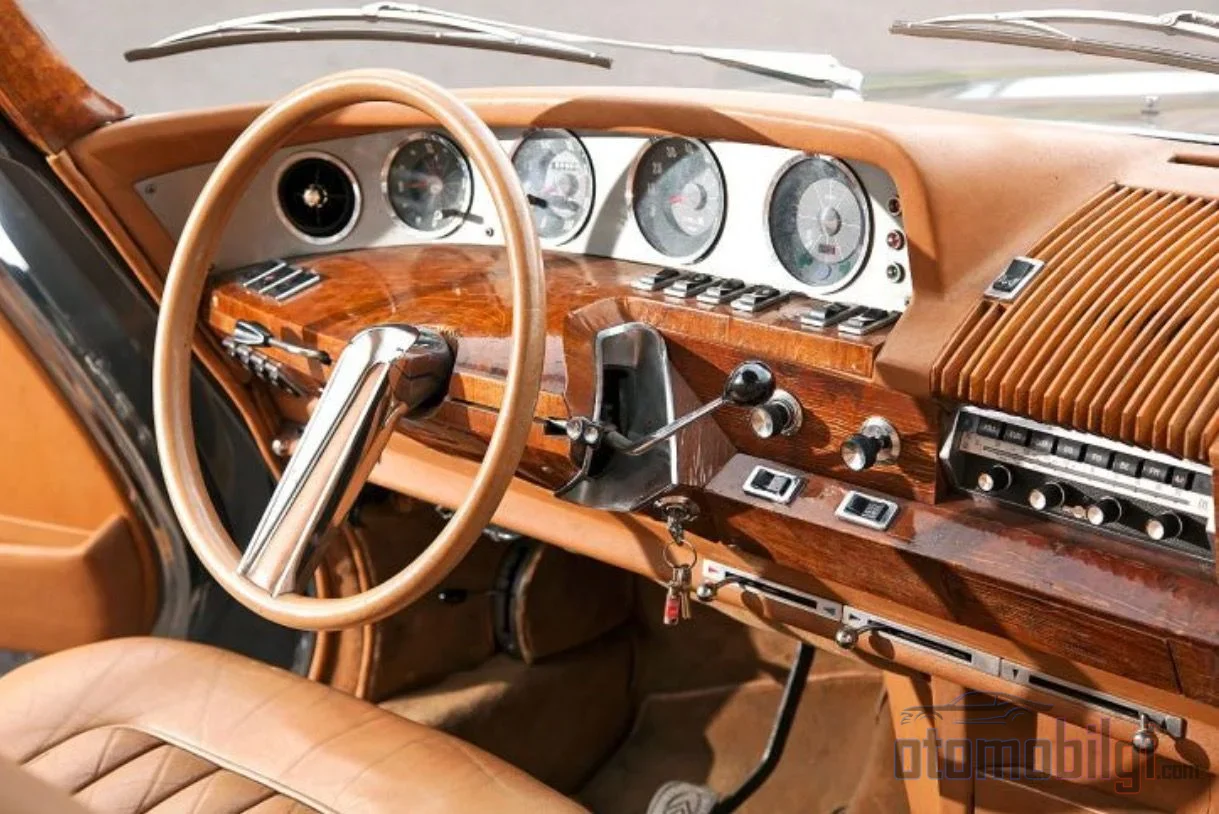
So where does this title come from? The DS's show-stealing flair and technical daring made it one of the most influential figures in automotive history, and it is widely referred to in the community as the car of the century. Documented awards also back up this fame: In a survey where world-famous designers, including Giugiaro, Ian Callum, Roy Axe, Paul Bracq and Leonardo Fioravanti, took part as a panel, the DS was chosen as the most beautiful car of all time. It also ranked fifth in the 100 Coolest Cars list published in 2005. A goddess crowned in the temple of designers - what else can we say.
One leg of the title also stands on rally stages. The DS won the Monte Carlo Rally in 1959 and 1966; although the 1966 victory was controversial due to the disqualification of the rival Mini-Cooper team, it still topped the podium. In 1962, Pauli Toivonen won the 1000 Lakes Rally with a DS19, and Robert Neyret took the Rallye du Maroc with a DS 21 in 1969 and 1970. In the 1974 London-Sahara-Munich World Cup Rally, the DS achieved victory in an event where 70 vehicles took part and only 5 managed to finish. The comfort monster was also a durability champion in the desert.
The DS's 20-Year Journey: From 1955 to 1975
The DS was produced in three series over a single generation between 1955 and 1975; it was sold in fastback/sedan, station wagon and convertible body types. A total of 1,455,746 units were produced, 1,330,755 of which came out of the Quai de Javel factory in Paris, today known as Quai André-Citroën. Production peaked in 1970. The last DS left the line on April 24, 1975, handing over its throne to the CX, itself a hydropneumatic Citroën.
The commercial side is also interesting: The 1955 DS19 was 65% more expensive than the Traction Avant it replaced; for this reason, the more accessible ID sub-model was born in 1957. In 1959, the US list price of the ID19 was $2,833, roughly $31,289 in 2025 money. In 1969, the 115 hp DS was selling for $4,170 in the US; for the same money, a 360 hp Buick Electra 225 Custom could be bought. Total sales in North America remained at 38,000; the lack of automatic transmission, air conditioning and a powerful engine, along with headlight regulations, made its job harder. Swiveling headlights and headlight covers were banned or restricted due to US rules; in the US version, the headlights did not swivel.
On the engine side, because the French tax system favored small engines, a top-segment six-cylinder never arrived; the planned air-cooled flat-6 prototype also never made it into production. The 1,911 cc engine was replaced with 1,985 cc in September 1965. The luxury equipment package arrived in 1965: The Pallas, named after Athena, defined the top level with better sound insulation, luxurious upholstery and exterior trim embellishments; from 1966 onward, a height-adjustable driver's seat was also added.
Citroën DS Technical Specifications: DS 19 and DS 21 Pallas
Before getting to the numbers, let me say one thing clearly: The official 0-100 km/h acceleration and trunk capacity figures for the Citroën DS were never disclosed by the manufacturer. Although estimated values circulate, I do not write made-up figures; I'm giving you the documented data in the table below.
| Feature | DS 19 | DS 21 (1968, Europe) |
|---|---|---|
| Engine | 1,911 cc inline-4 | 2,175 cc inline-4 |
| Power | 75 hp (83 hp after 1961) | 105 hp (99 hp in North America) |
| Torque | 142 Nm | Approximately 172 Nm |
| Top speed | Approximately 140-160 km/h range (depending on the period) | Approximately 185 km/h |
| Length | 4,826 mm (sedan) | 4,826 mm (sedan) |
| Wheelbase | 3,124 mm | 3,124 mm |
| Width | 1,791 mm | 1,791 mm |
| Height | 1,464 mm | 1,464 mm |
| Curb weight | 1,270 kg | 1,270 kg |
In 1961, the DS19 was raised to 83 hp with a Weber-32 twin carburetor and an 8.5:1 compression ratio. On the DS 21 side, the carbureted version produced around 109 hp, while the fuel-injected version produced around 125 hp; 0-100 km/h figures are estimated to be in the 12-14 second range. With a top speed reaching approximately 185 km/h, the DS 21 was serious performance for its era. As you may have noticed, the weight and dimensions remained almost constant throughout the generation; Citroën's evolution lived not in the chassis, but in the technology and the engine.
Which DS Versions Are Gaining Value?
According to the 2026 market outlook, a DS sedan in good condition, especially with Pallas trim, typically changes hands in the £20,000-30,000 band; the most powerful DS21 and DS23 versions trade above even that band. The top of the price range is formed by Pallas trim and rare body styles: the Break/Safari station wagon, the Henri Chapron-signed Décapotable convertible produced from autumn 1960 to summer 1971, and the UK Slough-built cars distinguished by leather seats and a Lucas electrical system are separate categories in terms of collectibility.
The overall 2026 picture is also promising: market analysts expect the values of the best-condition, low-mileage cars to remain stable or continue rising; meanwhile, the prices of good and fair-condition cars tend to diverge. So the dream of buying a poorly conditioned DS and rescuing it cheap is becoming increasingly difficult. The signs that DS values are on an upward trend are strong, especially for top models like the DS 23 Injection.
How demanding is ownership, really?
Let's be honest: the goddess has a price. The hydraulic system is the heart of the car and its most sensitive spot. First the plant-based LHS fluid was used, then synthetic LHS; both were hygroscopic, meaning the system components that breathed in water required expensive maintenance. The 1967 model year saw the switch to mineral-based LHM. The critical rule is this: green fluid is LHM, black parts mean the old LHS system, and the two must never be mixed; the wrong fluid quickly destroys the seals. When inspecting a car, distinguishing which system you are looking at is the backbone of the purchase decision.
On the cost side, an annual maintenance budget of 2,000-4,500 euros for a DS 21 stands out as a realistic estimate. In professional workshops, a comprehensive rebuild can cost £40,000-80,000, while concours-level restorations can exceed £100,000; so a serious restoration project can exceed the vehicle's market value. An expert inspection before buying is also money well spent; classic car pre-purchase inspection services in Europe start from base prices like 750 euros plus VAT. On the insurance side, classic car policies cover all DS models, including the Cabriolet d'Usine and DS 21 Pallas.
A Realistic Buying Guide for Beginners
Since we've been talking about costs, let me give you some big-sister advice: think twice before buying a DS that has been sitting unused for a long time. The hydraulic system is happiest when used regularly; in a stationary car, water-related degradation begins and the bill quickly balloons. This is a world full of pitfalls, requiring a full restoration guide under the bodywork, hydraulics and mechanics headings.
- Check the color of the hydraulic fluid: is it green LHM or the older black LHS?
- Ask how many years the car has been out of use; an idle hydraulic system means expensive surprises.
- Clarify the version: Pallas, Break/Safari, Décapotable and Slough-built cars carry different values.
- Get an independent classic car inspection before buying.
- Plan an annual maintenance budget of 2,000-4,500 euros from the start.
And it's also worth listening to the criticisms, because the goddess isn't perfect either. By the 1970s, the narrow cabin, the gear lever mounted on the steering column and the separate fenders had started to look old-fashioned. But even these flaws couldn't shake the DS's standing; because no rival could imitate its suspension, comfort and charisma.
Conclusion: Did the Goddess Live Up to Her Name?
The short answer: absolutely yes. The Citroën DS is an engineering manifesto: it brought hydropneumatic suspension and disc brakes into series production in 1955, pushed car design years ahead in a single stroke with its swiveling headlights and aerodynamic silhouette, proved its durability with rally victories, and was voted the most beautiful car of all time by designers. Today, with prices starting from the 20,000-30,000 pound range, it is a collectible that holds its value and rises on the right versions. If you're going to enter the classic car world and want to drive on a goddess with carpet-like suspension even once, the DS deserves a spot on your list. Just one condition: never forget to check the color of the hydraulic fluid.