1965 Ford Mustang: The Secret Behind Its Classic Status
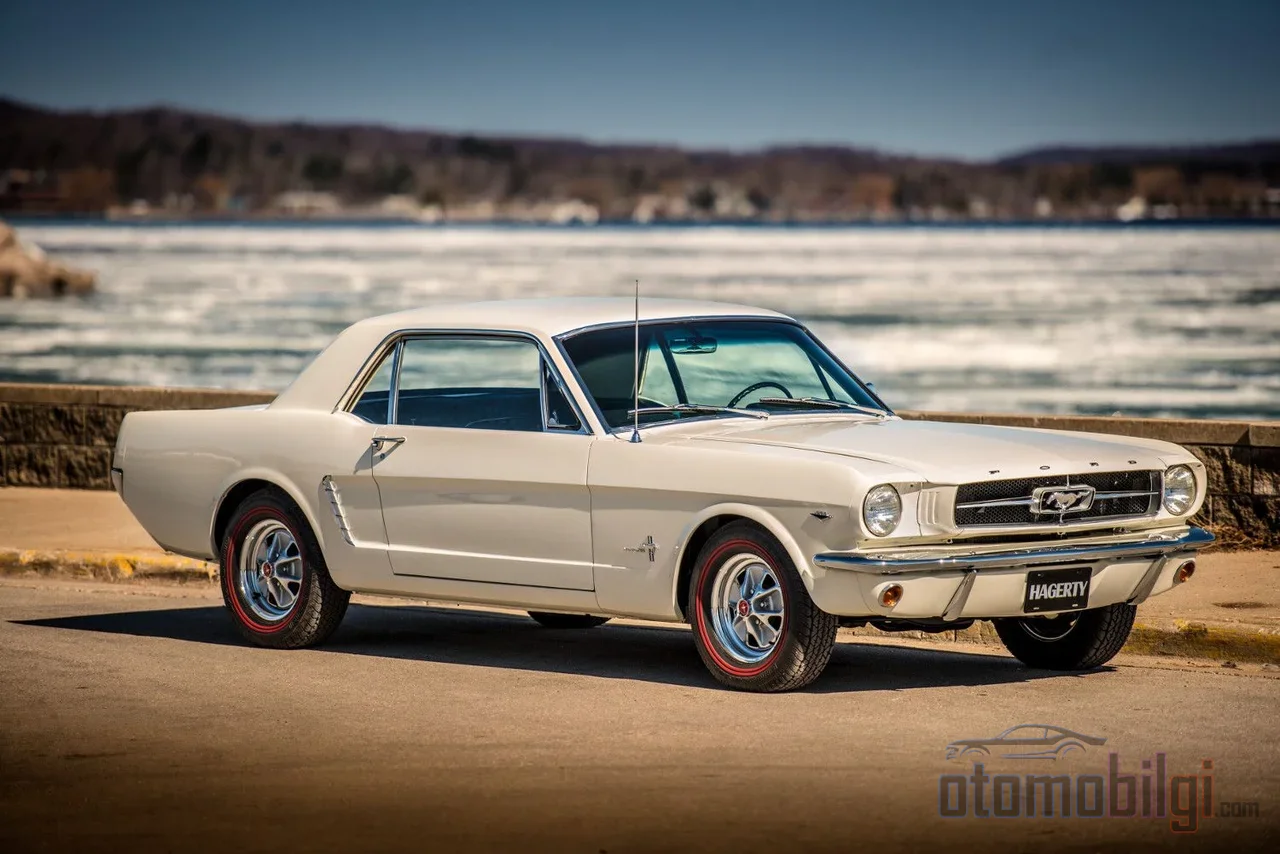
Say you have a dream of a classic car in your garage, and your wallet belongs to the real world. Looking around, everyone is talking either about six-figure European legends or about obscure, quirky intermediate models whose parts fail every month. So how does one of those "liquid" classics, like the 1965 Ford Mustang, continue to exist in this crowd - still finding buyers in every corner of the world despite its 60-plus-year history, and with parts easier to find than any other? The answer doesn't fit in a single sentence; but by the end of this page, you will clearly understand why the 1965 Mustang is still at the top of the list of models people recommend for a first classic car.
How the Pony Car Concept Was Born: April 17, 1964
The story actually begins at a fair stand. Introduced at the New York World's Fair on April 17, 1964, the Mustang achieved something the automotive world had never seen before: it created an entirely new class. Or rather, it became the class itself; because the name of this category, later called the pony car, comes directly from this automobile.
The idea was bold, but the price was even bolder: With a base price of $2,368, the Mustang offered entry-level buyers the aesthetics of a high-end European Grand Tourer. In other words, you were eating the cream of the cake without paying for the cake. The launch offered hardtop coupe and convertible body options; the fastback body joined the lineup a little later.
The project itself was like a speed record: in an era without computer-aided design, it took only 18 months to complete. Designer Joe Oros secretly prepared the fastback version in fiberglass and presented it to Lee Iacocca; once approved, the road to mass production opened. Inside were bucket seats, a four-speed gear lever, and - honestly speaking - very cramped rear seats; but nobody was buying a Mustang for the rear seats anyway.
Here is where a detail you will often hear in collector culture comes into play: because the Mustang entered production five months ahead of the normal 1965 production calendar, these early cars are unofficially called 1964 1/2. Officially, they all belong to the 1965 model year; but collectors treat the 1964 1/2 as a separate category. The entire first generation was produced until 1973.
Highlights
- The Mustang was introduced at the New York World's Fair on April 17, 1964 and created the pony car class.
- The base price was only $2,368; it offered high-end aesthetics at an entry-level price.
- 289 V8 Fastback: 225 horsepower, 414 Nm of torque, 0-100 km/h in about 7.6 seconds.
- With the high-performance 289 codenamed HiPo, 0-60 mph dropped to just 5.2 seconds.
- Its abundance of parts and broad collector base make it one of the most liquid classics in the world.
1965 Mustang Technical Specifications: Two Characters in Numbers
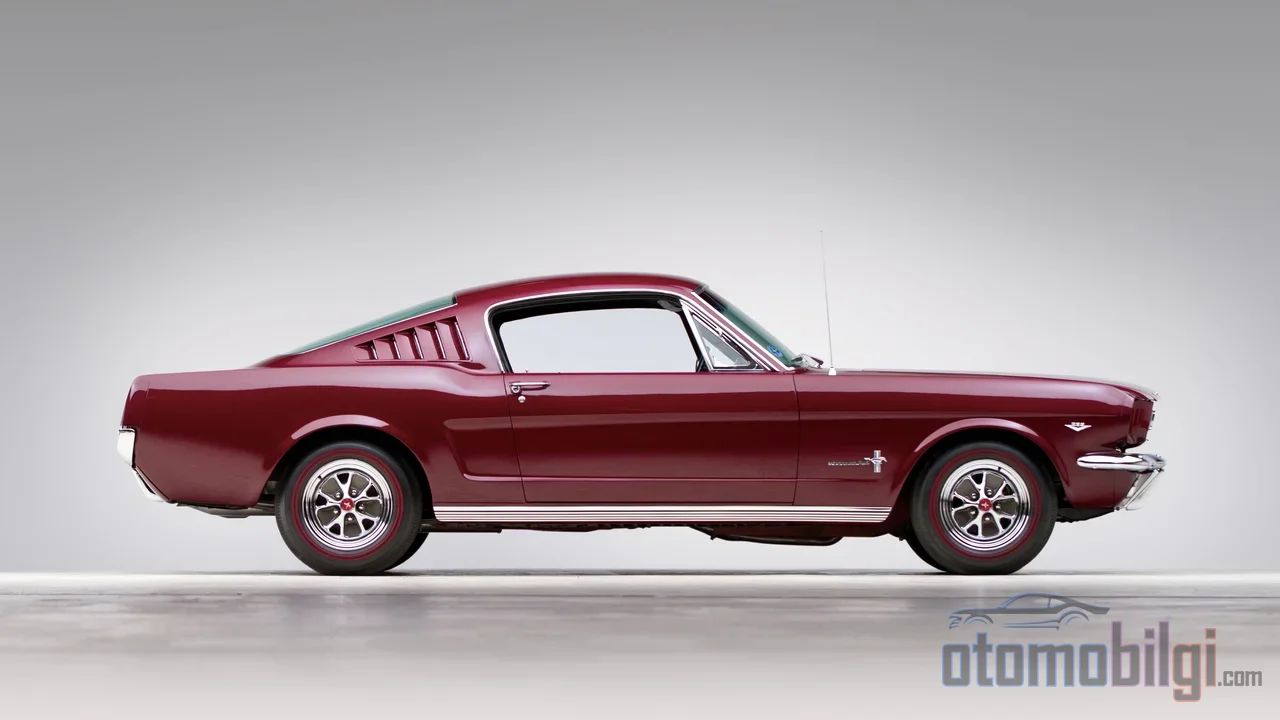
The 1965 Mustang was actually sold in two different characters, and both are still in demand today. On one side the calm, cheap-to-run six-cylinder Thriftpower 200, on the other the muscular 289 Windsor V8. Comparing the two on paper is the fastest way to see which character your budget can afford.
| Specification | 200 Thriftpower (6-cylinder) | 289 Windsor V8 Fastback |
|---|---|---|
| Engine | 3.3-liter naturally aspirated inline-6 (3,273 cc) | 4.7-liter naturally aspirated V8 (4,736 cc), OHV, carbureted |
| Power | 120 hp @ 4,400 rpm | 225 hp (228 PS) @ 4,800 rpm |
| Torque | 258 Nm @ 2,400 rpm | 414 Nm @ 3,200 rpm |
| 0-100 km/h | Not stated by the manufacturer | Approximately 7.6 seconds (0-62 mph) |
| Top speed | Not stated by the manufacturer | 190 km/h |
| Consumption (combined) | Not stated by the manufacturer | Approximately 14 mpg (around 16.8 l/100 km) |
| Transmission | 3-speed automatic / manual | 4-speed manual / 3-speed automatic, rear-wheel drive |
The six-cylinder version was used between 1965 and 1970; the earliest Mustangs had a smaller-displacement 170 cid engine, replaced by the 200 cid in 1965. So not every 1965 Mustang you see today has the same engine; asking whether it is the calm 120 hp six-cylinder version or the V8 roaring with 414 Nm of torque should be the first question in any buying and selling conversation.
Dimensions and Body: Small But Ample Volume
The V8 Fastback body measures 4,613 mm in length, 1,735 mm in width, 1,300 mm in height, with a wheelbase of 2,743 mm. Its dry weight is 1,250 kg; and the trunk capacity is 150 liters. Considered compact by the era's standards, this body carries a power-to-weight ratio of 180 hp/ton, respectable for its time. There are double wishbones at the front, rigid axle suspension known as a live axle at the rear, and drum brakes at all four corners; not disc brakes, drums. That was normal for 1965 technology, but in today's traffic you will need to respect braking distances.
The HiPo Legend: A 1965 Car That Does 5.2 Seconds
The real legend was written with the high-performance 289 engine, codenamed K-Code HiPo. A 1965 Mustang equipped with this engine and a 4.11 ratio differential completed 0-60 mph (0-97 km/h) acceleration in 5.2 seconds. For a car produced in 1965, that is performance close to the figures discussed for today's sports coupes; in the mid-sixties this speed was not a show-off, but an open threat.
Why It Is Still in Such Demand: The Anatomy of Liquidity
So, if the classic market is constantly changing, why does the 1965 Mustang continue to be talked about year after year? The answer does not lie in a single factor; several forces are working at the same time.
- Parts supply: Millions of vehicles produced between 1964-1973 mean the spare parts market is still extremely wide today. A months-long parts hunt on a European classic is measured in days here.
- Cross-generational demand: The generation that rode in their father's Mustang is now the segment defining the market, and a new generation is joining this culture with nostalgia.
- Tangible asset appeal: Collectors want the car they hold to be a felt, drivable, showable object; the Mustang is one of the most famous candidates for this role.
- Limited but endless supply: Since production stopped long ago, supply is fixed; as collector demand grows, values gain momentum.
On the market side, the picture is twofold. Rare and verifiable models command very strong prices: for example, as of 2026 the average value of a model in good condition has risen from 521 thousand dollars to 704 thousand dollars, and models considered blue-chip in the collector world, such as the Mustang Boss 429, are trading in the 180-200 thousand dollar band, with annual increases of up to 10 percent. On the other hand, standard, ordinary Mustangs hold their value in fair condition but appreciate much more slowly. So the statement "every classic car is an investment" is not true here either; scarcity, verifiable originality, and condition are what matter. Also, due to the post-pandemic economic slowdown, 2026 prices are generally uncertain; there are quite a few experienced owners writing on forums that the market is cooling and that some cars' repair costs exceed their value. To be realistic: Buy the Mustang first to live with it, and see the return on investment as a bonus.
Beginner's Buying Guide: Rust, Money, and Negotiation
What You Must Check Before Buying
When buying a classic Mustang, the biggest enemy has a name: rust. Corrosion in the chassis rails is this model's most common problem; wiring and alternator failures also rank high on the list. During the test drive, pay attention to gear shifts, vibrations as speed increases, and the speedometer and all indicator lights working properly. For valuable GT, Shelby, Mach 1, Boss, or Cobra Jet models, an expert inspection is considered a must; a wrong purchase at this level can turn into a mistake worth hundreds of thousands of dollars.
Despite the excitement you feel, never skip checking part numbers and factory stamps. Cars that come with their original engine and paperwork, meaning those that retain their matching numbers status, change hands at higher prices; K-Code HiPo cars are at the very top of the list. Staying away from sellers with a problematic history and unclear paperwork is far more valuable than any good negotiation tactic.
The Restoration Reality: Between 700 Dollars and 116,000 Dollars
Restoration costs range across a boundless spectrum: rebuilding a body pulled from a junkyard can start from a 700-dollar parts budget and extend up to 116,000 dollars for a fully professional restoration. In a more typical scenario, around 30,000 dollars is estimated to get started with a car in reasonable condition. First-generation Mustang restoration is both rewarding and technically challenging; so ask yourself the question "ready car or project?" before writing down your budget. The short answer is this: your first classic car should never be a rusty red, incomplete "project."
Insurance and Inspection Side
A classic Mustang can be insured with collector's insurance that offers savings of up to 40 percent compared to a traditional policy. The condition is that the vehicle is used as a collector's car rather than a daily means of transportation. Insurers generally use the agreed value method, based on an agreed-upon value supported by photos, invoices, and documents; the VIN, the door data plate, and, if available, a Marti report are valuable documents in this process. Thanks to being over thirty years old, every first-generation Mustang qualifies for collector's insurance, meaning a lower annual premium as well. As for inspection, the first inspection takes place 3 years after first registration, and then every 2 years; a vehicle caught without an inspection is fined, and an inspection is mandatory within 7 days. Also remember that before your appointment, traffic fines, MTV (motor vehicle tax), and highway toll debts on the vehicle must be settled.
Short Answer: Is a 1965 Mustang a Good First Classic?
Yes, it is; but under the right conditions. The 1965 Mustang has three things that make it one of the most accessible and most liquid classics in the world: parts available everywhere, demand that has spanned generations, and a version to fit every budget (from the calm 120 hp six-cylinder to the HiPo that dips into the 5.2-second range). For a buyer who doesn't skip rust inspection, asks for matching numbers documentation, and plans a restoration budget before the purchase price, this car is one of the safest doors into the world of classic cars. An ordinary example won't make you rich quickly; but a 1965 Mustang bought in the right condition turns into one of those rare classics that tends to hold its value while you enjoy it.