Porsche 356: The Classic That Quietly and Steadily Gains Value
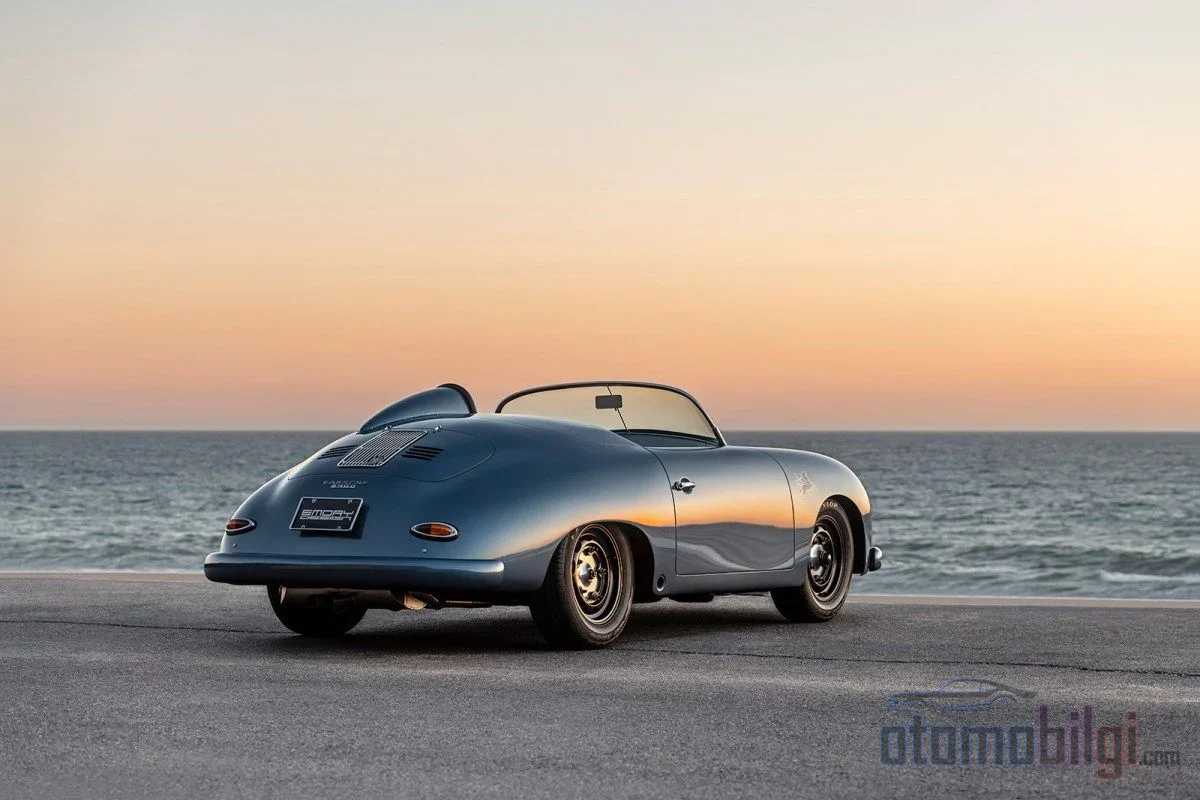
Suppose there are two Porsches in the garage. One is the 911 everyone has a poster of on their wall, and the other is its quiet but charismatic big brother: the Porsche 356. The question I ask is this: if the 911 is a legend, why do we see 356s among the record-breaking cars at auctions? And to the point that most 356s today have long since crossed the 100,000 euro threshold. There is something odd about this, and that oddity tells one of the most fascinating stories of the classic car market.
If you are ready, let's begin. Because behind the 356's rise in value there is not just nostalgia; there are version differences, ease of maintenance, and the market's mathematics.
What Is the Porsche 356, and Why Is It So Special?
The 356 was Porsche's first mass-production model. It was born in 1948 in the town of Gmund, Austria, in a barn-like space, with around 50 cars built with aluminum bodies. In 1950, production moved to the Zuffenhausen region of Germany, and the bodies turned to steel. Production continued until 1965, with more than 76,000 vehicles built in total. It took shape across four generations: Pre-A (1948-1955), 356A (1955-1959), 356B (1960-1963), and 356C (1964-1965). It came in Coupe, Cabriolet, Speedster, and Roadster body types.
So what makes this car special? Inside, there is a 1.6-liter air-cooled, 4-cylinder Boxer Engine; rear-wheel drive, light, and a mechanically extremely simple construction. In 1964, the 356C brought disc brakes to the series along with the 1600 SC, the most powerful pushrod engine of the series: 95 horsepower. It may look small, but combined with the car's lightness, things change.
Highlights
- The Porsche 356 was produced in four generations between 1948-1965; a total of 76,000+ units
- The vast majority of 356s today trade above 100,000 euros
- The most valuable versions: Carrera GS/GT Speedster over 1 million USD, standard Speedster 300-700 thousand USD
- The 356C 1600 SC engine produces 95 PS of power; the most powerful pushrod engine of series production
- The spare parts network is so extensive that everything can be found, from gaskets to engine components
Which Versions Gain Value, and Why?
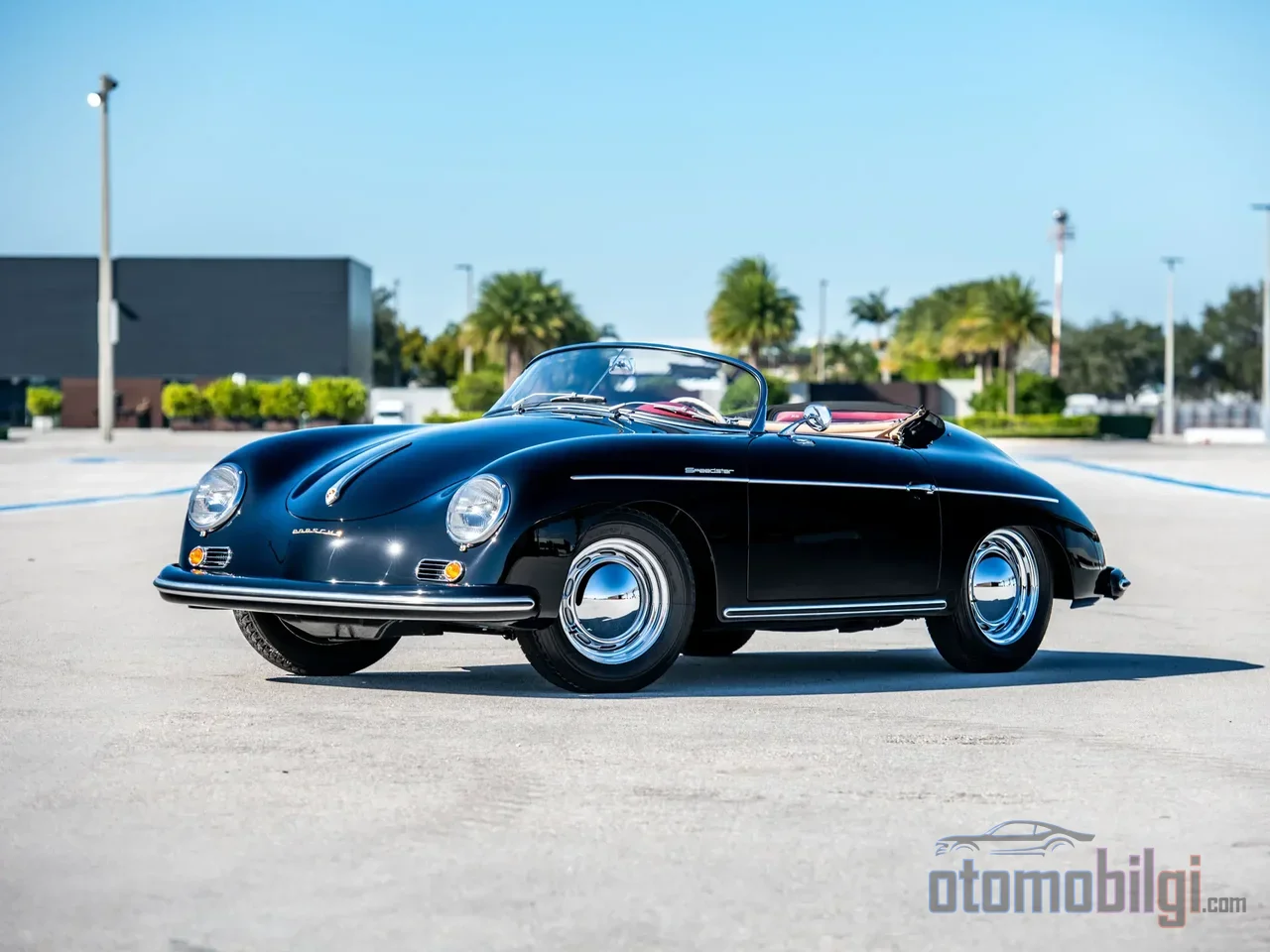
Here is the most exciting part of the story. Because not every 356 is the same, and the market separates them with merciless clarity. The price tiers are roughly as follows: a project or damaged vehicle 25,000-60,000 USD, a running project 60,000-100,000 USD, a solid driver car 100,000-175,000 USD, a quality restoration with matching numbers 175,000-350,000 USD, while concours-level cars climb from 350,000 USD up to over 1 million USD.
Speedster: The mathematics of the lowered windshield
Introduced in 1954, the Speedster was a sportier version lightened for the US market with a shortened windshield. Today it finds buyers at 300-700 thousand USD and above. A 1955 Pre-A Speedster sold for 418,000 USD despite its outlaw-style modifications and non-original engine; the market average was around 363,000 USD. So demand is exceeding the average as well.
Carrera GS/GT: The peak of the series
The real records belong to the Carrera models. The Fuhrmann-designed Carrera GS/GTs, with four camshafts (four cams), change hands for over 1 million USD, whether in preserved or restored condition. A concrete example: A 1959 356A GS/GT Carrera Speedster changed hands for a dizzying 1,850,000 USD. A 1958 1600 Super Speedster, meanwhile, was seen selling for 502,000 USD. Moreover, these are not exceptions but a trend.
Other body types
Convertible D and Roadster models range from 150,000 to 350,000 USD, 356A and 356B Coupes from 80,000 to 150,000 USD and above, while a drivable, decent 356C is around 60,000 to 100,000 USD. One detail is very interesting: While in the 911 Coupes are more expensive than Cabriolets, in the 356 the situation is exactly the opposite; open-body models are more valuable.
Porsche 356 Technical Specifications
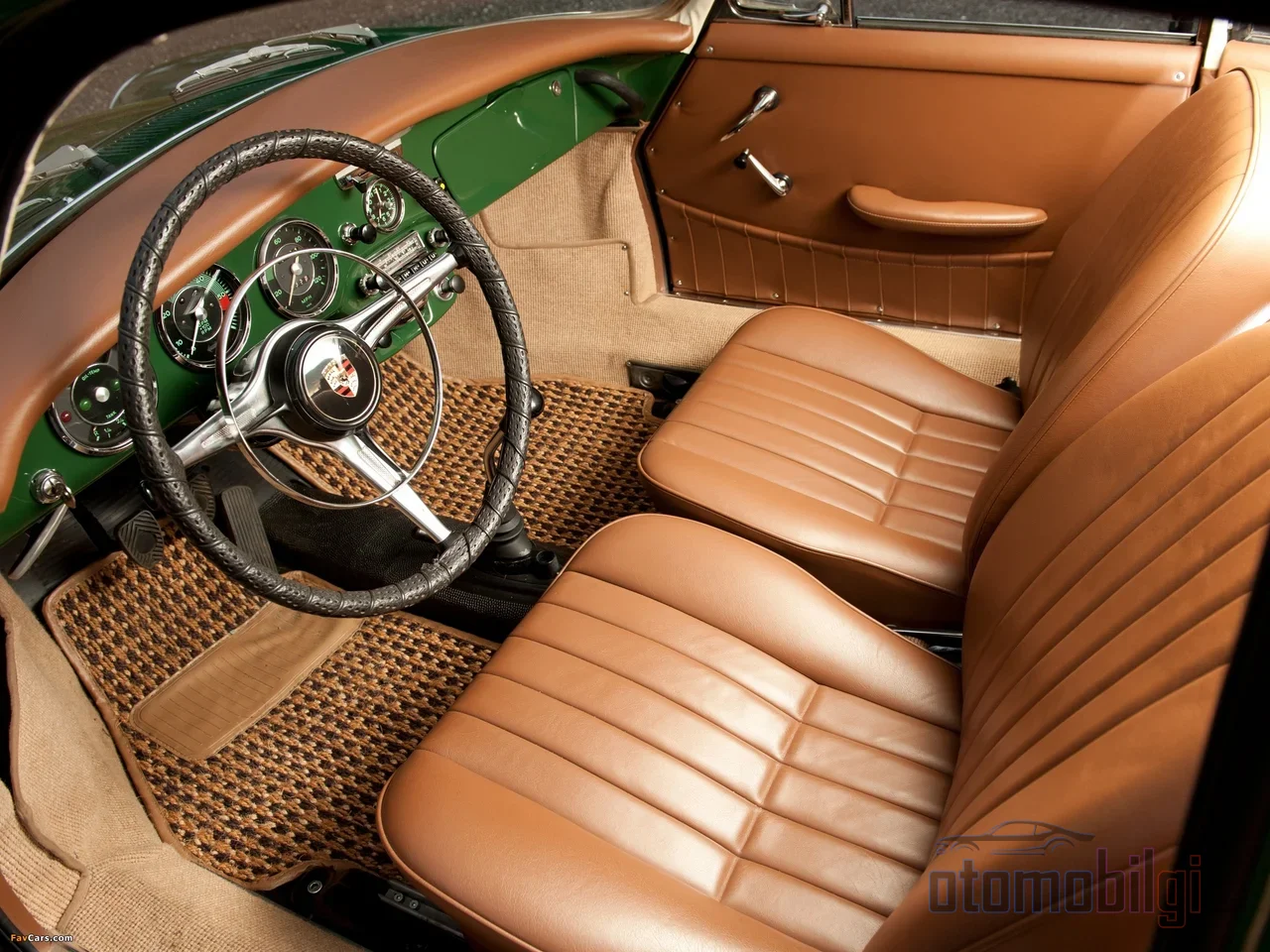
The 356 came with very different engine options over its 17-year production run. For this reason, there is no single "356 figure"; it varies by version. Here are some example figures that can be cross-verified:
| Version | Engine | Power | Torque | 0-100 km/h | Consumption |
|---|---|---|---|---|---|
| 356 (early period, 1100) | 1.1 L naturally aspirated Boxer, 4 cylinders | 40 hp @ 4200 rpm | 52 lb-ft @ 2800 rpm | Not disclosed by the manufacturer | Not disclosed by the manufacturer |
| 356A T1 (1290) | 1.3 L naturally aspirated Boxer | 44-60 hp (DIN) | 8.25-9.0 mkg | Not disclosed by the manufacturer | Not disclosed by the manufacturer |
| 356 general (1600) | 1,582 cc naturally aspirated Boxer, twin Solex/Zenith carburetors | 55 HP / 56 PS @ 4400 rpm | 106 Nm @ 4400 rpm | Not disclosed by the manufacturer | Not disclosed by the manufacturer |
| 356C 1600 C | 1.6 L naturally aspirated Boxer | 75 PS | 123 Nm | Not disclosed by the manufacturer | Not disclosed by the manufacturer |
| 356C/1600 SC Coupe (1964) | 1.6 L naturally aspirated Boxer | 95 PS / 70 kW | Not disclosed by the manufacturer | Not disclosed by the manufacturer | Not disclosed by the manufacturer |
As a period figure, the 0-60 mph acceleration was published as only 13.5 seconds for a 1.6-liter variant. The transmission is a 4-speed manual across the entire series; no reliable manufacturer-disclosed data exists for dimensions and luggage capacity. Honesty is required at this point: the 356 is not a speed monster, but a character monster. Even the 95 PS SC remains modest by today's standards yet delivers satisfying performance.
In the Shadow of the 911: Why Is the 356 a Sensible First Collector Car?
Now let's come to the real issue. Why should someone who wants to enter the classic Porsche world start with the 356? The answer lies in three headings.
Mechanical simplicity and parts abundance
The 356's engine has an easy-to-understand mechanical structure, free of complex electronics and computers, with the calmness of a Corolla. Or, if you like analogies: the 911 demands an expert, the 356 demands a patient craftsman. The spare parts side is incredible: thanks to dedicated suppliers, almost everything from engine parts to gaskets can be sourced. At Porsche specialist workshops, the hourly rate is 100-200 USD, a full service runs over 600-1,000 USD, and an engine rebuild is around 10,000-20,000 USD. And let's say it too: on the four-cam Carrera engines, these figures rise dramatically.
Entry price and the insurance reality
A historical comparison is striking: While the 911 sold for around 6,500 USD in the US, the 356 SC sold for around 4,700 USD; today, too, the 356 generally offers a more accessible entry point than the 911. Examples can still be found in the five-figure range. For classic car insurance, agreed value policies come in an annual band of 300-1,000 USD; moreover, since Coupes on the 356 are more affordable than open versions, you can make a choice according to your budget. A vehicle that fails its inspection is given 1 month to fix its deficiencies; for passenger cars, the periodic inspection is done every 2 years. So the paperwork side isn't intimidating - it's orderly and easy to track.
Community support
All of these cars are at least 60 years old and most are with their fifth, sixth, or even tenth owner. Most have been restored, or at least repainted. You are never alone with such an old car; clubs, specialists, and parts suppliers make ownership far easier than you might think.
Before You Buy: The Realities of Rust, Electrics, and Restoration
Time to rein in the excitement a little. There are critical points you need to know when buying a 356, and they directly affect your wallet.
Rust is enemy number one
The body is non-galvanized steel, and rust is this car's arch-enemy. Risky areas: floor panels, rocker panels, battery box, front fenders, door bottoms, and the torsion tube area. Before buying, always have the car inspected by a 356 specialist. Also, the original 6V electrical system is weak; many cars have been converted to 12V, but poorly done conversions can give you headaches.
Mechanical quirks
On the engine side, oil leaks, worn valve guides, timing gear wear, and low compression are common. The gearbox is durable, but synchro wear in 2nd gear is widespread, and a full rebuild is expensive. For most of production, drum brakes were sensitive to heat and fade and required regular adjustment. Ethanol-blended fuels can also damage original fuel system components.
Restoration budget and matching numbers
A real example: a barn-find 356C was bought for 20,000 euros, and a restoration lasting two years came to 125,000 euros; the under-chassis had rusted from winter road salt. Driver-level restorations run 40-75 thousand USD, concours level 150 thousand USD and above. Cars "restored to sell" with wrong parts lose value; matching numbers and the Porsche Certificate of Authenticity document play a critical role in determining value.
Is the 356 Market Rising in 2026?
In 2023-2024, some collector cars lost value, 2025 saw a recovery, and in January 2026 the market hit a new peak. Standard 356B and 356C Coupes have reached their peak; the true rarities, namely the Carreras and special Speedsters, continue to climb. Even in the Australian market, the 356 holds an "anchor" position; mid-band B and C Coupes see steady interest.
On the investment side, opinions are divided: while some see viewing the 356 as an investment vehicle as high risk, market data points to strong long-term value growth and blue-chip status. If you ask me, buy it not just for appreciation, but to use and enjoy; let the appreciation be a nice side effect.
Conclusion: What Is the Secret of the Value-Appreciating 356?
The short and clear answer: The Porsche 356 appreciates because it was produced in small numbers, it is mechanically manageable to maintain, its spare parts network is excellent, and its historical significance is great. While rare versions like the Speedster and Carrera GS/GT exceed 1 million USD, even an ordinary 356C trades in the 60-100 thousand USD range. This first Porsche, which remains in the shadow of the 911, is actually one of the most sensible entry doors into the classic car world; just take rust control seriously, question the matching numbers documentation, and set your restoration budget realistically.
What do you say: would your first classic Porsche be a Speedster, or would you start with a calm Coupe? Let's talk in the comments.
Sources
- Porsche 356 Buyer's Guide: Everything You Need to Know
- Porsche 356
- Model Overview 356 - Porsche
- Porsche 356 - Ultimate Model Guide
- FOR SALE: 1959 Porsche 356A 1600 Super GT Speedster
- 1955 Porsche 356 1500 Super Value
- Is the Porsche 356 Market on the Decline?
- 1948 Porsche 356 Specifications & Dimensions
- Jay Leno's Garage - Which Porsche 356 Is Worth More?