One Tire Rule in DTM: From Cost to Equality
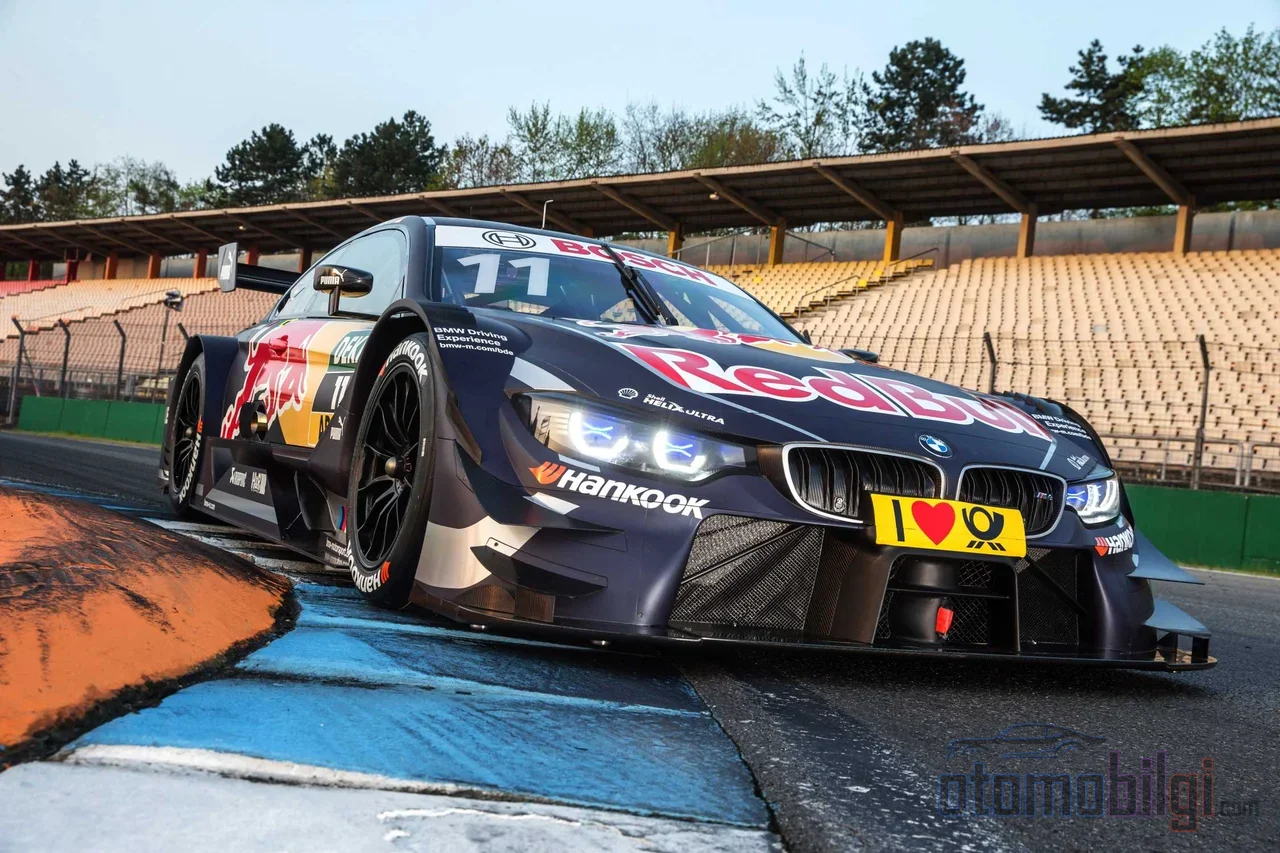
Stop by the edge of a racetrack and think: while manufacturers spend millions to overtake each other on the roadside in one of the world's most advanced touring car championships, namely the DTM, why do the tires under all of them come from the same brand? BMW, Mercedes, and Audi send the products of their own engineering schools into battle, but everyone's tires come out of the same box. This is not a coincidence; it is a calculated choice. So why did the DTM switch to a single tire supplier rule? The answer lies hidden in the years when the tire ceased to be a technical component and turned into a weapon that devoured budgets.
The Multi-Supplier Era: What Did the Tire Wars Cost?
In motorsport history, the periods when multiple tire manufacturers competed in the same series had their own unique excitement. For a team, signing with the right tire manufacturer was sometimes more valuable than winning a race; because a rival tire could find a second within a week. But this picture also has a dark side.
If there are multiple manufacturers, the development race never stops. Each manufacturer secretly develops its own compound, its own construction; teams set aside a separate budget for testing, and predicting how each tire will behave in which weather conditions becomes an intelligence game. This is called a tire war, or in English, a tire war. And everyone pays the bill for this war: while big-budget teams keep trying new tire specifications, independent and small teams cannot keep up with the pace financially. Standardization is therefore regarded in some circles as a kind of cost shield; the single-supplier model effectively ended the tire-labeled arms race.
In fact, the DTM had long since experienced the most painful version of this bill. The original DTM was forced to shut down after 1996 because costs had skyrocketed; the manufacturers had transformed cars that looked like road cars into near-prototypes, and spending had become uncontrollable. The series reborn in 2000 was founded on the lessons of that trauma. So for the DTM, cost control was not an abstract concept; it was a matter of survival.
Highlights
- Dunlop's agreement with the DTM ended in 2010; the series signed a 3-year contract with Hankook.
- The Hankook partnership lasted 10 seasons and was extended until 2023.
- In 2013, the super-soft option tire was introduced as a second tire; lap times dropped visibly.
- From the 2026 season onward, the DTM's sole supplier is Pirelli.
- The three pillars of single sourcing: cost control, competitive equality, and predictability.
How Did the Hankook Era Begin and Take Root?
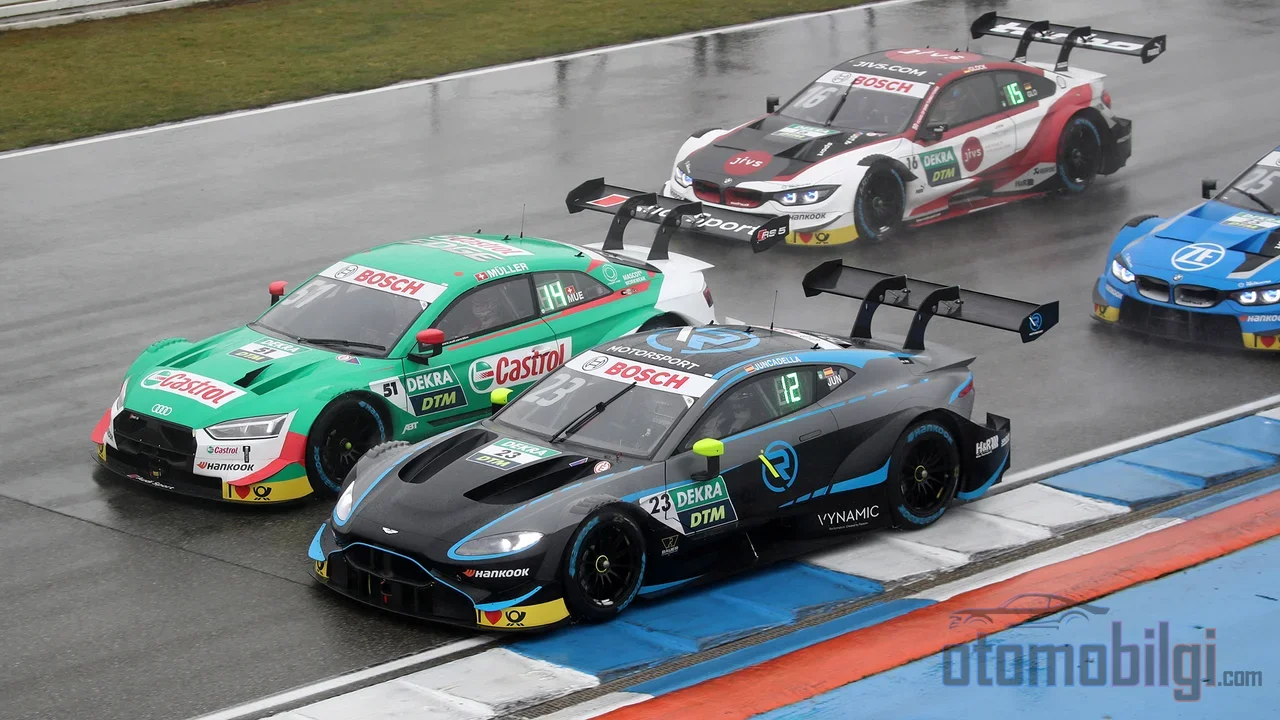
The critical turning point came in 2010: Dunlop's agreement with the series ended, and the series promoter ITR signed a 3-year supply agreement with the South Korean manufacturer Hankook. Hankook thus became the DTM's official and exclusive tire partner. This was a remarkable move for that period; an Asian-origin manufacturer leaving its mark on Europe's established touring car championship was a sign that the balances in the tire world were also changing.
If your series has a single supplier, you have to be serious, and Hankook was serious. In 2013, an option tire, that is an alternative compound, was added alongside the base slick: the super-soft compound gave drivers the chance to set much faster lap times. This also dispelled concerns that the single-brand model would become boring; strategy now involved two different tire characters, meaning a choice between durability and speed. Hankook's DTM tires were defined by a high level of grip and good load-carrying capacity; for the heavy, high-downforce-producing Class 1 cars, these two attributes were indispensable.
The Longevity of the Partnership
The agreement was later extended through an announcement made at Norisring, keeping it valid until 2023, and the premium automakers in the series welcomed the extension. The Hankook–DTM partnership lasted a full 10 seasons. A tire supplier staying in the same series for a decade can be considered the most concrete proof that the single-supplier model worked functionally for the DTM ecosystem.
What the Single-Supplier Rule Brought
So what exactly are the technical and sporting justifications for this model? When you put them together, the picture becomes clear.
First, cost. A single tire source effectively ends the tire development race, preventing teams from being crushed in the budget competition. Tires are not the only component subject to the single-source rule either; standardization is seen in motorsport as a general cost-reduction tool. If you remember the 1996 collapse in DTM's own history, you understand how sensitive the series needed to be to this argument.
Second, fairness and predictability. With a single manufacturer, the series solves any tire problem with a single point of contact; since all teams use the same tire, the source of performance differences largely comes down to the car and the team. Tire behavior also becomes more predictable. It is no coincidence that Formula 1 has summarized its priority of switching to a single supplier since 2007 with the same trio: fairness, safety, controlled cost.
Third, perhaps the least visible one: Balance of Performance, or compliance with BoP. BoP is the balancing of car models through testing and analysis based on their previous performance; in some cases it is adjusted even between sessions. The DTM's official stance is that the purpose of BoP is to deliver exciting races. Now add multiple suppliers to this equation: if each tire brand behaves differently on each car, it becomes impossible to tell which car is genuinely fast. This is exactly why a return to tire wars seems difficult in championships that depend on BoP, such as endurance series.
The Tire's Impact on Race Strategy
A single supplier does not mean an absence of strategy; quite the opposite, it moves strategy onto a purer footing. The mandatory pit stop arrived in DTM in 2001; the rules changed in the following years, evolving into a two-stop mandatory strategy in sprint races. So the pit window, tire age and compound choice remained the variables that determined the fate of the race.
When the option tire was introduced in 2013, a classic dilemma emerged in the DTM: do you attack with the super-soft compound, or manage a patient race on the standard slick? While dry-track compound choice was rewarded with clear lap times, the fact that all teams used the same wet tire on wet tracks tied the battle in the rain entirely to driver skill and car setup. This is the summary of the single-supplier model's sporting philosophy: let the difference be made by people, not tires.
Criticisms: Does the Model Solve Every Problem?
Let's be honest - though not being honest isn't an option either. Those who miss the multi-supplier era argue that the intrigue and hidden development battles brought by tire wars added a special color to the racing calendar; and this nostalgia is not entirely empty. Also, a single supplier brings its own problems: when one specification changes, some cars may suit that tire better than others, and the source of performance differences becomes murky. Whether the difficulties Manthey experienced with their Porsches can be attributed to the new DTM specification tire, or the fierce criticism of the BoP itself, shows that the tire-BoP balance continued to be debated even in the single-supplier era. So the rule came to solve problems, but it did not completely end the politics of tires.
A New Page in 2026: The Pirelli Era
Hankook's 10-season journey has ended, and as of the 2026 season Pirelli became the DTM's sole tire supplier. The Italian manufacturer developed tires specially designed for the series' cars; along with the extended race format, four different Pirelli tires came into play. In short, the series changed its supplier but stayed faithful to the model.
So let's gather the clear answer to the question: The DTM switched to the single tire supplier model to stop the hidden development race and cost escalation triggered by multiple suppliers, to keep the BoP balance single-variable, and to give all teams the opportunity to race on the same footing; the Hankook era proved that this model worked for 10 seasons.
Next time you watch a DTM race, look at the pit wall: when you know everyone is using the same tire, you know that every difference you see on track comes entirely from genuine racing. In my opinion, there is no better guarantee for a championship than that.
Sources
- Hankook Signs 3-Year DTM Supply Deal
- Successful partnership between Hankook and the DTM extended until 2023
- Hankook and the DTM complete tenth season together
- DTM exclusively using Hankook racing tires
- Pirelli develops exclusive tyres for the 2026 DTM
- The DTM: all you need to know
- Deutsche Tourenwagen Masters
- Why tyre wars are largely a thing of the past in motorsport
- DTM BoP: Balance of Performance performs at Monza
- Mandatory Two-Stop Strategy Introduced for Sunday Races