What Is the Aim of the DTM Trophy, and What Does It Offer Young Drivers?
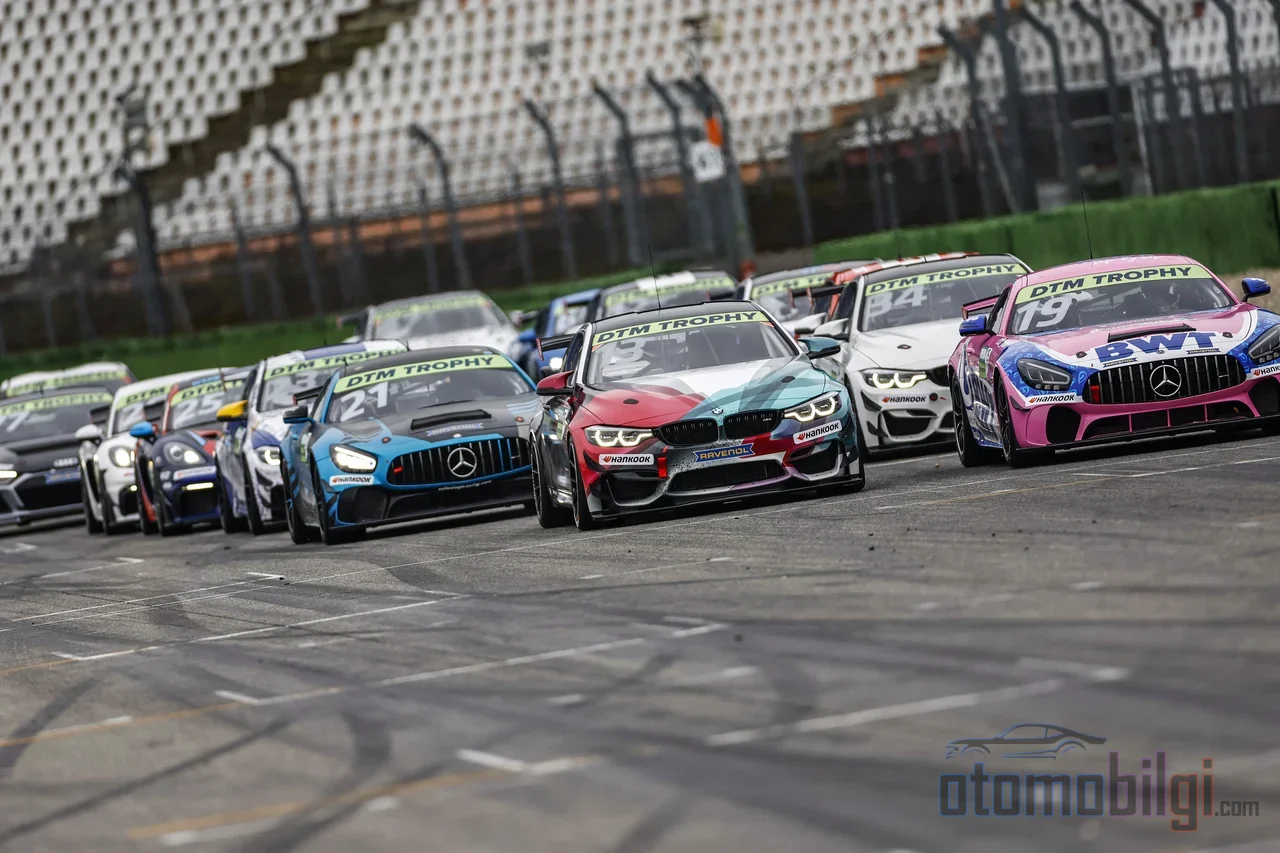
Say you're 15 years old, with a passion for steering wheels in your hands, dreaming of making it to DTM. Here's the problem: the Class 1 machines in the main series are monsters that produce 610 hp and press up to 3G of aerodynamic load in high-speed corners. Jumping into these to prove yourself would be like taking a university final exam while still in high school. But what if you built a bridge across this huge gap? In November 2019, ITR did exactly that: it announced the DTM Trophy, which ran with GT4 cars and invited young drivers and young teams to DTM weekends. On this page, we explain why that series was created, the GT4 philosophy, and how much of its claim to feed the main series actually held up.
Why was the DTM Trophy created?
Short answer: to fill the gap. The merger of GP3 Series and Formula 2 had weakened the support package of DTM weekends. ITR's solution was to add a new GT4-based series alongside every DTM meeting. In 2020, the series would run across seven DTM race weekends, and the official announcement introduced it with two goals: to bring young talents onto the stage and to offer attractive starting and track time on DTM's massive platform, especially to teams whose mission is developing young drivers.
So the Trophy was not just a youth series; it also told teams wanting to grow their stables: "come, show yourselves in DTM's shadow." Based in Germany, the series was registered within the tradition of sports car racing affiliated with the DMSB-FIA structure since 1984.
Highlights
- The DTM Trophy was announced in November 2019 and ran at seven DTM weekends in 2020.
- The cars were GT4 machines in the 400-500 hp band, close to road cars.
- The main series' Class 1 cars produced 610 hp and 3G of aerodynamic load.
- A full-season driver entry was announced at 27,000 €.
- The series no longer runs today; its function has been taken over by structures like ADAC GT4 Germany and the BMW M2 Cup.
The GT4 philosophy: one step from the showroom to the track
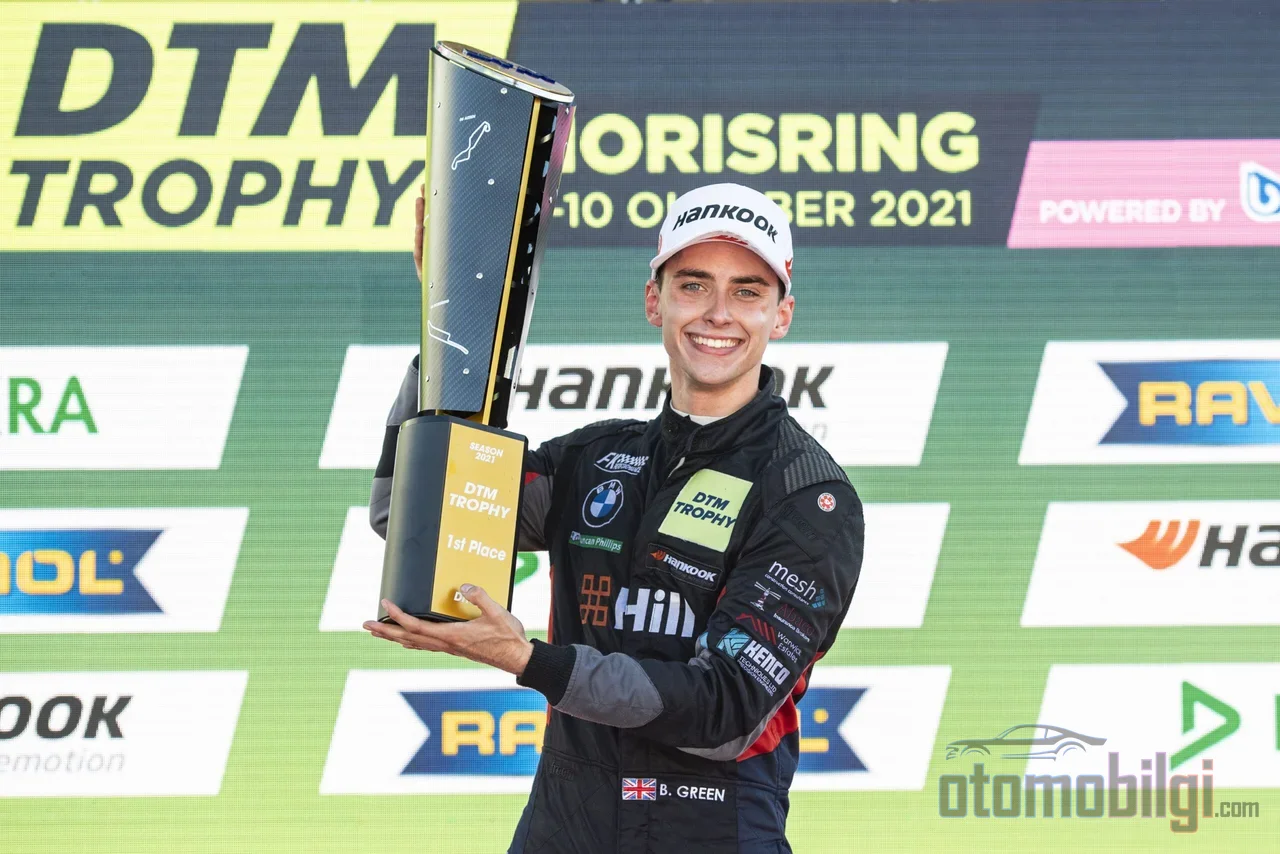
Let's use an analogy to understand the GT4 class: GT3 is the professional chef who redesigns their kitchen from scratch; GT4 is the master who cooks a home meal with the same ingredients but with minimal touching. Introduced by SRO in 2007, independently of the FIA, for cars less powerful than GT3 and closer to road cars, this category runs with production-based vehicles modified only slightly for racing. And that's exactly its purpose: customer racing. An entry gate for amateurs, and an ideal rehearsal stage for young drivers looking to move up to endurance racing.
The eligibility requirement in the DTM Trophy was GT cars that were almost series-production spec, conforming to the FIA E2-SH and E2-SC categories. And the nice part: brand diversity. In the 400-500 hp band, almost every manufacturer had a GT4 car; alongside Audi, BMW and Aston Martin, Mercedes-AMG, Porsche, McLaren, Ford, Chevrolet, Lotus, Jaguar, Toyota and Nissan were among them. The BMW M4 GT4 was among the first models announced as eligible for the series.
How do different brands race on equal terms?
The answer is the well-known solution of the GT world: Balance of Performance, or BoP for short. The ITR set the specifications of all vehicle types before the season and classified the different models accordingly. This made it possible for Audi and Nissan to battle head-to-head on the same track. The Trophy carried the spirit of the main series' brand wars, at a far more accessible cost and with a much broader palette of brands.
How wide was the gap between Class 1 and GT4?
Let the numbers speak. A Class 1 era DTM car, the BMW F82 for example, produced 610 hp with its 2.0-liter turbocharged four-cylinder engine and generated up to 3G of aerodynamic load in high-speed corners. The GT4 cars in the Trophy, on the other hand, were in the 400-500 hp range and were much closer to road cars. The difference between them resembles the gap between an ordinary hatchback and a supercar.
| Feature | DTM Class 1 (BMW F82) | DTM Trophy (GT4) |
|---|---|---|
| Power | 610 hp | 400-500 hp |
| Engine | 2.0 L turbocharged 4-cylinder | Production-based, varying from brand to brand |
| Aerodynamic load | Up to 3G in high-speed corners | Close to a road car, limited |
| Parity system | Technical regulations | Balance of Performance (BoP) |
| Approximate identity | Fully prototype-like touring car | GT with minimal changes from production |
And this very gap is the very reason the Trophy came into existence. A young driver cannot jump directly into a 610 hp Class 1 car; but with a 450 hp GT4 whose behavior feels familiar, they can gradually scale up what they have learned. The steps of the ladder were logically arranged.
How did the 2020 season work?
The format was evenly distributed across the weekend: Friday featured two free practice sessions, while Saturday and Sunday each had a 20-minute qualifying and a 30-minute race. A short, intense, spectator-friendly program. The calendar followed the main series: Zolder in April, Lausitzring in May, Anderstorp in June, Norisring in July, Assen and Nurburgring in September, and Hockenheimring in October. On the championship side, three titles were planned for drivers and one for teams.
The cost side was also interesting: It was announced that a full-season driver entry would be €27,000 and the single-race option €5,000. However, these figures should not be read as definitive information on their own; it is known that on the main series side, ADAC charged an entry fee of around €100,000 per car and season budgets reached the €3,028,000-3,228,000 range. The figures for the two sides belong to different years and different item definitions, so they cannot be directly compared on the same scale. But the order of magnitude outcome is clear: The Trophy was in a completely different league in terms of accessibility. Moreover, we have no separate data on operating costs other than the entry fee, such as car rentals and team expenses; so let it be known that when we say "cheap," we are only talking about the visible items.
Ladder function: Did the Trophy really carry young drivers into the DTM?
This is where the controversial part of the story begins. An analysis published in early 2022 questioned whether the series was truly an efficient platform for connecting its drivers to professional teams, raising the possibility that the Trophy might function more as a stepping stone or proving ground than a career-launching series. In other words, it was built with the intent of forming a bridge, but how solidly that bridge connected to the far shore remained an open question in the eyes of the authorities.
Another development that strained the context came from the main series itself: In 2021, DTM dropped its Class 1 cars and switched to Group GT3-based modified machines. As the main series drew closer to the GT world, the meaning of the Trophy rung leading from GT4 to GT3 also changed; whether it was now a "touring car rung" or an "entry into the GT world" shifted into a gray area. Nevertheless, DTM continued to keep touring car history alive with familiar machines; the 2026 season was run as the series' 40th season and took place with a 16-race calendar in Germany, the Netherlands and Austria.
Who carries that function today?
There is no clear primary record of a direct continuation of the Trophy today; there are signs that the series is no longer run, but the closing date is not clearly documented. Instead, the youth rung role is now carried by structures such as ADAC GT4 Germany and the BMW M2 Cup on the DTM platform. The Road to DTM program also expanded its support for 2027: a total of 1.5 million € in cash and non-cash prizes was set aside for the path leading from karting to DTM. Within the program, ADAC GT Masters stands out with a 775,000 € prize pool, ADAC GT4 Germany offers around 330,000 €, and the BMW M2 Cup provides 305,000 € in support. One of the program's first proteges was Finland's Matias Salonen, who rose from karting to the youth series DTM Trophy. So for a period, the Trophy was indeed a real link in this chain.
So what was the purpose of the DTM Trophy, and what remains?
Let's sum it up: DTM Trophy was a support series announced by the ITR in November 2019, run across seven DTM weekends in 2020, and aiming to carry young drivers and development-focused teams onto the DTM platform with 400-500 hp GT4 cars. Closing the huge gap with the main series' 610 hp Class 1 machines, offering broad brand diversity thanks to BoP, and being accessible with a low entry cost were the three pillars of its founding logic. Its stepping-stone role remained contested, the context changed when the main series switched to GT3 in 2021, and today the same function is carried by series such as ADAC GT4 Germany and the BMW M2 Cup.
So although the Trophy was not a bridge that fully reached its goal, it was one of the doors opening into the young racing ecosystem during the years when DTM went through an identity transformation. And like most doors in motorsport history, it reflected the needs of the era in which it opened. If you are wondering what's next, the 1.5 million euro Road to DTM package for 2027 looks like the present-day continuation of this story.
Sources
- DTM Launches Support Series For GT4 Cars
- Team GT commits to DTM Trophy for 2020
- DTM Trophy | DTM Wiki
- SRO GT4 - Wikipedia
- About GT4 - Toyota Gazoo Racing
- Did year one of DTM's GT3 era work for young drivers?
- BMW F82 DTM Class 1 Car Deep Dive - Petersen Museum
- The Road to DTM programme 2027 announcement