Why Was the DTM-Super GT Joint Race So Short-Lived?
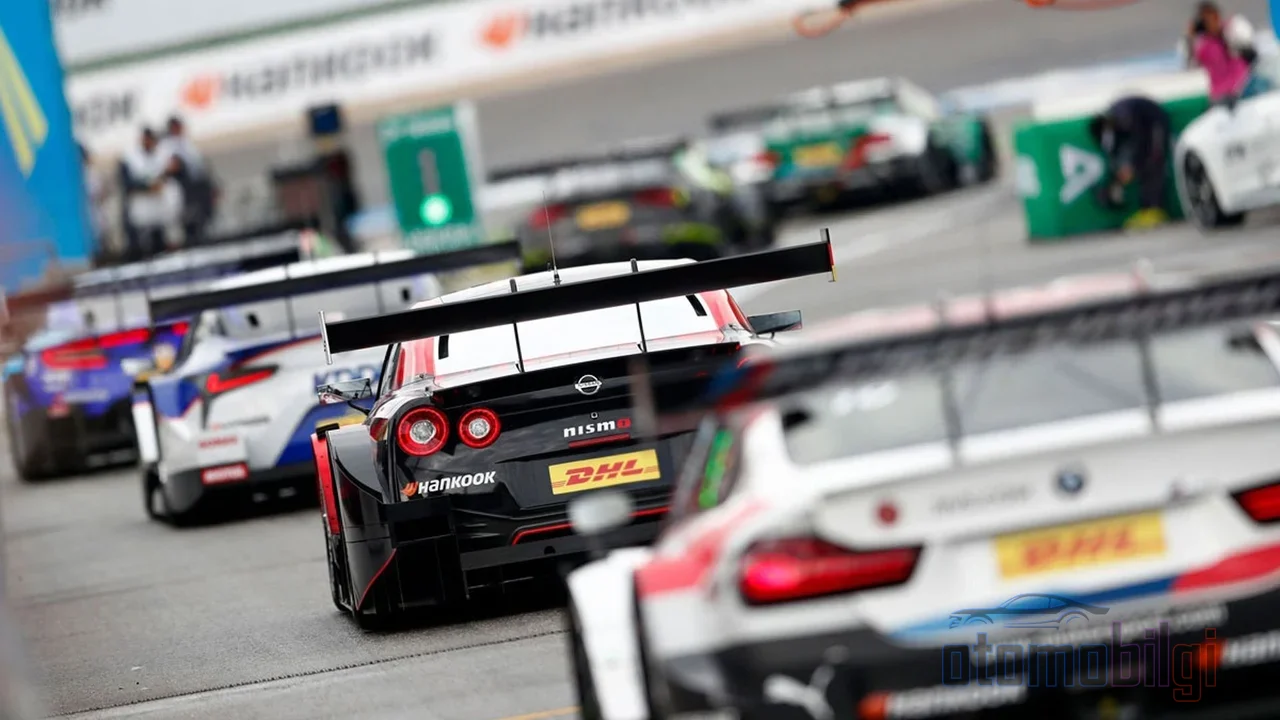
On the last weekend of November 2019, there was a historic scene at Fuji Speedway: DTM's German touring cars, having crossed the ocean, met the GT500 giants of Super GT on the same track, in the same race. This "dream race", the product of years of joint rules work, carried great hopes for both fans and the managers of the two series. But in a way, that weekend was both a beginning and a farewell. So why did the joint race between DTM and Super GT remain a single event, and why did this alliance known as Class 1 fall apart? The answer lies not in a single reason; it is based on a story in which technology, money, and bureaucracy became intertwined.
Where Did the Class 1 Idea Come From?
The story actually begins long before 2019. In early 2014, the managements of DTM and Super GT signed a cooperation agreement to unify their technical regulations. The idea was simple but bold: if two major touring car championships on two continents used the same car architecture, costs would drop, and joint races, and even a shared future, would become possible. It was somewhat like two teams speaking two different languages sharing the same grammar book.
Super GT acted quickly on this path. Since 2014, the GT500 class had been using 2.0-liter, inline four-cylinder, single-turbo engines producing over 650 hp. DTM, on the other hand, was still racing with big V8 engines at that time. The joint Class 1 technical regulations were officially announced in June 2018; DTM's switch to two-liter turbo four-cylinder engines in 2019 was also part of this plan. In other words, Germany was adapting to the formula the Japanese had been using for years.
Highlights
- The joint race was held at Fuji Speedway on November 22-24, 2019, without championship points.
- The DTM side consisted of 3 Audis + 3 BMWs; Aston Martin did not come due to costs.
- GT500 drivers won both races: Nick Cassidy and Narain Karthikeyan.
- Class 1 engines produced power in the 610-650 hp range.
- The alliance collapsed due to financial barriers and Audi's withdrawal from DTM.
What Happened at Fuji: The Two Days of the Dream Race
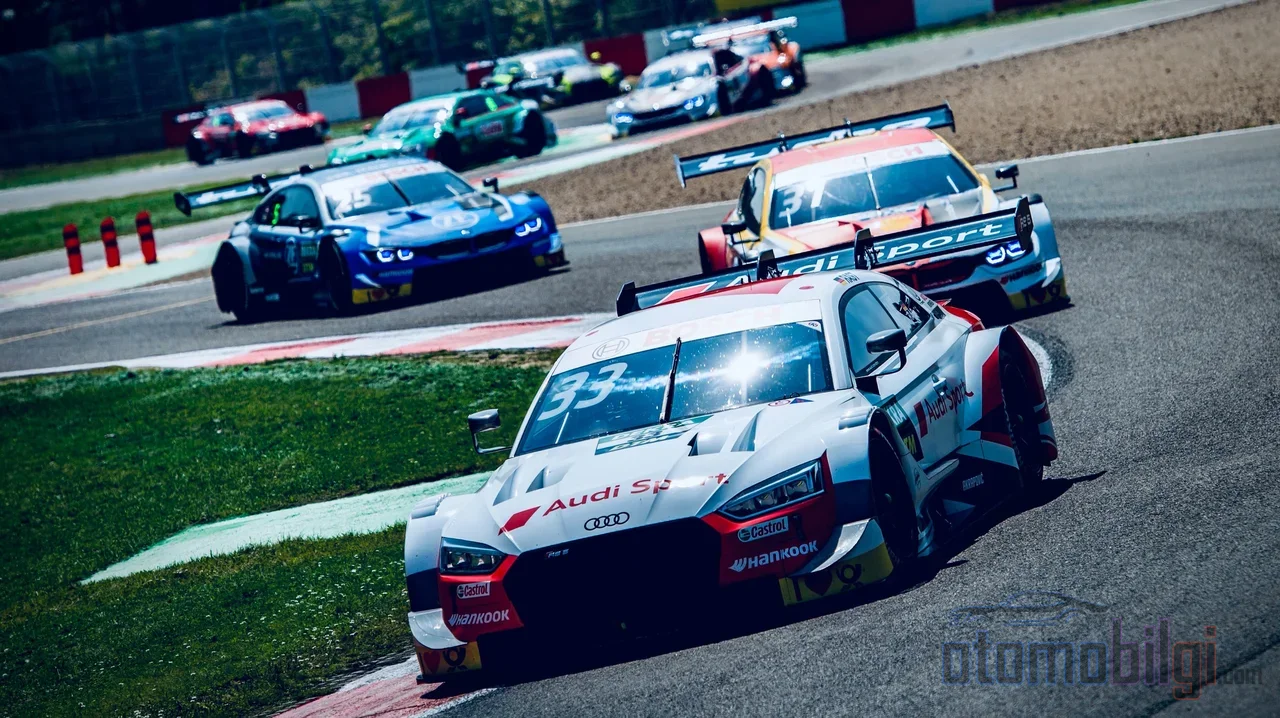
The event's official name was the Super GT x DTM Dream Race, held as part of the 45th anniversary celebrations, and it was run at Fuji Speedway on November 22-24, 2019. There were no championship points; but the prestige battle was in full swing. The program consisted of two races, each lasting 55 minutes plus 1 lap.
The DTM contingent went to Japan with six cars: three Audis, three BMWs. Aston Martin's R-Motorsport team never sent their Vantages due to cost and development problems; in fact, the team withdrew from DTM entirely shortly after, before the 2020 season. This was the first clue: the alliance's weakest link was clear from the start.
Results: GT500 Did Not Let Go of Home Advantage
Nick Cassidy from the TOM'S team won the first race; and the winner was also the holder of pole position. The second race was even more colorful: Daisuke Nakajima had set the fastest time in qualifying, but due to a chassis change he received a five-place grid penalty, so pole position passed to Loïc Duval. The race was won by Narain Karthikeyan from Nakajima Racing. In other words, both races were taken by the home GT500 drivers; the DTM contingent, who had traveled from Germany for the Dream Race, could not see the top of the podium.
Same Rulebook, Different Cars
So what was the problem, given that common rules had been established? Here is exactly where the alliance's most critical breaking point lies. Super GT's GT500 class was using a technical package known at the time as "Class 1 Alpha," and this package contained elements not included in DTM's rules: differences such as tire wars, which were banned in DTM, and mid-mounted engine layouts came into play. Moreover, GT500 cars were roughly 100 kg heavier than DTM cars.
In short, the two series thought they were reading the same book, but from different chapters. Just imagine: on one side, light and aggressive downforce-focused German machines; on the other, Japanese giants that were somewhat heavier but had power outputs above 650 hp. Was truly equal racing really possible in this picture?
| Feature | DTM Class 1 (Audi/BMW) | Super GT GT500 |
|---|---|---|
| Engine | 2.0 L inline 4-cylinder turbo | 2.0 L inline 4-cylinder turbo |
| Power | above 610 hp (+30 hp boost) | above 650 hp |
| Torque | Not disclosed by the manufacturer | Not disclosed by the manufacturer |
| Weight difference | Reference | Roughly 100 kg heavier |
| Tire war | Banned | Free |
| Engine position | Front | Mid position was possible |
The Hope and Reality of Balance of Performance
The mechanism brought up to level these differences was the well-known Balance of Performance in sports car racing. The idea was to bring different cars closer together through adjustments such as weight and power; many names, including DTM director Gerhard Berger, raised the possibility that this method could be used in the Fuji joint race. But BoP is not an antidote, it is a bandage: it does not close structural differences, it only establishes a temporary balance for race day. A permanent alliance, on the other hand, fundamentally required the same car, the same cost structure, and the same rules. And right at that point, things went awry.
Money Talked: The Real Cost of the Alliance
Audi's motorsport chief Dieter Gass openly stated after Fuji that the main reason the alliance failed to reach its full potential was financial obstacles. This was not an empty sentence. It was known that DTM had historically struggled with very high costs, and that its attempts to expand abroad had not yielded the desired result. The transition to Class 1 meant redeveloping the engine from scratch: Audi's 2.0-liter TFSI engine produced over 610 hp, and drivers could use an additional 30 hp boost for a short time; BMW's F82 DTM car was in the same formula, equipped with carbon-ceramic brakes and pushrod suspension. These were impressive engineering marvels, but they were not cheap.
Moreover, the Fuji Dream Race was the last race in which the original GT500 cars were used. Super GT was switching to new Class 1 cars in 2020 that complied with the technical regulations jointly prepared with DTM; in other words, the Japanese side had remained faithful to the plan. But a storm was waiting on the continent.
The Tokyo Meeting and the Collapse
The chain of events leading to the end was dramatic. A critical meeting held in Tokyo ended in tension, and the collaboration table fell apart; it was reported that the German delegation walked out of the meeting. The blow that followed was Audi's withdrawal from the DTM as a manufacturer. According to an assessment from the Super GT front, the alliance was effectively doomed by that withdrawal; a championship based on Class 1 could not stand while Audi was already gone.
Alternative narratives do exist: the view that financial barriers were the more fundamental cause stands alongside the narrative of the tense meeting in Tokyo. But in the end, they all lead to the same conclusion: without mutual trust and a shared budget, technical alignment alone could not carry the alliance. The strategic separation between these two series was not rivalry, but quite literally a parting of ways.
Why Did DTM and Super GT Never Fully Unite? Short Answer
The question deserves a clear answer: DTM and Super GT never fully united because the two series' cars were structurally different (the tire war, engine placement, a weight difference of around 100 kg), equalization could only be solved race-day-specific through Balance of Performance, costs had become unbearable for both sides, and Audi's withdrawal from the DTM effectively ended the plan for a shared future. The single joint race at Fuji became the most beautiful, yet shortest, acknowledgment of this fact.
After the Paths Parted: Who Went Where?
After the break, the two series were flung in two different directions. From 2021 onward, the DTM switched to a format based on FIA GT3; instead of expensive prototype touring cars, racing versions of production cars and customer teams became the backbone of the series. Super GT, meanwhile, continued on its own path: while GT500 remained on the Class 1 technical basis, the series; focused on topics on its own agenda, such as performance balancing, speed restriction, tires, and research into carbon-neutral fuels, brake discs, and pads. Japan chose to protect its own ecosystem, while Germany had to broaden its base in order to survive.
The ironic thing is this: the Class 1 project was a technical success. The two series had truly reached the same engine formula, similar power levels, and a common architecture. At Fuji, six German cars were able to go to Japan, and two races were run amid great fanfare. But race engineering can start an alliance; it cannot sustain it without structure, budget, and long-term intent. The short life of the Dream Race is precisely this lesson reflected onto the field.
Sources
- 2019 Super GT x DTM Dream Race
- Showdown at Fuji: The dream becomes a reality - DTM
- Class 1 Touring Cars
- Super GT, DTM Formally Announce Class 1 Technical Regulations
- Audi: Financial hurdles stopped DTM, Super GT Class One tie-up
- DTM collaboration with Super GT collapses
- Super GT eyes Asian expansion as DTM tie-up flounders
- Super GT Technical Regulations
- Audi reveals new 2.0 litre t/c DTM engine