Structural Battery: What Do CTB and CTC Change?
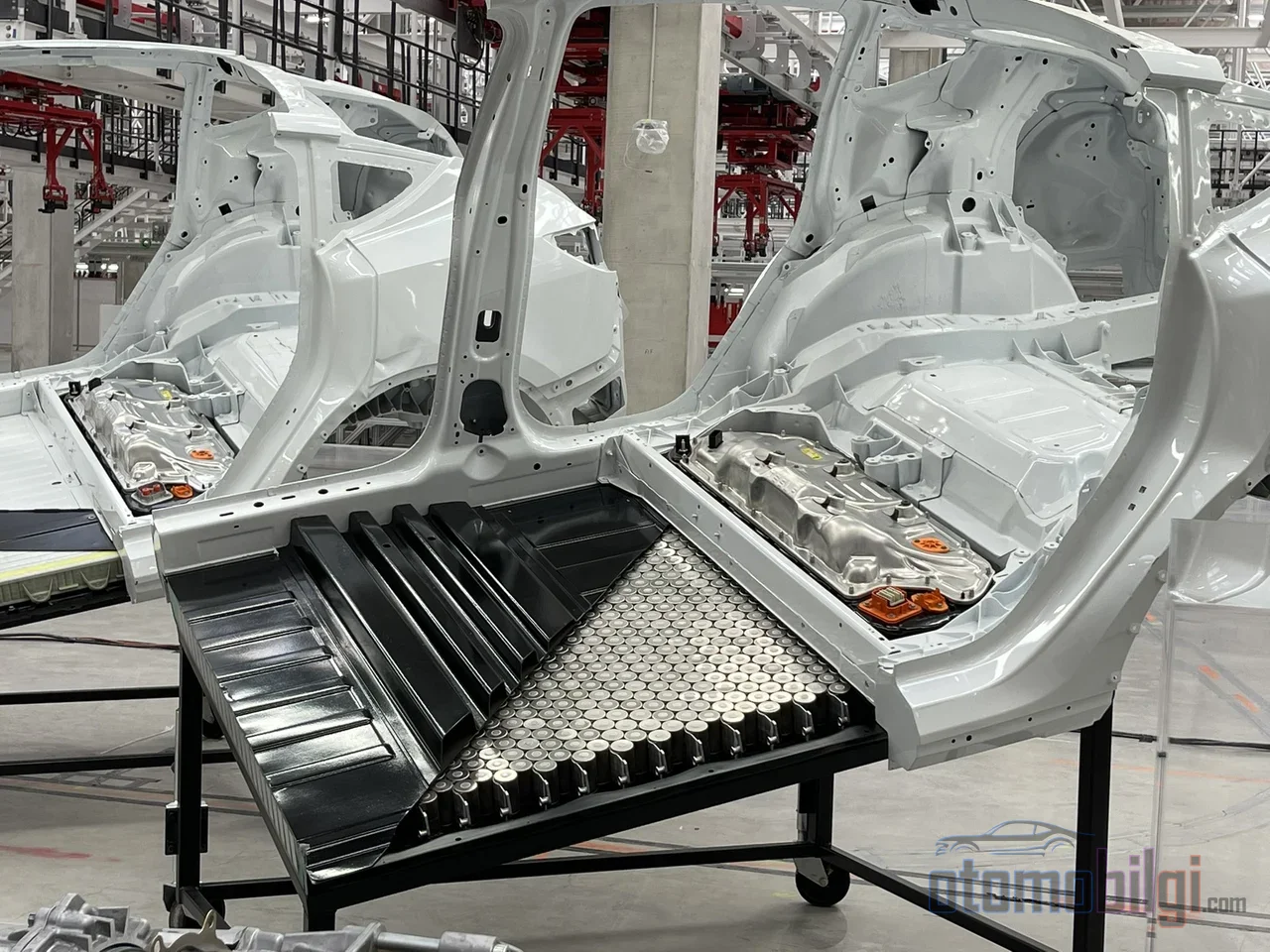
The heaviest part of an electric vehicle battery was, until recently, completely dead weight: it is fitted to the vehicle, carries passengers, carries energy - but contributes no mechanical strength to the body. Today, manufacturers are turning this weight into the load-bearing structure itself. These architecture steps, summarized as cell-to-pack (CTP), cell-to-body (CTB) and cell-to-chassis (CTC), transform the battery from a simple energy store into the cornerstone of the vehicle's skeleton. But every gain has a price: as rigidity and energy density increase, repairability and second-life potential erode rapidly. This page examines what structural battery architectures have changed, and their cost, with measurable figures.
From module to pack: eliminating unnecessary parts
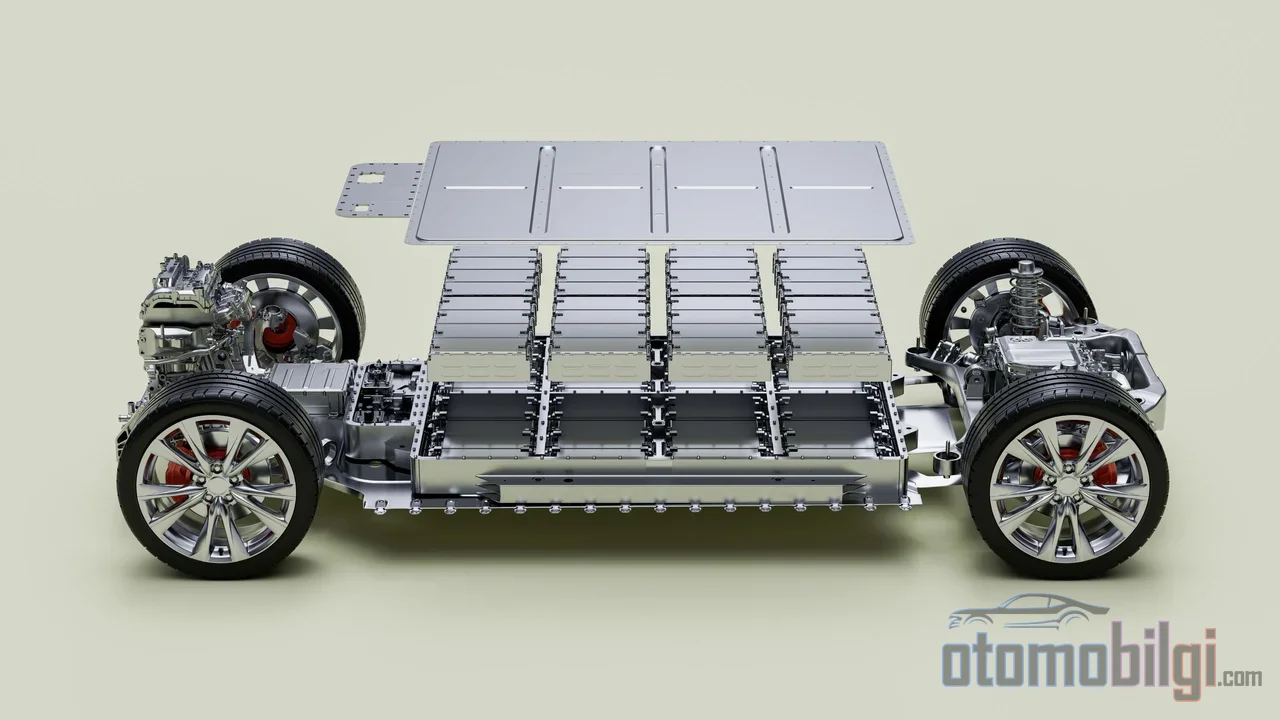
To understand the classic architecture, it is enough to look at the abbreviation CTM: cells are grouped into modules of 12-24, and the modules form the pack. This structure provides production flexibility and replaceability at module level; you can remove a faulty module and replace it with a new one. The cost is the parts that are structurally unnecessary: each module carries its own casing, connectors and wiring, none of which store energy.
CTP (Cell-to-Pack) removes this module layer. In the approach pioneered by CATL, cells are placed directly into the pack housing. The results are measurable: the number of parts drops by about 40 percent, volume utilization rises from CTM's 40-50% to 60-70%, and system energy density can exceed the 200 Wh/kg threshold. The reported gain in volumetric efficiency is around 15-20%. In short, the same vehicle fits more energy within the same external dimensions.
CTP is the first step of structural integration. The cells are still inside a separate pack; the pack remains a box that sits on the vehicle floor. The real transformation begins at the next step, where this box merges with the body or chassis.
CTB and CTC: the battery becomes a structural member
CTB (Cell-to-Body), as the name suggests, integrates the battery into the vehicle's body - the body-in-white. In the application BYD launched in 2022 with its Seal sedan, the battery's top cover takes on the role of the vehicle floor panel directly; the cells work in a sandwich structure with the chassis. CTC (Cell-to-Chassis) takes integration one step further: the pack cover can be used as the floor panel or a structural transverse member. Although the terms are often used interchangeably, the difference lies in the aggressiveness of the integration: CTB targets the body, CTC the chassis frame.
For choosing between the two architectures, concrete examples are the best guide. BYD and Tesla approach the same goal with very different risk profiles:
| Feature | BYD CTB (Seal) | Tesla CTC (Model Y) |
|---|---|---|
| Cell type | Blade, longitudinal LFP over 900 mm | 4680, NMC |
| Integration | Limited: modular servicing preserved | Unrestricted: floor panel removed entirely |
| Torsional rigidity | Over 40,000 N·m/degree (~70% improvement) | Significant gain (no figure published) |
| Volume utilization | ~%66 | Above 70% |
| Part elimination | Modular structure is partially preserved | More than 70 parts are eliminated from the floor structure |
| Cell replacement | Modular serviceability is maintained | Impossible without body separation |
Both manufacturers point to approximately a 10-15% mass reduction and significant rigidity gains. Tesla's expectation that its structural battery pack will increase range by 16% and reduce total weight by 10% sums up the promise of the architecture. However, the last row in the table summarizes the entire difference: BYD leaves an exit path, Tesla does not.
Highlights
- CTP eliminates the module layer: the part count drops by ~40%, and volume utilization rises to 60-70%.
- BYD's CTB improves torsional rigidity by ~70% compared to the classic architecture in the Seal.
- Tesla's CTC eliminates more than 70 parts from the floor structure; cell replacement is not possible without body separation.
- The structural connection is established with adhesives featuring over 20 MPa lap-shear strength and cannot be disassembled.
- Even a minor underbody impact can turn into a total loss scenario.
A pack working like a leaf spring: how the structural role is established
A classic pack, despite reaching a mass of 450-700 kg, adds no structural strength to the chassis. CTB reverses this balance: the battery carries vertical loads, resists torsional loads during maneuvers, and takes part in managing crash energy. The pack integrated into the vehicle floor contributes directly to underbody rigidity; once the pack merges with the body, it ceases to be a separate component and becomes part of the structure.
The physical requirements of this role are serious. Calculations suggesting that structural batteries can compete with common structural materials predict a rigidity on the order of 25 GPa. Real cells, however, behave anisotropically: they are far more rigid along their axis than in the radial direction. This is precisely the logic behind BYD deeming its longitudinal prismatic Blade cells, exceeding 900 mm in length, suitable for carrying longitudinal loads.
At the joint, the stage belongs to structural adhesives: lap-shear strength exceeding 20 MPa and resistance to thermal cycling between -40 °C and +80 °C are required. Mechanical connections such as self-piercing rivets (SPR) and flow-drill screwing (FDS) provide a backup load path. Replacing bolted-welded joints with structural adhesive has become the rule in the industry - and it is precisely the fact that these adhesives cannot be non-destructively disassembled that is the source of the problems we will encounter later in this article.
Crash safety: load path and thermal runaway management
Structural integration also has a principle on the crash side: in a side impact, the pack is directly in the load path. This heavily punishes design errors; excessive structural intrusion can damage cells and trigger thermal runaway. Finite element analyses show that, to the extent the pack itself is an impact absorber, it must also protect the cells.
Manufacturers' solutions reflect their architectures. Tesla connects its crash rails to the front edge of the pack, creating an uninterrupted load path from the bumper to the cabin section. BYD, on the other hand, uses the longitudinal compression resistance of its Blade cells for load bearing and defense purposes. In integrated architectures, the barrier between cells thins out, so the lost protection is reinforced with aerogel and ceramic fiber insulation, directed ventilation, and structural fuses.
Repairability: integration's most expensive bill
This is where the sharpest debate over structural batteries lies. Since adhesive joints cannot be disassembled non-destructively, even a small underbody impact can turn into a total loss scenario. Who carries the risk? On the engineering paper, it is shifted from manufacturing efficiency to insurance and the vehicle's residual value. While rigidity and mass metrics are regularly published, there is not yet any quantitative lifecycle analysis on repair frequency, insurance differences, and end-of-life costs - meaning the gains are measured, but the losses are not yet.
In the field, the picture is clearer. If structural repairs are performed outside certified service centers, frame strength weakens, creating the risk of battery damage that could lead to overheating. Cell damage during repair can pave the way for short circuits and fires. In a crashed vehicle, the damage may not be visible from the outside; without an expert assessment, the vehicle's condition cannot be estimated.
Two philosophies, two risk profiles
BYD's limited integration sacrifices part of the efficiency while preserving modularity; Tesla's unrestricted integration maximizes efficiency while making repair practically impossible. Which one is better depends on the segment: commercial fleets where downtime costs exceed efficiency gains may favor the BYD-type modular approach, while the performance-focused consumer segment may lean toward Tesla-type radical integration.
Cost and production: the acceleration of vertical integration
Structural integration not only eliminates metal parts; it also redraws the supply chain. BYD produces its own Blade cells, and Tesla produces its own 4680 cells. The roughly 40% reduction in part count puts independent battery suppliers at risk of marginalization. Tesla's unboxed assembly process shortens the line and reduces capital investment; in return, tolerance requirements become significantly stricter.
On the materials side, chemistry choice supports the architecture: the cathode active material accounts for 40-50% of cell production cost in NMC and 25-30% in LFP. BYD's cheap and thermally stable LFP choice feeds its own CTB approach from a cost perspective; Tesla's NMC choice brings higher thermal runaway risk and material costs at the expense of higher energy density.
Second life and recycling: a glued future
The second problem front of the structural battery is the end of the vehicle's life. Permanent adhesive connections make disassembling the battery for recycling or second use significantly more difficult. Soluble adhesives and designed debonding are on the research agenda, but not yet in series production. The lack of disassembly standards is the main bottleneck for second use: disassembling and testing heterogeneous packs has not yet been standardized.
The economics are also contradictory: the li-ion recycling market is projected to reach roughly $6.9 billion in 2026 and grow to $37.5 billion by 2035; yet recycling some batteries can cost more than the value of the recovered material. Current structural designs prioritize production efficiency over end-of-life recovery, and this carries the potential to conflict with battery passport regulations that mandate material traceability. BYD's protected modularity may prove more adaptable to evolving recycling requirements than a fully integrated CTC.
The next step: will solid-state batteries make the true structural cell possible?
The intersection of solid-state chemistries with CTB is the most intriguing development path in the field. When the flammable liquid electrolyte is eliminated, thermal runaway severity drops; mass savings beyond the current 10-15% become possible, and the cell moves toward a true structural battery concept capable of serving as a genuine primary structural element. But there is a practical obstacle: solid electrolytes require continuous compression - stack pressure - and this requirement creates an incompatibility with adhesive-based CTB bonding. In other words, today's bonding philosophy may have to be redesigned around tomorrow's chemistry.
Summary: what does the structural battery gain, and what does it cost?
The clear answer to the question is this: By integrating the cells directly into the vehicle's load-bearing structure, a structural battery pushes volume utilization into the 60-70% band, raises rigidity to up to 40,000 N·m/degree, and delivers ~10-15% mass savings; in return, adhesive-based permanent bonding makes cell replacement and repair difficult, minor impacts can turn into total loss, and the battery's removal for a second life or recycling is seriously hindered.
Therefore, the choice between CTB and CTC is not a question of which is technically superior, but of which risk gets assigned to whom. Commercial fleets and users who rely on a certified service network may favor limited integration where modularity is preserved; for users in segments under pressure for performance and range, the efficiency gains of unrestricted integration are appealing. What is certain, as the field's new reference studies also underscore, is this: every percentage point gained is offset by a cost on the repair and end-of-life side that cannot yet be fully accounted for.
Sources
- A review of cell-to-body (CTB) battery-structure integration design for electric vehicles - Frontiers in Mechanical Engineering (2026)
- Electric vehicle batteries - IEA Global EV Outlook 2026
- Electric Vehicle Battery Pack Integration Technology - NEWARE (Dec 2025)
- Battery Pack and Underbody: Integration in the Structure - MDPI
- Cell-to-Chassis vs. Traditional Modules: Usability in EV Architecture - PatSnap Eureka
- Structural Batteries Could Make EVs Lighter - Assembly Magazine (Jan 2023)
- Structural Batteries: The Cars of the Future Are Glued - Laserax
- Why EV Structural Repairs Need Certified Shops - Spectrum Auto (Feb 2026)
- EV Battery Second Life 2026: Home Storage & Grid Applications - energy-solutions.co
- EV battery recycling has a math problem - NPR (Jul 2026)