What Happens When an EV Battery Is Removed from the Car?
Share This Page
An EV battery whose range has visibly declined doesn't go to the trash: when it reaches the end of its life in the vehicle, most packs still hold energy equal to 70–80% of their original capacity. That level is insufficient for the vehicle but more than enough for stationary energy storage. The pack is dismantled, tested, reconfigured and keeps working for years beside a solar plant or charging station; in the final stage, lithium, nickel and cobalt are recovered back into the economy through hydrometallurgical or direct recycling methods. This article follows the journey of an EV battery step by step after it leaves the vehicle.
Highlights
- End-of-life packs typically retain 70–80% of their original capacity.
- About 60% of collected batteries are found suitable for a second life after testing.
- In the EU, the battery passport becomes mandatory from 2027.
- Hydrometallurgical recycling offers the highest recovery rates for NMC cathodes.
- LFP batteries face negative profitability in recycling; their value is markedly lower compared to NMC.
Why Is a Pack Retired? SOH and the 70-80% Rule
A battery's health is measured by its SOH (State of Health) value: it shows what percentage of the battery's original energy capacity it retains. An average lithium-ion pack loses about 2.3% of capacity per year; after roughly a decade of use it can become impractical for vehicle use. Note that this doesn't mean the battery is dead - the range has shortened, maximum power may have dropped, but the energy it can still store is considerable.
Knowing a pack's internal structure makes it easier to understand what comes next. The smallest unit is the cell; cells form modules, modules form the pack. On top of this hierarchy come the battery management system (BMS), thermal management and cooling systems. Almost all second-life decisions are made at one level of this structure: will the pack stay whole, be separated into its modules, or be repackaged at the cell level?
Introduction to the Second Life: Testing and Repurposing Process
A disassembled pack first arrives at refurbishment centers. Repurposing means using a used battery in an application outside its original purpose - most commonly, stationary energy storage. The fundamental difference from recycling is this: recycling breaks the material down into its chemical components, and the energy storage function is never used again. Repurposing preserves the function and is preferred first because it reduces the battery's life cycle impacts.
Repurposing consists of four steps:
- SOH assessment: The pack's remaining capacity is measured; if severely degraded, it is sent directly to recycling.
- Feasibility assessment: Which application is the remaining capacity suitable for? How many cycles are left?
- Configuration decision: Will the pack be used whole, or dismantled and repackaged at the module or cell level?
- Reassembly: The system is built according to the selected configuration.
According to industry data, roughly 60% of collected EV batteries are found suitable for a second life after standard testing. Only 2-5% reach a refurbisher or recycler before their first life ends - the rest wait in storage or end up in wrong streams. This narrow gateway is one of the market's biggest bottlenecks today.
Pack-Whole or Module-Based?
The engineering balance of the two configurations differs. Pack-whole use eliminates the costly disassembly process entirely; but it requires access to the manufacturer's BMS software - data that is almost never shared. Module-based repackaging is far more customizable but means designing new software and thermal management systems. In either case, the golden rule of the system is the same: a system performs only as well as its weakest link, so modules with similar SOH and the same chemistry must be matched together.
On the certification side, UL 1974 defines the testing procedures for batteries that have been used; by one estimate, this testing process can cost up to 30% of the used battery's value. Pack performance can also be tested with constant power cycles featuring 4-hour, 2-hour and 1-hour deep discharges, simulating grid services such as energy arbitrage.
Where Do Batteries Work in Their Second Life?
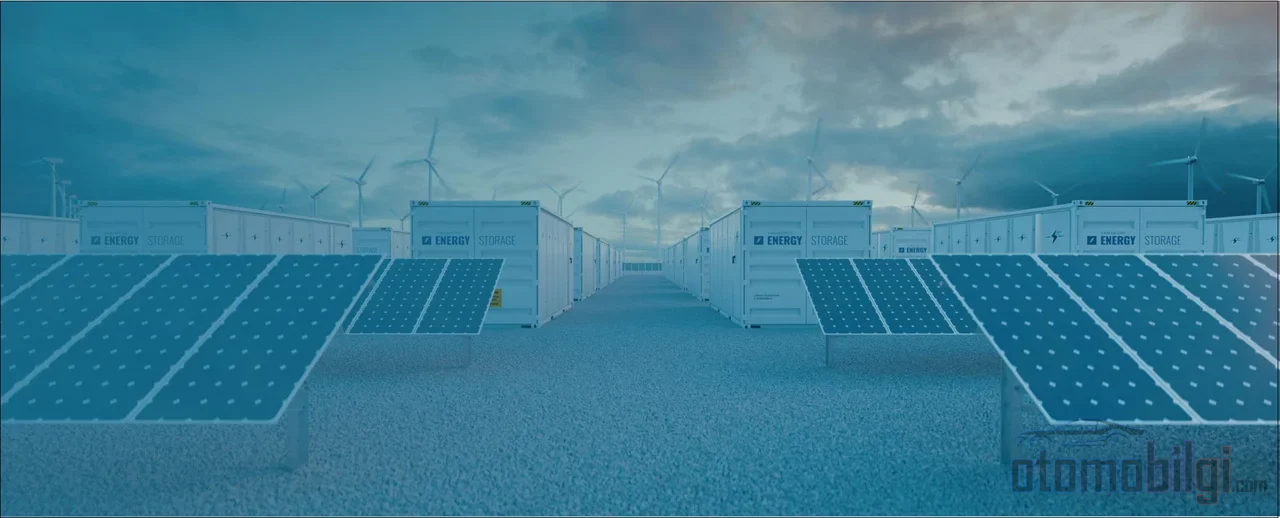
Stationary energy storage is a natural host for second life because it demands far lower energy density and performance than a vehicle: weight and volume constraints are relaxed, and charging speed is irrelevant. Applications fall into three categories according to suitability.
- High suitability: Commercial backup power - rare use and few cycles, the scenario that places the least strain on an already tired battery.
- Medium suitability: Deferring grid upgrades, grid-scale storage, residential backup power and EV charging station storage.
- Low suitability: Daily high-cycle grid ancillary services such as frequency regulation - frequent cycles quickly render already degraded batteries dysfunctional.
The economics are also satisfying: in systems paired with solar energy, costs can drop by up to 60% compared to sourcing round-the-clock power from a supplier. This gap also explains the growth forecasts of the second-life market; but market analysis firms' figures vary widely due to methodological differences - estimates for 2026 range between 1.3 and 2 billion dollars, and projections extending into the tens of billions of dollars exist for the mid-to-late 2030s. This range should not be read as a single definitive figure. Companies such as Connected Energy, RePurpose Energy, Moment Energy and Smartville are today producing stationary storage systems from used EV batteries.
Final Stop: Recycling Methods
For packs whose second life has also ended, or that are too degraded to have ever been on this road from the start, it's time for materials recovery. Three main methods are comparable, and the difference between them is not just technological but economic as well.
| Method | How it works | Strengths and weaknesses |
|---|---|---|
| Pyrometallurgy | High-temperature smelting | Loses most lithium, high energy consumption |
| Hydrometallurgy | Dissolving and separating components via chemical leaching | High recovery rate, low energy and fewer greenhouse gases; the most technologically mature option |
| Direct recycling | Preserving and reusing the cathode structure without destroying it | The lowest environmental impact; but less mature than hydrometallurgy |
For NMC cathodes, the commercially widespread approach today is hydrometallurgical processing; it offers the highest extraction rate and the lowest energy impact. Next-generation methods are pushing the bar even higher: an electrochemical system has been described that recovers more than 80% of lithium from spent NMC cathode material, while a combination of carbothermal processing and water leaching has demonstrated 95.7% lithium recovery from NMC. Selective leaching of lithium via heat treatment in mixed LFP-NMC black mass is also being researched. Direct recycling, for its part, has a markedly smaller environmental impact than hydrometallurgical methods - modeling studies consistently confirm this - but at industrial scale, technological maturity still lies with hydrometallurgy.
NMC and LFP: The Difference in Recycling Economics
The same recycling facility looks at two different packs whose lids it opens with very different eyes. NMC; contains high-value minerals such as nickel, manganese and cobalt, and this mineral value is a direct revenue item for recyclers. LFP may be cheaper, safer and longer-lasting, but it contains no recoverable precious metal. The result: While NMC generates positive recovery value, LFP faces negative profitability at current recycling costs. Every cobalt-free or low-cobalt chemistry delivers lower economic returns from recycling - and recyclers clearly prefer NMC.
This picture has an interesting secondary consequence: The US market's shift toward LFP may protect repurposers. Since LFP carries little value for recyclers, repurposers can buy used LFP packs very cheaply - and LFP's long cycle life and lower fire risk are also pluses for stationary storage. The economic gulf between chemistries is also a summary of the competition that determines a single pack's fate: recyclers and repurposers are competing for the same used batteries, and the pack goes to whichever actor offers the best business model.
How Is the Battery Passport and Regulation Shaping the Market?
The biggest obstacle in this market is not technical but administrative: data access. Manufacturers treat BMS data as a trade secret; repurposers often buy used batteries with almost no data at all. Yet the SOH and usage data recorded throughout the first life directly affects both the repurposing decision and the testing cost. Since UL 1974 certification effectively makes manufacturer cooperation mandatory, manufacturers are positioning themselves as the gatekeepers of the industry.
The EU Battery Regulation closes this gap with regulation. For all EV and industrial batteries, a battery passport tracked with a unique identifier such as a QR code becomes mandatory from 2027; the passport provides access to production information throughout the battery's lifetime. The Regulation also sets measurable targets: From August 18, 2031 onward, 16% of cobalt, 85% of lead, and 6% each of lithium and nickel will need to be recovered in recycling. The recycling efficiency target is 65% for lithium-based batteries. In the US, there is no such data sharing or requirement today; expert organizations are proposing BMS data access, battery passports, producer responsibility, and design standards that facilitate dismantling.
The other obstacles the industry must overcome are also concrete: constantly changing battery chemistries, increasingly expensive logistics as several-hundred-kilogram packs fall into the hazardous materials class, fire risk, dismantling difficulties, and UL certification costs. Together with the lack of data access, these are the variables that will determine the growth rate of the second-life market.
Conclusion: A Materials Economy with Two Lives
When an EV battery leaves the vehicle, its story does not end; it enters an evaluation funnel. Those with sufficient capacity are tested and repackaged to work in stationary storage for years, while the rest are separated into lithium, nickel, and cobalt through increasingly mature chemical processes. Regulations are tightening both ends: the passport makes the battery a traceable asset throughout its life; recovery targets take recycling out of the realm of the optional. The main remaining question is how this economy, built on relying on NMC's valuable metals, can be made profitable in an increasingly LFP-weighted world. Until that answer is found, the second-life market may stay at the bottom of the forecasts; if it is found, it may exceed the forecasts.
Sources
- Repurposing EV Batteries for Second-Life Stationary Storage
- Sustainability rules for batteries and waste batteries
- EU Sustainable Batteries Regulation
- Electric vehicle batteries - IEA Global EV Outlook 2026
- The EV Battery Life Cycle
- Second-Life Application of Electric Vehicle Batteries
- Pack-level performance of electric vehicle batteries in second-life applications
- Hydrometallurgy an Efficient Li-Ion Battery Recycling
- Hydrometallurgical recycling technologies for NMC
- Comparison of direct recycling and hydrometallurgical processes
- Upscaled Recycling of NMC
- Novel Lithium Recovery Method for NMC
- Comparing circularity of NMC and LFP
- Economic and technical challenges of LFP recycling
- Second Life EV Battery Market
- Second life of EV batteries
- What Happens to EV Batteries After Use?
- RePurpose Energy
- Connected Energy - Second Life EV Batteries