How Does Battery Recycling Really Work?
Share This Page
An electric vehicle battery that has reached the end of its service life is retired when it falls to roughly 70-80% of the vehicle's capacity: the reduced range makes long-distance driving practically impossible. But this battery's story does not end there. The pack is disassembled, the cells are separated, and the lithium, nickel, cobalt and copper inside are recovered through chemical processes and turned into raw material for new cells. In short, an EV battery at the end of its life is not waste but an ore with high gray value; the recycling process is an engineering-disciplined chain consisting of discharge, dismantling, size reduction and chemical recovery steps.
Highlights
- Modern hydrometallurgical recycling can achieve over 95% recovery for lithium, nickel and cobalt.
- Recycling has a significantly lower environmental impact compared to primary metal mining; comparisons highlight 61% less carbon and 83% less energy standing out.
- More than 95% of global recycling capacity relies on the hydrometallurgical method.
- Direct recycling requires 80-90% less energy than conventional methods but is still at the scaling stage.
Safety First: The Discharge and Dismantling Stage
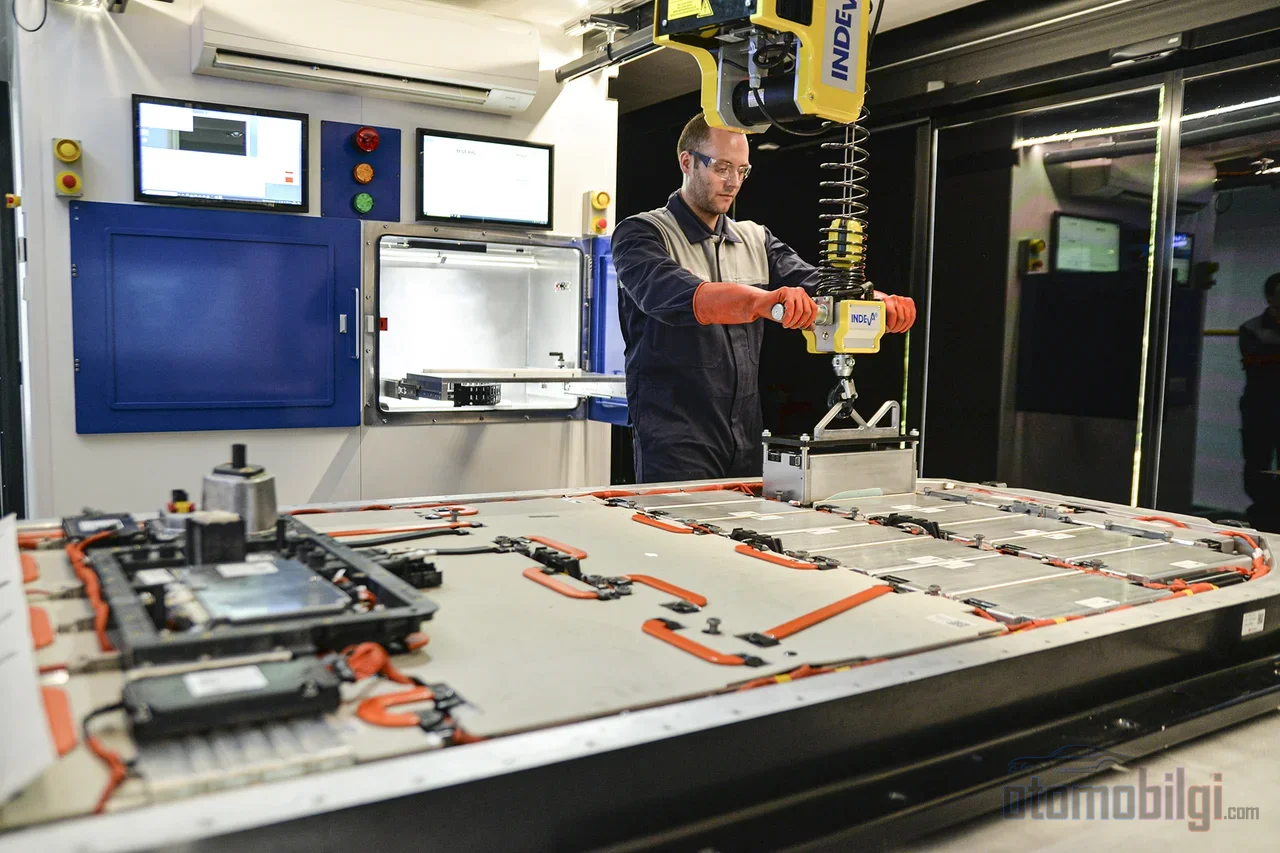
When an EV battery arrives at a recycling facility, it comes with energy stored at hundreds of volts. For this reason, the first link in the chain is always electrical discharge: no dismantling operation begins before the remaining energy in the battery is safely discharged. Then comes inspection; the pack's chemistry, condition and structure are documented.
The dismantling itself follows a specific order: first label scanning and cover removal, then separation of cables and electronic components, and finally descending from the pack to modules and from modules to cells. This gives a good idea of how laborious a job it really is. The bolts are mounted with locking connections, high-voltage cables are fixed to the body, and every manufacturer's pack architecture is different. For this reason, intensive research is being conducted on automated dismantling methods such as laser cutting; the difficult removal of bolted connections alone is a technical focus area.
It is no coincidence that dismantling is the preliminary step of chemical recovery: when components are separated early, the downstream chemical processes work much more efficiently. After the cells are separated, mechanical processing (crushing and grinding) takes place, resulting in a granular material containing the active cathode and anode materials called black mass . Black mass is the economic striking point of recycling: the metal value inside determines the profitability of the process.
Pyrometallurgy: Melting with High Heat and Its Price
Pyrometallurgy, as its name suggests, relies on heat. It consists of three stages: roasting, smelting and refining. Lithium-ion battery materials 1200-1600°C enter furnaces in the range of ; in some processes, the smelting temperature rises up to 1700°C. As a result, cobalt, copper and nickel are collected as a metal alloy.
The method's real strength is its flexibility: regardless of the battery's chemistry or where the raw material comes from, it can process mixed waste streams. But the cost is serious. Lithium, aluminum, and manganese end up in the slag and are not economically recovered; graphite and electrolyte are destroyed in the combustion process. Moreover, this high-energy-intensity process produces direct CO2 emissions: emissions from the burning of graphite, solvent, and separator sheets in pyrometallurgical cobalt recycling are measurable, while under the same conditions the direct emission impact of hydrometallurgy remains negligible. Problematic gas emissions such as fluorine compounds are also a risk this method must manage.
Hydrometallurgy: Over 95% Recovery with Aqueous Chemistry
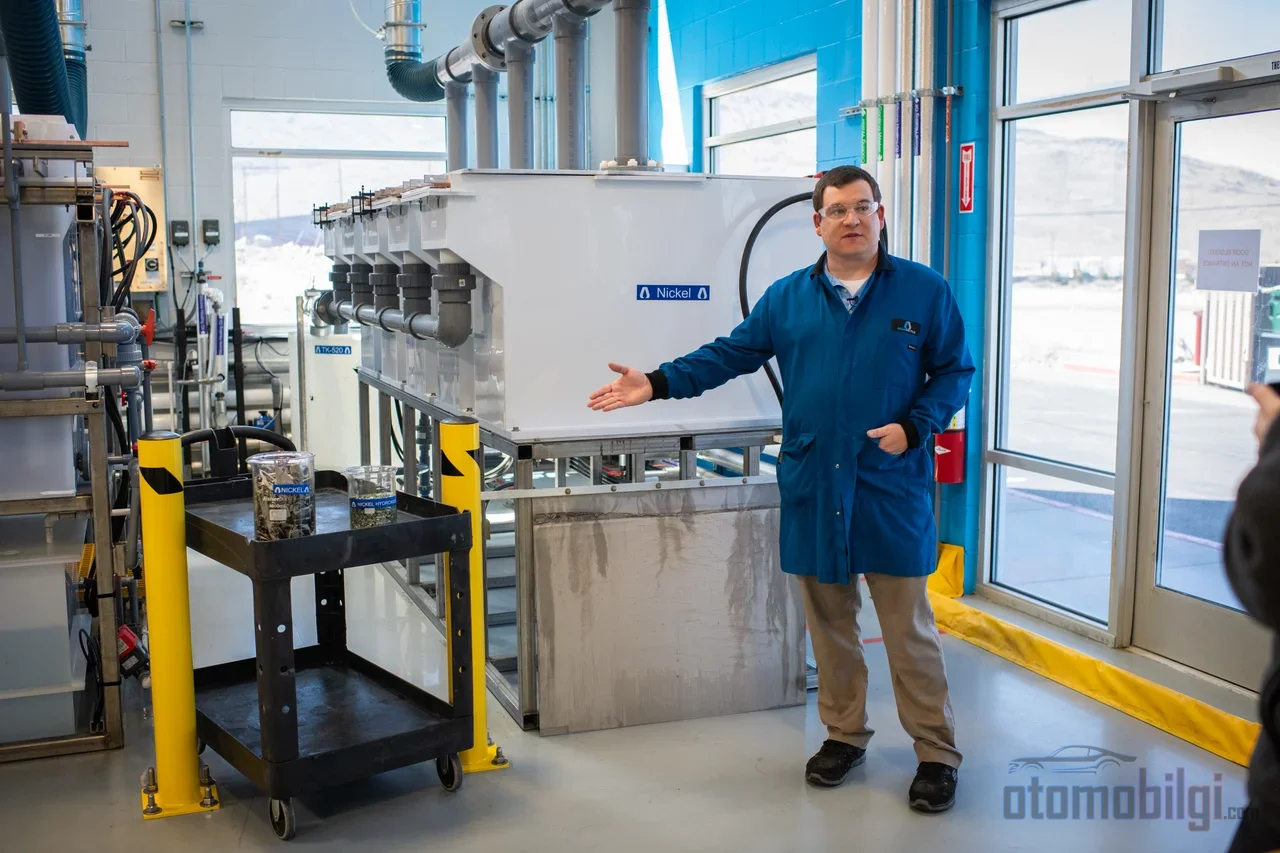
Hydrometallurgy uses aqueous chemistry instead of heat: the cathode material is dissolved in a solution containing acid or base, and the metals are separated one by one. The process consists of three main stages: leaching (dissolution), solution purification, and metal recovery. The most common leaching agent is dilute sulfuric acid; hydrochloric and nitric acids are also used. More environmentally friendly alternatives such as organic acids and deep eutectic solvents are being actively tested.
In the purification stage, solvent extraction, chemical precipitation, ion exchange, and filtration come into play; solvent extraction is particularly critical in the isolation of cobalt and nickel. In the final step, electrowinning yields metals with purity above 99%. For metals not suitable for electrowinning, methods such as pH-adjusted precipitation, crystallization (lithium carbonate is recovered this way), and cementation are used.
The results speak for themselves: this process, which can operate below 100°C, can achieve recovery exceeding 98% for copper, nickel, and lithium. Commercial facilities report recovering an average of 95% of nickel, cobalt, lithium, and copper from end-of-life EV batteries; some facilities produce nickel-cobalt-manganese with purity above 99.5%, making the material directly usable in new cell production. The United Nations describes this method today as the most environmentally friendly battery recycling technology available. More than 95% of global recycling capacity already consists of hydrometallurgical facilities. Closed-loop water systems are also becoming widespread; many facilities operate without producing wastewater, keeping water and cathode material in circulation.
The Two Methods Side by Side: Where Are the Differences?
| Criterion | Pyrometallurgy | Hydrometallurgy |
|---|---|---|
| Basic mechanism | Roasting, smelting, refining | Leaching, purification, metal recovery |
| Temperature | 1200-1600°C and above | Below 100°C |
| Lithium recovery | None (goes to slag) | Can exceed 98% |
| Flexibility | Chemistry-independent, mixed streams | Requires processed material |
| Direct emissions | High (graphite, electrolyte burned) | Negligible level |
| Global capacity share | Limited | More than 95% |
The comparison should not lead to the conclusion that pyrometallurgy is unnecessary. The most efficient approach is usually a combination of the two methods: pyrometallurgy reduces mixed and dirty waste into a rough valuable intermediate product, while hydrometallurgy purifies this intermediate product and converts it into final metal. Many large facilities today operate exactly this hybrid chain.
Direct Recycling: One Step from Cell to Cathode
The next-generation approach refuses to reduce the material down to its component elements. Direct recycling, renews the material by preserving the engineered structure of the cathode and anode: through processes such as lithium supplementation (relithiation), a worn cathode is converted back into battery-grade material. Three main strategies are defined for the cathode: solid-state sintering, solution-based regeneration, and molten salt method; chemical and electrochemical relithiation are among the other techniques applied.
The logic behind this approach is measurable: compared to conventional methods, it requires 80-90% less energy and, because it does not perform molecular-level decomposition, it produces the least waste. On the commercial side, processes that convert black mass directly into battery-grade cathode precursor active material (pCAM) within approximately 12 hours are being introduced today. Single-step direct recycling methods have also recently come to the fore; the goal is to valorize materials without fully reducing them to their chemical components.
The method's biggest constraint is operational: it can efficiently process only a single battery chemistry at a time and requires homogeneous feedstock. In the real world, the scrap arriving at a facility is mixed - NMC, LFP, and packs from different manufacturers meet at the same output. For this reason, automatic chemistry identification and sorting systems are considered a prerequisite for direct recycling. The U.S. Department of Energy's ReCell center is focused on bringing the method to commercial scale with its work on disassembly cost, automatic sorting, and cathode renewal. The market is still very small today: the direct recycling market is estimated to be at a level of approximately 34 million dollars in 2026. The positioning emphasized at Fraunhofer's second Battery Direct Recycling Conference in 2026 also fits this framework: the method will complement established methods rather than replace them.
Cleaner than Mining? A Cost and Carbon Comparison
Recycling's true rival is ore mining, and this comparison is measurably clear. Stanford's industrial-scale life cycle analysis reveals that recycling has a significantly lower environmental impact in recovering critical metals than primary mining: in comparisons, 61% less carbon, 83% less energy, and 79% less water consumption stand out. This directly reflects the environmental cost of metal extracted from a cell rather than metal extracted from a well.
The economic side reads similarly. While the production cost of battery cells is at a level of approximately 95 $/kWh , the cost of recycling is below 9 $/kWh remaining; in other words, recycling reduces the environmental impact of cells without disrupting the total cost structure. The scale of the potential is also ambitious: in a scenario where all the lithium, cobalt and nickel in end-of-life EV batteries are recovered, annual savings are estimated to reach 25 billion dollars by 2040.
Why Is Recycling Capacity Lagging Behind EV Sales?
The answer to the question largely lies in the calendar. The lifespan of an EV battery in a vehicle is around 12 years ; the big sales wave of the mid-2010s has not yet reached the end of its life. In other words, the volume of scrap batteries that today's facilities need to process is still small compared to the future volume. Models reflect this reality: recycling's contribution to material supply is calculated to be able to accelerate only after the first large EV generation reaches the end of its life, i.e. after 2040, and from that point on to meet 50-100% of battery material demand. Recovery rates for nickel-cobalt-manganese are also projected to rise from today's 30-45% range to 50-100%, depending on the chemistry.
There is a striking contrast in this picture: while 99% of lead-acid batteries are recycled in the USA, the global recycling rate of lithium-ion batteries, whose economic value is two to ten times higher, remains in the 2-47% range. The secret of success on the lead-acid side is a collection and processing network that has matured over decades; on the lithium-ion side, this infrastructure is still under construction. Meanwhile, it should be noted that the statement "only 5% of EV batteries are recycled" is a widespread claim circulating on the internet, while some analyses assess the global rate at around 59% - the difference stems from which battery flows (production waste, end-of-life packs, damaged packs) are included in the count. The common ground is this: the rate is low under any definition, and a serious wave of investment is needed to close the growing capacity gap.
The End of the Chain: New Cell, Old Metal
The entire recycling process targets a true closed loop: the nickel, cobalt and lithium extracted from end-of-life packs are purified and then processed into new cathode material, which enters the production of new cells. Today, facilities over 99.5% purity metal recovery is possible; in other words, yesterday's cell can become the raw material for tomorrow's cell. New approaches such as regenerative electro-hydrometallurgy are expected to make this cycle even cleaner by using electric current as a catalyst instead of chemical additives. As battery chemistries diversify and first-generation packs reach the end of their lives, recycling will become a material source independent of mining - with the technical foundations ready today.
Sources
- How Advanced Battery Recycling Technology Works
- Hydrometallurgy and Pyrometallurgy Battery Recycling
- Hydrometallurgical Recycling Process: Steps, Benefits, Challenges
- A Study on the Battery Recycling Process and Risk Estimation
- A Systematic Review on Lithium-Ion Battery Disassembly
- Life cycle comparison of industrial-scale lithium-ion battery recycling
- Recycling lithium-ion batteries delivers significant benefits
- Costs, carbon footprint, and environmental impacts of battery recycling
- Battery recycling and critical material demand in electric mobility
- Understanding How EV Battery Recycling Can Address Future Mineral Supply Gaps
- Direct recycling of lithium-ion battery materials
- Recycling batteries necessary to meet growing EV demand
- What share of lithium-ion batteries are recycled?
- 2nd Conference on Battery Direct Recycling