How Did LFP Batteries Get So Cheap?
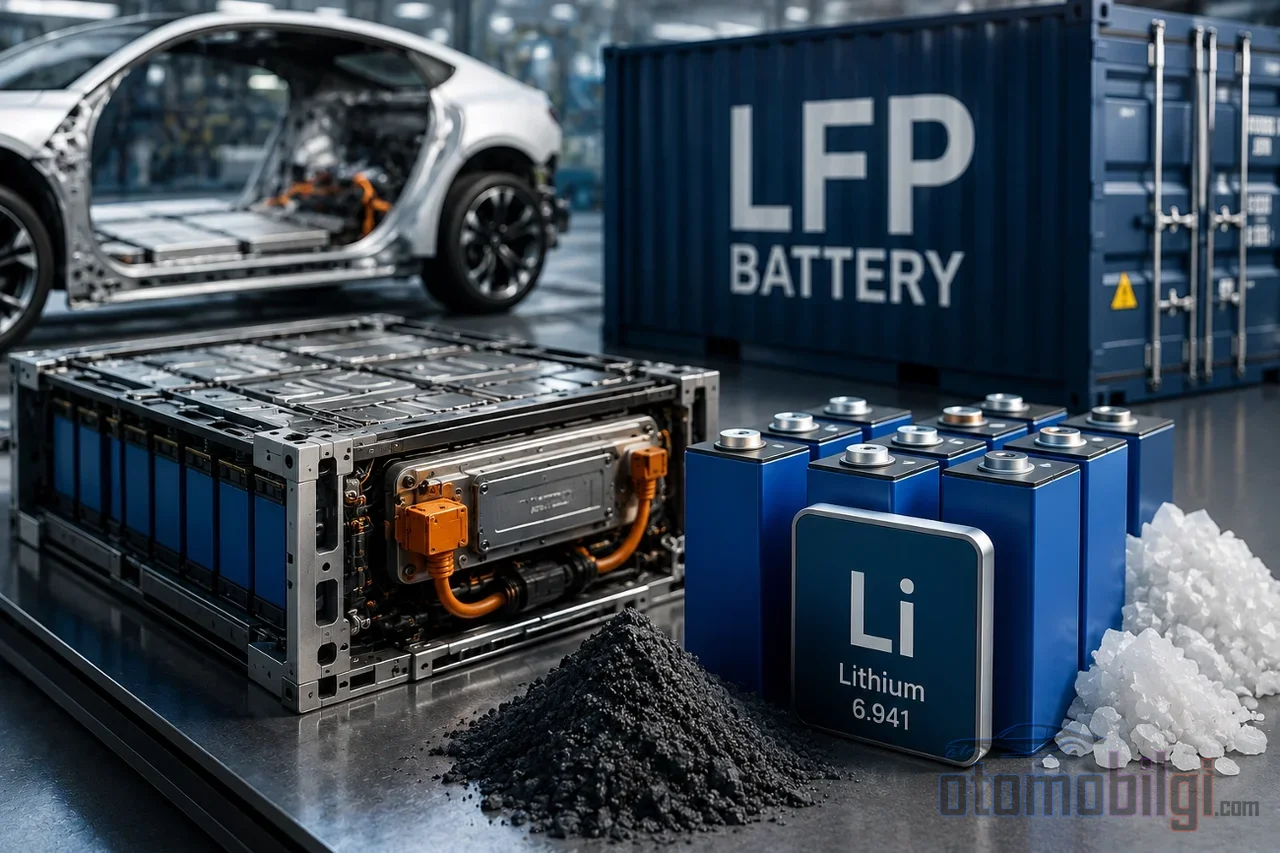
Lithium-iron-phosphate, or LFP, was a second-class chemistry in the eyes of most designers a decade ago because of its weak energy density. Today, that same chemistry shows up in almost all stationary storage installations and in a growing number of electric cars. So how did a battery chemistry get this cheap this fast? The answer lies not in a single breaking point; it lies in several conditions coming into play at the same time, ranging from raw material choice to manufacturing scale in China, and from cathode processing to the jump in energy density.
Why LFP is cheaper than NMC: The chemistry's direct effect on the economy
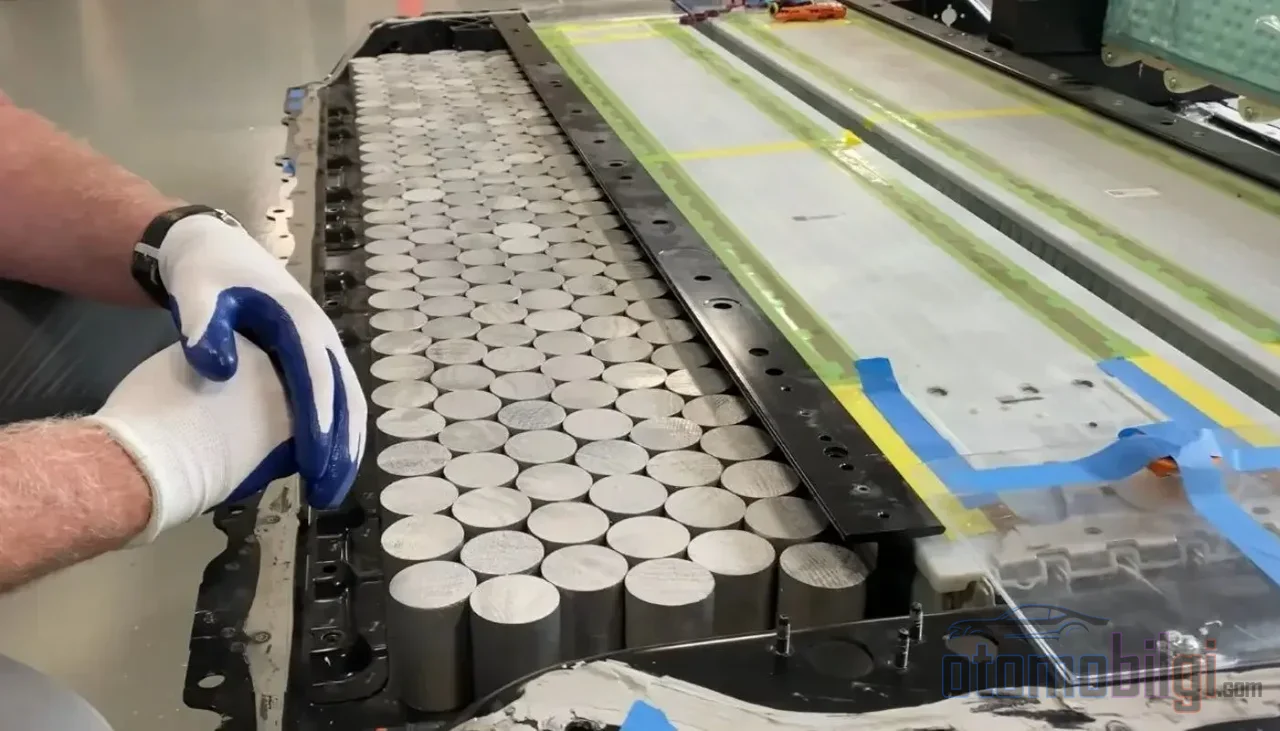
The foundation of the cost decline lies in the chemistry itself. The cathode of an LFP cell contains no nickel or cobalt; it contains substances abundant in the Earth's crust with predictable prices, such as iron and phosphate. NMC cells, on the other hand, contain nickel, cobalt and manganese; each of these is among the most expensive and most volatile links in the supply chain. This difference creates a direct price disparity per chemistry.
The figures show this clearly. When global average pack prices for 2025 are broken down by chemistry, LFP packs came in at an average of $81/kWh, while NMC packs stood at $128/kWh. The difference is roughly 37%. The same picture is visible in the broader context as well: stationary storage packs fell to $70/kWh, becoming the cheapest segment for the first time, and LFP has a large share in this decline.
It should also be added that cost is not just about raw materials. In a mature cell factory, the largest line item is materials; cathode active material accounts for more than a third of cell cost in nickel-based chemistries. On the LFP side, about 85% of cathode production cost already comes from raw materials; so the raw material advantage is reflected almost one-to-one in cathode cost.
Highlights
- LFP packs average $81/kWh; NMC packs $128/kWh - a difference of about 37%.
- The lowest observed LFP cell price is $36/kWh, and $50/kWh at pack level.
- More than 90% of stationary storage installations in 2025 were built with LFP.
- CATL's Qilin series LFP cell reached an energy density of 205 Wh/kg.
- Twingo E-Tech entered the A-segment with its LFP battery offering 263 km of WLTP range and a version priced below €20,000.
Economies of scale and excess capacity: The real engine of the price
The raw material advantage is old news; what explains the leap of the last two years is the production side. Price analysts attribute the 2025 decline to three factors: excess cell manufacturing capacity, fierce competition, and manufacturers' rapid shift to LFP. What is striking is that this decline happened while metal prices were rising. In other words, the cheapening came not from the market, but from the factories.
China is at the center of this picture. The country produces far more cells than its domestic demand; its annual cell capacity of approximately 557 GWh for stationary storage is about twice the segment's global demand. This dominance in LFP production is of a scale that could meet nearly all global demand. Excess capacity has squeezed margins so much that some manufacturers are selling at below the profit line or with zero margin. This also brings an important warning: some prices seen in surveys may be below the production cost. Price does not always reflect the cost base.
Cathode production processes: Fine engineering that lowers the cost per kilogram
The second lever after raw materials is how the cathode material is produced. In recent years, three developments stand out in this field. First, reducing the production scrap rate and energy consumption; energy-intensive steps such as drying and dry rooms occupy a significant place in the cost table. Second, the comparison of processes known as dry electrode production with conventional LFP cathode production in terms of cost and carbon footprint; studies examining four different processes show that dry production can improve both items. Third is the development of low-cost alternative production routes such as continuous-flow cathode synthesis; publicly funded projects are being carried out in this direction.
A geographic advantage is added to these. The fact that iron resources are cheap and accessible in China makes LFP production structurally more cost-effective for that country. In other words, the cost advantage lies not only in the chemistry but also in the location of the supply chain.
Energy density leap: The 205 Wh/kg threshold and the CATL effect
The classic weakness of LFP was energy density; NMC always led in this area. Recent generations have closed this gap considerably. In CATL's Qilin series, LFP cells have reached the 205 Wh/kg level; in the same series, NMC is at 265 Wh/kg. 205 Wh/kg went down in the record books as the first LFP chemistry to exceed the 200 Wh/kg threshold and formed the basis of a pack that achieved the 1,000 km range target at system level; such a pack of about 80 kWh weighs around 400 kg.
CATL's multi-chemistry system, with an energy density of 230 Wh/kg, promises more than 15% additional range compared to a single LFP system without increasing the pack weight. The economic significance of these developments is this: it is becoming possible to design a smaller, and therefore cheaper, LFP pack for the same range. As energy density increases, the cost advantage is preserved while the disadvantage narrows.
| Chemistry / System | Energy density | Typical use |
|---|---|---|
| LFP (newest generation) | 205 Wh/kg | Passenger EV, stationary storage |
| NMC (Qilin series) | 265 Wh/kg | Long-range EV |
| Sodium-ion (newest) | 175 Wh/kg | Commercial vehicle, entry segment |
| Multi-chemistry system | 230 Wh/kg | Range-weight optimization |
Market share and expansion into the cheap EV segment
The market reflection of the cost decline is read on two fronts. In stationary storage, LFP is now effectively the standard; in 2025 it accounted for more than 90% of global stationary battery storage installations, which corresponds to approximately 40% of all LFP uses. The market size also grew from 42.2 billion dollars in 2025 to 47.7 billion dollars in 2026, and is projected to reach 116.8 billion dollars in 2033; annual compound growth of 13.6%.
The passenger car side paints a regional picture. In Europe and North America, EV packs are in the 121-131 $/kWh band on average; in China, it is 84 $/kWh. In the US, LFP's use in EVs has declined, while it has surged in grid storage. But the rise of LFP in the cheap EV segment is a global reality: Twingo E-Tech, with an entry price under €26,300 in the A-segment, offers 263 km of WLTP range with a 27.5 kWh LFP battery, its Evolution version dipping below €20,000. The Jogging version of the Renault 4 also sacrifices about 5 km of range for a cheaper 37 kWh LFP battery. The transition of manufacturers like Tesla, BYD and Ford to LFP shows that the chemistry is moving beyond the entry segment.
Will LFP always remain cheaper? The question of 2026
The story told so far shows a linear cheapening trend; but 2026 is testing that line. Lithium carbonate prices bottomed out at around $8,000 per tonne in mid-2025, then fluctuated in the $21,000-25,500 band on the Chinese spot market in the first half of 2026; in other words, it doubled within a year, yet still remains well below the 2022 peak. On top of this, China's change to its battery export framework and the zeroing of the export VAT rebate could gradually add more than 20% in total extra cost to Chinese-sourced cells and packs. Forecasts point to a cumulative 15-17% increase for 2026.
This picture raises two questions. First, with the end of VAT incentives, LFP's Chinese cost advantage is tightening; on a delivered-cost basis, NMC could become relatively competitive again in applications where energy density is decisive. Second, sodium-ion chemistry has approached LFP at 175 Wh/kg and is an aggressive player on price; it carries the potential to become an alternative to LFP, especially for commercial vehicles and the entry segment.
Still, LFP's fundamental advantages are structural: no cobalt or nickel dependency, a high thermal runaway threshold of around 270 °C, and a cycle life of 4,000-10,000 cycles offering up to twice the service life of NMC. Although there may be dips in the price line in the short term, the chemistry's cost base is still more solid than its rivals'. The short answer to why LFP has become so cheap is actually here: abundant and cheap raw materials, margins squeezed by overproduction capacity, improved cathode production, and engineering that raises energy density to 205 Wh/kg - all four at once. Even though the price decline may stall, no chemistry that could replace this base is yet visible on the market.
Sources
- Lithium-Ion Battery Pack Prices Fall to $108 Per Kilowatt-Hour - BloombergNEF
- Electric vehicle batteries - Global EV Outlook 2026 - IEA
- Battery Cost per kWh in 2026: What Drives It - BatteryMBA
- Battery price decline - Our World in Data
- Innovative Technology - CATL
- CATL presents an LFP battery enabling a 1000-kilometre range - electrive
- Renault Twingo E-Tech electric: Behind the wheel – Renault Group media
- Exploring sustainable lithium iron phosphate cathodes – ScienceDirect
- Lithium Iron Phosphate Battery Market – Grand View Research
- LFP vs NMC technical comparison – BSLBATT