Why Are Cobalt and Nickel Still Critical in Battery Chemistry?

When looking at an electric vehicle's range brochure, we don't think about the fate of a few hundred grams of metal inside the cathode; yet cobalt and nickel are both the strongest cards of the lithium-ion cell and its most vulnerable points. While LFP packs are on average more than 40% cheaper per kilowatt-hour than NMC, high-performance vehicles still cannot give up nickel-rich cathodes. The answer to this paradox lies hidden in the job these two metals do in the cathode chemistry.
What Does Cobalt Actually Do at the Cathode?
In NMC cathodes, nickel provides the energy and manganese maintains structural stability; but cobalt's role could not be fully defined for a long time. Today's picture is clearer: cobalt improves the electronic conductivity of the cathode material, enhancing fast charging and high current draw performance. It also contributes directly to thermal stability; in cathodes where cobalt is reduced, the risk of thermal runaway, which overheating can trigger, increases.
An electrochemistry study published in 2026 concretized cobalt's function: in a cathode with a 60% nickel ratio and no cobalt, forming a cobalt-rich surface stabilized with cobalt at the 5% Co level delivers performance comparable to commercial mid-nickel cathodes that resort to multiple coating elements. In other words, cobalt works as a coating and doping element on the surface of the cathode grains; a kind of built-in insurance. This surface positioning also has a delicate temperature window: when a second annealing step stays below 850 °C, the cobalt-rich surface is preserved, while at 900 °C the surface cobalt is lost.
And this is exactly where NMC chemistry's known weakness begins. The structurally weak thermal stability of NMC cathodes and the oxygen release it triggers can ignite exothermic side reactions and are seen as the main safety threat of large-scale applications. The threshold values are clear: electrolyte decomposition begins at approximately 130 °C, while the cathode's release of oxygen from its structure starts at approximately 180 °C. During fast charging, temperature gradients of 5-15 °C form inside the cell; at high discharge rates, local hot spots can exceed 60 °C. Cobalt's stabilizing surface role serves precisely as this thermal buffer.
Nickel: The Key to Energy Density and Its Price
Nickel's job is more showy: capacity. As the nickel ratio increases within the stable operating window, the cathode can store more lithium and offer a higher average voltage - for example, the NCA family operates around 3.7 V. Since energy density is simply capacity times voltage, high-nickel cathodes create a distinct range advantage at the cell level. In advanced NMC versions, the nickel share can now approach 90%.
Another appealing aspect of nickel is economic: when it partially takes cobalt's place, cathode cost drops, and nickel is a far more abundant metal than lithium. But is there no downside to this picture? There is - and it is a downside agreed upon in the engineering literature: as the nickel ratio rises, the cathode loses cycle life, rate capability, and thermal stability. A higher nickel content increases energy density, but it does so at the cost of stability loss and increasing processing challenges. High-nickel formulations such as NMC 811 are precisely the product of this equation: longer range, more demanding thermal management, and a shorter lifespan curve.
This trade-off explains the roles of both metals. Formulations that want to remove cobalt entirely have to compensate for cobalt's thermal insurance in other ways; those that keep cobalt live with cost and supply risks. Even though the code name is the same, NMC622 and NMC811 are two chemically very different materials.
NMC or LFP: The Numerical Table of Comparison
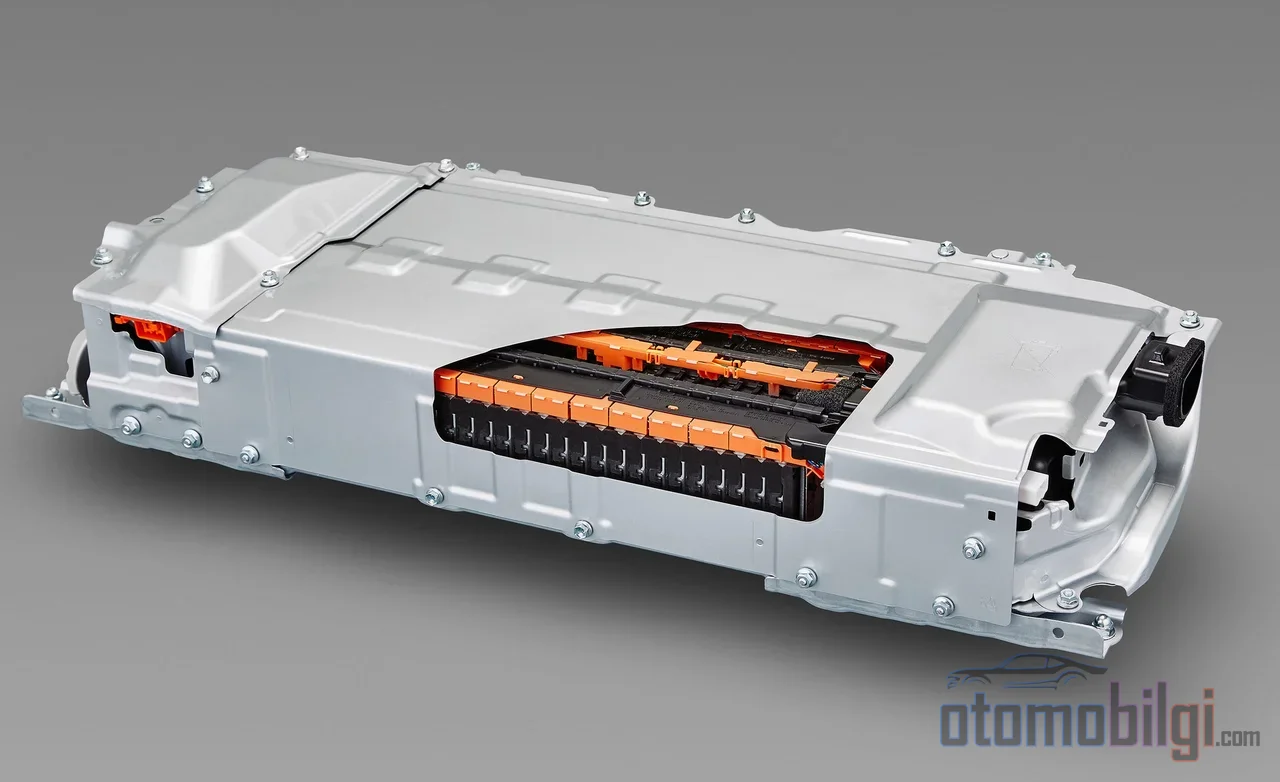
The fastest way to become free of cobalt and nickel is to switch to a chemistry that does not use these metals at all. The rise of LFP (lithium iron phosphate) is based precisely on this. To sum up the trade-offs between the two chemistries in a single table:
| Property | NMC | LFP |
|---|---|---|
| Energy density | 150-250 Wh/kg | Lower |
| Cycle life | Shorter | Roughly 2-4x longer |
| Cobalt / nickel content | Contains both | Contains none |
| Cost | Higher | Roughly 80-100 USD/kWh |
| Thermal runaway onset | Earlier | Later |
| Typical use | Long-range, high-performance segment | Fleets, buses, marine applications |
NMC still dominates in segments that require energy; this continues because in long-range electric vehicles, range comes directly from energy density. LFP, on the other hand, has become the standard in applications where safety, lifespan, and cost come to the fore. As of 2025, LFP's share of battery packs has exceeded 55%, and the IEA's 2026 global electric vehicle report confirms that LFP packs have become more than 40% cheaper on average per kWh than NMC. The honest technical verdict is also simple: neither one is definitively superior; the trade-off is struck between energy density and cost, cycle life, and safety.
Key Takeaways
- Cobalt provides thermal stability and rate performance as a coating and additive element on the cathode surface; for NMC640, a minimum of 5% Co is found to be sufficient.
- Electrolyte decomposition starts at ~130 °C, and cathode oxygen release at ~180 °C.
- In 2025, LFP packs were on average more than 40% cheaper per kWh than NMC; their share exceeded 55%.
- LMFP closes the gap between the two camps by offering an energy density 10-20% higher than LFP.
Supply Risk: The Price of Cobalt Tied to a Single Country
The more valuable cobalt's role in the chemistry, the more fragile the supply side. 73% of the global cobalt supply comes from a single country, the Democratic Republic of the Congo; export quotas and political instability turn this dependency into price volatility. Indonesia raising its share to 14% with a hydrometallurgical production method called HPAL somewhat softens the monopolization, but geographic concentration continues.
Alongside supply risk, there is an ethical dimension. Child labor in small-scale artisanal mining, human rights violations, inadequate safety conditions, and health risks from exposure to cobalt dust are all documented. For electric vehicle manufacturers, this is not merely an image problem: while securing the cobalt supply they need, managing ESG risks has become a central item in supply chain-focused corporate assessments. The demand side is also tracing an exhausting curve; the expectation that cobalt demand will grow not by 58% but by 585% between 2017 and 2050 becomes even harsher with growth exceeding 1000% in the 2 °C climate scenario. These two curves - supply fragility and a demand explosion - are the real driving force pushing the industry toward metal-free batteries.
How Are Manufacturers Transitioning to Cobalt-Free Chemistries?
De-risking strategies are advancing along three tracks. The first is the most direct one: a mass transition to LFP, which contains no cobalt or nickel. On its own, this significantly reduces cobalt demand; the battery chemistry mix stands out as the dominant factor in the reduction of cobalt use per vehicle - the main variable behind savings of 7.2 kg per vehicle in China and 3.6 kg per vehicle in the EU is the chemistry choice, not manufacturing efficiency.
The second track is closing LFP's energy density gap. LMFP (manganese-doped lithium iron phosphate) fits exactly into this gap: while offering 10-20% higher energy density than conventional LFP, it preserves LFP's safety profile and cobalt-free supply chain. Rechargeable LMFP cells are measured in the 160-180 Wh/kg range; it closes most of the performance gap without raising costs. Blend strategies that mix NMC and LFP in a single pack follow the same logic: balancing NMC's energy density with LFP's safety and cost advantages.
The third track is more ambitious: new cathodes that contain no cobalt at all. It is estimated that in cobalt-free chemistries, cathode material cost can be reduced by up to 60% compared to NMC; the market for cobalt-free high-manganese cathode precursor chemicals rose from $1.74 billion in 2025 to $2.08 billion in 2026 and is forecast to reach $7.28 billion. Among the candidates are organic-based cathodes that require no rare earths and single-crystal high-nickel cathodes; in July 2025, a new method substituting nickel and cobalt in the battery was announced. As the US Department of Energy has also emphasized, moving away from high cobalt content requires fine-tuning all performance characteristics of the new cathodes - meaning this is not a material swap, but a re-engineering process.
A common misconception also needs correcting: the assumption that solid-state batteries will completely free us from these metals is misleading. Solid-state architecture changes the electrolyte; on the cathode side, cobalt, nickel, and manganese continue to be used in a similar manner. Manufacturers such as Toyota, BMW and Hyundai are targeting limited commercial distribution between 2026 and 2028, but this is not expected to reset cathode metal demand. On the recycling front, examples of manufacturers producing batteries with 100% recycled nickel and cobalt are creating a secondary source that could gradually reduce the need for primary supply.
So What Is the Future of Cobalt and Nickel?
A clear answer to the question of this article: cobalt and nickel are still critical, because what they do in the chemistry - energy density, fast-charging performance and thermal stability - cannot be fully replaced by any alternative available today. Nickel remains central to the technical requirements of the long-range electric vehicle; as for cobalt, while its presence is debated, every cathode formula pays the cost of its absence in some way. The purification process is real and measurable: formulas dropping to the 5% Co threshold, cobalt-free calculations showing 60% cost savings, and LFP's share exceeding 55% are proof of this. But this process is taking shape not as putting cobalt and nickel into the chest of history, but as concentrating them in fewer, higher-performance and more easily recycled cells. The expected picture in the medium term is layered: cobalt-free LFP and LMFP in mass-market and economy segments, low-cobalt high-nickel NMC in long-range segments, and limited solid-state distribution at the end of the 2020s. Cobalt and nickel are losing their employment in battery chemistry; but they are not being fired.
Sources
- Enhancing The Performance of Medium Nickel Cathodes via Controlled Cobalt Rich Surface Coating - IOP J. Electrochem. Soc. (2026)
- The Role of Cobalt and Manganese for the Safety of Ni-Rich NMC - IOP ECS Meetings Abstract
- Thermal Stability Improvement in Nickel Manganese Cobalt EV Batteries - GreyB
- The future nickel metal supply for lithium-ion batteries - RSC Green Chemistry
- Electric vehicle batteries - IEA Global EV Outlook 2026
- Battery chemistry mix and cobalt reduction - Nature (2026)
- LFP, NMC and Sodium-ion Compared (2026) - Battery.mba
- Reducing Reliance on Cobalt for Lithium-ion Batteries - US DOE energy.gov
- Responsible sourcing of cobalt - Umicore
- New method replaces nickel and cobalt in battery - TechXplore (July 2025)