Why Are QuantumScape and Solid-State Batteries Delayed?
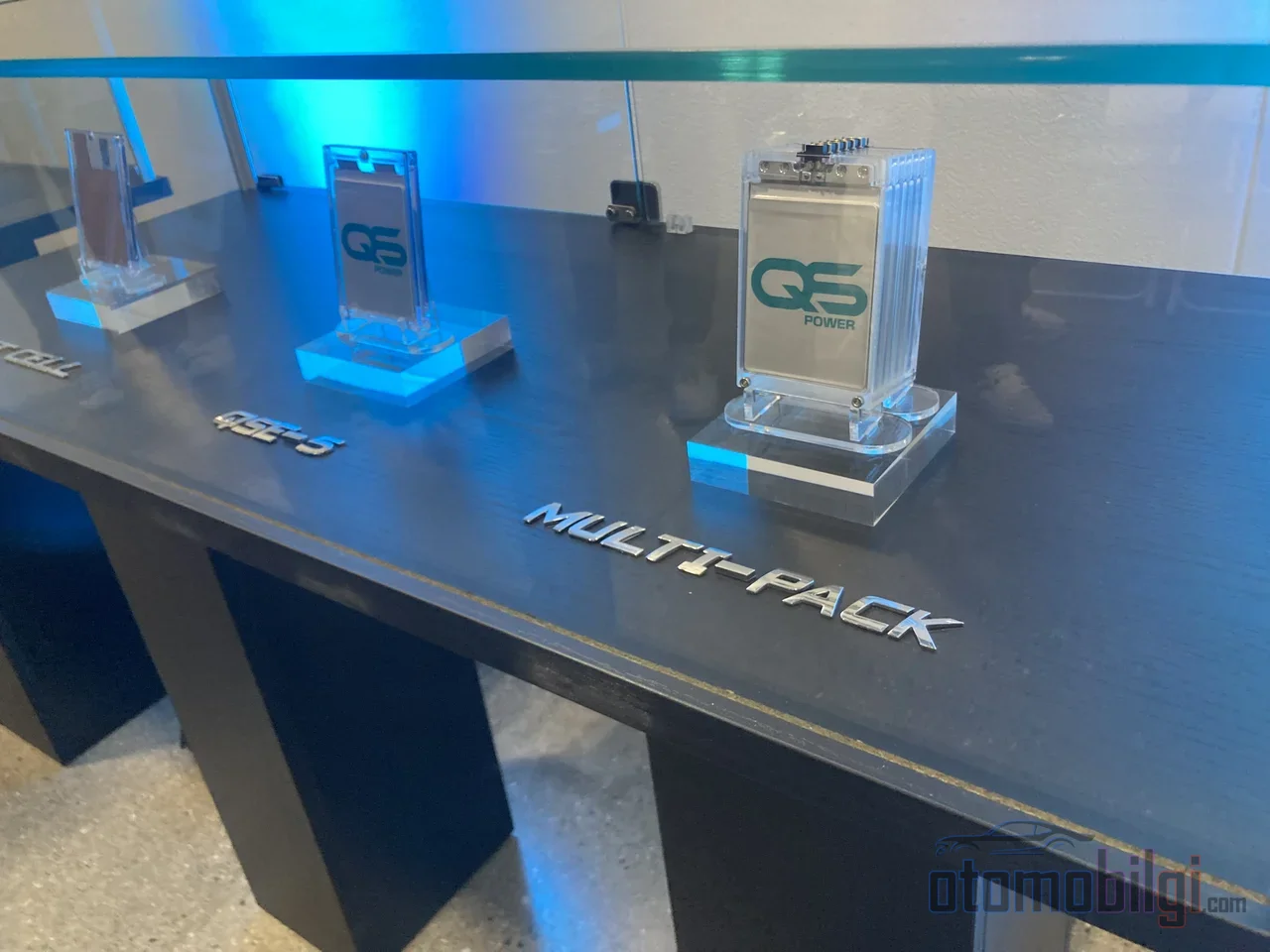
By the fall of 2026, the solid-state battery dossier presents a striking contradiction: In Taiwan, a facility announces series production, QuantumScape plans a new cell line with 100 MWh capacity, and Toyota and Panasonic have been parading their prototypes for years. Yet in the same week, QuantumScape's announcement that it is stepping away from its own GWh-scale production plans reveals the other side of the story. The distance between promise and a real commercial product has still not been closed, and the reason for that distance is not marketing - it is physics.
The answer to why the solid-state battery still is not turning into a scalable product lies hidden in three concrete mechanical problems: dendrite growth, contact loss at solid-solid interfaces, and the cost of achieving consistency on the production line. On this page, we examine these three obstacles one by one, along with what companies' announcements actually mean.
What Does the Solid-State Battery Promise?
A solid-state battery transports lithium ions between electrodes using a solid electrolyte instead of a liquid or gel one. This structural change offers two major gains: a chemistry considerably less prone to thermal runaway and fire risk than lithium-ion, and the potential for much higher energy density. Ceramic separator-based designs, working together with a lithium-metal anode, aim to advance both energy density and fast-charging performance.
There are also measurable targets on the table. ProLogium's gigawatt-scale facility in Taiwan announced that it has entered series production with TUV-verified gravimetric energy density of 381 Wh/kg and volumetric energy density of 903 Wh/L; for the next generation, an energy density of up to 400 Wh/kg and a charging target of reaching from 5 percent to 80 percent capacity in 6.4 minutes were announced. By contrast, a mature lithium-ion cell is still cheaper, easier to produce, and more predictable in terms of cycle life. Although some solid-state designs carry a lifetime potential of over 10,000 cycles, due to the lack of development in component optimization they can still deliver cycle life below lithium-ion in the real world.
Highlights
- ProLogium announced series production with an energy density of 381 Wh/kg; mass-market scale is still nowhere in sight.
- QuantumScape is planning a 100 MWh cell line; its target for the start of production is 2028.
- In July 2026, QuantumScape stepped away from its own scaled production and turned toward a licensing model.
- The production cost premium of solid-state cells is at a level of 3-5 times compared to lithium-ion.
- Lithium-sulfur solid-state designs can require formation pressures of over 350 MPa.
Why Are Solid-State Batteries Still Not Being Mass-Produced?
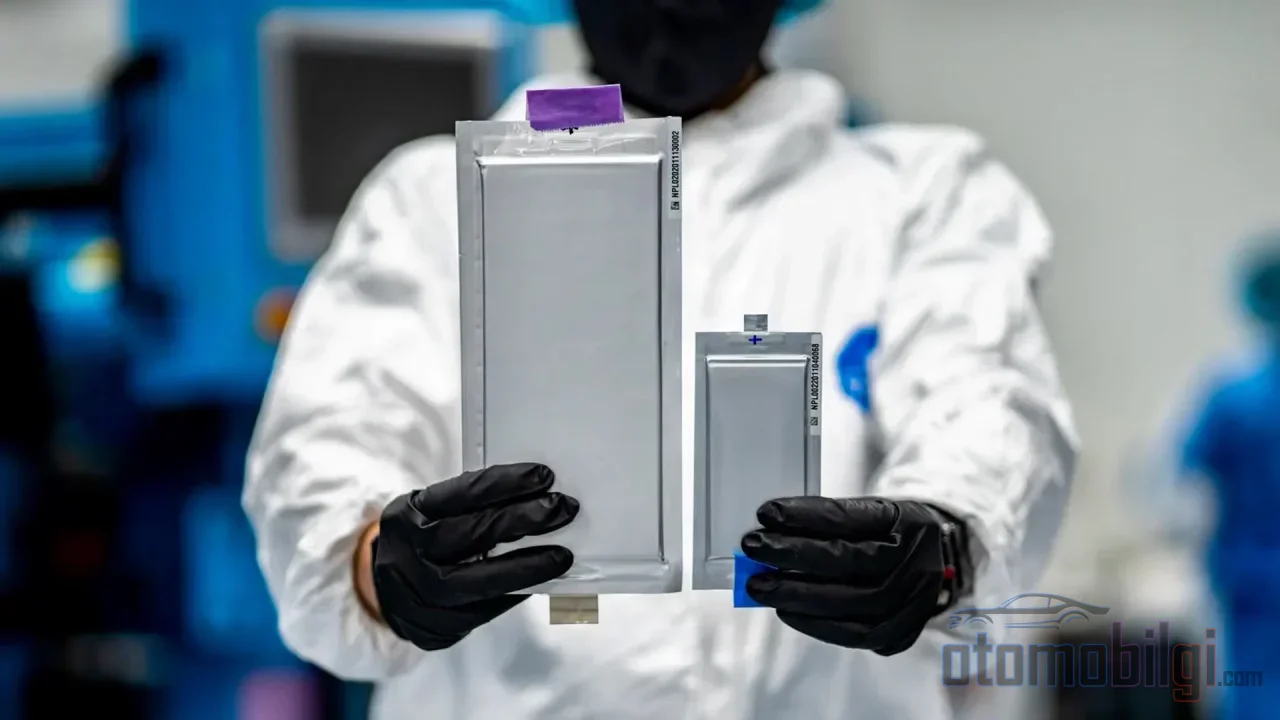
The short answer comes down to three headings: weak physical contact between solid components, high production cost, and the difficulty of carrying laboratory results to gigawatt scale. A liquid electrolyte fills the microroughness on the electrode surface by wetting it spontaneously; a solid electrolyte cannot do that. The two surfaces must make atomic-level contact, and maintaining that contact throughout the cycle is the cell's weakest link. Most companies are therefore still at the validation stage; and the majority of products reaching the road are not fully solid, but semi-solid designs.
Dendrite Growth: The Root of the Short Circuit
Dendrites form when lithium deposits irregularly during charging, creating needle-like structures. When these structures grow through the electrolyte toward the cathode, they cause short circuits, capacity loss and safety risks. Dendrite growth, cited as the main problem preventing the widespread adoption of solid-state batteries, cannot be stopped despite solid barriers such as ceramic separators; it has even been shown that they can grow at stress levels far lower than expected. A January 2026 study from Brown University clarifies why dendrites are identified as one of the biggest problems of next-generation solid-state batteries: running the cell realistically at high current rates triggers dendrite formation, and when combined with the interface, the problem multiplies.
Interface Resistance and Mechanical Instability
The interface resistance between the solid electrolyte and the electrode increases the cell's internal resistance, making operation at medium and high current rates more difficult. The problem is not limited to this: mechanical instability also appears in the form of lithium dendrite-related short circuits and interface separation (debonding). Throughout the cycle, the electrodes change volume; physical contact between the swelling and shrinking surfaces is lost and the ion transport channel weakens. The three fundamental challenges (dendrite formation, weak solid-solid interfaces and contact loss during cycling) must be solved simultaneously in the same cell. This is not a problem that can be overcome with a single invention; it means the joint optimization of materials, surface processing and cell design.
Pressure and Volume Change Problem
Some solid-state cells require continuous external mechanical pressure to keep components in contact. Lithium-sulfur solid-state designs have been measured to typically require stacking pressures above 350 MPa and cyclic stack pressures above 7 MPa. Adding a structure to an automotive battery pack that applies pressure at this level means both weight and cost; the claim of some approaches, such as QuantumScape, to operate at low pressure therefore carries strategic importance. Volume change during charge-discharge cycles is a separate issue as well: the lithium-metal anode swells and shrinks noticeably with each cycle, which constantly re-breaks the contact at the interface.
QuantumScape Timeline: The Distance Between Promise and Reality
QuantumScape's 2026 activity is intense: It was announced that a cell production line with a capacity of 100 MWh for artificial intelligence data centers, aviation and defense markets is planned for October 2026, and that the goal is to start production in 2028 through the partnership established with Muehlbauer Group. A multi-year joint research agreement was signed with Honda R&D in June 2026. The Cobra separator process entered base production, delivering roughly a 25-fold improvement in heat treatment speed; an agreement was established with Corning for the development and commercialization of the ceramic separator.
However, the other half of the picture is more meaningful: In July 2026, the company announced it was moving away from plans to manufacture solid-state batteries itself at scale, and the PowerCo partnership was updated to support cell development and validation over the following two years. Still at a pre-revenue stage, the company is evaluating multiple commercialization paths such as licensing, component sales, and joint ventures; in the company's narrative, projected revenue of approximately 242 million dollars is set for 2029, while the most conservative analyst estimates put it at only 26 million dollars. What stands out is that the initial commercial targets are not automotive, but niche, low price-sensitivity markets such as data centers, aerospace, and defense.
This shift is itself a data point: the move of a company that has been promising GWh-scale production for years from pilot scale to a licensing model shows the difficulty of scaling production in the most direct way.
ProLogium, Toyota, and the Industry's Actual Position
ProLogium stands out as a Taiwanese developer founded in 2006 and backed by Mercedes-Benz: The Gen 3.5 Lithium Ceramic Battery series entered mass production at a Giga-level facility, and UL Solutions testing is ongoing. This announcement is genuine progress; but on its own it does not mean mass-market commercialization. On the Toyota front, it is known that the first prototype was tested in 2021 and launch plans were announced for the first fully solid-state battery product; the road from the first prototype to a mass-produced car is still open, though. Solid Power continues to develop its technology built on the trio of lithium-metal anode, sulfide-based solid electrolyte, and NMC cathode. Sunwoda introduced a 400 Wh/kg polymer solid-state battery with a cycle life of 1,200 cycles under ultra-low pressure.
The overall picture is this: As of 2026, all fully solid-state commercial batteries are limited to pilot-scale tests and carry a production cost premium of around 3-5 times compared to lithium-ion. In the industry's own summary, solid-state batteries work; what is missing is low-cost, high-volume production for mass-market electric vehicles. Some forecasts predicted production volumes could reach GWh levels by 2027; the situation at the end of 2026 shows this forecast was optimistic.
Progress in Electrolyte Chemistry: Chloride and Sulfide Paths
The problem is not only scaling; the material itself is also evolving. While sulfide-based solid electrolytes stand out for their high ionic conductivity, chloride-based electrolytes are promising in terms of interface stability. Under the government-backed Battery500 program, solvent-free and sinter-free production methods are being developed for fully solid-state lithium-ion batteries targeting 500 Wh/kg; these kinds of process steps are critical for scalability, as they eliminate the costly heat treatment of the ceramic separator. Translating lab results to the pilot line and GWh scale remains the industry's most widely agreed-upon toughest obstacle.
When Will Solid-State Batteries Truly Be Ready?
The question can be reduced to this: why aren't solid-state batteries in mass production yet? Because the liquid electrolyte of lithium-ion does something for free on the production line: wetting the surfaces to ensure contact. In solid-state design, that same contact has to be built separately with an interface material that suppresses dendrite growth, operates at low resistance and low pressure, and can withstand volume changes throughout the cycle. Holding all four of these conditions simultaneously in the same cell is a joint exam for materials science and manufacturing engineering.
Expectation management is just as important. The products most manufacturers are promising within two years will, by the end of 2026, be either on pilot lines or in niche markets; and a date previously given by Toyota has not yet been met. Forecasts for widespread adoption point to 2030. Concrete steps such as ProLogium's mass production announcement and QuantumScape's 25-fold heat treatment improvement in the Cobra process are real; but these are not a breakthrough that solves the electric car's range and charging problems in one stroke - they are early milestones in a long scaling marathon.
The practical takeaway for the reader is this: when an electric car with fully solid-state batteries is unveiled, it is important to know that the cells inside have gone through years of validation and cost reduction. Until then, the real gains in range and charging speed will still come from mature lithium-ion chemistries.
Sources
- QuantumScape Announces Plans for 100 MWh Solid-State Battery Production Line
- QuantumScape Announces Agreement with Honda
- QuantumScape (QS) Updates PowerCo Program And Expands Its Battery Commercialization Efforts
- Cobra Separator Process Enters Baseline Production
- ProLogium Begins Mass Production of All-Solid-State Battery
- New strategy addresses dendrites - Brown University
- Why solid-state batteries keep short-circuiting - MIT News
- Deciphering Volume Changes in Li-S Solid-State Battery
- Global EV Outlook 2026 - IEA
- How solid-state battery technology is changing energy storage