The Four Barriers Limiting NCA Battery's Market Share
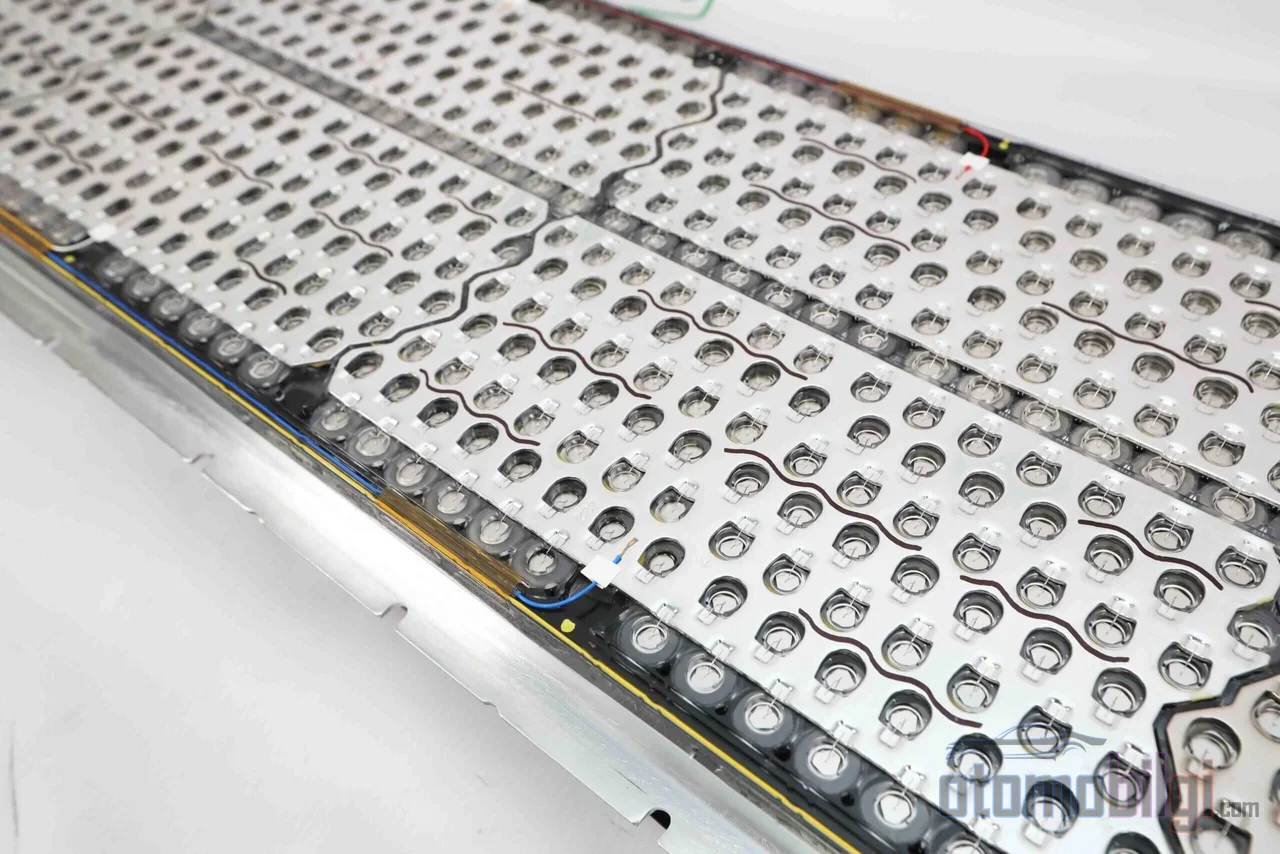
In the lithium-ion world, two names sit at every table: NMC and LFP. The rivalry between them is told along the axes of price, safety and range. But in the shadow of this duo, there is a third cathode chemistry: NCA, or nickel-cobalt-aluminum oxide. Since Tesla's early days, it has been the cell chemistry behind high-range electric vehicles, it still competes in the class with the highest energy density at the cell level, and yet it has remained behind the NMC family, in the hands of a narrow group of manufacturers. Why? The answer is not a single reason; it lies in the chemistry itself, the cost structure, and the critical point of the supply chain.
What Is the NCA Cathode and What Does Aluminum Do?
NCA is a layered lithium-ion cathode written with the formula LiNiₓCoᵧAl_zO₂. The typical composition weighs 80% nickel, 15% cobalt, 5% aluminum, and the crystal structure is arranged in the layered α-NaFeO₂ type (R3m space group) like NMC: lithium and the transition metals form separate planes between the oxygen layers. Lithium ions move between these layers during charging and discharging.
Each element has a clear role. Nickel is the redox-active main element and determines capacity; cobalt stabilizes the layered structure, preventing the displacement of lithium and nickel ions (cation mixing). The critical difference lies in the third element: aluminum. In NMC, manganese takes on the stabilizer role; in NCA, aluminum takes over this role. Aluminum is electrochemically inert and does not contribute to capacity. Instead, it works like a structural pillar: it strengthens the metal-oxygen bonds, regulates the behavior of the Ni-O bond, and raises the operating voltage. Its most tangible result is thermal: while exothermic decomposition in pure LiNiO₂ begins at approximately 200°C, the addition of aluminum pushes this threshold above 250°C.
The result is a cathode with a reversible specific capacity typically of 180-200 mAh/g (in the range of 150-220 mAh/g depending on composition and voltage window) and a nominal cell voltage of ~3.6-3.7 V. The same figure for LFP is approximately 170 mAh/g and ~3.2-3.3 V. The numbers alone do not tell much; the real difference emerges when it is carried to the pack level.
Highlights
- Typical NCA composition: 80% nickel, 15% cobalt, 5% aluminum
- Energy density at cell level of ~200 Wh/kg and above, exceeding LFP's ~160 Wh/kg
- Nominal voltage of ~3.6-3.7 V, at the same level as NMC
- Cycle life is the weak link: typically 500-1,500 cycles to 80% SoH
- Cathode production depends largely on Sumitomo Metal Mining and a limited number of specialized manufacturers
Energy Density Comparison: NCA, NMC and LFP

NCA's reason for existence can be summarized in one sentence: it is the lithium-ion chemistry that offers the best combination of energy density and power density. At the cell level, both NMC and NCA are in the ~200 Wh/kg class; current NMC cells are measured to reach up to 275 Wh/kg, while for NCA, values above 300 Wh/kg at the cell level are reported. LFP lags clearly behind in this race at roughly 160 Wh/kg. The higher nominal voltage also allows more energy to be drawn from the same volume.
When we put the comparison into a table, the table is clear, but there is also the other side of the coin:
| Property | NCA | NMC | LFP |
|---|---|---|---|
| Nominal voltage | ~3.6-3.7 V | ~3.6-3.7 V | ~3.2-3.3 V |
| Reversible capacity | 180-200 mAh/g (typical) | Similar class to NCA | ~170 mAh/g |
| Cell energy density | ~200 Wh/kg and above | ~200-275 Wh/kg | ~160 Wh/kg |
| Cost | LFP is more expensive than LMFP and NMC | Premium class | Most economical |
| Thermal behavior | More sensitive than NMC | More stable | Most tolerant class |
While NCA leads on the scoreboard, the market table says exactly the opposite. The solution to this contradiction lies not in chemistry's engineering notebook, but on the economics and manufacturing side.
Why NCA's Market Share Is Low: Four Obstacles
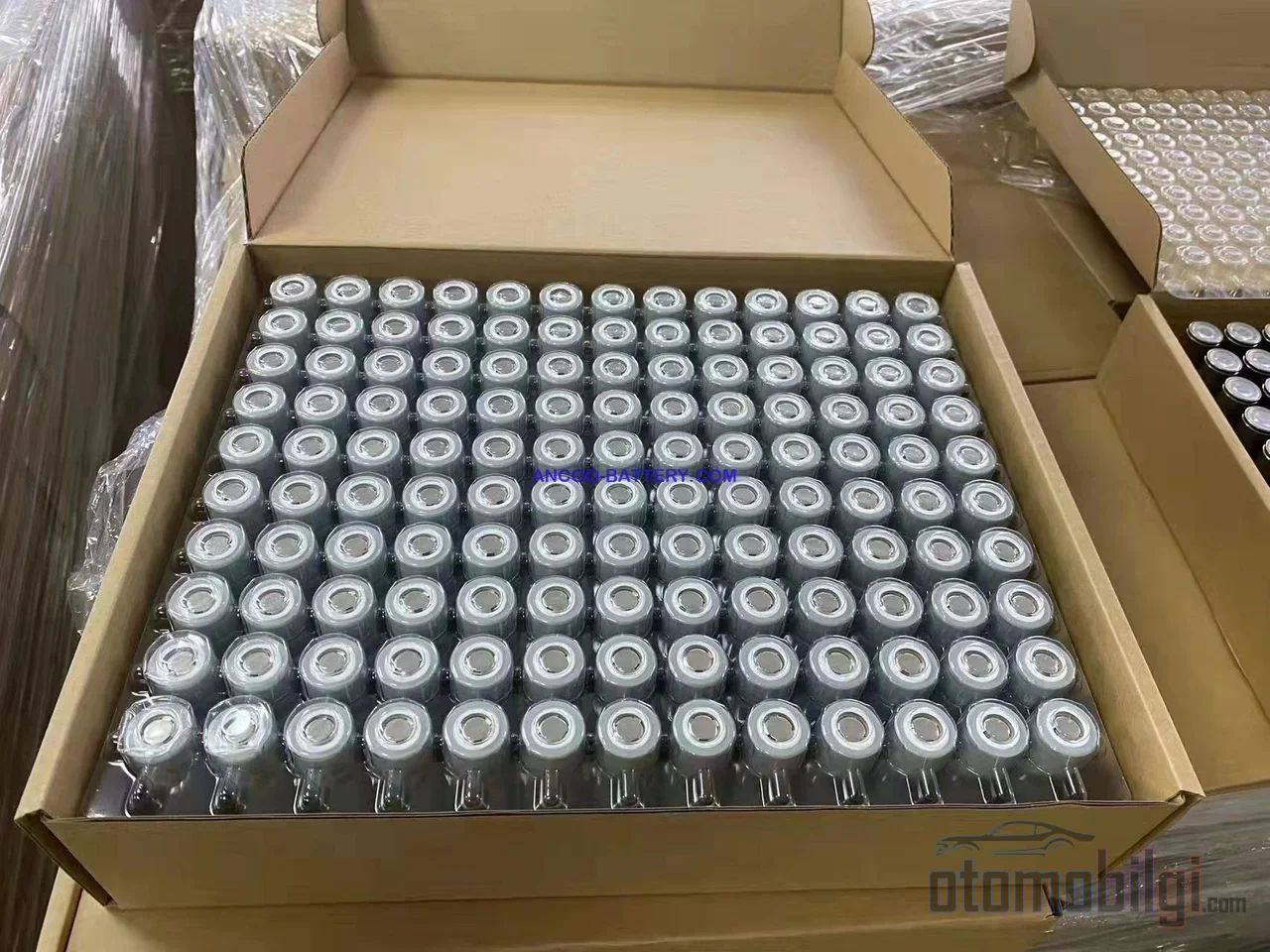
Cost and cobalt dependency
When the four main chemistries (LFP, LMFP, NMC, NCA) are ranked, NCA is the most expensive; LFP sits at the cheapest end, NMC in the premium class. A large portion of the cost comes from the cathode, and sharp increases in cobalt prices upset this balance every time. NCA also leans on more critical metals with its four-element composition; supply tightness in nickel and cobalt is projected through 2030. The fact that most of the cobalt is mined in a single country under harsh conditions also stands at the top as an ethical and supply risk. In cathode active material prices, NCA and NMC811 can track close to each other; meaning the expensiveness comes not only from raw materials but from manufacturing itself.
Thermal sensitivity and BMS load
High nickel content raises capacity but also increases thermal sensitivity. In terms of thermal runaway risk, NCA is more demanding than NMC and requires an advanced battery management system and careful thermal management. In safety-critical applications, NMC is preferred for its better thermal stability and lower overheating risk. Although manufacturers try to stabilize the cell through surface coatings (Al₂O₃, AlF₃) and doping with elements such as aluminum, titanium, and zirconium, these additional layers push the cost a bit higher.
Degradation and cycle life
NCA's best-known weakness is on the lifespan side: It typically reaches the 80% SoH level in 500-1,500 cycles. The mechanism is also well understood. As it cycles, the layered structure first transforms into a spinel phase, then into a NiO-like rock-salt surface phase; after 200-500 cycles, microcracks form in the particles, and HF attack from the electrolyte increases internal resistance per cycle. This surface restructuring alone contributes 30-40% of the total capacity loss. Temperature directly accelerates these mechanisms; aging studies on 18650 NCA cells show that even at 25°C, 3C fast charging significantly affects lifespan. There is an interesting nuance here: field data shows that Panasonic-made NCA packs have a noticeably longer lifespan than LG's NMC811s. In other words, cycle life is a function not only of the chemistry but also of the cell manufacturer's quality control and pack management; poorly managed NCA ages faster than well-managed NMC.
The production bottleneck: the Sumitomo chokepoint
Perhaps the least talked-about obstacle is this: the aluminum that keeps the high-nickel structure stable creates special requirements in cathode synthesis. As a result, NCA cathode production is largely confined to Sumitomo Metal Mining and a small group of specialist producers. NMC, by contrast, is produced in a much broader pool of manufacturers, on their standardized lines. For a chemistry to become mainstream, good performance alone is not enough; the capacity to produce it at scale must also be widely available.
Where Does NCA Stand in the Market?
Capacity-based market share figures vary depending on how each chemistry family is counted. When high-nickel NMC variants such as NMC721 and NMC811 are evaluated together with NCA, these cobalt-containing batteries make up roughly 80% of the 2025 market; the NMC family leads by a wide margin, while NCA is a small part of this group. Some analyses show that NCA is represented by a single-digit share of global capacity, while LFP is growing rapidly, driven especially by the Chinese market. In short, the picture is consistent: Despite being the leader in energy density, NCA is a niche chemistry that lags behind the NMC family and is shrinking in the face of LFP's cost offensive. This pressure is intensified further because cell-to-pack designs on the LFP side can compensate for the cell-level energy density deficit at the pack level.
Who Uses NCA?
NCA's story is largely woven around a single supply relationship: Panasonic is Tesla's exclusive supplier of NCA cylindrical cells, producing high-nickel NCA optimized for energy density in 18650, 2170 and 4680 formats at their joint gigafactory in Nevada. Tesla has been using Panasonic NCA cells since the first Roadster in 2008, and Panasonic supplies more than 40% of the batteries in electric cars produced in the US, making it the country's largest supplier. The chemistry mix in Tesla's current models has changed over time; some models are known to have switched to LFP and NMC variants.
The second major player is Samsung SDI: the company is developing 46-series cylindrical cells with NCA cathodes together with a silicon-carbon nanocomposite anode, and these cells are part of BMW's supply localization plan. On the future side, the landscape is shifting: Tesla and GM have announced they will use NMCA (manganese-doped NCA derivative) cells in upcoming models; BMW and Toyota also plan to move toward ultra-high-nickel technology. The Lucid Gravity, supplied with Panasonic's next-generation 2170 cells, has achieved volumetric energy density above 800 Wh/l.
Conclusion: Why Didn't It Become Mainstream?
The short and clear answer is this: NCA offers the highest energy density in its class, but it comes with the highest cost, the narrowest pool of manufacturers, the most sensitive thermal behavior, and an average cycle life. When NMC achieves similar density with a broader production base and better thermal margins, economies of scale work in NMC's favor; while LFP captured the lower market on the cost and lifespan axis, NCA remained in niches where energy density plays the leading role, such as the Tesla-Panasonic axis. It did not fail as a chemistry; the choice was concentrated elsewhere, in line with market economics driven by engineering necessity. Moreover, the industry trend toward high nickel carries the know-how NCA developed into the future through derivatives like NMCA.
Sources
- LFP vs NMC vs NCA vs LMFP: The Battery Chemistry Guide for OEM Engineers
- Cathode Material Selection Guide: NMC vs LFP vs NCA for Lithium Battery Research
- LFP vs NMC vs NCA: 3 Top Batteries
- LFP vs NCA vs NMC: How Battery Chemistry Affects Your Tesla
- What are LFP, NMC, NCA Batteries in Electric Cars?
- NMC vs LFP: safety and performance in operation
- Power of the future: Uncovering the secrets of the NCA battery