Why Does Risk Increase as the Nickel Ratio in NMC Batteries Rises?
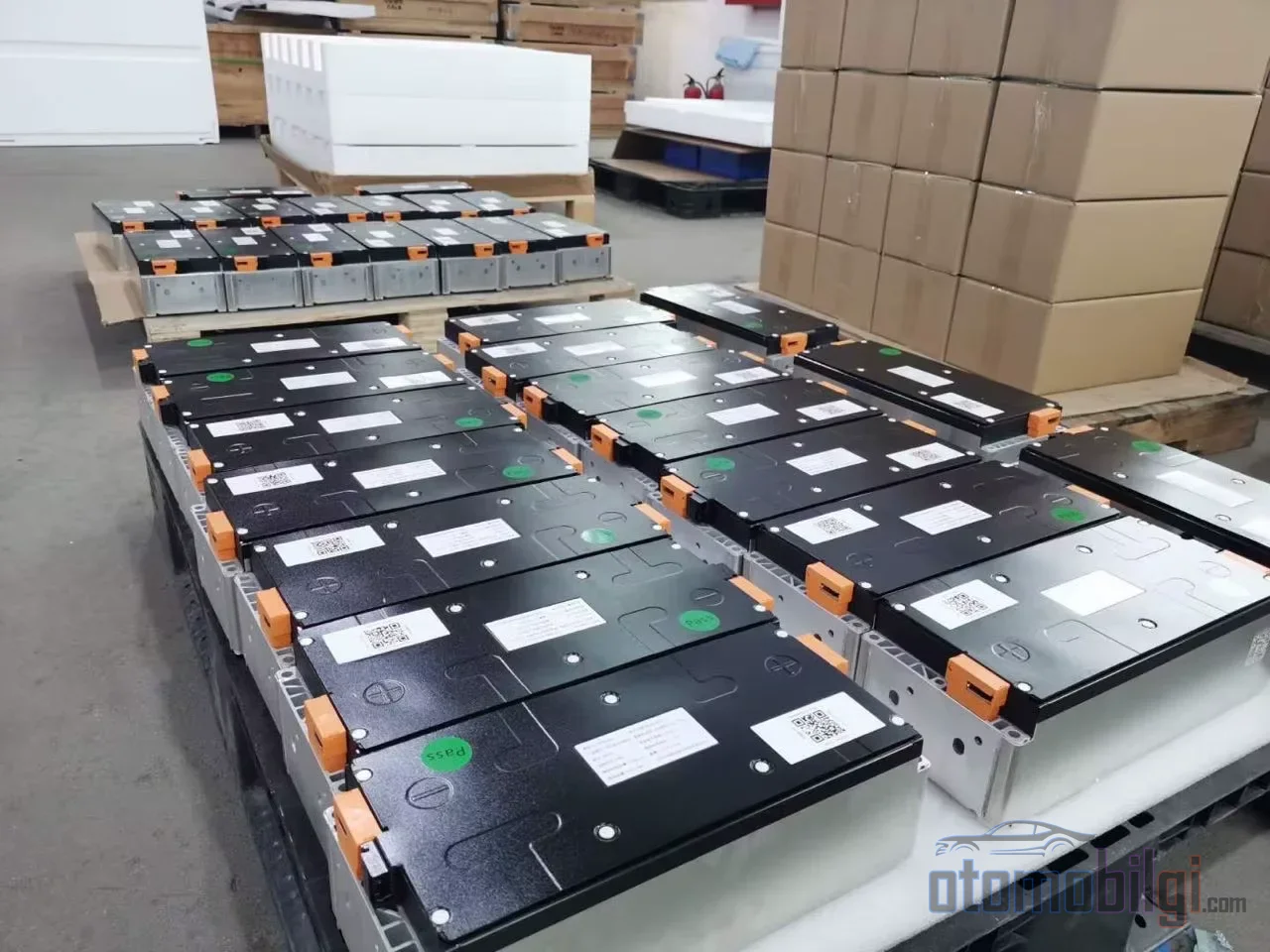
One of the most direct ways to increase an electric vehicle's range is to raise the nickel ratio in the battery cathode. Moving from NMC 111 to NMC 811 significantly increases energy density; but at the same time, the temperature at which the cathode releases oxygen drops, cycle life shortens, and production tolerances narrow. In other words, in the chemistry the battery industry uses most, capacity and safety sit on opposite pans of the same scale. In this article, we examine the materials science behind the increase in nickel in NMC formulations with concrete measurements.
Every Metal Has a Role in NMC Chemistry
NMC is a lithium-ion chemistry with a layered cathode structure made of nickel, manganese, and cobalt oxides. Its nominal voltage is 3.6-3.7 V, with an operating range of 3.0-4.2 V. The three digits in the formulation name indicate the molar ratio of the three metals: NMC 811 means a cathode in which 80 percent of the molar ratio, not the weight, comes from nickel.
The roles of the three metals are clearly distinct. Nickel is the engine of capacity; the redox reaction of nickel accounts for most of the lithium ions transported during discharge. Manganese, in its Mn⁴⁺ form, acts as a structural skeleton, supporting the stability of the layers, but contributes little to capacity. Cobalt, on the other hand, stabilizes the layered structure and suppresses the swapping of lithium and nickel ions - that is, cation mixing. Increasing nickel means shrinking the balancing roles of manganese and cobalt; and the price is paid there.
The Formulation Spectrum: What Changes from 111 to 811?
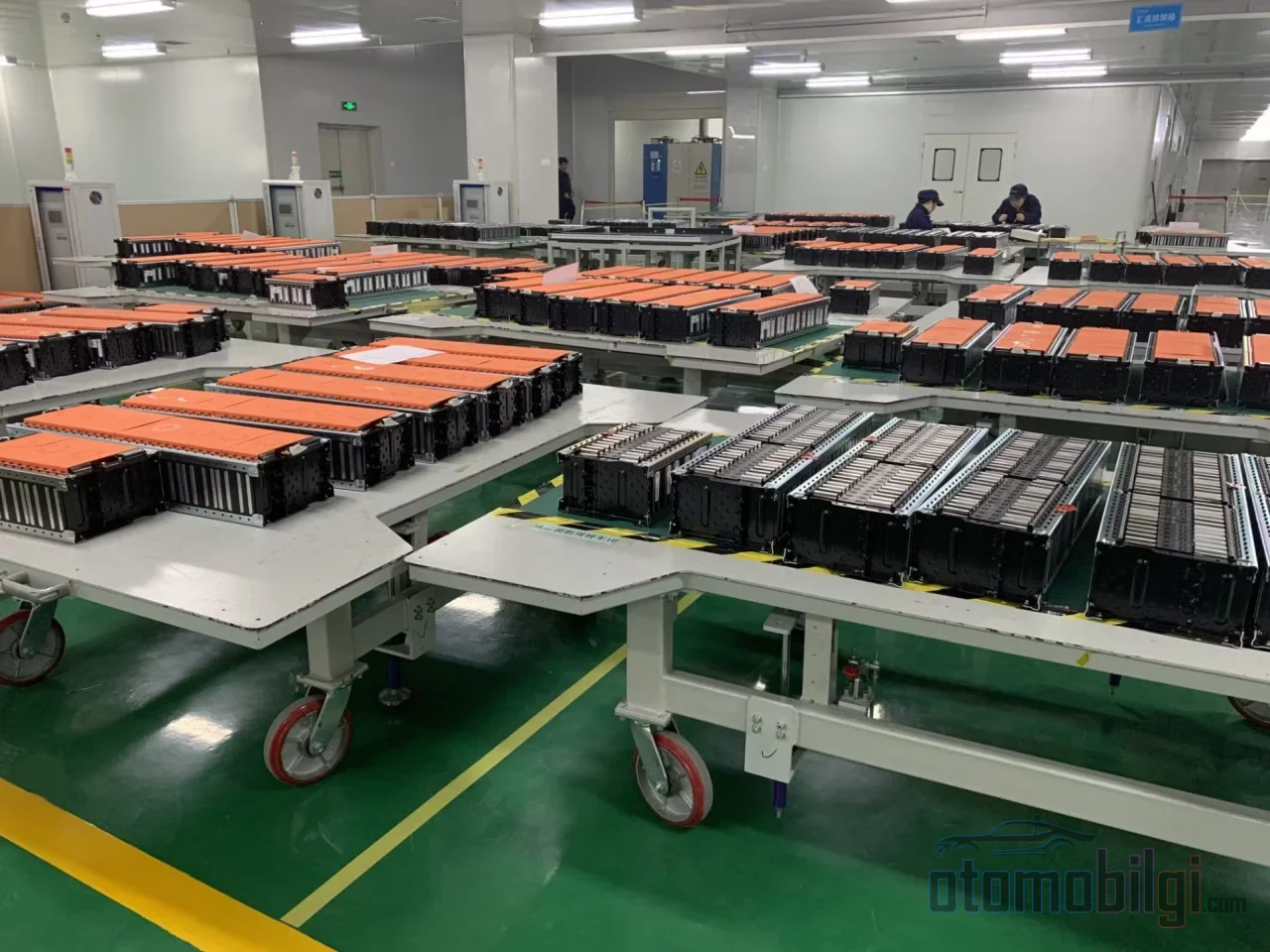
As the nickel ratio increases, the picture progresses in a consistent direction: energy density rises, cycle life shortens, and thermal stability declines. The comparison of four common formulations is as follows:
| Formulation | Energy density | Cycle life | Thermal stability |
|---|---|---|---|
| NMC 111 | ~160 Wh/kg | 1,000-2,000 cycles | Highest |
| NMC 532 | ~180 Wh/kg | 1,000-2,000 cycles | High |
| NMC 622 | ~200 Wh/kg | 800-1,500 cycles | Moderate |
| NMC 811 | 200-250 Wh/kg | 500-1,000 cycles | Lowest |
Highlights
- While the NMC 811 cathode begins releasing oxygen at ~200 °C, NMC 111 remains stable up to 300 °C.
- Under optimal conditions, NMC 811 offers a specific capacity 15-20% higher than NMC 622.
- 2. and 100. Capacity retention rates between cycles: 91.97% for NMC 532, 93.92% for NMC 622, and 86.95% for NMC 811.
- NMC 111 can operate up to 4.6 V without releasing oxygen.
The numbers alone do not tell the whole story; the real question is why the difference is inevitable at the materials level.
Why Does Capacity Rise as the Nickel Ratio Increases?
The cathode releases lithium ions during charging and takes them back during discharge. How many electrons you can process per unit mass in this exchange determines capacity. Because nickel is a metal that can switch between multiple oxidation states, it directly expands the cathode's electron budget. There is a simple reason why NMC 811 delivers a markedly higher Wh/kg value than NMC 111. The same mechanism explains why high nickel brings an additional specific capacity of about 15-20% even in the transition from 622 to 811 under optimal conditions.
The Physical Root of the Risk: The Nickel-Oxygen Bond
The safety cost of high nickel begins inside the crystal structure. In a layered nickel oxide cathode, the primary weak link when heated or pushed into overcharge is the nickel-oxygen bond. As the nickel ratio rises, this bond begins to break at lower temperatures, and the structure releases oxygen. In the NMC 811 cathode, this release begins at around 200 °C, while NMC 111 maintains its structural integrity up to 300 °C. The released oxygen enters exothermic reactions upon contact with the electrolyte; it serves as fuel for thermal runaway. Differential scanning calorimetry (DSC) measurements point in the same direction: as the nickel content increases, the onset temperature of the exothermic reaction decreases.
This is not a manufacturing defect; it is the nature of the material. Among the dominant variables controlling the thermal runaway temperature are the nickel content and the state of charge (SOC); in other words, the more nickel a cell contains and the fuller it is, the earlier the threshold is pulled forward. In NMC/graphite cells, if the cell temperature exceeds the ambient temperature by 115.2 °C, the problem can begin even without waiting for separator rupture. For comparison: While the thermal runaway threshold in NMC chemistries generally falls in the 200-300 °C band, in LFP this range shifts to 270-400 °C.
Cation Mixing: The Invisible Thief of Lifespan
Besides the thermal risk, high nickel also amplifies a more insidious mechanism in daily use: Li+/Ni2+ cation mixing. Since the diameter of nickel ions is close to that of lithium ions, nickel gradually migrates into the lithium sites. As the channels used by lithium narrow, the cell's internal resistance increases and capacity steadily erodes. Cobalt is the element that suppresses this migration; as the nickel ratio rises and cobalt falls, the protective shield thins out.
Cycle data confirm this picture. In NMC 532, NMC 622, and NMC 811 electrodes, the capacity retention ratios between the 2nd and the 100th cycle are 91.97%, 93.92%, and 86.95%, respectively. In continuous high-frequency cycling, NMC 811 delivers 30-40% fewer cycles than NMC 622, and the capacity loss accelerates as the cycle count increases. Degradation is also strongly dependent on temperature: In NMC 811/Si-graphite cells, cycle life loss is at its lowest around 25 °C, increasing both below and above this temperature. Without proper temperature management, high nickel lives below its potential.
The Structural Cracking Problem
As the nickel ratio increases, the tendency for cracking between cathode particles also grows. NMC 811 is particularly prone to intergranular cracking during repeated charge-discharge cycles; these cracks open new contact surfaces with the electrolyte, accelerating degradation and facilitating oxygen release. NMC 111, on the other hand, can operate at up to 4.6 V without releasing oxygen, offering a similar degradation profile regardless of electrolyte type. NMC 622 offers a pragmatic middle ground between the two extremes: while delivering significantly higher energy density than NMC 111, it does not carry NMC 811's structural fragility.
Narrowing Tolerances on the Production Side
The risk increases not only during use but also in manufacturing. Commercial NMC cathodes are produced via co-precipitation; the metal hydroxide precursor is blended with a lithium source and then calcined. As the nickel ratio rises, the optimum heat treatment window narrows from around 900 °C to the 750–800 °C range. Sensitivity to ambient moisture and carbon dioxide also increases; high-nickel cathodes require strict protective measures in the facility. All these tightening conditions are among the factors that raise NMC 811's unit cost and manufacturing scale-up difficulty. Industry analyses predict that the transition from NMC 532 to 811 and higher-nickel formulations in the premium electric vehicle segment will be spread across 2026-2033 - however, this transition is being made conditional on solving the cycle stability problems.
The Engineering Answer: Managing the Risk
The handicaps of high nickel are addressed through two separate branches operating at the material and system levels.
Cathode-Side Solutions
Three approaches stand out on the material side. The first is surface coating: high-nickel cathodes coated with cerium oxide retain 96.4% of their capacity after 60 cycles, while this figure stays at 84.4% in the uncoated control group. The second is grain boundary engineering: grain boundary designs containing niobium aim to suppress oxygen release while preserving capacity. The third is fourth-element addition: aluminum is added to high-nickel formulations (the NCMA family) to slow capacity loss and thermal degradation. These solutions deliver results at the laboratory level; there is not yet an industry-wide standardized recipe.
System-Side Solutions
On the pack side, the measures rely on known methods: liquid cooling in packs above 10 kWh, cell-level temperature monitoring, fire barriers between cells, and limiting the state of charge according to ambient temperature. Early detection is critical, because a thermal event starting in a single cell can spread to neighboring cells in under 60 seconds. Lowering the charge upper limit in high ambient temperatures - for example, limiting to 90% SOC above 35 °C - can extend calendar life by up to 30-50%. With a quality thermal management and BMS architecture, NMC is not inherently an unsafe chemistry; the risk materializes with poor cooling, physical damage, or a faulty management system.
Why Does the Risk Inevitably Increase as Nickel Increases?
In short, the answer is this: By the physics of the nickel-oxygen bond, as the nickel ratio increases the cathode releases oxygen at lower temperatures, and this oxygen acts as fuel for thermal runaway, while the weakening of the cobalt-manganese balance amplifies both cation mixing and structural cracking. This trade-off between capacity gain and thermal stability is the fundamental design tension of NMC chemistry, and it can be managed with good engineering but never eliminated.
That is why formulation choice is made according to the priorities of the application. Uses where weight and volume constraints are strict - drones, premium electric vehicles, aviation - highlight the energy density of 811. For mid-range vehicles and e-bikes, 622 or 532 offers a balanced middle ground; fleet and commercial operators also prefer the cycle life and safety profile of 622, sacrificing some maximum energy density. Where safety and lifespan come above all else - medical devices, backup power systems - NMC 111, or even entirely LFP, stands out. In stationary energy storage, where weight and volume constraints are minimal, NMC's energy advantage becomes meaningless and the choice usually shifts to LFP.
The market direction is nevertheless toward high nickel: the high-nickel cathode market reached $4.11 billion in size in 2025, and roughly 20% compound annual growth is forecast for the 2026-2035 period. The reason manufacturers stay at different nickel ratios is not strategic indecision; it is that each application needs a different point on the triangle of energy, lifespan, and safety. The nickel ratio is the main control lever that determines where you will stand on that triangle.
Sources
- NMC Battery Guide: Chemistry, Types, Performance
- Effects of Ni Content on Energy Density, Capacity Fade
- NMC 811 vs NMC 622 Battery Capacity: Cycle Stability Difference
- Nickel Content, Thermal Safety, and Cycle Life
- Ni-rich lithium nickel manganese cobalt oxide cathode
- Comparing NMC523, NMC622 and NMC811
- High-Nickel Cathodes (NMC 811) Market
- Quantitative Analysis and Prediction of Thermal Runaway