Why Did the Zebra Battery Disappear From EVs?
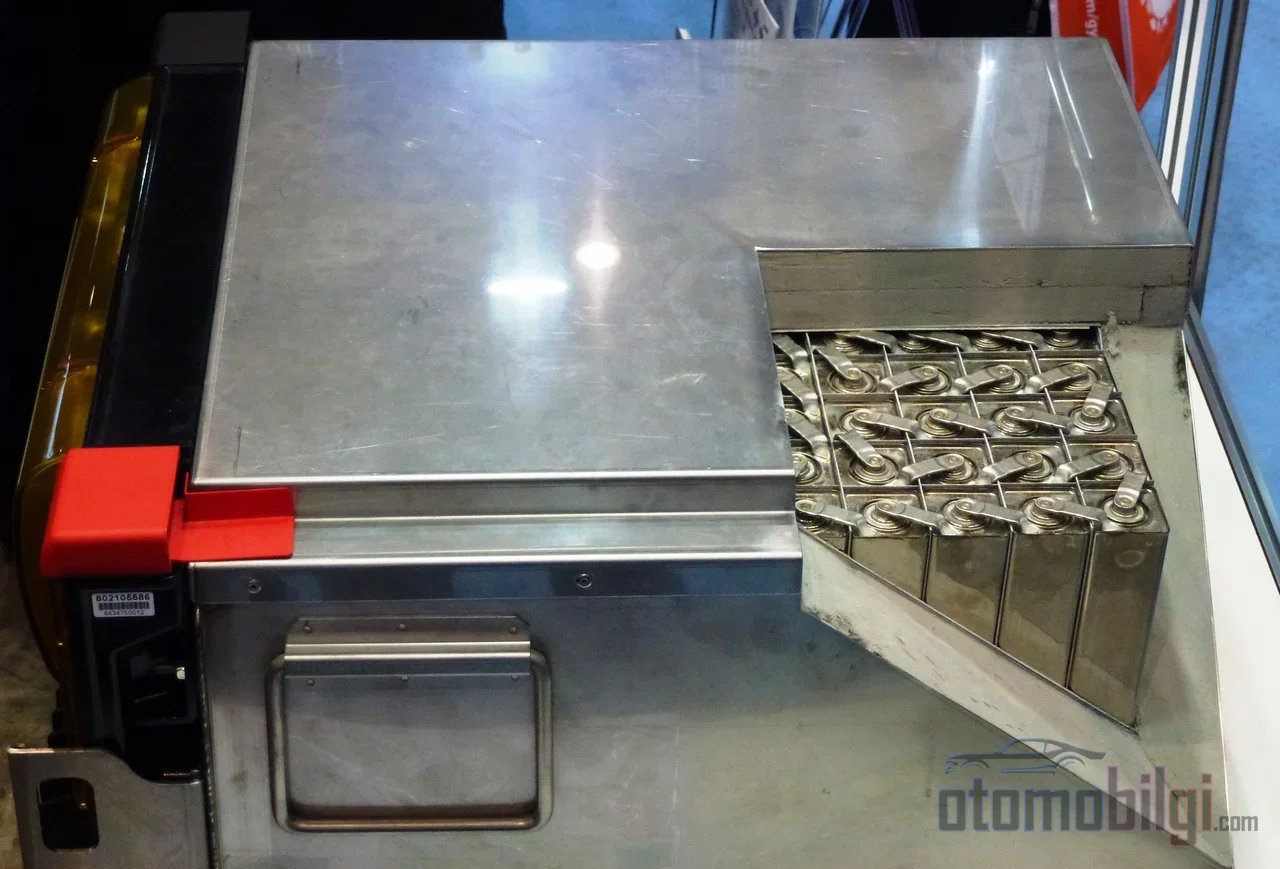
In the late 1990s, before lithium-ion, there was a battery chemistry taken seriously for electric cars: sodium-nickel chloride, better known as the ZEBRA battery. Mercedes-Benz launched the electric A-Class with this chemistry in 1997, and in fleet tests the cars covered hundreds of thousands of kilometers without maintenance. Then the technology vanished, as if erased from history. Today sodium-based batteries are back in the spotlight - but with a completely different architecture that operates at room temperature. Behind the Zebra battery's disappearance from electric vehicles lies a single physical constraint: its operating temperature.
What Is the ZEBRA Battery and How Does It Work?
The ZEBRA battery is a rechargeable molten-salt battery. It takes its name from the Zeolite Battery Research Africa project launched in South Africa in 1985; the core idea was developed at a scientific research organization in Pretoria, with the first patent dating back to 1978. Development continued in England, and in the 1990s the AEG and Anglo American partnership carried it to pilot production; in 1999, Switzerland-based MES-DEA took over the technology.
The cell's architecture forms an elegant and logical chain. On the anode side there is liquid sodium metal, and on the cathode side nickel chloride. The two electrodes are separated by a solid ceramic electrolyte made of beta-alumina, which conducts sodium ions; on the cathode side, a secondary liquid electrolyte (NaAlCl4) serves to carry sodium ions to the positive electrode. The materials list is remarkably modest: nickel, sodium obtained from table salt, chloride, and ceramic.
The Physical Reason for the 270 °C Requirement
The detail that determines this battery's fate is its temperature requirement. Sodium melts at 98 °C; the secondary electrolyte NaAlCl4 becomes liquid above 150 °C. For the system to operate efficiently, the cells must typically be kept in the 270-350 °C range. The module maintains this temperature with its internal heating system; the cells are insulated inside a double-walled, vacuum-flask-like enclosure roughly 25 mm thick.
The real engineering problem here is that the battery must be kept warm even when it is not in use. A cooled pack can take 12 hours to return to its operating temperature; a battery that has fully cooled to room temperature can take up to two days to be reheated and become chargeable. This is the technology's breaking point in vehicle use, and the key that explains why it later lost to lithium-ion, as covered later in the article.
Highlights
- ZEBRA cells operate in the 270-350 °C range; the battery must be kept warm even when not in use.
- Specific energy was measured at 90-120 Wh/kg, with specific power above 150 W/kg.
- In fleet tests, 1.6 million km was exceeded; individual vehicles completed over 100,000 km of driving without maintenance.
- Mercedes produced the electric A-Class in 1997, and the first-generation Smart ED came with a 13.2 kWh Zebra pack.
- GE discontinued production in 2015 for market reasons, not technical ones.
A Strong Specification on Paper

The reason the Zebra battery was taken seriously in the 1990s is that, by the standards of that era, it presented a genuinely good technical picture. Its specific energy was in the 90-120 Wh/kg band; the improved ZEBRA R series offered 120 Wh/kg specific energy and over 150 W/kg specific power. At cell level, a volumetric density of 328 kWh/m³ was reported; at battery level this figure drops to 170 kWh/m³ - the cost of pack insulation and heating infrastructure is clearly visible.
| Feature | Typical value |
|---|---|
| Operating temperature | 270-350 °C |
| Specific energy | 90-120 Wh/kg |
| Specific power (ZEBRA R) | >150 W/kg |
| Calendar life | 15 years and above |
| Fleet test distance | 1.6 million km |
| From cold start to ready state | 12 hours - 2 days |
The longevity side is even more striking: 15 years and above of calendar life, long cycle life, maintenance-free operation and even the absence of any need for extra cooling - since the battery is already hot, it does not require air conditioning. Fleet tests showed that this promise was realistic: it was extensively trialed in vehicles from 1988 onward, with a total exceeding 1.6 million km; individual vehicles completed driving exceeding 100,000 km and more than 1000 electrical cycles without maintenance over periods of up to five years.
Use in Period Vehicles: Mercedes A-Class and Smart ED1
The example where the technology came closest to production stage is the 1997 electric Mercedes-Benz A-Class (W168) version with a Zebra battery. A more concretely documented application is the Smart ForTwo ED1: in this vehicle with first-generation (450) bodywork, a sodium-nickel chloride pack with a capacity of 13.2 kWh operating at 245 °C was used. In 2007, a field test with 100 vehicles was launched in London; the vehicles were offered only to corporate customers under a leasing model of 375 pounds per month.
This leasing model was no coincidence, and it summarizes the technology's position in the vehicle. Since the battery had to be kept molten and constantly ready, the technology was not practical for the car of a private user whose vehicle might sit in a garage for weeks. In vehicles such as continuously operating taxi and police fleets, the relative cost of heating was offset by the intensity of use.
The breaking point came quickly: Smart switched to lithium-ion from 2009 onward. The second-generation ED2 launched with Tesla cell packs, while the ED3 of 2012-2015 hit the road with Daimler's own cells.
Thermal Management and Robustness Engineering
Although the high temperature was the system's weak point, the engineering side was strong. Beta-alumina ceramic is mechanically fragile; however, when a crack forms, the NaAlCl4 electrolyte reacts with sodium and self-seals the crack with salt and aluminum deposition. This is an elegant safety mechanism that suppresses an internal short circuit. Its sibling chemistry, the sodium-sulfur battery, has a much worse record: the Ford Ecostar prototype burned during charging, and in 2011 a serious fire broke out at a production facility in Japan. Zebra is regarded as the more controlled member of the sodium family.
The degradation mechanisms were also well characterized: Growth through Ostwald ripening of sodium chloride particles increases internal resistance, dendrite formation in beta-alumina carries a risk of short circuit, and the abrupt voltage drop at the end of the discharge curve makes it difficult to determine the state of charge (SOC). These problems were known, but they were not decisive; what was decisive were the two factors in the next section.
Why It Lost Out to Lithium-Ion?
There are two concrete reasons why the Zebra battery disappeared from electric cars. The first is measurable: energy capacity, and especially energy density, fell behind lithium-ion, and while lithium-ion improved rapidly throughout the 2000s, Zebra showed no similar acceleration on the chart. The second is structural: it was expensive, and the constant heating requirement was a heavy compromise for the private user. A two-pronged deadlock in the vehicle market - failing to provide enough energy and failing to become cheap enough - pushed the technology irreversibly out.
Its commercial fate confirmed this as well. GE bought the technology's developer, Beta R&D, in 2011 and attempted production under the Durathon name; the reason given for halting the project in 2015 was not technical failure, but market conditions. The chemistry worked - but not in the form the vehicle market wanted.
It Survived in Stationary Storage
The technology withdrawn from vehicles did not die completely; it shifted its center of gravity to stationary energy storage. Today the only manufacturer of sodium-metal chloride batteries is Switzerland-based FZSoNick. In Switzerland, the technology was optimized with local raw materials other than nickel; a 540 kWh solar storage facility operates on the roof of a shopping mall, and more than a million batteries are produced per year. The European Parliament's 2023 assessment highlights that Na-NiCl2 batteries have risen as sustainable storage systems based on abundant, non-critical materials such as sodium, nickel and aluminum.
Even in stationary storage, the thermal cost persists: despite its reduced capacity, it has been found viable for solar storage, but there is a constant energy consumption to keep the system hot. On the cost side, the picture is clear - the nickel inside the cathode accounts for more than 60% of the battery's total cost. This is the technology's harshest limit in terms of price competitiveness.
Its Kinship with Today's Sodium-Ion Batteries
There is no direct technological continuity between Zebra and today's sodium-ion batteries; what they share is that the carrier element is sodium. Modern sodium-ion batteries operate at room temperature, carry Na+ ions, and are similar to lithium-ion in terms of cell structure - there is no molten salt, no 270 °C heating, and no ceramic electrolyte. In other words, the idea of sodium as a battery material has survived; the architecture that carries it has completely changed. It can be said that room-temperature sodium-ion attempted what Zebra failed to achieve in vehicles - this is an interpretive connection; no such kinship claim appears in the sources.
The performance table also clarifies this context: sodium-ion batteries are still in the 140–160 Wh/kg band while lithium-ion offers 180–250 Wh/kg; sodium being heavier and its ions larger reduces volumetric energy density by 20–40%. Still, the momentum is real: international energy agencies take seriously sodium-ion's claim of reducing dependence on critical minerals, and market analyses forecast that the global sodium-ion market will reach 18 billion dollars by 2037 with a 20.1% compound annual growth starting from 2026.
Conclusion: The Battery That Vanished at 270 Degrees
The concise answer to the question of why the Zebra battery disappeared from electric vehicles is this: A battery that must be kept at 270 °C, offers lower energy density than lithium-ion, and costs more did not fit the reality of the private car user. The technology itself did not fail - with proven durability of 1.6 million km in fleets, a calendar life exceeding 15 years, and self-healing cell chemistry, it was a strong engineering product on paper. What lost was not the battery, but the usage model the battery was based on. The same sodium atom today continues its journey at room temperature, with a much leaner architecture; while Zebra lives on in stationary storage, in a mission where it fits for the first time.
Sources
- ZEBRA battery
- The ZEBRA electric vehicle battery - TRID database
- What is a Sodium-nickel chloride Na-NiCl2 battery?
- High Temperature Ceramic Batteries (ZEBRA) - CNR
- Salt Batteries: Opportunities and applications - European Parliament 2023
- GE's Molten Salt Battery Failure - by Jon Y
- Current Status of Health and Safety Issues of Sodium/Metal Chloride Batteries - NREL
- Sodium-ion battery