Can Lithium-Sulfur Batteries Replace Solid-State?
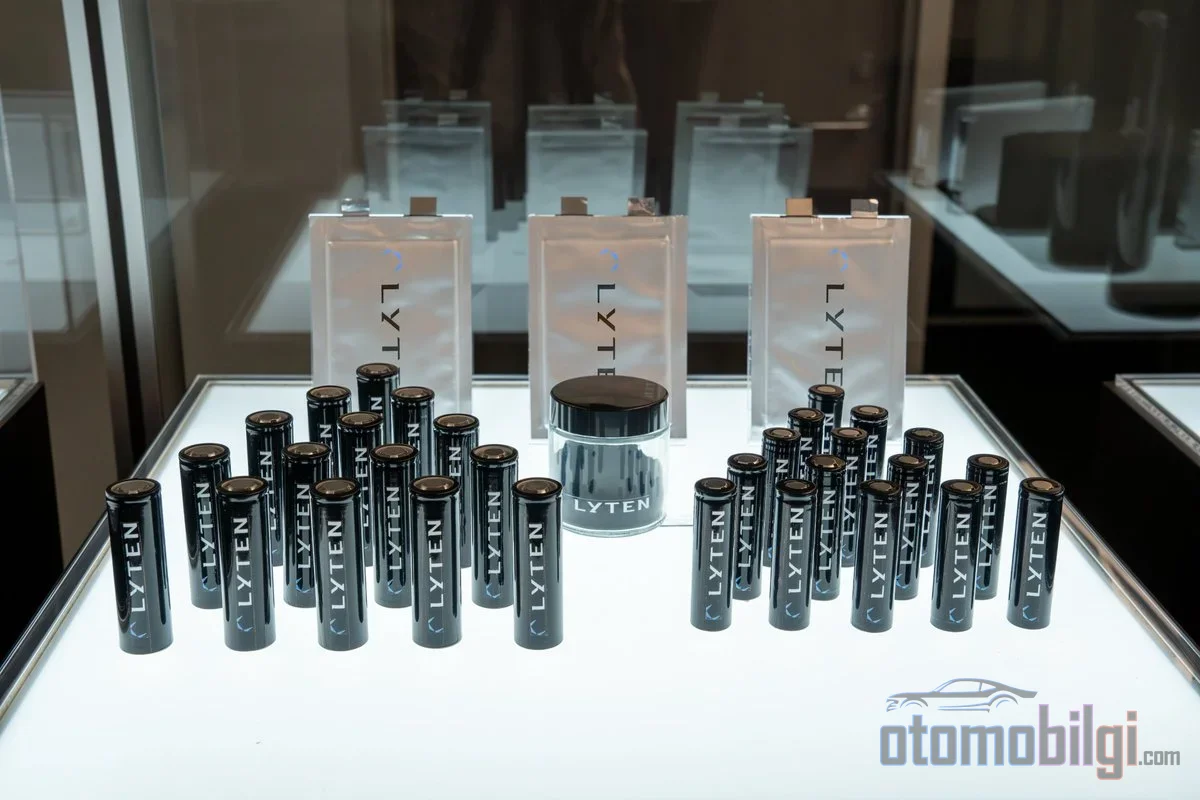
The name that has dominated the electric vehicle agenda in recent years has always been the solid-state battery. Yet in the same race, there is a candidate that has stayed much quieter: lithium-sulfur chemistry. On paper, this technology promises roughly five times the energy density of today's lithium-ion cells - and without using any expensive metals like cobalt and nickel. In return, the distance between the lab and the mass production line still stands as a serious engineering problem for this chemistry. Can the lithium-sulfur battery truly replace solid-state, or will its advantage always be swallowed by the cycle-life barrier?
How Does a Lithium-Sulfur Battery Work?
In lithium-ion cells, lithium ions detach from the graphite or silicon-based anode during discharge and settle into the crystal structure of the cathode; this mechanism is called intercalation. A lithium-sulfur (Li-S) cell, however, works on an entirely different path. In a cell consisting of a metallic lithium anode, a sulfur-based cathode, and an electrolyte, the conversion mechanism applies: during discharge, the sulfur in the cathode gradually transforms into intermediate products called polysulfides (Li₂Sₙ, where 4≤n≤8) and in the final step is reduced to lithium sulfide (Li₂S). During charging, the process runs in reverse and lithium sulfide is oxidized back to elemental sulfur.
This gradual transformation also leaves its mark on the cell voltage: the discharge curve of a lithium-sulfur cell shows two distinct plateaus, at approximately 2.3 V and 2.1 V. The first plateau represents the conversion of S₈ into long-chain polysulfides, while the second plateau represents the reduction of short-chain polysulfides to Li₂S. For those accustomed to the single-voltage lithium-ion curve, this two-step profile is the most visible evidence of the chemistry's conversion nature.
Where Does the Energy Density Promise Come From?
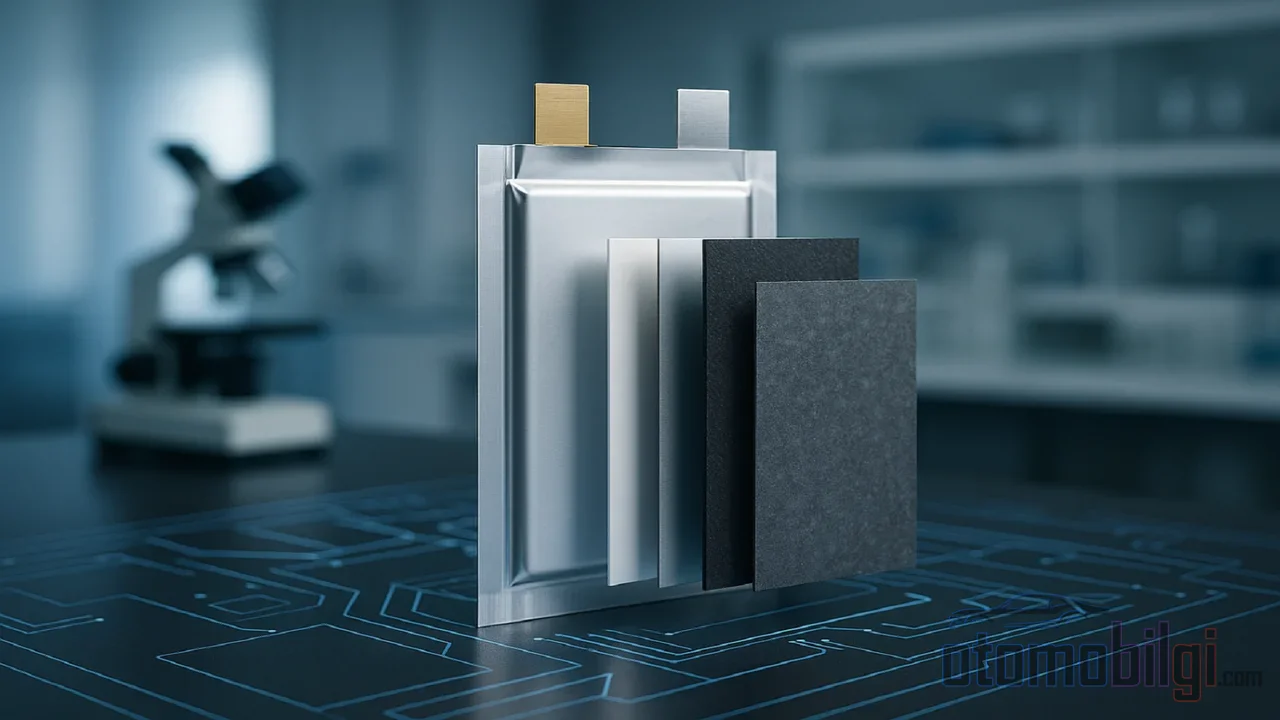
Lithium-sulfur's main trump card speaks with numbers. The theoretical energy density of this chemistry is around 2600-2700 Wh/kg; a typical lithium-ion cell remains in the 150-250 Wh/kg range. The claim of five times the capacity at the same weight is an accurate summary on paper. In terms of theoretical specific capacity as well, sulfur, with a value of 1675 mAh/g, ranks among the highest of all cathode materials.
Highlights
- Lithium-sulfur's theoretical energy density is approximately 2600-2700 Wh/kg; typical lithium-ion is in the 150-250 Wh/kg range.
- Practical pouch cells have demonstrated 300-450 Wh/kg; in the relevant cell format, a level of 470 Wh/kg has been reached.
- Current Li-S cells typically last 300-500 cycles; lithium-ion exceeds 1,000+ cycles.
- Estimated arrival to mainstream markets is in the 2028-2035 range; earlier, aviation and drone applications lead the way.
The source of the advantage rests on two elements. First, the ability of this chemistry to use metallic lithium, the lightest solid element, directly as the anode. Second, sulfur's capacity to hold two lithium ions per atom and its very low density compared to transition metal oxides. This is why the energy that can be stored per kilogram at the cathode side comes out so high.
Values Achievable in Practice
The gap between theoretical values and real cells is engineering's true test. In pouch cell format, practical energy densities have been shown in the 300-450 Wh/kg band; values above 400 Wh/kg require demanding design conditions such as high sulfur loading, reduced electrolyte amount, and limited excess lithium. It has been demonstrated that a level of 470 Wh/kg has been reached in a technologically relevant cell format. These figures are clearly above today's best lithium-ion cells; the challenge is being able to combine this performance with a long service life.
The Cards of Cost, Abundance, and Safety
Beyond energy density, the commercial appeal of lithium-sulfur comes largely from material economics. Sulfur is one of the most abundant elements in the world; its production is spread across all continents. Replacing expensive metals like cobalt and nickel also eliminates geopolitical bottlenecks in the supply chain - dependence on regions where cobalt supply is concentrated is a well-known fragility of the lithium-ion industry. According to an estimate from 2020, lithium-sulfur cells could offer similar performance at less than half the price of lithium-ion.
The picture on the safety side is also promising. The conversion mechanism reduces the risk of catastrophic failure compared to lithium-ion; although thermal runaway is theoretically possible, its severity is significantly lower than in lithium-ion. Lithium-sulfur cells can be safely transported in a fully discharged state and shipped by air - this is a small but real logistical advantage.
Four Technical Obstacles to Commercialization
The Polysulfide Shuttle Effect
The main enemy of lithium-sulfur is the phenomenon known as the polysulfide shuttle effect. Polysulfides formed in the intermediate stages of discharge dissolve in the liquid electrolyte and migrate from the cathode to the anode. These species, reduced into short-chain compounds at the anode surface, return to the cathode; this traffic, which continues throughout the cycle, causes loss of active material, lithium corrosion, low coulombic efficiency, and continuous capacity loss. The core of the problem is that polysulfides reaching the anode enter irreversible side reactions with lithium. This is the main mechanism limiting cell life.
Conductivity and Volume Expansion
Sulfur, with a conductivity of approximately 5×10⁻³⁰ S/cm at 25 °C, is practically considered an insulator; a cathode made of pure sulfur does not work. For this reason, it is mandatory to add conductive carbon additives to the cathode composition. The second problem is mechanical: during the formation of lithium sulfide, the volume expands by approximately 80% of the original sulfur volume. This expansion and contraction, repeated in every charge-discharge cycle, generates mechanical stress and gradual destruction in the cathode structure.
Instability of the Lithium Metal Anode
Metallic lithium is highly reactive toward organic electrolytes, and uncontrolled accumulation on the anode surface reduces coulombic efficiency. In research, anode deactivation stands out as the most common cause of failure in lithium-sulfur cells. In other words, no matter how much the sulfur chemistry at the cathode is optimized, the anode side is a lifespan problem in its own right.
Cycle Life: Critical Threshold
The visible outcome of all these obstacles is cycle life. Current lithium-sulfur cells typically last 300-500 cycles; lithium-ion cells exceed 1,000, and mostly exceed 2,000. For comparison, in lithium-ion systems, the typical capacity loss after 1,000 cycles is in the 15-20% range.
| Feature | Lithium-ion (NMC/LFP) | Lithium-sulfur | |
|---|---|---|---|
| Theoretical energy density | - | ~2600-2700 Wh/kg | |
| Practical energy density | 150-250 Wh/kg | 300-470 Wh/kg (demonstrated) | |
| Typical cycle life | 1,000+ (mostly 2,000+) | 300-500 | |
| Cathode material | Nickel, manganese, cobalt or iron phosphate | Sulfur (abundant, low cost) | |
| Critical weakness | Material cost, thermal runaway risk | Polysulfide shuttle effect |
Laboratory results, meanwhile, are moving in a promising direction. In 2017, 1,500 cycles were demonstrated, but these results have not been fully verified under commercial-scale and lean-electrolyte test conditions. More recent studies have reported very low degradation rates of around 0.03% per cycle and lifetimes of up to 750 cycles; with an approach using graphene-based interlayers, 674 Wh/kg stability was achieved over 1,000 cycles. All-solid-state lithium-sulfur cells are also being researched with a target of 600 Wh/kg. The common goal of the research front is to succeed in raising cycle life to the 800+ level.
Comparison with Solid-State and Sodium-Ion: Which Chemistry for Which Scenario?
In the "next generation" race, lithium-sulfur is not alone. Solid-state batteries and sodium-ion chemistry stand out as alternative frameworks, each solving a different problem. Sodium is roughly a thousand times more abundant than lithium (in the Earth's crust, lithium is about 20 ppm while sodium is about 23,600 ppm), and sodium-ion cells are expected to achieve costs 10-20% lower. There are also claims of faster charging and more stable chemistry; on the other hand, energy density is the clear weak point of sodium-ion. That is, sodium-ion is a strong candidate for cost-focused stationary storage scenarios where volume and weight are secondary; when range and weight are critical, lithium-sulfur comes to the table.
Its relationship with solid-state technology, meanwhile, involves complementarity more than rivalry: solid-state electrolytes carry the potential to fundamentally block the migration of electrolyte-soluble polysulfides. For this reason, the all-solid-state lithium-sulfur cell is being researched as a way to structurally suppress the shuttle effect. Lithium-sulfur is already in use today in aerospace applications such as high-altitude drones, solar-powered aircraft, and satellites; long-term projections also cover short-range electric aircraft and eVTOL platforms through 2050. On the vehicle side, some manufacturers have begun multi-year qualification processes for electric vehicles, trucks and delivery vehicles.
Market data also reflects this gradual roadmap: it is estimated that the lithium-sulfur market was approximately $32 million in 2024 and is projected to reach $209 million by 2029. While estimates for commercial access to mainstream markets concentrate in the 2028-2035 range, early commercial deployment is reported to have begun in niche markets where the technology's power advantage is significant. Cycle life, performance stability and large-scale production are listed as the common conditions standing before every estimate.
Conclusion: Will It Replace Solid-State?
The short and honest answer is this: rather than replacing solid-state, the lithium-sulfur battery is running in a different lane of the same race - and what it depends on at least as much as solid-state appears to be the cycle life threshold, which is critical for adoption scale. The two arguments put forward for replacing lithium-ion are solid: theoretically about five times the energy density, and abundant, cheap sulfur that eliminates the cobalt-nickel dependency. But the current lifespan of 300-500 cycles falls below the durability required by passenger car and heavy-duty applications.
The most likely scenario is a division of labor: lithium-sulfur arrives first in aviation, drone and space applications, where weight is the primary cost; as the 800+ cycle target is achieved, it expands toward range-focused electric vehicles. While solid-state lithium-ion takes the high power and safety side, and sodium-ion cost-focused stationary storage, lithium-sulfur takes on the energy density race. What is being lived through is a period of diversity - and the early years of it - where one chemistry does not eliminate the other, but each is the solution best suited to its own problem. The fate of lithium-sulfur depends on a single variable that everyone following this development now knows: how far it can push degradation per cycle downward.
Sources
- How Lithium-Sulfur Battery Operating Principle Works
- Lithium-Sulfur Batteries: Advantages
- Lithium-Sulfur Batteries - an Overview
- A Comprehensive Analysis of Lithium-Sulfur Batteries
- How Lithium-Sulfur Battery Cathodes Improve Energy Density
- High Energy Density Solid-State Lithium-Sulfur Batteries
- Suppression Strategies for the Polysulfide Shuttle Effect
- Lithium-Sulfur Battery Lasts 1000 Cycles With COF Fix
- Sodium-Ion Batteries: A Sustainable Alternative
- Lithium-Sulfur Battery Market Report