Can the Silicon Anode Revolution Double the Capacity of Electric Vehicle Batteries?
Share This Page
A silicon anode is an anode material that replaces graphite in a lithium-ion battery (or is blended into it), and its theoretical capacity is roughly 10 times that of graphite; this carries the potential to nearly double the energy density of electric vehicle batteries in a single move. The obstacle is also clear: silicon expands by about 300% of its volume when storing lithium, and when uncontrolled, this expansion breaks the material apart. Today the industry's answer is not pure silicon, but managing the expansion through nanostructuring, carbon coating, and silicon-graphite composites; in other words, taming the chemistry with engineering.
Highlights
- Graphite 372 mAh/g, while silicon offers 3,500-4,200 mAh/g of theoretical capacity.
- Silicon experiences a volume expansion of 280-300% at full lithiation; graphite's expansion is only around 10% .
- Commercial anodes are currently graphite blends containing 5-20% silicon by weight.
- Silicon anode cells are already on the way: 298 Wh/kg and 350 Wh/kg examples entering production are available.
- The cost gap has not yet closed: silicon anode is around 15-20 USD/kWh, graphite at the 5 USD/kWh level.
Why Does a Silicon Anode Store More Energy Than Graphite?
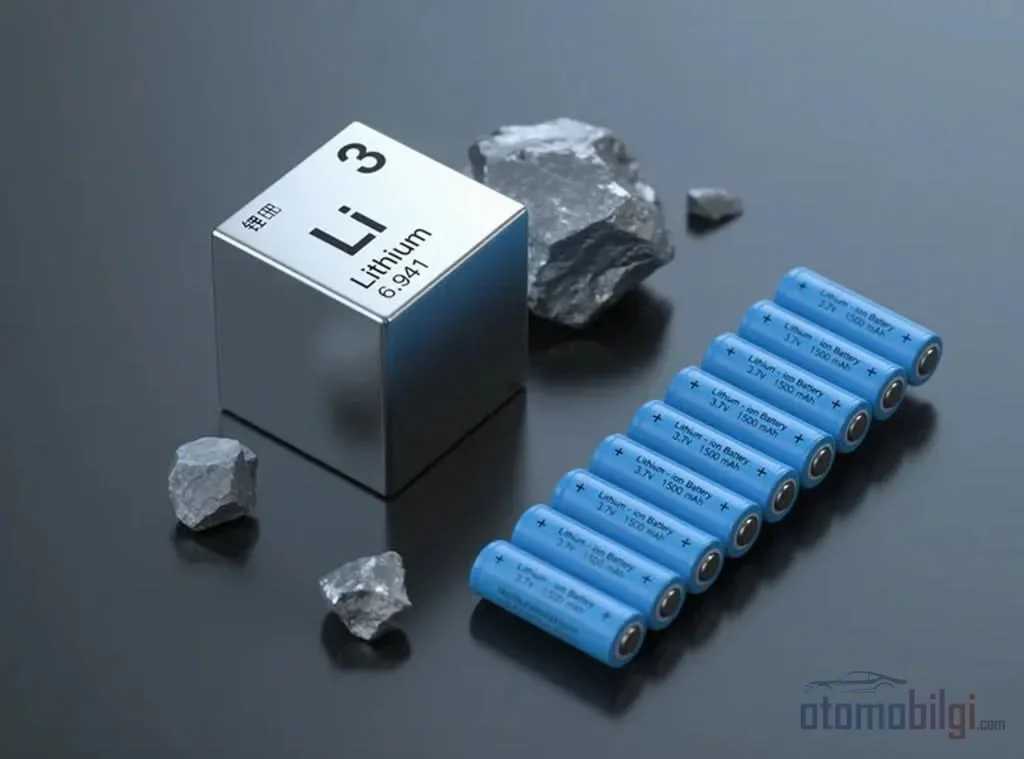
The energy density of a battery is determined by the anode as much as the cathode, and on the anode side, graphite has sat on the throne for more than 30 years. Graphite's job is simple: it stores 1 lithium ion for every 6 carbon atoms, and in return delivers 372 mAh of theoretical capacity per gram. Low-cost, chemically stable, and durable for thousands of cycles - but we have long since reached this capacity ceiling.
Silicon's equation is entirely different. A silicon atom can host 4.4 lithium ions ; by weight, its theoretical capacity is measured between 3,576-4,200 mAh/g depending on the lithiation stage used. That means an anode material of the same weight can store about 10 times more lithium than graphite. Volumetric capacity is also impressive: approximately 9,800 mAh/cm³. In addition, silicon operates at a low potential of about 0.2 V against lithium; since this keeps the cell voltage close to graphite-based cells, pairing it with a cathode is not a problem.
On paper, the picture is as simple as it is intimidating: switch the anode to silicon and multiply the energy density. In practice, reaching that entire ratio is not possible, but even reaching only a part of it is enough to create a range difference per pack. The entire industry race is built on growing this part as much as possible.
The Expansion Problem: Why Hasn't Everyone Switched to Silicon Yet?
Silicon's one big problem is mechanical. When fully loaded with lithium, its volume expands by about 280-300% ; graphite's expansion is only around 10% . It is not hard to guess, with an engineer's mind, what happens when you fill a battery cell with a material that swells and shrinks thousands of times.
The chain damage progresses like this: repeated expansion creates mechanical stress and cracking in silicon particles; the particles break down over time in a process called pulverization. Each newly exposed surface has to come into contact with the electrolyte and form a new SEI (solid electrolyte interphase) layer; this layer consumes lithium and electrolyte. The result is accelerating capacity loss - in systems with pure silicon anodes, the practical cycle life can fall below even 100 cycles is. This 300% volume expansion is recognized as one of the five fundamental obstacles to commercialization; secondary problems such as gas evolution can also be added to it.
Commercially used silicon-based anode types can be grouped under four headings: silicon nanoparticles, silicon suboxides (SiOx), silicon-graphite composites (SiGC), and silicon-carbon composites. SiOx makes expansion more moderate from the start, which is why it has found its place in Panasonic cells used by manufacturers such as Tesla.
How Do Manufacturers Overcome the Expansion?
Nanostructuring
The first and most fundamental move is to keep silicon at a smaller scale. Nano-sized particles, nanowires, and porous architectures distribute the volume change more evenly across the particle, reducing cracking. The logic of the porous design is also elegant: you leave pre-allocated voids for expansion, the material fills these voids when it swells, and the external electrode structure retains its integrity.
Carbon coating and conductive networks
The second move is conductivity and stability. Multilayer carbon coating stands out as one of the effective and cost-efficient ways of managing silicon's dramatic volume expansion; carbon also raises the composite's conductivity. As a more radical solution, single-walled carbon nanotubes (SWCNT) create highly conductive and mechanically robust connections between silicon particles, preventing the electrical network from breaking during cycling.
Binders, electrolyte, and pre-lithiation
The anode sheet is not made of silicon alone; the binder that holds the particles together is also on the front lines of the battle against expansion. Conventional PVDF falls short for this task; binders such as CMC (carboxymethyl cellulose) and alginate provide a stronger bond, while branched-chain polymer binders absorb the expansion stress and preserve anode integrity. On the electrolyte side, the FEC additive forms a more robust SEI layer and contributes to cycle stability. To compensate for the irreversible capacity loss in the first cycle, pre-lithiation is applied - a technique of providing an extra lithium reservoir to the silicon before the first charge.
Silicon oxide and composites
Silicon-based anode types used in commercial practice can be grouped under four headings: silicon nanoparticles, silicon suboxides (SiOx), silicon-graphite composites (SiGC), and silicon-carbon composites. Since SiOx makes expansion more moderate from the start, it has found its place in Panasonic cells used by manufacturers like Tesla.
Is Silicon Already Present in Current Batteries?
Yes - but contrary to what most readers think, it is not yet 100% silicon. Today, commercial production uses silicon-graphite composites containing 5-20% silicon by weight. There is a good engineering reason for this: the graphite matrix provides both stable SEI formation and expansion allowance for silicon particles; moreover, it can be produced on existing graphite production lines. So the transition is being made gradually, without requiring factories to be rebuilt from scratch.
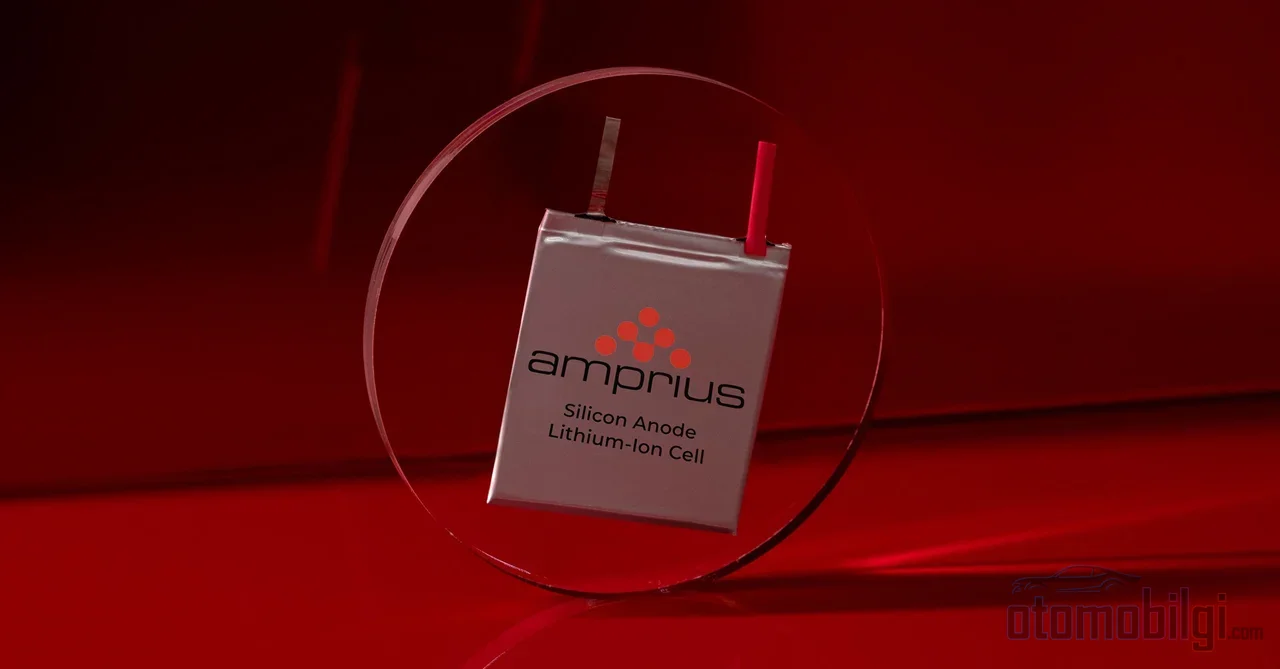
Application examples are multiplying rapidly: cells with silicon-containing anodes in the Mercedes-AMG GT 4-Door Coupé with an NCMA cathode reach an 298 Wh/kg energy density; Grepow's NMC cells rise to 350 Wh/kg with a silicon-carbon anode. Sila Nanotechnologies's silicon anode technology is used in the Whoop 4.0 fitness wristband and the Honor Magic7 Pro smartphone; Amprius demonstrated 315 Wh/kg in a 6.3 Ah 21700 cell with the SiCore platform it introduced in early 2024, and 25% more capacity compared to standard 5.0 Ah cells. Sionic Energy has introduced a cell with a 100% silicon anode - this is the industry's most aggressive edge.
There are also measurable concrete claims: Group14 Technologies' SCC55 silicon-carbon composite delivers 50% higher volumetric energy density than graphite at full lithiation; the company's material has been delivered to more than 100 EV and battery manufacturers since September 2024. Group14 In tests by StoreDot, which works with this material, it is reported that 80% charging was achieved in 10 minutes. So it is not the entire jump claimed in the headline, but a certain portion of it is being measured in the field today.
What Is the Real Impact on Range and Charging Time?
The increase in energy density translates directly into range: more stored energy at the same battery weight means more kilometers in the same vehicle. Secondary sources carry promises of up to 50% range increase or 2x range; however, these need to be separated from measurable data. The concrete claim of material manufacturers like Group14 is a 50% increase in volumetric energy density compared to graphite - most of the percentage range promises are more ambitious projections derived from this scale. The healthy reading is this: as the silicon ratio increases, the range increase also grows, but the full jump requires mass production maturity of silicon-dominant anodes.
On the charging side, the picture must deliberately be told in a balanced way. Silicon has the potential to carry lithium ions faster within the anode, and there is electrochemical data showing it can be charged about twice as fast as graphite before reaching 0 V. In contrast, the finding of Oak Ridge National Laboratory, affiliated with the U.S. Department of Energy, indicates that silicon anodes can be fast at power delivery (discharge) but slower at charge uptake - meaning the fast-charging claim depends on material and cell design, it is not an automatic gain. The most accurate framing is this: properly designed silicon-carbon anodes open the way for fast charging; but pure silicon itself is not a fast-charging guarantee.
Cost and Solid-State Outlook
The cost of the capacity advantage exists for now: silicon anode production is roughly 15-20 USD/kWh, while graphite is around 5 USD/kWh . Industry projections point to cost parity around 2027-2028, that is, matching graphite. Market projections, meanwhile, range widely due to definitional differences; forecasts for the anode material market extend to the tens of billions of dollars over a ten-year horizon, and one analysis predicts that by 2035 silicon could account for 20% of EV anode capacity. What matters is not the absolute value of the figures but the trend: the direction is the same in every projection - upward.
There is also a safety dimension, which is the issue that must not be overlooked from an engineer's perspective: higher capacity means more energy stored in the cell, which carries the risk of greater energy release in the event of a possible failure. In high-density cells with silicon anodes, safety analysis becomes an even more critical design input than with graphite.
Looking to the future, silicon's story intersects with solid-state batteries. Silicon is one of the promising anode candidates for future lithium-ion cells with solid electrolytes; different combinations of solid electrolyte and silicon are being actively researched, and in solid-state architecture, binder choice plays a critical role in preserving the structural integrity of the silicon anode. In other words, when the solid-state revolution arrives, there is a good chance that the anode material knocking on the door will be silicon. As a note: this story does not apply to the sodium-ion side - since sodium ions do not work well with graphite, the anode choice in that chemistry is hard carbon with a capacity of 300-350 mAh/g ; silicon's advantage is specific to lithium chemistry.
Conclusion: The Leap's Today and Tomorrow
Silicon anode is the technical foundation of a leap in energy density that can be skipped not by steps but by orders of magnitude - but this leap is not a single piece; it is a phased engineering construction. Manufacturers who manage swelling with nanostructures, carbon coatings, advanced binders, and blending have today reached 298-350 Wh/kg cells with 5-20% silicon content; next-generation designs with over 80% silicon are also on the roadmap. In the near term, we will see silicon blended with graphite and carbon in electric vehicles rather than pure silicon; the range gain will grow proportionally from cell to pack. Silicon anode technology is no longer a hypothesis - in its current form, it is more of an increment added little by little, an acceleration that will visibly change range and charging tables over the years.
Sources
- A comprehensive review of silicon anodes for high-energy batteries (ScienceDirect)
- Understanding Why Silicon Anodes Are Fast Discharge, Slow Charge (Oak Ridge National Laboratory)
- The Age of Silicon Is Here...for Batteries (IEEE Spectrum)
- Sionic Energy Unveils 100-Percent Silicon Anode Battery (IEEE Spectrum)
- Next-Gen Anode Material to Succeed Graphite: Silicon Takes the Lead (Highstar)
- Compare Graphite vs Silicon Anode in Lithium Ion Battery (Patsnap Eureka)
- What is a Silicon Anode Lithium-Ion Battery? (Grepow)
- Comparison of commercial silicon-based anode materials (Sciopen)
- Solutions for the problems of silicon-carbon anode materials (PMC)
- Silicon-based anodes for solid-state batteries (PMC)
- Recent progress and challenges in silicon-based anodes (RSC)
- Paving the path toward silicon as anode material for future solid-state batteries (ScienceDirect)
- Relationship between Silicon Percentage in Graphite Anode (ACS)
- Silicon-based Anodes Challenges & Practical Testing Solution (IEST Battery)
- Addressing Silicon Anode Swelling in Energy Storage (AZoM)
- Silicon Anode Materials Market (SNS Insider)
- Charted: The Rise of Silicon in EV Batteries (Visual Capitalist)
- Silicon-Anode Batteries: More Energy, More Risk? (Exponent)