Sodium-Ion Battery Cars Have Started Hitting the Road
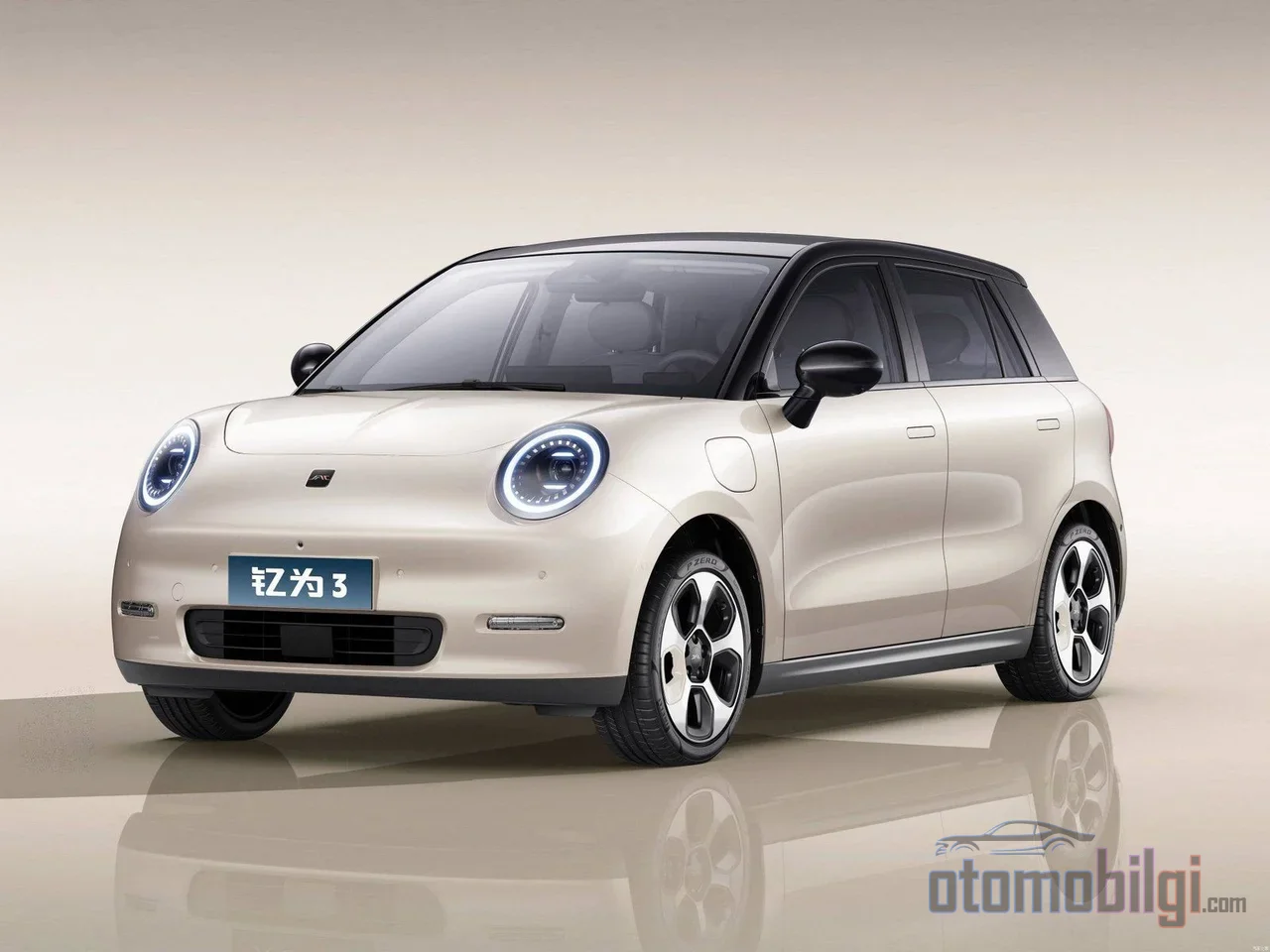
For years, we kept talking about sodium-ion batteries as the technology of the future; in the shadow of solid-state, always as news from a few years down the road. Then in December 2023, the world's first mass-produced sodium-ion electric car rolled off a production line in China, and that date never changed again. Today, three production models are on the road with this chemistry, while CATL has locked volume production into the final quarter of this year. So why did sodium-ion suddenly become real, and where do we stand against LFP?
The First Mass-Production Vehicles: How Did the JAC Yiwei and JMEV EV3 Get Started?
First in line for mass production is Volkswagen-backed JAC Yiwei. The vehicle entered the production line in China in December 2023, deliveries began in January 2024, and in February 2024 the first export of a sodium-ion battery electric car also took place. Underneath this 3.65-meter micro car sits a pack made up of cylindrical sodium-ion cells in 32140 format: 23.2 kWh of capacity at pack level and a range of 230 km according to the CLTC cycle. Cell density is 140 Wh/kg, dropping to 120 Wh/kg at pack level; a 10%-80% charge is completed in about 20 minutes at 3C-4C rates.
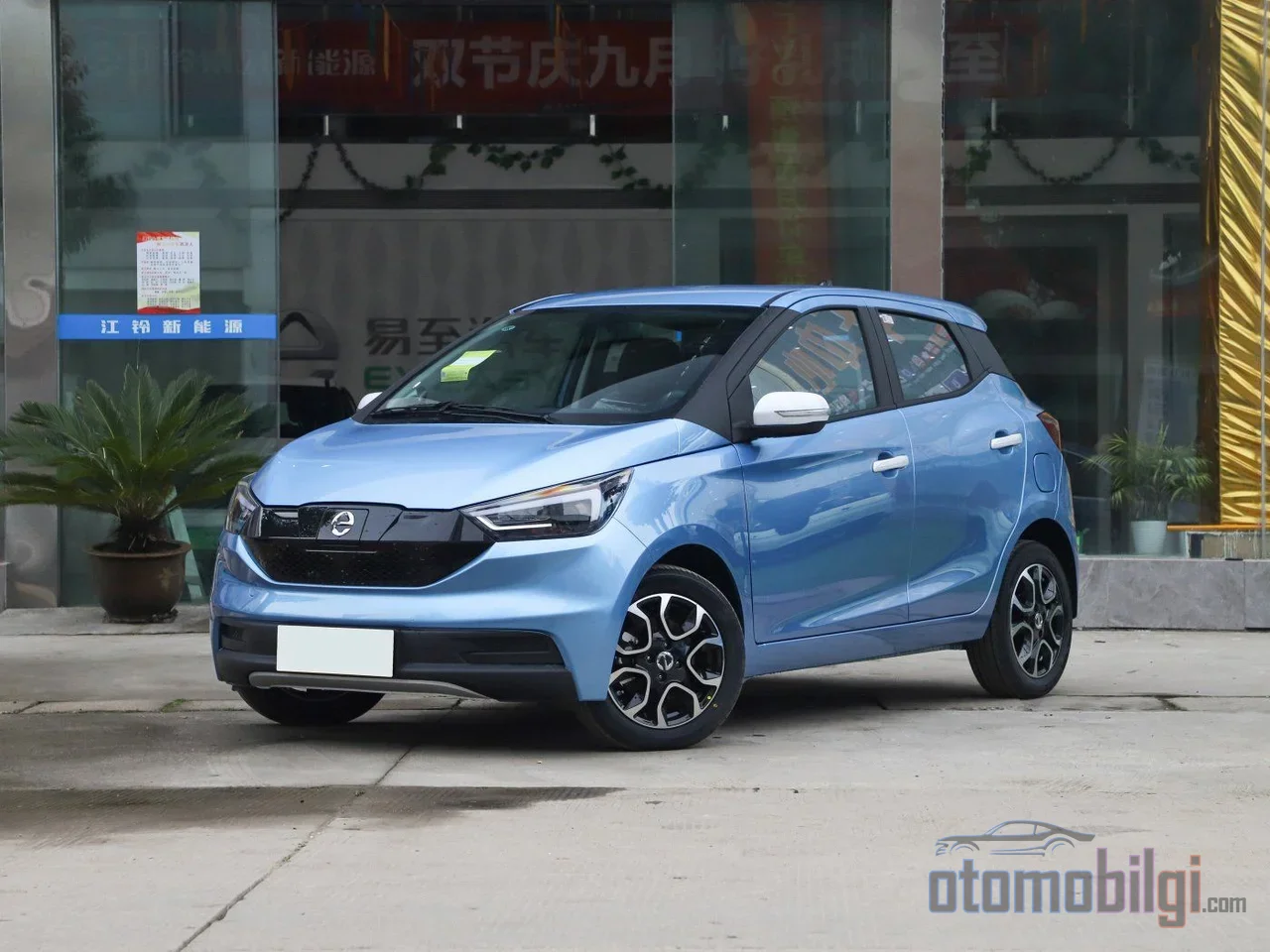
The second model to come off the line in the same period was the JMEV EV3; the world's second production car to use this chemistry, with Farasis Energy's sodium-ion cells. Two different vehicles rolling off the sodium-ion production line at the end of the same month also explains why Chinese manufacturers keep investing in this chemistry: The sodium version of the EV3 offers 251 km of CLTC range with a 21.4 kWh pack, and its starting price is RMB 58,800 - roughly $8,300. That is a figure that redefines the battery's share of the vehicle's total cost in the micro EV segment.
Key Highlights
- The world's first mass-produced sodium-ion EV was the JAC Yiwei; production started in December 2023, offering 230 km of range with a 23.2 kWh pack.
- The Changan Nevo A06 is the first model to push range above 400 km with CATL's 45 kWh Naxtra battery.
- The CATL Naxtra retains more than 90% of its range at -40°C and delivers three times the discharge power of LFP at -30°C.
- At cell level, sodium-ion is still about 13% more expensive than LFP; forecasts say this gap will reverse.
- Changan and CATL introduced this vehicle in February 2026 as the world's first mass-produced sodium-ion passenger car.
Changan Nevo A06 and CATL Naxtra: The Chemistry Has Moved to the Big Class
Proving that sodium-ion works in micro EVs is one thing; bringing out a long-range passenger car without breaking the energy density constraint is quite another. That is precisely why the launch on February 5, 2026 should be seen as a threshold: Changan and CATL announced the Changan Nevo A06, the world's first mass-produced sodium-ion battery passenger car, with its market launch expected in mid-2026. The vehicle has a 45 kWh pack, and according to CLTC, the range is above 400 km.
At the heart of this pack lies CATL's Naxtra battery; cell energy density is announced as 175 Wh/kg, which is considered a sector-leading figure on the sodium-ion side. The most striking figure, however, is the cold performance: Naxtra delivers three times more discharge power than LFP at -30°C, retains more than 90% of its range at -40°C, and provides stable power output down to -50°C. This is exactly where sodium-ion is strongest, in winter conditions, which are lithium-ion's weakest point - generic sodium cells can also retain about 90% of their nominal capacity at -40°C.
The critical step on the production side became clear at CATL's technology day on April 21, 2026: it was announced that mass production would begin in the last quarter of this year, and the company's chief scientist Wu Kai stated that the core production challenges had been overcome. The four major technical obstacles listed by CTO Gao Huan - extreme moisture control, gas generation from hard carbon anodes, the aluminum foil bonding bottleneck, and the mass production of self-generating anodes - have been solved; according to the company, more than 100 engineering problems in total have been closed out. By 2025, CATL had invested approximately 10 billion yuan (about 1.45 billion dollars) in sodium battery R&D and has also secured the world's largest sodium-ion order, a supply agreement for 60 GWh. It expects 20,000 electric vehicles to use sodium-ion batteries this year; it is targeting rollout starting from the second quarter in passenger vehicles and from the third quarter in commercial vehicles. The sodium battery variant of the Aion UT Super, which GAC and JD.com presented as a collaboration, is also on the production calendar.
Sodium-Ion vs. LFP Comparison: Which Battery Wins Where?
The strengths of the two chemistries are actually perfect complements to each other. LFP is cheaper per kWh, has a long cycle life, and is an extremely difficult chemistry to make undergo thermal runaway. Sodium-ion stands out because it requires no lithium or other scarce battery minerals at all, offers very low-temperature performance, and has a cost that has potential to fall over time. It is more honest to summarize the comparison in a single table:
| Feature | Sodium-ion | LFP |
|---|---|---|
| Cell energy density | 100-160 Wh/kg (CATL Naxtra 175 Wh/kg) | 160-200 Wh/kg |
| Cycle life | 4,000-6,000 cycles; CATL platform 8,000 | 3,000-6,000 cycles |
| Low-temperature performance | ~90% of capacity retained at -40°C | Noticeable power loss in the cold |
| Cell cost (2026) | ~59 USD/kWh (broad range: 70-120 USD/kWh) | ~52 USD/kWh (70-80 USD/kWh in separate figures) |
| Use cases | Micro and A0-class small EVs, stationary storage | Broad EV spectrum |
As can be read from the table, energy density remains sodium-ion's main constraint. While LFP reaches the 160-200 Wh/kg band, sodium-ion mostly stays between 100-160 Wh/kg; more weight and volume are required to carry the same capacity. That is why the first production applications naturally turned to compact models such as the JAC Yiwei and JMEV EV3, as well as station-scale storage. On cycle life, the two chemistries are very close to each other; sodium-ion's 4,000-6,000 cycle band practically overlaps with that of quality LFP, and the CATL platform goes beyond this band with an 8,000-cycle claim.
Why Is Sodium-Ion Still More Expensive Than LFP? The Real State of Cost
The perception that sodium-ion is cheap is widespread, but 2026 data paints a more nuanced picture. One analysis puts the average LFP cell cost at $52/kWh and sodium-ion at $59/kWh; meaning at the cell level, sodium-ion currently carries a premium of roughly 13%. Other assessments place LFP in the $70-80/kWh range and sodium-ion in the $70-120/kWh band - the difference varies depending on which production scale and which cell type the measurement is based on. The common point is this: cheapness today is a promise for the future, not a reality.
When will the price gap close?
Projections say this gap will reverse. According to IRENA's technology note, sodium-ion cell cost could fall to as low as $40/kWh; another analysis predicts sodium cells could reach $55-70/kWh, while LFP could reach $85-110/kWh. On the IEA side, prices are also expected to fall to roughly 30% below LFP. The mechanical explanation for this is simple: economies of scale are effective in battery production, and sodium-ion is still in the first years of volume production. As scale increases, unit cost will fall; meanwhile, price volatility in the lithium supply chain will make sodium's raw material cost advantage - which effectively makes its raw material nearly free - even more significant.
Where is the market growing?
Market size estimates vary considerably depending on scope definitions: for the general sodium-ion market, projections for 2034 range from below $1 billion to above $12 billion, while the automotive-specific forecast goes from $0.85 billion in 2025 to $7.97 billion in 2034, growing 28.5% annually. There are more concrete figures on the China side: the market is projected to grow from 10 GWh in 2025 to 292 GWh in 2034, and a 20 GWh sodium-ion production facility has been announced in China. China's total sodium-ion production capacity had reached approximately 275 GWh by the end of 2025; the combined market share of CATL, BYD and HiNa in this market is estimated at 55-60%. CATL's chairman Robin Zeng goes even further, predicting that sodium-ion will eventually replace 30-40% of the existing battery market - there is a wide gap between this and the cautious estimates of research firms, and this gap shows that it is not yet clear in which segments the technology will find its place.
While Solid-State Is Delayed, Why Did Sodium-Ion Reach Mass Production First?
The industry narrative has chased solid-state batteries for years; yet it was sodium-ion that claimed the first mass-production victory. The reason lies in production engineering. According to CATL, solid-state is far from mass production, while sodium-ion is predicted to be the chemistry adopted first; the company is skipping solid-state and moving directly to sodium-ion, while holding onto lithium-air for the long term. The advantage of sodium-ion is that it is a technology whose production infrastructure closely resembles lithium-ion lines: the problems to be solved - humidity control, anode gas generation, foil bonding - were complex but classic engineering problems, and CATL has openly announced that it has solved them.
The technology's self-declared targets are also ambitious: a 600 km range in pure electric models and 300-400 km of pure electric range in range-extended hybrids once the supply chain matures, which could cover more than half of market demand. Of course, an engineering reality needs to be remembered here as well: reaching 600 km starting from 175 Wh/kg means a larger battery pack - that is, the cost of sodium-ion's weight disadvantage. For the target to be realistic, gains in density must also progress in parallel.
Conclusion: Is Sodium-Ion No Longer the Battery of the Future, But of Today?
To answer the question in the title clearly: the sodium-ion battery is no longer a laboratory story, it is a reality on the production line - but not yet the battery for every class. Series production, which began in December 2023 with the JAC Yiwei and JMEV EV3, reached passenger cars with 45 kWh and over 400 km of range in February 2026 with the Changan Nevo A06 and CATL Naxtra. CATL's volume production in the last quarter will accelerate this spread.
The technology's identity card has also become clear: since its energy density remains below LFP, its main territory is small and mid-range EVs, stationary storage, and cold climates; its cycle life rivals LFP, and while its cost currently carries a premium of about 13%, projections of falling below LFP are strong as the scale grows. A year or two ago, mentioning sodium-ion ahead of solid-state would have been considered an exaggeration; today the vehicles on the roads are taking the place of that assessment. The two indicators to watch are whether CATL will meet its 2026 target of 20,000 vehicles and how quickly cell prices can actually fall into the 40-55 USD/kWh band.
Sources
- Volkswagen-backed JAC Yiwei EV powered by sodium-ion battery starts mass production in China - CarNewsChina
- JAC's Yiwei brand starts delivering EVs equipped with sodium-ion batteries - CnEVPost
- JAC Yiwei starts first exports electric cars with sodium-ion batteries - Electrive
- Changan Qiyuan A06 receives sodium-ion batteries from CATL - Electrive
- Changan Nevo A06: World's First Production EV with Sodium-Ion Battery - IAA Mobility
- CATL resolved sodium-ion battery core manufacturing challenge, mass production to start in 2026 - CarNewsChina
- Sodium-ion battery momentum grows, but challenges remain - IEA
- Sodium-Ion Battery vs LFP: Separating Hype from Reality in 2026 - Seplos
- CATL Expects Sodium-Ion Battery Adoption Before Solid-State - Battery-News.de
- Sodium Ion Battery Market Forecast 2034 - IMARC Group