The Next Decade of Batteries with Solid-State and Sodium-Ion
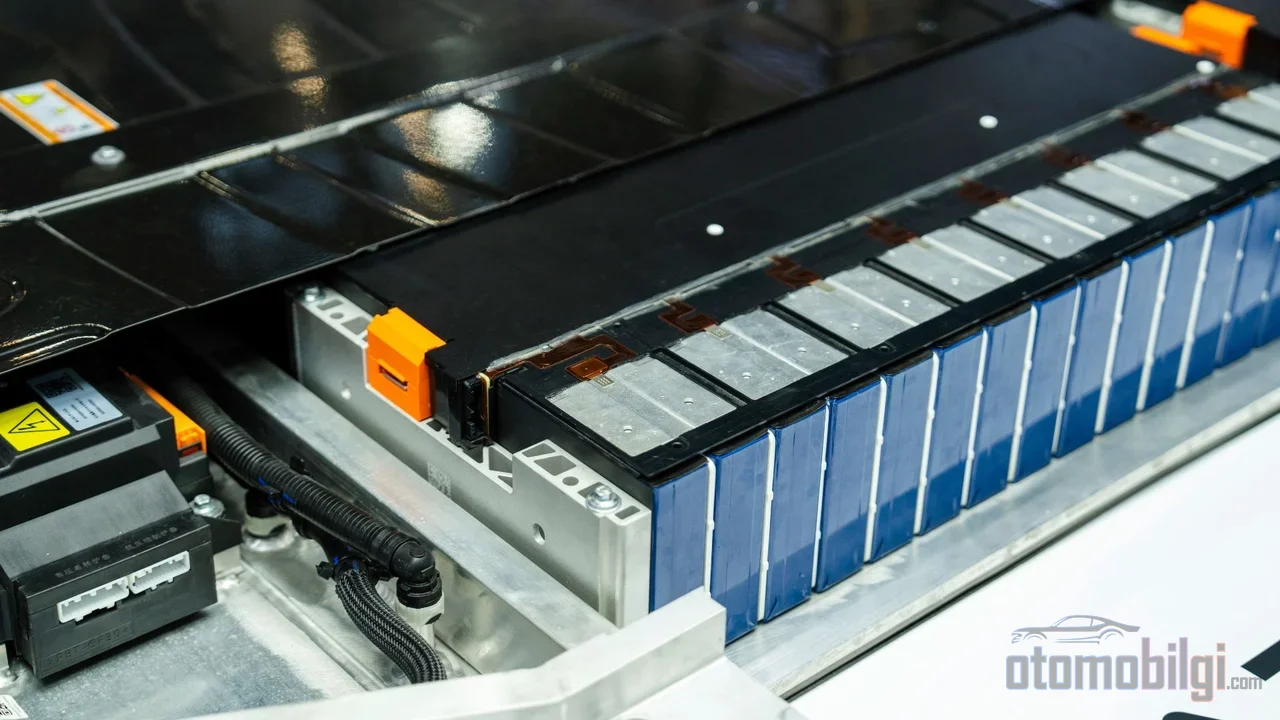
Share This Page
Solid-state batteries aim to eliminate the two fundamental weaknesses of lithium-ion - the flammable electrolyte and limited energy density - by replacing the liquid electrolyte with a solid ionic conductor; sodium-ion, on the other hand, uses abundant and cheap sodium instead of lithium, gaining advantages in cost and cold-weather performance, accepting lower energy density in return. As of 2026, sodium-ion has entered mass production; true solid-state largely points to the end of the 2020s and the 2030s. This page comparatively examines the promise, obstacles, and timeline of both chemistries.
Highlights
- Most solid-state cells require a continuous compression pressure of 10-20 MPa for performance; in conventional lithium-ion this value is below 1 MPa.
- Sodium-ion cells -20°C can be charged noticeably better than lithium around.
- CATL, in 2026 is starting mass production of sodium-ion batteries with an energy density of 175 Wh/kg
- BloombergNEF predicts that by 2035 solid-state batteries will account for only 10% of EV and battery storage demand.
What Do Solid-State Batteries Promise?
The core idea of the solid-state battery is simple: replace the flammable liquid solvent in the cell with a solid material that can conduct lithium ions. The family of solid electrolytes, ranging from ceramic-based garnet structures (LLZO) to sulfide glasses (LGPS) and polymer composites (PEO), raises thermal stability and reduces the risk of catastrophic failure caused by electrolyte combustion. Consider that the main failure pathway in a modern lithium-ion cell is eliminated - this is a move that fundamentally changes the safety discussion.
The second promise is energy density. Liquid electrolytes are incompatible with lithium metal anodes over long cycle life; lithium needles called dendrites grow freely within the liquid and short-circuit the cell. Solid electrolytes can restrain this growth to a certain extent, making the lithium metal anode practical. Lithium metal is a material that significantly increases theoretical capacity on the anode side; when paired with high-voltage cathodes, the energy density gain grows. Additionally, options such as higher silicon loading and safe operation at higher cell temperatures also open up.
Estimates on lifespan are also ambitious: some solid-state cells are predicted to retain 90% of their capacity after 5,000 cycles . The wide operating temperature range is the third item on the list of contributions. But this picture describes laboratory conditions and specific architectures; when it reaches the field, the picture becomes complicated.
The Solid-Solid Interface Problem: Why Does Physics Resist?
The most fundamental engineering obstacle of solid-state is the contact problem. A liquid electrolyte fills every gap of the porous electrode, and the contact area with ions is practically unlimited. Two solid surfaces exchange ions only at the points where they truly touch; the contact area is limited and pressure-sensitive. Most of today's solid-state architectures require 10-20 MPa requires constant compression pressure - in conventional lithium-ion cells this value is below 1 MPa. This difference directly affects module and pack design: you have to apply mechanical pressure to each cell that is evenly distributed and does not degrade over thousands of kilometers. For the vehicle package, this means a serious weight and cost penalty.
Obstacles on the production line
Making the cell is not easy either. Sulfide glass electrolytes are the best option in terms of ionic conductivity, but they are extremely sensitive to moisture; processing lines require a dew point of -70°C or lower. Oxide garnets are more resistant to moisture, but require densification at high temperature and have a brittle structure. On the cell format side, options today are basically limited to pouch and prismatic.
Another metric is more illuminating: commercial liquid-electrolyte EV cells 4 mAh/cm² reach an areal capacity of over . Most demonstrated solid-state prototypes, on the other hand, operate well below this value for acceptable cycle life. This gap between the energy density promise and current prototype performance summarizes numerically why the technology has been delayed.
Is Solid-State Really Safer?
The answer is not as clear-cut as it seems. The elimination of flammable liquid is a genuine gain, but solid-state cells are not "intrinsically safe." Lithium metal retains its high reactivity as an anode; the possibility of oxygen release from high-energy cathodes persists. Peer-reviewed thermal analyses show that the thermal runaway window in most solid electrolyte/lithium composites is approximately in the range of 270-350°C . The LLZO/lithium interface, on the other hand, showed no thermal runaway in adiabatic calorimetry tests - meaning material choice makes a difference.
The point that needs to be read more carefully is this: in theoretical formats with high energy density, under extreme conditions such as internal short circuit, solid-state cells are predicted to show a temperature rise above 1,600°C and release more heat than conventional lithium-ion. Moreover, the finding that the electrolyte/lithium interface carries a more serious thermal risk on the cathode side rather than the anode side shows where safety design should focus. In summary: the risk does not disappear entirely, it shifts and needs to be better managed.
When Will Solid-State Battery Vehicles Be on the Roads?
The calendar is more cautious than the announcements promise. Toyota's original 2025 target 2027-2028 has shifted to ; the company is pointing to this range for the launch of a solid-state battery vehicle. QuantumScape's 2024 commercial production target has today come down to the B-sample stage for 2025-2026 - meaning the roadmap is running behind. Honda is developing all-solid-state batteries independently and announced that it aims to put them in production vehicles in the second half of 2026 ; this is the most aggressive end of the calendar. Mercedes-Benz has similar targets.
Industry analysts, however, paint a broader picture: within the last year, numerous cell manufacturers and automotive companies, by 2027 committed to solid-state EV demonstration. The most likely scenario is that "semi-solid" systems with hybrid/gel electrolytes will first enter service in transportation, defense, and aerospace in the late 2020s; for true solid-state to reach high-volume commercialization, the early 2030s is being indicated. The long-term projection points in the same direction: QuantumScape by 2040 foresees production of 1 terawatt-hour or more of solid-state per year. Market size estimates suggest the global EV solid-state market could grow from $78.6 million in 2026 to $3,582.7 million in 2034 - a high base, fast multiplier, but the absolute scale slipping into the 2030s.
Meanwhile, a list of names is a shortcut to reading the calendar: Toyota, QuantumScape, Solid Power, Samsung SDI, ProLogium, and Factorial are the companies standing out on the solid-state side in 2026. SES's technology has attracted partnerships with manufacturers like GM, Honda, and Hyundai.
The "Solid-State" Label: The Difference Between Marketing and Engineering
There is a widespread criticism in 2025-2026: the term "solid-state" has turned into a marketing slogan, and most of the cells reaching the roads are actually semi-solid or hybrid in structure. It should be noted that the technology reaching 2026 is largely semi-solid; these are intermediate forms containing liquid components. Although it is said that a Chinese manufacturer is already producing semi-solid batteries and fitting 150 kWh into the same package volume, such claims should be read with caution as they await independent verification. The practical takeaway for the buyer is simple: it is difficult to know without asking which electrolyte architecture a vehicle labeled "solid-state" uses, and the difference between true solid-state and semi-solid matters for both safety and lifespan.
Sodium-Ion: The Balance of Cost, Cold, and Energy Density
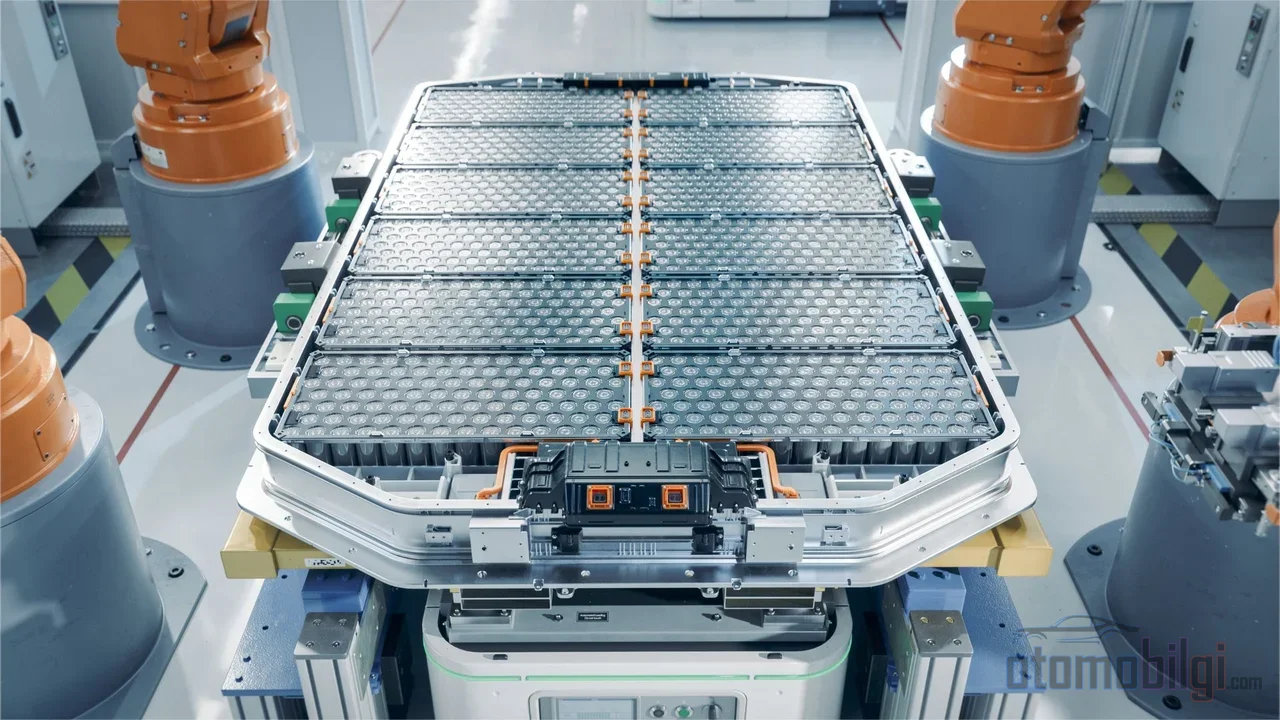
Sodium-ion, unlike solid-state, is not a laboratory promise but a commercial reality. Sodium can be obtained from cheap and abundant raw materials such as seawater and soda ash; this lowers costs as well as reducing the geopolitical risk of the lithium supply chain. Cells can charge faster than lithium-ion. Cold weather performance is the most distinct difference: at -20°C, sodium-ion cells can be charged to 80% capacity in about 18 minutes, while their lithium equivalents take over 30 minutes. CATL's first-generation sodium-ion cells show remarkable behavior in freezing conditions.
The weak points are energy density and lifespan. While lithium-ion cells today progress roughly in the 180-250 Wh/kg range, sodium-ion is roughly at 140-175 Wh/kg range; examples at the upper end of this range are already available. Lower volumetric energy density means a packaging constraint: a bigger and heavier package for the same range. Cycle life is also still behind lithium. The cost picture has become more complicated: when the narrative that sodium-ion will become cheaper than lithium with scale meets the finding that part of the cost advantage has been lost, it becomes clear that the technology's main argument is now not pure price, but cold-weather performance, safety, and raw material diversity.
| Feature | Lithium-ion | Sodium-ion |
|---|---|---|
| Energy density | 180-250 Wh/kg | 140-175 Wh/kg |
| Charging to 80% at -20°C | Over 30 minutes | Approximately 18 minutes |
| Raw materials | Lithium, carries supply risk | Seawater, soda ash - abundant and cheap |
| Cycle life | Longer | Still shorter |
| Status in 2026 | Standard on the road and in storage | Entering mass production, led by China |
Where Will Sodium-Ion Be Used?
The energy density constraint is determining sodium-ion's first stops. Due to range and packaging constraints, the technology is expected to be used first in stationary energy storage, short-range, and low-performance EVs; cold climates, meanwhile, are a unique area of advantage. In stationary storage, the weight and volume penalty is almost negligible, while cost and lifecycle are decisive, so this ordering is consistent from an engineering standpoint.
The commercial side is moving fast. At its supplier conference in December 2025, CATL confirmed that sodium-ion batteries from 2026 onward would spread on a large scale in vehicles and energy storage, and announced that 175 Wh/kg cells would enter mass production once manufacturing challenges were solved. CATL and BYD are accelerating sodium-ion deployment as lithium costs rise; together they control roughly 55% of the global EV battery market, which directly determines how quickly the technology scales. As of 2026, sodium-ion has reached commercial scale through China-led EV projects, grid investments, and manufacturing investments.
The Next Decade's Timeline
To sum up the timing of the two chemistries in a single table:
- 2026: Sodium-ion cells are entering large-scale deployment in vehicles and energy storage; Honda is targeting the second half of this year for solid-state.
- 2027-2028: Commitments by numerous manufacturers to solid-state EV demonstrations; Toyota's plan to launch a solid-state vehicle falls within this window.
- Late 2020s: Entry of semi-solid systems into transportation, defense, and aerospace.
- Early 2030s: High-volume commercialization of true solid-state.
- 2035: According to BloombergNEF's forecast, solid-state will account for only 10% of global EV and battery storage demand.
As for range claims: with solid-state batteries, promises of 745 miles of range and a full charge in under 10 minutes are physically possible, but as of 2026 this has not yet materialized. The gap between manufacturers' "within two years" rhetoric and analysts' timelines pointing to the 2030s is the most critical measure in evaluating this technology.
Conclusion: Which Chemistry Wins in Which Scenario?
Solid-state and sodium-ion are not rivals but complements. Solid-state is a technology that wants to push up the energy density ceiling and make the lithium metal anode practical, targeting the long-range segment in the long term; in return, it has to solve interface physics, mechanical pressure, and manufacturing problems. Sodium-ion, on the other hand, is the pragmatic solution that is scaling today and delivering value in cold weather and cost-sensitive segments; the price it pays is energy density and cycle life. The realistic expectation for the coming decade is this: while sodium-ion solidifies its position in stationary storage and entry-segment EVs, solid-state will first spread with semi-solid forms and select models, and from the 2030s onward with truly solid cells. The battery's next decade will not be the story of a single winner, but the story of the right task assignment per chemistry.
Sources
- Thermal stability and safety challenges of all-solid-state batteries
- Solid-State Batteries in 2026: Promise vs. Reality
- Sodium-ion battery momentum grows, but challenges remain (IEA)
- Sodium-ion batteries: Should we believe the hype?
- A comprehensive use-case-analysis of sodium-ion-battery
- Sodium ion batteries: A sustainable alternative to lithium
- Beyond Lithium: Evaluating Sodium-Ion Batteries
- CATL to Roll Out Sodium-Ion Batteries in 2026 (Caixin Global)
- All Current And Upcoming EVs With Solid-State Batteries
- Will 2027 be the year of the solid-state EV battery?
- Our Strategic Blueprint (QuantumScape)
- EV Solid State Battery Market Size, Share, Forecast
- Safer and Powerful Solid-State Batteries for Electric Vehicles
- Sodium-Ion vs Lithium-Ion Battery: 2026 Comparison
- How Sodium-Ion Technology Is Disrupting the Global Battery Market in 2026