CATL Shenxing Plus Breaks the LFP 205 Wh/kg Barrier
It was long believed that lithium iron phosphate (LFP) chemistry had hit its ceiling in terms of energy density. It was thought that a cheap, safe chemistry with a lifespan of over 2,000 cycles was doomed to the 150 Wh/kg range; when you needed range, the solution was on the nickel manganese cobalt (NMC) side. At the Auto China show in Beijing in April 2024, CATL released a figure that shook this assumption with its Shenxing Plus battery: 205 Wh/kg. So was this figure measured at the cell or pack level, what is the physical basis of the 1,000 km range claim, and does this development really close the gap between LFP and NMC?
Where Was the 205 Wh/kg Figure Measured: Cell or Pack?
This question must be addressed first, because it is the key to interpreting the data correctly. In the battery world, energy density is defined at two separate levels. Cell level describes the specific energy offered by the active material of a single cell. Pack (system) level, which also takes into account the structure into which the cells are placed, the cooling components, and the battery management system (BMS), always yields a lower value. The difference is not negligible: In LFP chemistry, while cell-level density is in the range of roughly 160-200 Wh/kg, at pack level it typically drops to 130-160 Wh/kg. On the NMC side, cells are measured in the range of roughly 150-300 Wh/kg; some comparisons give this range as 200-300 Wh/kg, others as 150-220 Wh/kg.
Which level the published 205 Wh/kg value for the Shenxing Plus belongs to is inconsistent according to publicly available information: some reports place it at cell level, others at system or pack level. CATL frames the assessment on its own technology page as follows: The NMC-based Qilin battery offers 265 Wh/kg, while the LFP version offers 205 Wh/kg. In this context, 205 Wh/kg marks the upper region achievable for LFP at pack level in CATL's own comparison language. A more cautious reading places the value at cell level and says that pack level remains somewhat below it. In either case, the result is the same: LFP chemistry has been documented in a commercial product exceeding the 200 Wh/kg threshold for the first time. Without clarifying at which level it was measured, comparing figures has no engineering significance.
Highlights
- Shenxing Plus was introduced at the Auto China show on April 25, 2024.
- Energy density of 205 Wh/kg: The first product to exceed the 200 Wh/kg threshold in LFP.
- 4C fast charging: A claim of adding 600 km of range in 10 minutes.
- Range target of over 1,000 km; most likely the Chinese CLTC standard.
- BYD's next-generation Blade battery stands at 190 Wh/kg in the comparison.
Why Was the Classic LFP Range Falling Short?
LFP's classic range of around 150 Wh/kg was the result of a design choice. By its nature, the LFP cathode material carries less energy per cell compared to the NMC cathode; in return, it contains no cobalt or nickel, is thermally more stable, and offers a cost advantage of up to 30 percent with a lifespan of over 2,000 cycles. BYD's Blade battery was the symbol of this philosophy: by integrating long, thin prismatic cells directly into the pack (cell-to-pack), it achieved both structural rigidity and low cost, but on the energy density side it remained at the 190 Wh/kg level even in the new generation, and charging speed data was not shared.
The problem was that cell-level gains had slowed, even though the limits of the chemistry were partially compensated by the pack architecture. Cell-to-pack designs increase volumetric efficiency by eliminating the intermediate layer of modules and integrating the cells directly into the pack; BYD Blade and CATL Qilin are examples of this approach. But pack optimization also has a limit. The only way to permanently increase density is to make progress in the cell itself. CATL's work focuses precisely on this.
How Did CATL Reach 205 Wh/kg?
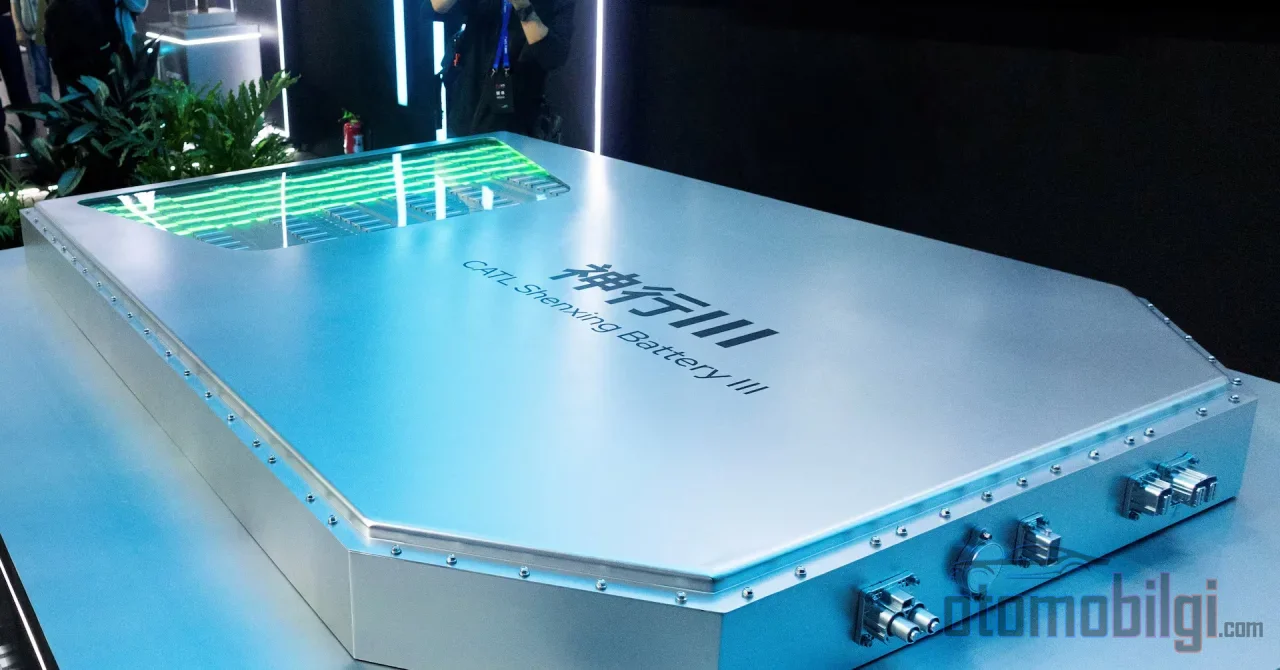
Shenxing Plus achieves this density not with a single leap, but through a series of measured improvements that touch every layer of the cell. The announcement date is April 25, 2024, and the company positions the product as the first LFP battery to offer a range of over 1,000 km together with 4C super fast charging.
Cathode: Granular Gradation Technology
On the cathode side, nanometer-sized LFP particles are placed in their optimum positions within the cathode using the granular gradation method. In the first Shenxing generation introduced in 2023, this approach was described as a fully nano-crystallized LFP cathode material and a highly conductive electron network structure that accelerates the movement of lithium ions. Nano-crystallization increases the rate at which ions leave the cathode, while the gradation of particle placement enables the active material to make the most efficient use of volume.
Anode: 3D Honeycomb Structure
On the anode side, a material with a three-dimensional honeycomb pattern is used. This structure has two functions: it contributes to energy density and keeps the volume expansion that occurs in the anode during charge-discharge cycles under control. In fast charging, the mechanical strength of the anode is a critical parameter for preserving cycle life. In addition, coatings with high lithium-ion conductivity and transition metal element additives are used on both the anode and cathode surfaces.
Body and Pack Architecture
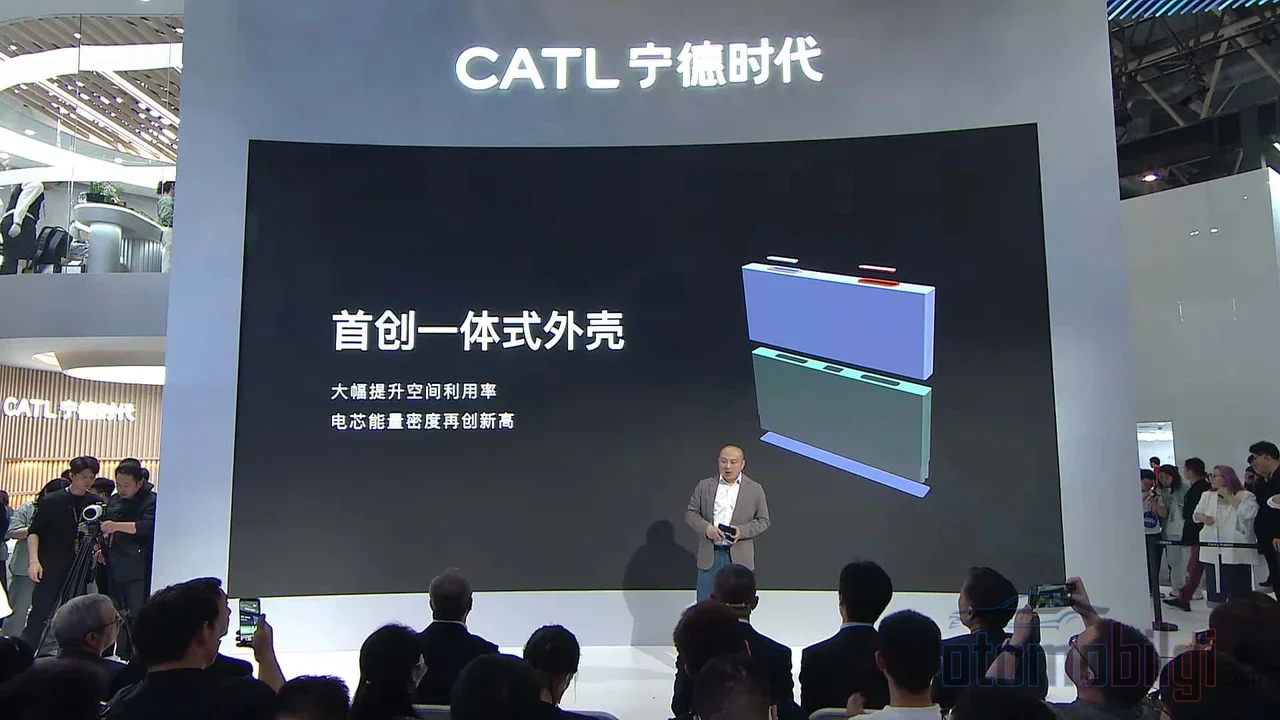
The single-piece body of the prismatic cell optimizes the mounting area for the active material and remains rigid enough for cell-to-pack integration. On the pack side, the third-generation module-free cell-to-pack architecture (CTP 3.0) is used; in this architecture, which is also found in CATL's Qilin battery, the topological structure of the pack is optimized to increase packaging efficiency by 7 percent. In other words, the gain in cell chemistry is multiplied by the gain in pack design and reflected in the result.
AI-Supported BMS and Cooling
4C-level charging currents challenge thermal management. CATL states that the battery management system uses artificial intelligence to predict in advance the effects of high-current charging at the cell level, and that the cooling system has been improved to quickly expel the heat generated during charging. High current is the price of fast charging; and controlling this price without it reflecting on cycle life and safety is the real achievement of the design.
What Does 4C Charging Mean in Practice?
The C-rate is the ratio of charging power to pack capacity. 4C means the pack can be charged with four times its capacity in power, and its concrete equivalent varies depending on capacity: An 80 kWh pack means 320 kW, a 90 kWh pack 360 kW, and a 100 kWh pack 400 kW of charging power. In theory, 4C means a full charge could be completed in a quarter of an hour; the 16.6-minute figure for a full 1,000 km charge is also derived from this rate. However, this value depends on the condition that 4C is maintained across the entire state-of-charge range of the charging curve, and in practice it is conditional. CATL did not disclose the Shenxing Plus's storage capacity and maximum charging power; these two values remain in the records as undisclosed data by the manufacturer.
The announced concrete charging performance is striking: a 20 to 80 percent charge in 10 minutes, adding 600 km of range in that time, and a rate of adding roughly 1 km of range per second. The first Shenxing generation (August 2023, with 4C charging and a claimed 700 km range) added 400 km in 10 minutes; Shenxing Plus improves that value by half.
The Physical Reality Behind the 1,000 Km Range Claim
The 1,000 km figure should be approached with caution. This value most likely belongs to China's CLTC test standard, and CLTC is known for producing optimistic results compared to real-world consumption. When we check the figure in a US-style electric vehicle scenario (assuming 3 kWh per mile consumption, 10 percent degradation, and a 5 percent unusable buffer), the picture becomes clear: a 235 kWh pack is required for approximately 621 miles (approximately 1,000 km) of range. With 205 Wh/kg density, the cell weight alone of this pack would be 1,146 kg; excluding the weights of the pack structure, cooling, and BMS. In other words, 1,000 km is physically possible with an efficient vehicle body and a large pack, but range claims are not a meaningful benchmark on their own without specifying vehicle efficiency, test conditions, and pack degradation.
The Cost Argument: Did the Density Increase Raise the Price?
CATL made no direct statement that the 205 Wh/kg cell was produced without increasing cost; honesty requires acknowledging that point. The cost argument is built on the overall picture of LFP economics: while the global average lithium-ion pack price is at the level of $115/kWh, LFP packs are around $95/kWh and NMC packs are in the $130-150/kWh band. LFP cell prices have fallen below an average of $100/kWh and are on average 32 percent cheaper than NMC cells; in recent years, LFP packs have become cheaper at a rate exceeding 40 percent per kWh. This table shows that Shenxing Plus remains a product within LFP economics, and that its cost advantage over high-density NMC is holding its structure. A product-specific price tag was not disclosed.
Comparison with NMC: Has the Gap Really Closed?
A clear answer is needed here: no, it has not fully closed; but an LFP pack has now entered the density zone that only NMC could reach two generations ago. CATL's own data makes the comparison concrete: In the Qilin architecture, the NMC pack offers 265 Wh/kg, while the LFP pack offers 205 Wh/kg. The difference is around 30 percent, and the LFP side compensates for it with advantages in cost, safety and a lifespan of over 2,000 cycles. The theoretical band of NMC cells extends up to 300 Wh/kg; however, no concrete series-production NMC cell example exceeding 300 Wh/kg has been widely documented for comparison. Considering that current LFP batteries already reach approximately 190 Wh/kg, Shenxing Plus's 205 Wh/kg is about 8 percent above current technology and shows that LFP's double-digit density increase momentum continues.
Conclusion: LFP's Ceiling Is Not an Assumption, but a Moving Target
The story of Shenxing Plus is not just a single figure. At 205 Wh/kg, being the first documented commercial product to exceed LFP chemistry's 200 Wh/kg barrier makes it a milestone; combined with 4C fast charging, adding 600 km of range in 10 minutes and the CTP 3.0 pack architecture, it is the most comprehensive attempt yet of cheap chemistry overcoming range anxiety. NMC is still ahead in density, and the density gap has not fully closed; but LFP's ceiling should now be read not as a natural limit of the chemistry, but as a moving target of engineering. Despite the 205 Wh/kg figure, whose uncertainty about whether it was measured at cell or pack level persists, both interpretations lead to the same conclusion: LFP's limits are significantly higher than assumed a few years ago.
Sources
- CATL Unveils Shenxing PLUS, Enabling 1,000-km Range and 4C Superfast Charging
- CATL presents an LFP battery enabling a 1,000-kilometre range
- CATL shows first LFP battery for 1,000 km range and 4C charging
- CATL presents EV battery with 1,000 km range
- CATL presents EV battery with 1000 km range
- Innovative Technology - CATL
- LFP, NMC and Sodium-ion Compared
- 5th Generation LFP