How Does Dry Electrode Manufacturing Change with the Tesla 4680?
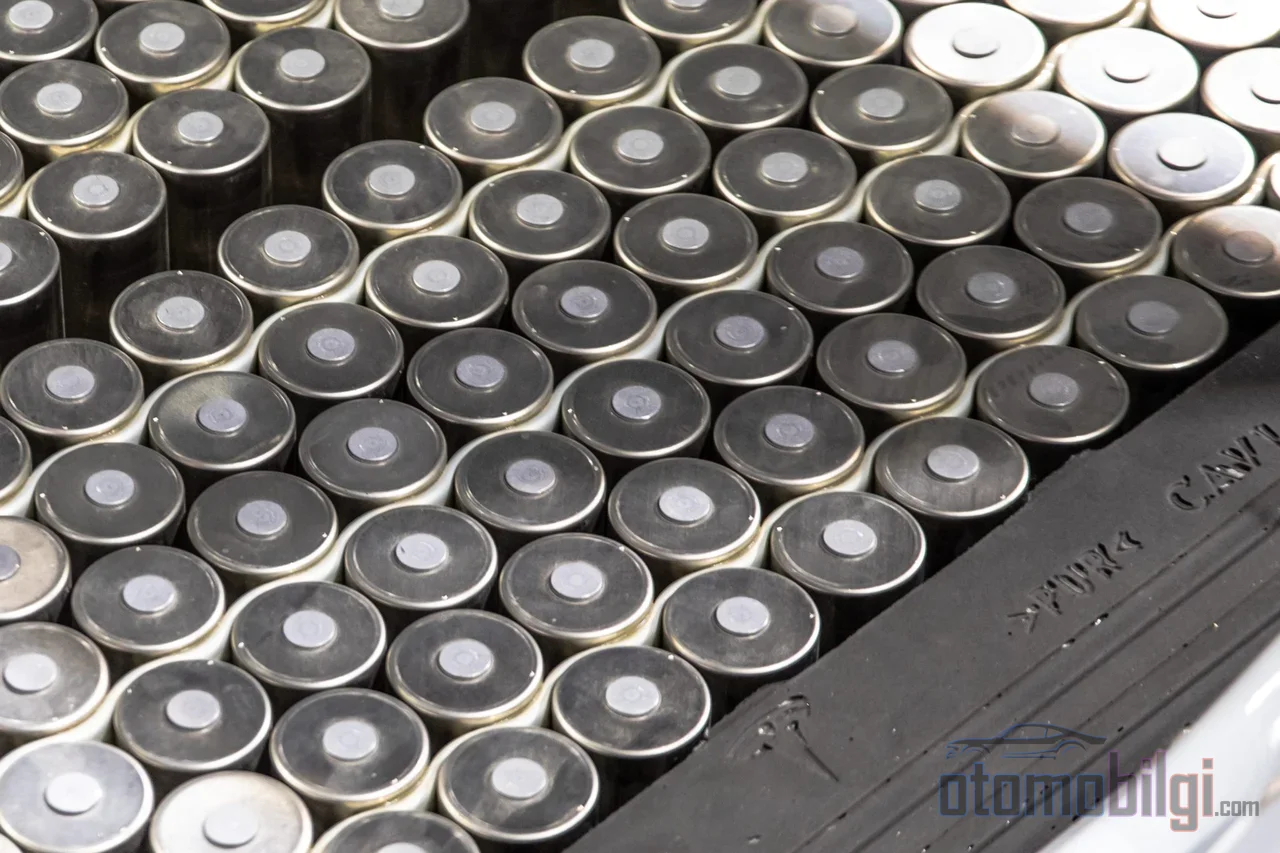
Perhaps the least discussed item in the cost of a lithium-ion cell is not the chemistry itself, but the way the electrode is coated. With an announcement made in January 2026 and confirmed in the following weeks, Tesla stated that it has moved to fully dry electrode production on both the anode and cathode side of its 4680 cells. Elon Musk described making this process work at scale as extremely difficult; it was the product of five years of engineering effort. So how much can you gain by changing only the production method without touching the chemistry inside a battery at all? The answer lies in a chain that extends from the factory footprint to energy consumption and cell performance.
How Does Traditional Wet Coating Work?
Today, the standard route in lithium-ion production is slurry casting, in other words wet coating. The active material, binder and solvent are turned into a slurry in a mixer, spread onto a metal current collector foil, passed through long drying ovens, and then compressed by calendering. The production chain works roughly like this with large lines: slurry mixing, coating, drying, calendering and finally slitting of the electrode and separator.
The critical point is the solvent itself. The typical solvent used on the cathode side is NMP (N-methyl-2-pyrrolidone); its job is to dissolve the PVDF binder. NMP does this job well, but it is toxic, and condensation systems are required to recover the portion that evaporates in the ovens. This means both a facility cost and a continuous energy load. In the drying stage, moreover, three physical processes compete at the same time: evaporation, binder diffusion and sedimentation. The binder can migrate during drying and disrupt the homogeneity of the coating - this is one of the structural weaknesses of the wet process.
A framework for a sense of scale: A classic techno-economic analysis from 2017 shows that electrode production accounts for approximately 8-9% of the total pack cost. In other words, a revolution in the coating line does not determine the entire battery economy, but works on an item that shapes it significantly.
What Does the Dry Electrode Process Do, and What Does It Eliminate Entirely?
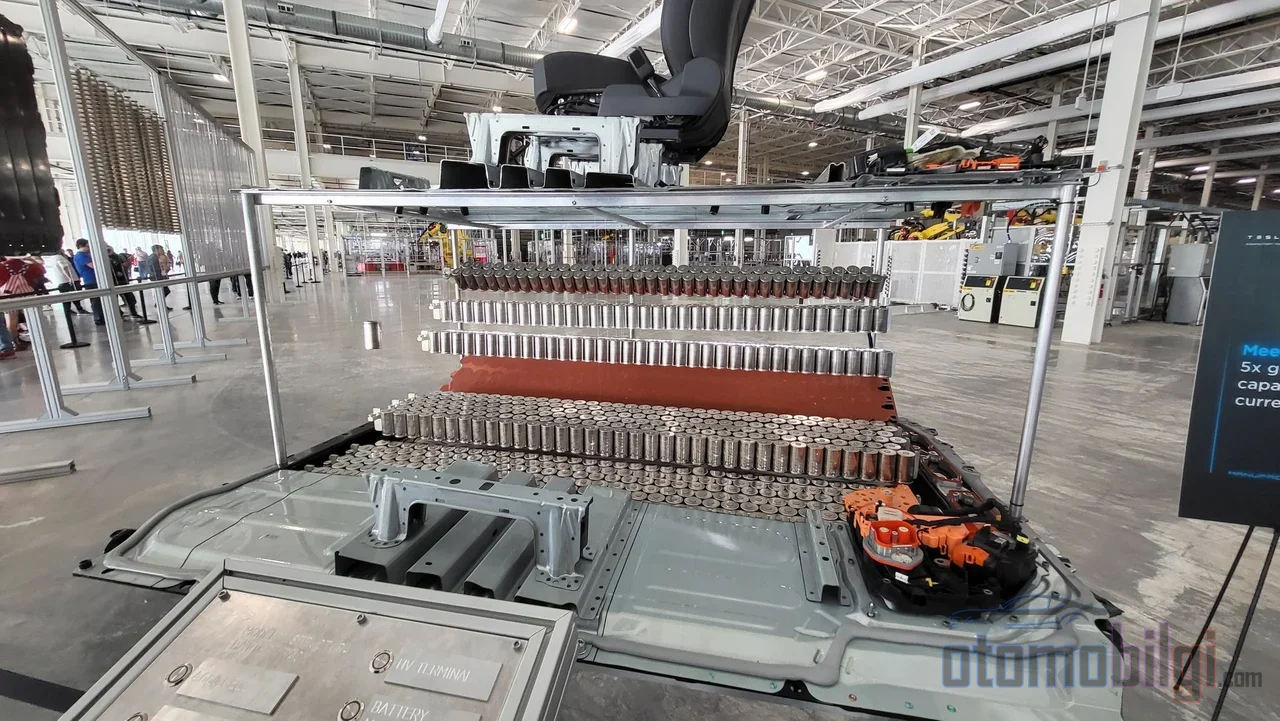
In dry electrode production there is no solvent; dry powders are converted directly into a self-supporting film by machine pressing and laminated onto the current collector. The most commonly followed method is freestanding film production and lamination; alternative approaches such as dry powder spraying and binding are also being researched.
The origin of the process is based on the dry electrode coating technology developed by Maxwell Technologies; Tesla brought this technology in-house by acquiring the company. The logic of the chain is simple but the consequences are big: once the solvent disappears, the solvent recovery system, the massive drying ovens, and their energy consumption are all erased from the factory. Dry cathode production directly reduces the need for production space and the energy spent on drying the cathode material.
Highlights
- Dry electrode carries the potential for a 6-15% reduction in production cost and up to a 50% reduction in energy consumption.
- In January 2026, Tesla announced fully dry production of both the anode and cathode for its 4680 cells; the breakthrough is the product of five years of work.
- Dry coating can achieve electrode thicknesses of up to 200 micrometers.
- Electrode production accounts for roughly 8-9% of total pack cost.
Cost, Energy, and Factory Footprint: What Do the Numbers Say?
Savings claims span a wide range, and the reason depends on where the measurement is taken from: cell cost, electrode line, CAPEX or OPEX. With the elimination of NMP and drying ovens, a 6-15% reduction in cell production cost and up to 50% savings in energy consumption are projected. Removing NMP entirely alone can reduce material costs by 15-20%. On the equipment side, the claims are more ambitious: LiCAP reports roughly a 40% reduction in energy use and up to a 50% drop in total battery production cost; AM Batteries projects a reduction of up to 30% in CAPEX and over 50% in OPEX.
The figures on the factory footprint side paint a more consistent picture: up to a 50% reduction at facility level, and over 60% in the electrode coating and drying area. Production speed also gains - with dry coating, production times 60-70% shorter are cited. Since a significant portion of these figures comes from equipment and process manufacturers, independent verification is still limited; however, a peer-reviewed comparative review also confirms that the dry process reduces energy use and simplifies production.
The Thick Electrode Advantage: Performance Opportunity and Limit
The most interesting performance effect of the dry process is the possibility of coating thicker electrodes. In the wet process, the drying penalty for thick coatings is severe; in the dry process, this constraint largely disappears, and thicknesses of up to 200 micrometers become possible. Thicker electrodes mean less current collector and separator per cell - less dead weight for the same energy.
There is a numerical basis too. When areal loading is increased from 15 to 35 mg/cm2, production energy decreases by 25% and specific energy increases by 14%. An even more striking equivalence: increasing the cathode areal loading from 15 to 30 mg/cm2 delivers the same energy gain as raising the cathode specific capacity from 200 to 300 mAh/g; cell cost could fall by up to 14%. A claim dating back to the Maxwell era pointed to energy density above 300 Wh/kg with dry electrodes, an increase of approximately 42.8%.
But a physical limit comes into play here. In a very thick electrode of 45 mg/cm2, only 76% of the theoretical capacity can be utilized under practical conditions; the reason is the limitation of ion transport. In other words, porosity and tortuosity engineering in thick electrodes is a prerequisite for making the energy density advantage real. Risks of cracking, delamination, and curling in thick layers add to this.
Technical Challenges: Binder, Thickness Control, and Equipment Wear
Binder selection and PTFE fibrillation
If PVDF is used as the binder in the wet process, the binder system must be changed in the dry process. The most common approach is PTFE fibrillation: PTFE binder is mixed with the active material powder and fibrillated by direct compression; the adhesion of the resulting film to the current collector and the preservation of energy density are critical metrics. An incorrect binder choice is structured so that it pays back all the cost advantages of the dry process through a loss in cell performance.
Homogeneity and equipment lifespan
Consistent material distribution across wide-format electrodes, homogeneous dispersion of powders, and uniform adhesion throughout lamination are serious engineering challenges. And then there is the abrasive side of the matter: free film is abrasive and quickly wears out calendering rolls - this is an operating cost item that is often overlooked. Reports from early 2026 regarding Tesla's wide-format dry electrode film-forming equipment indicate that exactly this scaling problem is being worked on.
Current State in the Tesla 4680 (2026)
Tesla's transition to fully dry electrode production did not happen overnight. The company first brought the dry process online on the cathode side; dry cathode production was already reducing the need for production floor space and cathode drying energy. The breakthrough announced in early 2026 was the transfer of the anode side to the fully dry process as well - the problem Musk described as extremely difficult was getting the process to work reliably at high volume. Analysts expect most dry electrode capacity to come online gradually throughout 2026.
On the product side, the picture is becoming clearer: Tesla reinstated 4680 cells in the Model Y in January 2026. Domestic cathode material production at the Texas facility and the LFP lines in Nevada are expected to begin production within 2026. An older target table projected 72 GWh of dry cathode production by 2025 and 650 GWh by 2030; these figures have most likely been revised according to the current schedule.
Is It Only Tesla? Industry-Wide Outlook
Dry electrode is not only Tesla's game. Volkswagen announced its own dry coating process; LG Energy Solution describes dry coating as the key to process innovation. Market expectations also forecast growth, but the differences between projections stem from definitional differences: one projection takes the dry electrode market from $1.57 billion in 2026 to $6.50 billion in 2034 (~19.5% compound annual growth), while another, more broadly defined estimate ranges from $2.8 billion to $20.3 billion (28% compound growth).
In contrast, today's reality is this: wet coating remains the registered process due to its maturity, scalability, and established material systems. Dry coating is still in the development stage for large-scale production, and assuming a complete transition in the near term is not realistic. The prominent scenario in the industry is a dual-track future: wet coating remains the foundation of high-volume production while dry coating will grow as a long-term opportunity. The decision question is no longer whether to switch, but when and under what conditions to switch.
Conclusion: Same Chemistry, Changed Economics
Dry electrode does not introduce a new chemistry to the lithium-ion cell; what it brings is the ability to produce the same chemistry with far less energy, a much smaller factory footprint, and thicker electrodes. In summary: eliminating solvents and drying ovens promises a typical 6-15% reduction in cell cost and up to 50% savings in energy consumption; thick electrodes can increase specific energy by up to 14% - but binder selection, thickness control, and ion transport limits remain engineering problems that must be earned. Tesla achieving fully dry production in the 4680 is the strongest evidence that the process is scalable; but there is still a way to go before wet coating cedes its throne in the industry.
Sources
- Wet vs. Dry Electrode Coating: Evaluating Process Tradeoffs in Lithium-Ion Battery Manufacturing
- A Comparative Review of Wet and Dry Electrode Manufacturing
- Slurry vs Dry Coating in Scalable Battery Production
- Technical and economic analysis of solvent-based lithium-ion electrode processing (Wood et al., 2017)
- Dry Electrode Process Guide
- Dry Electrode Coating Vs Wet Slurry: Production Speed Comparisons
- Tesla puts 4680 battery cells back in Model Y