The End of a Legend: Audi A8 Production Ends, Q9 Takes Its Place
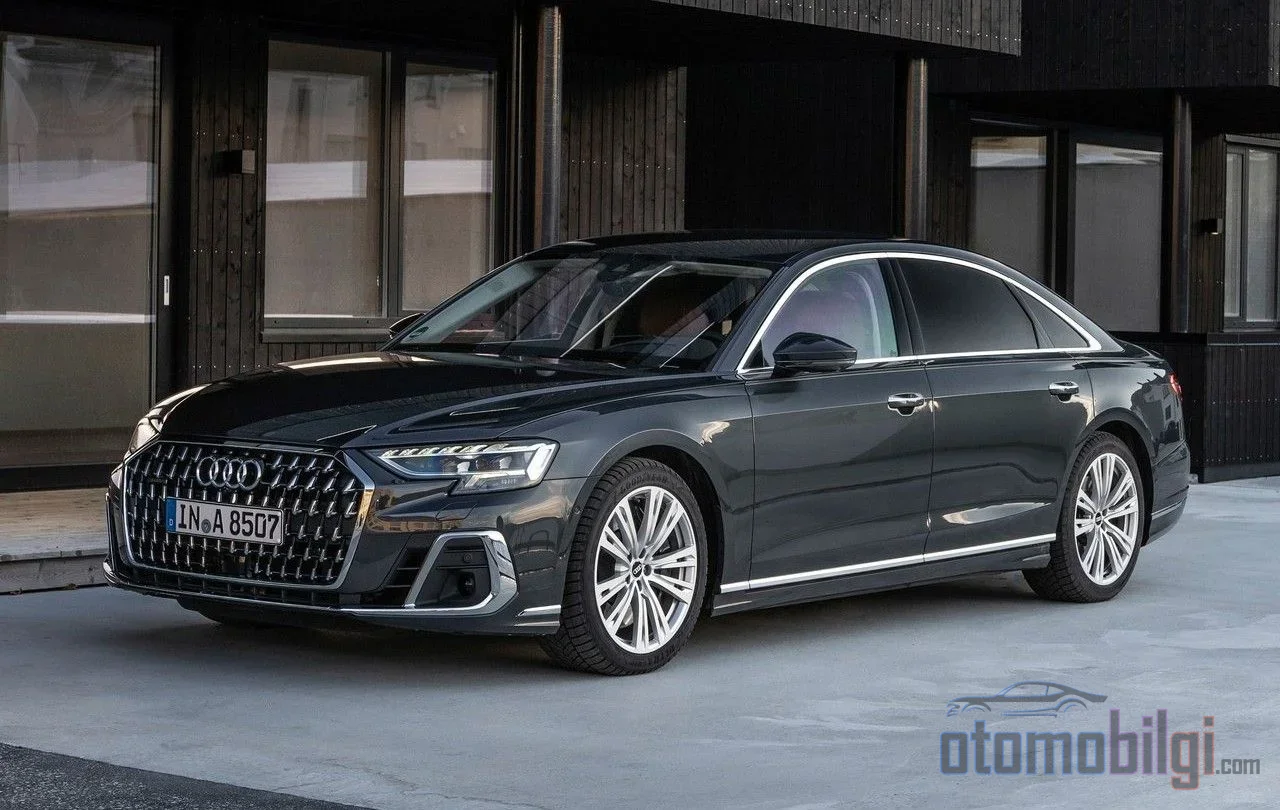
In mid-October 2026, the final Audi A8 rolled off the assembly line in Neckarsulm and the belt stopped. After 32 years, four generations, and several engineering milestones that have entered luxury sedan history, A8 production in Germany has ended. Order taking had already stopped in February 2026; the UK market had also bid farewell to the model at the start of the year. A three-row SUV called the Q9 is now taking over Audi's flagship seat. But the really interesting question lies beyond the model coming off the line: what will truly replace the A8?
The End of a 32-Year History
The A8 was first introduced in 1994 with the D2 generation, and throughout four generations - including the D3, D4, and the D5 introduced in 2017 and facelifted in 2021 - all production took place in Neckarsulm. The first generation holds the distinction of being the first production car to use a fully aluminum monocoque chassis: the Audi Space Frame, or ASF, was introduced as a concept in 1993 and hit the road the following year. At the time, that was a step ahead of rivals in terms of lightness and rigidity.
On the engine side, the first generation offered a wide range with V6, V8, V10, and W12 options; the S8 variant also made its way into popular culture with the 1998 film Ronin. The 6.0-liter W12 engine in the D3 generation produced 450 hp and 580 Nm of torque. It is no coincidence that the S8 has always been associated with powerful V8s across four generations: the first S8's 4.2-liter naturally aspirated V8 produced 355 hp and was one of the most respected engines of its generation. With the D4 generation, the model moved from a dedicated luxury sedan platform to the VW Group's MLB platform.
Highlights
- The last A8 came off the line in Neckarsulm in mid- October 2026; production lasted 32 years.
- US sales fell from 6,000+ units in 2013 to 1,406 units in 2025.
- In 2025, BMW sold 11,393 7 Series units in the US, and Mercedes-Benz sold 7,408 S-Class units.
- The Q9 taking over the flagship seat comes with a 429 hp twin-turbo V6.
- There are reports of China-based production with a Huawei architecture for a new-generation A8; it has not been confirmed.
Why Did the Sales Figures Reach This Point?
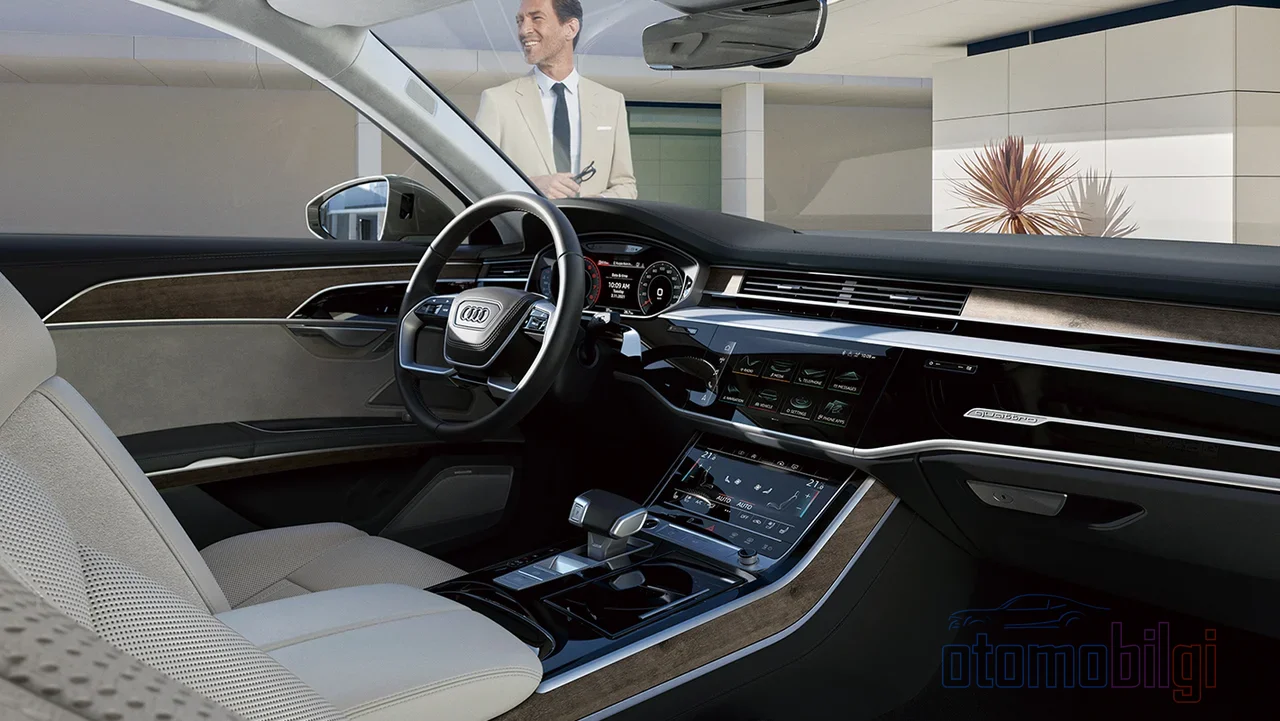
Reading the A8's farewell merely as an emotional ending would be incomplete. This is a market decision, and the numbers make the decision unavoidable. In the US market, the A8 peaked in 2013 with sales above 6,000 units; by 2025, that figure had fallen to just 1,406 units. That same year, in the same market, BMW sold 11,393 7 Series units and Mercedes-Benz 7,408 S-Class units. So the A8 not only fell behind its direct rivals; its share within the segment dropped to a marginal level.
The reason is not solely the decline in demand for luxury sedans. The A8's D5 platform dates back to 2017; the current model has been fundamentally the same car since the 2019 model year. While BMW's 7 Series was updated with a major facelift and electric and plug-in hybrid options, and Mercedes approached the S-Class with a major refresh and a promise of an electric S in the future, no such renewal ever arrived from Audi. This age gap in the product cycle is the most concrete explanation for why the gap in the sales chart has remained open.
What Has Changed in Neckarsulm: The Factory's New Mission
The freed-up assembly capacity will not sit idle: The lines in Neckarsulm are now reserved for the A5 Sedan and A5 Avant along with their S and RS derivatives. In the broader picture, VW Group's approved plan reveals that production capacity in Europe cannot be filled when demand is below 500,000 vehicles, and that competitive production tasks could not be secured for plants such as Neckarsulm, Emden, Zwickau and Hannover for the 2031-2034 period. The Group is obligated to establish a sustainable European production strategy by June 2027.
As for the A8 itself, the picture is clear but limited: Audi announced that the decision on a successor has been made and that it plans to present a successor before 2030; it has not yet shared the details. So the A8 name has by no means been shelved for good.
The New Audi Q9: The New Owner of the Flagship Seat
Introduced in July 2026, the Q9 is, for now, Audi's flagship. Positioned as a rival to the Mercedes-Benz GLS and BMW X7, the model sits above the Q7 and is produced in Bratislava.
| Model | Engine | Power |
|---|---|---|
| Audi Q9 | 3.0 L twin-turbo V6 | 429 hp |
| BMW X7 40i | 3.0 L inline-6 | 375 hp |
| Mercedes-Benz GLS 450 | 3.0 L inline-6 | 375 hp |
With a length of about 5.3 meters, a width of 2.2 meters and a height of 1.8 meters, the Q9 has a larger body than both rivals. The twin-turbo V6's 429 hp output is above the segment's 375 hp inline-six rivals; this means Audi has turned the power balance in its favor, at least on paper. On the performance side, the estimated 0-60 mph time is around 4.8 seconds; the official 0-100 km/h value has not yet been announced. The possibility of an SQ9 performance model and a diesel variant is also being mentioned; as for an electric version, there is no sign of one for now.
Interior and Equipment
Inside, an 11.9-inch virtual cockpit and a 14.5-inch MMI touchscreen are standard; with the optional 12.3-inch passenger display, the front console can go up to three screens. The cabin, which has three rows as standard, offers a 7-seat layout that can drop to 6 seats with optional captain's chairs in the second row; Audi's largest panoramic glass roof to date is also on this model. All seats are electrically adjustable. On the front console there are two MagSafe-compatible, cooled wireless charging pads, coming with up to 100 W output and two USB-C ports.
The New A8 Claim: Huawei Architecture and China-Centered Production
The real topic stirring debate is the successor plan. According to reports in the German press, Audi is discussing using Huawei's electric vehicle architecture for the China-specific next-generation A8. The plan may go to a board vote this month; if approved, the new China A8 could be on sale by the end of 2028. For production, the Changchun plant of the FAW joint venture is being considered: The facility, opened in 2024, produces the Q6L SUV and A6L sedan, but the combined sales of the two models this year are around 12,000 units; meaning the plant is operating well below its capacity.
An alternative scenario is also on the table: An A8 developed by Porsche, based on the MSB platform related to the Panamera, supporting gasoline and plug-in hybrid, and its production in Leipzig. However, neither scenario has been approved yet, and the report is merely speculative. There are also considerable obstacles in front of the Huawei plan: A 30 percent drop in China sales this year, investment costs, FAW's approval, and reputational concerns are expected to spark objections on the board.
SAIC Partnership and Uncertainty Over Sales Outside China
Audi's SAIC partnership in China also completes the picture. The E5 Sportback and E7X models of the four-ring-less AUDI sub-brand sold approximately 12,600 units in the first seven months of 2026; the E5 Sportback passed the 10,000 sales threshold in total. The model, which entered through parallel import to Germany with a price tag of 5,998 euros, received 127 orders within 72 hours, but Audi blocked the importer's sales. The company announced that these vehicles will not officially be released in Europe and that three models in three years will be produced only for Chinese users. The joint R&D center AITC, opened in Shanghai on November 5, 2026, is a signal that the partnership will continue.
This picture leaves unanswered the question of whether a China-specific A8 will go on sale in markets outside China, including Turkiye or Europe. Considering Audi's goal of halving its model lineup and SUV demand, the very idea of a new flagship sedan has already come into question.
Conclusion: What Will Replace the A8?
In short, here is the summary of the summary: A8 production is over, and there is no direct and approved successor as of today; the Q9 has taken over the flagship throne, and Audi plans to offer an A8 successor before 2030. This successor could either be an electric sedan produced in China with Huawei architecture, or a gasoline and plug-in hybrid model brought to life in Leipzig with Porsche's MSB platform; both are still scenarios on the table. In a period when the luxury sedan market is shrinking, Audi paid this price because it did not wait with a 2017-style platform in a segment where its rivals refreshed themselves with electric and hybrid options. Now it is trying not to make the same mistake on the SUV side; the Q9 is exactly the product of this strategy.
Sources
- Audi A8 Production Officially Ends After 32 Years at Neckarsulm
- RIP: Audi A8 Production Ends, But A Successor Is Planned (Motor1)
- Audi Axes The Luxurious A8 After 32 Years (Carscoops)
- Audi A8 production ends after 32 years, no successor in sight (Auto Express)
- Audi A8 production ends, successor may be made in China on Huawei platform - report
- 2027 Audi Q9 Review, Pricing, and Specs (Car and Driver)
- Audi Q9 revealed; bigger than rivals (The Supercar Blog)
- Audi to launch third model next year under new China brand (Reuters)
- All-new 2027 Audi Q9 (Audi USA)