Details Emerge About Audi's Factory in Georgia
A location has been chosen for Audi's first factory in the United States: The Middle Georgia Mega Site between Macon and Perry in the state of Georgia. The announcement was made, the figures were disclosed; but there is still an open button in this affair: The approval of the Volkswagen Group's supervisory board. In my thirty-year career I have long since grown used to similar scenes - ceremonies where it is announced that signatures must be collected before the champagne is popped. In this article, I look at the details of the factory that have become clear, the aspects that have yet to be clarified, and the economic calculation behind the decision.
When will Audi's Georgia factory be built, and what will it produce?
According to the official schedule, site preparation and construction will begin in 2027, with production starting in the early 2030s. Full capacity is targeted for 2031. Annual capacity is designed not to exceed 200,000 vehicles - a scale comparable to German premium manufacturers' existing facilities in the US, but not an ambitious one. On the employment side, the figure being discussed is approximately 4,500 new jobs.
As for which models will be produced, the matter remains partly a mystery for now. In its official statement, Audi uses the phrase "premium SUVs exclusive to North American customers." According to information circulating in the industry, the plan centers on the Q7, the Q8, and an even larger Q9. Whether these vehicles will come with internal combustion, hybrid, or electric powertrains has not yet been announced. Given the three-year construction period provided, it must be said that part of this uncertainty is deliberate - being able to make the powertrain decision at the last moment is a reasonable precaution in today's uncertain marketplace.
There is also a small inconsistency regarding the investment amount: Audi says approximately 4 billion dollars, while US President Trump used the figure of 4.2 billion dollars in his announcement. Most likely, the same items are being counted with different methods; in terms of the actual material reality, the difference is not critical.
Highlights
- The first US factory, to be built with an investment of approximately 4 billion dollars, will be in Georgia, at the Mega Site between Macon and Perry.
- A capacity of 200,000 vehicles per year is planned, with employment for approximately 4,500 employees.
- Production will begin in the early 2030s with high-end SUVs; the full capacity target is 2031.
- The VW Group's supervisory board approval has not yet been obtained; the decision may become clear by the end of the year.
- Audi sold 164,942 vehicles in the US in 2025 - a drop of 16% compared to the previous year.
Why is VW Group approval still awaited?
Less than a day after the announcement, Volkswagen Group published an important sentence through its own channel: The decision to build a new Audi factory in the US is still subject to the approval of the relevant committees. In other words, before a shovel touches the soil in Georgia, the entire internal approval machinery of Wolfsburg must be passed through. In the industry, this process is expected to become clear toward the end of the year. A four-billion-dollar expenditure ranks among the biggest decisions to be signed off on at VW Group, as at any company; this gap between the announcement ceremony and the final signature is a fuller process than it appears.
We need to remember the context. In September 2026, VW's supervisory board approved a transformation plan envisaging workforce reductions of up to 100,000 in total, including 50,000 additional job cuts across the group by 2030. In such a picture, advocating the opening of a new factory in the US is no easy task. The line adopted by Manfred Doss, who chairs Audi's supervisory board, is that the future cannot be secured by cutting costs alone, and that investment must also be braved. Whether this argument won a dominant position in the group's picture will become clear in the coming weeks.
Why Georgia, why now?
For many years, Audi was a strange exception in the US market: While BMW produces in South Carolina and Mercedes-Benz in Alabama, the brand from Ingolstadt settled for imports from Europe and from the San José Chiapa facility in Mexico. In the past, imports were advantageous when the currency and logistics calculations worked out; now the equation has changed. The 25% automobile import tariff imposed by the US hit Audi hard; the Q5, produced in Mexico, took the biggest hit because it failed to meet USMCA content rules.
The figures confirm this picture. Audi announced that last year, with a tariff impact of roughly $1.2 billion, its profit declined by 14% and its operating profit fell to 3.4 billion euros. In April 2025, following the tariff shock, the company temporarily paused vehicle deliveries to the US and was forced to keep vehicles waiting at ports. US sales in 2025 fell to 164,942 units - well below the 196,576 vehicles of 2024, a drop of 16%. Since 2019, the cumulative loss has reached 26%, while the overall market's decline remained at a far more modest level.
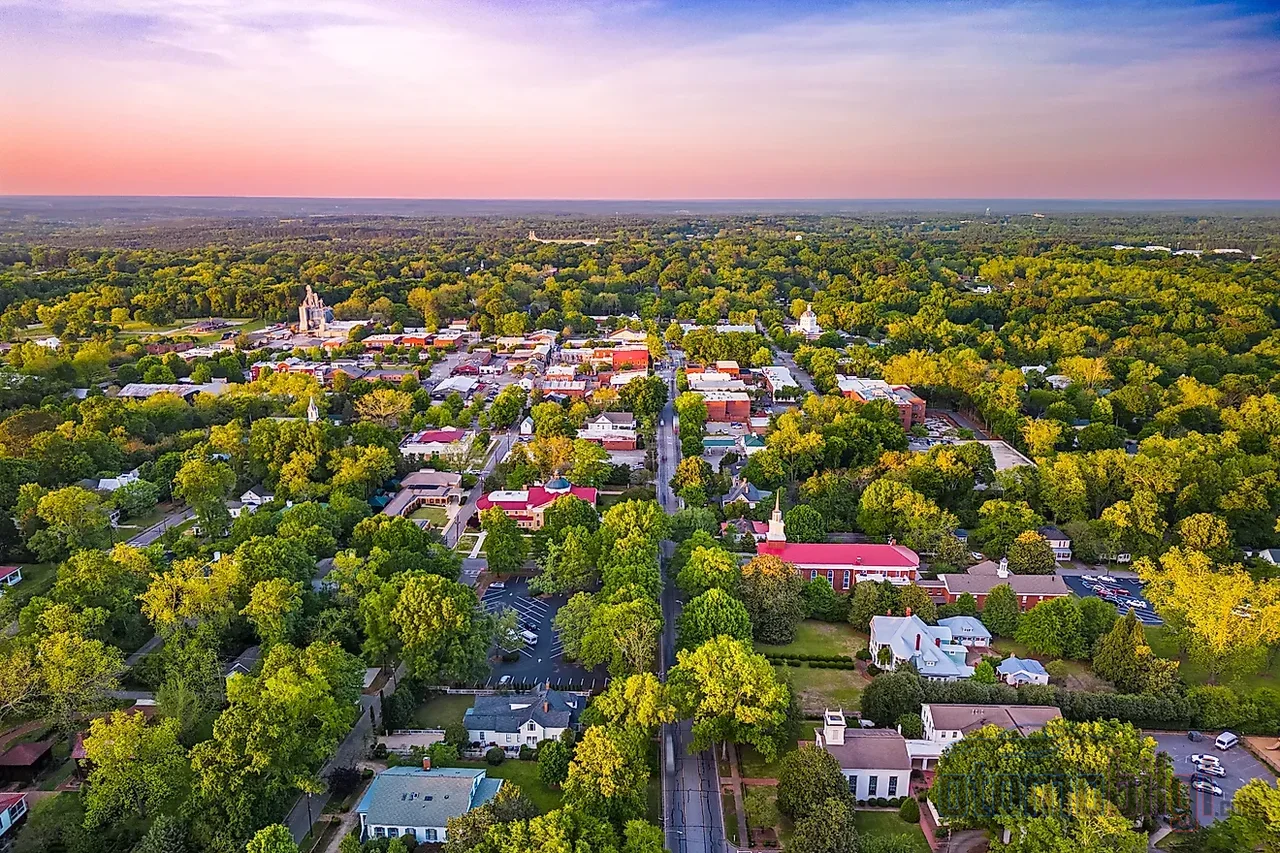
Geography also plays no small part in Georgia's selection. Hyundai's Metaplant and Kia's West Point facility are in the same region; the Norfolk Southern rail line offers connections of less than five hours to the ports of Savannah and Brunswick, and the drive to Atlanta's major airport is around ninety minutes. A factory is not just a production building; the supplier network around it, its logistics access, and its labor pool keep it standing. This is precisely the point emphasized by Gerd Walker, Audi's board member for production and logistics: building a factory from scratch offers the opportunity to rethink production from day one.
| Item | Plan / Status |
|---|---|
| Location | Middle Georgia Mega Site, Peach County (between Macon and Perry) |
| Investment | Approximately $4 billion |
| Employment | Approximately 4,500 new jobs |
| Capacity | Up to 200,000 vehicles per year |
| Construction start | 2027 |
| Production start | Early 2030s |
| Models to be produced | Premium SUVs (Q7, Q8, Q9) |
| Approval status | Awaiting approval from VW Group committees |
The political calendar of the announcement and the conflicting dates
The timing of the announcement is no coincidence. Trump announced this investment at his rally in Georgia ten days before the November 3 midterm elections; Democrats have already brought trade policy onto the election agenda. Audi's preference to appear at Trump's announcement also sparked debate within the group; the company front is running the defense that this was a commercial decision, not subject to election calculations. As someone who turns the old pages of automotive history, let me say this: major factory announcements coinciding with political calendars is not a new phenomenon; only its scale is changing.
A concrete contradiction is also noteworthy: Trump said construction would begin next month, whereas Audi's official calendar points to 2027 for construction. It is clear that the planning framework published by the company should be taken as the basis; dates thrown out on the political stage do not always match the reality of field engineering.
Will the factory ease the current tariff burden?
This is where the most critical weakness of the decision lies. A facility that will only reach full capacity in 2031 will not ease the tariff burden carried today by Audi's current models for several model cycles. So for the next several years, the company will continue paying tariffs on imports from Europe and Mexico while also carrying construction costs in Georgia. Meanwhile, negotiations over a tariff credit tied to US production are ongoing; Audi is known to have made an offer to Commerce Secretary Howard Lutnick in the weeks before the announcement. In terms of short-term pricing and dealer supply, the outcome of these negotiations will be as decisive as the factory itself.
There is also a timing question on the VW Group front. Group CEO Oliver Blume had previously taken the position that it was not possible to invest in new capacity while paying high tariffs at the same time. The accounting logic behind this sentence is simple: as tariff revenue decreases, the investment budget also shrinks. The fact that the Georgia decision could be taken forward for approval can be read as a sign that this equation has partially changed - or as evidence of the expectation that the tariff credit negotiations with the government will create a way out. Which one it is will become clear by the end of the year.
What will happen to the existing arrangement in Mexico and Europe?
So far, no change regarding the San José Chiapa facility has been announced; Q5 production appears set to continue from Mexico. The strategic goal is not to close existing facilities anyway: It is to make North America a third production pillar alongside Europe and China, reducing exposure to trade and currency risks. Considering that the US is the world's second-largest premium market, the logic of this goal is not open to debate; the question is entirely about the implementation timeline and cost.
Conclusion: What has become clear and what still needs to be clarified
Let's summarize. Audi's first US factory will be built at the Middle Georgia Mega Site in Georgia; an investment of approximately 4 billion dollars is planned, with an annual capacity of 200,000 vehicles and employment for 4,500 people; construction will begin in 2027, and production will come to life in the early 2030s with high-segment SUVs. The unanswered questions are at least as important as these: VW Group supervisory board approval is still pending, the powertrain choice has not been announced, and the tariff burden will continue unchanged until the plant comes online. The next chapter in Audi's US adventure will be written by that internal approval decision expected by the end of the year. As someone who has been following this industry for thirty years, let me note: the factory whose signature is signed, not the one whose foundation is laid, is the real factory.
Sources
- Audi to establish first U.S. production site in Georgia (Audi MediaCenter)
- Volkswagen Group on Audi's Production Plans in the USA
- Gov. Kemp: Audi AG Selects Georgia
- Audi to Build First U.S. Plant in Georgia With $4 Billion Investment and 4,500 Jobs
- Audi defends plans for a $4 billion Georgia plant amid VW job cuts
- Volkswagen to build $4bn Audi SUV factory in US despite job cuts at home
- Audi defends decision to stand by Trump on $4 billion US plant
- How Audi picked Georgia for first U.S. plant
- Volkswagen flags 50,000 job cuts as board approves transformation plan
- Audi of America Reports Sharp Decline in New Vehicle Sales for 2025
- Audi's Profits Slide 14% as Tariffs Bite Deep