Seat and Cupra's Profit Collapsed Along with EV Margins
The most striking line in the nine-month results announced by Volkswagen Group on October 30 concerns the financial bill of the electric transition the group so proudly touts: The operating profit of Seat and Cupra has melted by 59.3% in a year, down to just 6 million euros. So where exactly is the money going, when sales are not falling but rather demand for electric models is rising rapidly? For someone who has been reading this industry's balance sheets for more than thirty years, the answer is hardly surprising; but the numbers have never been laid out this clearly before.
What the Numbers Say: The Brand's Nine-Month Picture
Seat and Cupra's operating profit for the first nine months of the year is 6 million euros; in the same period last year, that figure was more than almost three times higher. The picture on the revenue side is comparatively solid: 11.1 billion euros, with a slight decline of 1.2%. In other words, while the company's vehicle sales volume and revenue remained largely intact, the profit line beneath that revenue has virtually evaporated.
The course of the year shows when this decline accelerated. In the first quarter, operating profit was 43 million euros, and the company's official language was still optimistic. By mid-year, cumulative profit had reached 122 million euros, with deliveries hitting 299,678 units. With the close of the third quarter, however, the overall picture has slumped to -59.3%. The company's own statement attributing the result to the rising share of electric vehicle sales, competitive pressure, and geopolitical volatility is an indirect but clear admission of the margin pressure in the second half.
Comparing with the past tells the story better. The profit once generated by the factories in Martorell and Martos was one of the balancing weights of Volkswagen Group's cheap and efficient production; now those same brands stand on the most expensive step of the transition to the electric platform. Last year closed precisely at this point: a record 15.3 billion euros in revenue, 586,300 deliveries, and yet only an operating result of 1 million euros. Selling hundreds of thousands of cars and writing almost zero on the profit ledger is a rarely seen spectacle in automotive history.
Highlights
- Seat and Cupra's nine-month operating profit fell 59.3% to 6 million euros
- The brand group's revenue declined 1.2% to 11.1 billion euros
- VW Group's nine-month operating profit fell 98.7% to 71 million euros
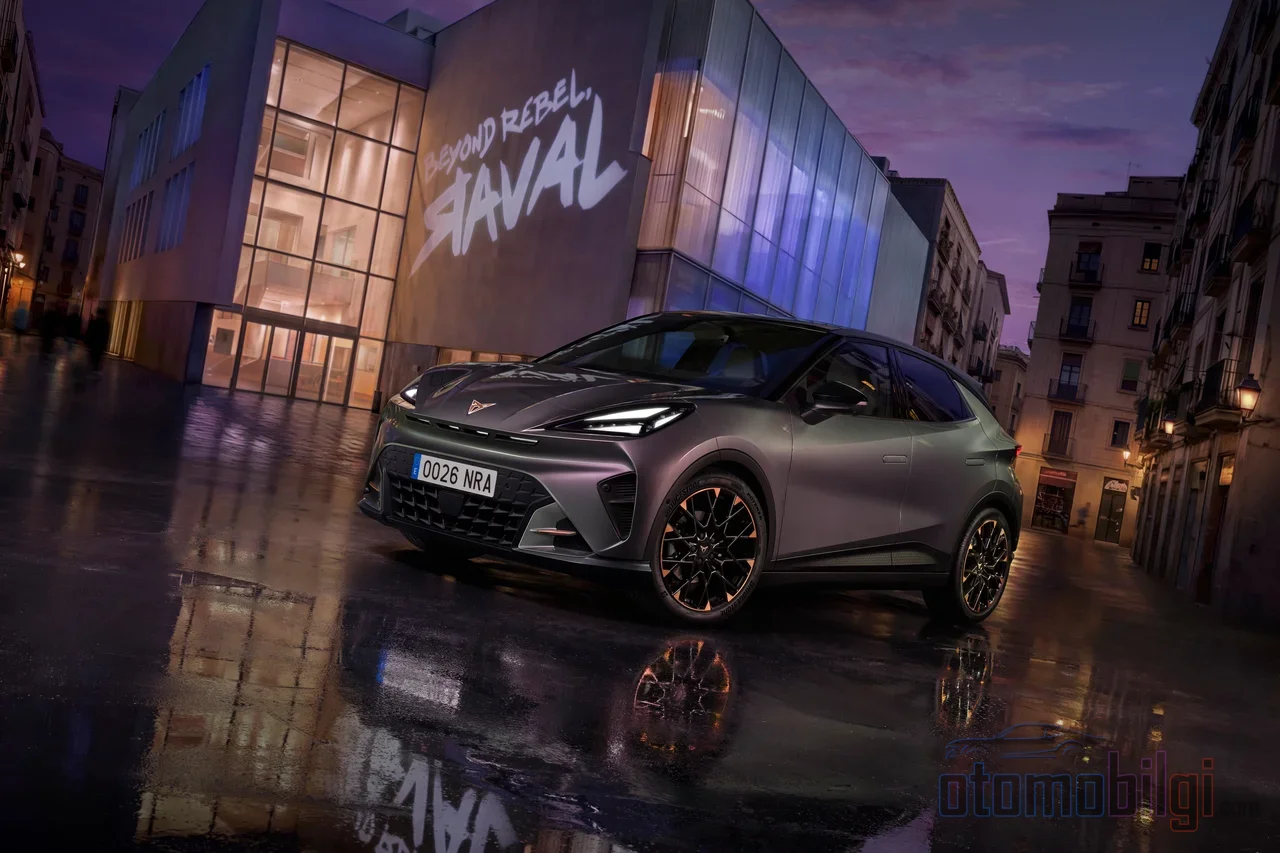
- 51,000 orders were received for the Cupra Raval; starting price is 36,770 euros
- Seat-Cupra management is targeting a 6% sales return by 2030
Why Do Electric Vehicles Earn Less Than Internal Combustion?
VW Group CFO Arno Antlitz openly acknowledged in the group's official balance sheet presentation that electric vehicles currently earn less than internal combustion vehicles. This means that a truth long discussed in industry backrooms has for the first time been reflected so clearly in a balance sheet. The picture is the same at brand level, too: Seat and Cupra CEO Markus Haupt had stated that EV profit margins are below those of internal combustion models and that the transition period brings a serious financial burden.
The mechanics behind this, in the language of those speaking the old terminology, are very simple: a Cupra Born or the Raval, which will hit the roads next year, is more expensive to produce than the brand's conventional models due to its battery, different production line, and new supply chain; but it has to enter the market, competing on price with internal combustion models that have been maturing for nearly a century. The Raval's starting price of 36,770 euros is absolutely necessary to hold its place in the market; but it is not yet sufficient for profit. So sales success and profit pressure are two faces of the same paradox: the faster demand shifts to electric, the faster the margin cushion of the company's internal combustion cash cow melts away.
There are dissenting voices too; the question of where the profit has gone, given that EVs are more expensive than internal combustion and their sales are rising, is also being debated in the industry media. In reality, profit is leaking from two places: on the one hand, the unit cost of EVs is still high; on the other, the one-time costs of the shift to electrification, technology investments, and restructuring items are undermining turnover. Attributing the profit decline solely to EV margins would be oversimplifying the picture somewhat; but it is also clear that the margin pressure is being fed from the main vein.
Demand Exists, Order Book Is Full - If So, Why Is There No Profit?
The interesting part is that Seat and Cupra are not actually suffering from a lack of demand. 51,000 orders have been received for the new Cupra Raval; the company states that electric vehicle orders increased by 85% in the second quarter. Looking across the group, EVs make up 40% of the order book, and the small electric family called the Electric Urban Car Family has alone accumulated 150,000 orders.
These figures prove one thing: the strategy is holding in the market. But an order book being full while the factory is busy and the profit table is empty breaks an equation that has been familiar in the car business for a century. In the past, when sales increased, profit increased too; now sales are increasing, and so are model complexity and battery costs. The tonal difference between the company's official language and the independent media's emphasis on the profit collapse stems precisely from this conflict: in its half-year results, management highlighted a profit of 122 million euros and a positive trend with the Raval's orders exceeding expectations, but with the close of the third quarter it faced a completely different picture.
The Picture Across the Group: Not Every Brand Is Hit in the Same Place
It is possible to see that the decline at Seat and Cupra is not an isolated development by looking at the overall picture of Volkswagen Group. The group's operating profit for the first nine months fell from 5.4 billion euros to 71 million euros; that is, it has been almost completely wiped out. Sales fell by 10.6% to 5.9 million units, and one-off costs totaling 8.7 billion euros over nine months eroded the operating result. In the third quarter, the group recorded its deepest quarterly loss since Dieselgate, due to the writedown at Porsche and China-related problems: An operating loss of 5.9 billion euros.
| Brand Group | Nine-Month Profit | Change |
|---|---|---|
| Core (VW, Škoda, Seat, Cupra) | 4.3 billion euros | Down from 4.7 billion euros |
| Progressive (Audi, Bentley, Lamborghini, Ducati) | 1.2 billion euros | 26% decline |
| Porsche | 1.5 billion euros | Increase |
| Group total (operating) | 71 million euros | 98.7% decline |
As the table shows, within the Core brand group, Škoda's strong performance partially offset VW's weak result; the collapse of Seat and Cupra made that balance even harder to maintain. While the profit of the Progressive brands, the premium wing, fell 26% on sales losses in China and North America, the sole exception is Porsche: with 1.5 billion euros in profit before interest and taxes, it was the only brand on an upward trajectory. When you read a balance sheet like this with thirty years of habit, what immediately catches the eye is not a shortfall but the complete absence of symmetry: every brand is going through its own separate crisis.
Management's Response: Future Plan and the 31 Billion Euro Restructuring
The group management's response to the nine-month results is that no time can be lost. The message Antlitz emphasized in his balance sheet statement is clear: acting quickly and decisively is essential. The group has a plan in hand for this move; the Future Plan, covering a comprehensive cost program of approximately 31 billion euros. A simplified model lineup, streamlined structures, reduced vehicle and general administrative costs, more efficient factories; the previously raised scenarios of factory closures and a halving of the model count also stand on the ground of this program.
On the Seat and Cupra front, the answer was already set: the company's target of a 6% return on sales by 2030 is backed by the Performance Program announced last year and the ELEVATE strategy. However, when you look at the first nine months' profit tally on the road to that target, it is clear how long the distance is. The multiplication of EV orders will bring scale in the long run; but Raval production reaching full capacity and battery costs coming down suggest that the 6% margin is not a point achievable with today's production balance.
Is the Real Cause of the Profit Decline Electric Vehicles?
It is worth saving the direct answer to this page's question for last, because the picture is too layered to be compressed into a single sentence. The main answer is this: The biggest factor in Seat and Cupra's profit decline is the margins squeezed by electric models - EVs do not yet yield as much as internal combustion vehicles, and the faster demand grows, the faster the mix loses margin. But that is not all; one-off costs, competitive pressure, geopolitical volatility and the combined burden of electrification investments are gnawing at the profit below the revenue from multiple directions.
Management has made it clear that it believes electric vehicles will win the long-term profitability race. In the short-term picture, however, the tension continues: on one side, a Raval with 51,000 orders; on the other, a nine-month operating profit of 6 million euros. The point where these two will converge is where EV production finds scale and margins settle onto the low throne of the internal combustion era; until then, it is clear that Seat and Cupra will keep paying their transition-period tax. I say this with thirty years of professional experience: in such transition periods, balance sheets show the harshest figure first and the improvement last.
Sources
- Volkswagen Group nine-month results underline urgent need for action - Volkswagen Group
- SEAT & CUPRA adapts to market shifts and intensified external pressures (Q3) - SEAT & Cupra Media Center
- SEAT & CUPRA posts operating result of €122 million in H1 2026 - SEAT & Cupra Media Center
- SEAT & CUPRA posts €43 million operating profit in Q1 2026 - SEAT & Cupra Media Center
- Why Cupra's EV boom puts pressure on profits - Automotive News
- Volkswagen posts deepest loss since Dieselgate - Reuters
- Uh oh, the VW Group's profits are down by almost 100 per cent - Top Gear
- Volkswagen Posts €5.8 Billion Loss on Porsche Write-Down - Trending Topics