Audi Tested the Updated Infotainment System on the Road

Audi has finally drawn a line under one of the issues its drivers have complained about most for years, rather than just saying "we hear you": the touch-sensitive steering wheel buttons are being replaced with physical scroll wheels, and the screen interface is getting simpler. The first real-world road test of the revised infotainment system was carried out with the 2027 model year Q6 e-tron, and the result sits exactly where anyone who has been through this ordeal could predict: when physical controls return, everything else falls into place more easily. But the story is not just about scroll wheels; the software's speed, the menu logic, an unnecessary passenger screen, and the question of how much of this update existing Audi owners will actually receive are also on the table.
Why Audi Had to Revise Its Screen Approach
The most controversial trend in cabin design over the past five years was the transfer of physical buttons to touch surfaces and screens. Audi was one of the most committed implementers of this movement: capacitive steering wheel buttons, a curved screen panel spanning the center console, and a philosophy that moved nearly every function to the touchscreen. This setup is called Digital Stage: under a single curved panel, an 11.9-inch digital instrument cluster and a 14.5-inch infotainment touchscreen sit side by side, with a palm rest shelf below. The system is developed by Volkswagen Group's CARIAD software unit on top of Android Automotive OS and works with Audi Connect services.
The problem was not the architecture itself, but everyday use. Touch-sensitive steering wheel buttons and the extensive use of screens frustrated drivers for years; independent consumer tests also openly found the controls of the 2026 Audi A6 irritating. So the criticism did not only come from grumpy owners on forums. Audi's system had even won awards; the MMI infotainment took home MotorTrend's 2026 Best Technology award. Brilliant on paper, award-winning, but exhausting on the road: which is exactly why the revision was inevitable.
The Highlights
- The touch-sensitive steering wheel buttons were replaced with physical scroll wheels; the change arrives with the 2027 Q6 e-tron and A6 e-tron.
- The update reaches five model lines: A5, Q5, A6, A6 e-tron and Q6 e-tron.
- The software features flatter menus, larger icons and fast screen responses; Spotify has been added via OTA.
- Standard equipment: an 11.9-inch instrument cluster and an 14.5-inch touchscreen.
- The optional 10.9-inch passenger screen is offered in the $1,800 Technology package and is considered unnecessary.
How the Scroll Wheels Work on the Road
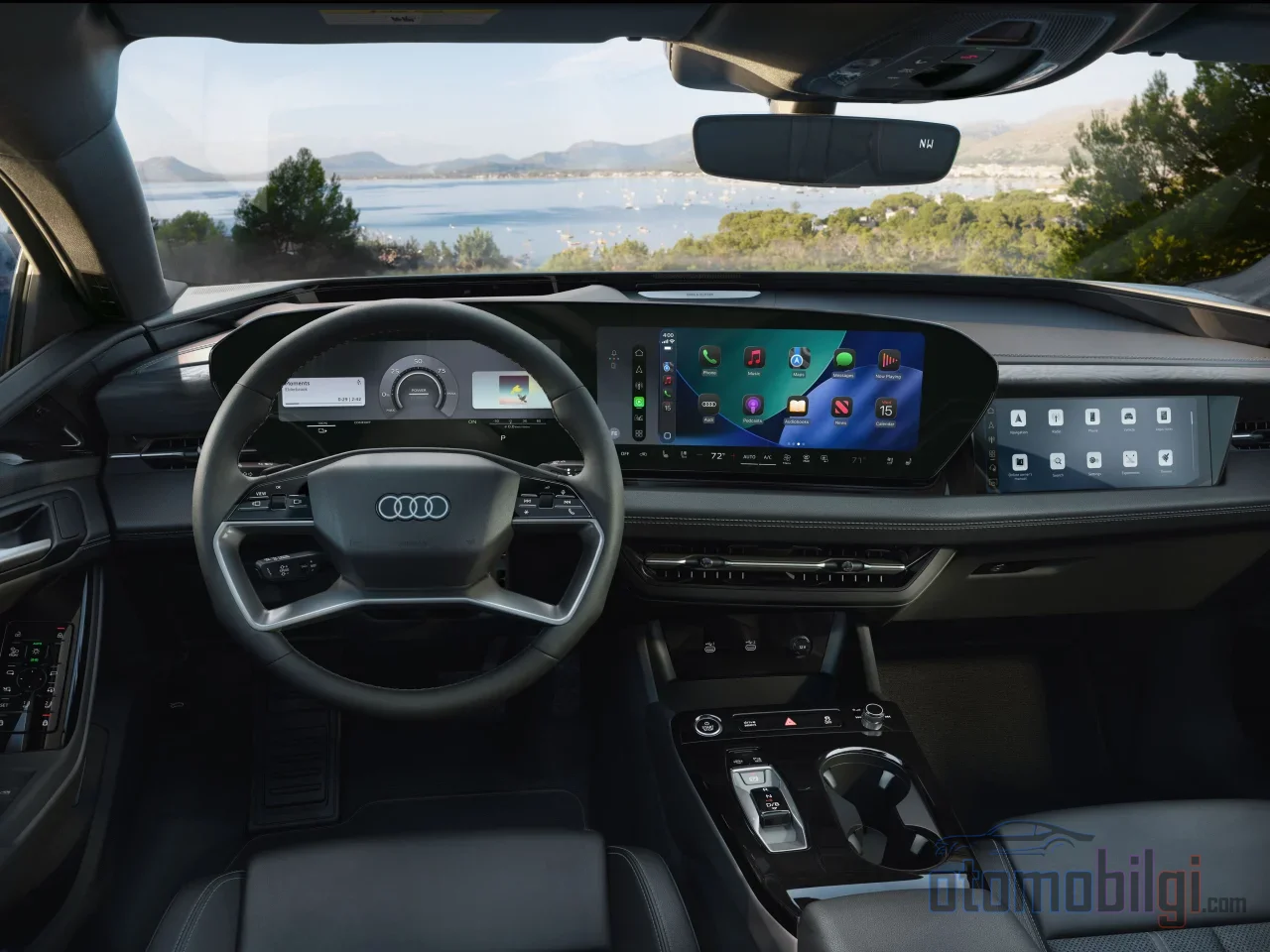
The most tangible part of the revision is on the steering wheel. In the new wheel, the capacitive sliders have been replaced by two physical scroll wheels: the left wheel manages the instrument cluster screens, the right one controls the volume. The touch-style haptic buttons have not been eliminated entirely; but they now deliver a clear, mechanical click feel. In the road test, the consensus among those who used this balance was clear: based on the touch setup alone, this structure is clearly far better, because volume and menu navigation can be done without taking your eyes off the road.
This is not a minor cosmetic tweak. Adjusting the volume from the steering wheel or switching pages on the instrument cluster are operations a driver performs dozens of times a day. If each of those operations requires guesswork and trial-and-error, it stops being a usability problem and turns into a safety problem. Audi breaking this cycle is the essence of what the revision means.
What Changed on the Software Side
Alongside the hardware move, the software has also been substantially overhauled. In the new interface, menus sit in a flatter hierarchy, icons have been enlarged, backgrounds have been simplified; this is an approach that those familiar with smartphone projection apps will feel at home with. Screen inputs respond quickly; daily tasks like navigation and audio are now handled effortlessly. With over-the-air updates, the Spotify app has also been added to the system.
That said, not everything is solved. The vehicle settings menus are still like a maze; a certain depth of learning is required to fully dismantle the system. In other words, Audi has solved the main problems that wore users down, but the same clarity has not yet been established across the entire menu architecture.
The Passenger Screen Debate: Premium Look, Limited Function
There is also an interesting contradiction in the revision: Audi continues to offer the optional 10.9-inch passenger screen alongside a simplified main interface. In testing, this screen was deemed unnecessary due to its limited functionality. This hardware, which looks like the pinnacle of cabin technology on paper, widens the gap between what it actually delivers and what you pay: the screen is part of the $1,800 Technology package in Premium Plus trim, and standard on Prestige. It is also criticized as an element that disrupts the cabin's clean lines.
This is a small slice of the industry's bigger picture. Increasing the number of screens seems to be the easiest way to prove a luxury car's technology claim; but in terms of usability, every new screen means a new interface, a new area of attention. Audi simplifying the main screen while keeping the passenger screen shows exactly the indecision on the manufacturer side of this tension.
Will Existing Audi Owners Get the Updates
The revision is not only about newly purchased vehicles. Audi has brought the updates to five model series: A5, Q5, A6, A6 e-tron and Q6 e-tron. While the new steering wheel replaces capacitive sliders with physical scroll wheels, new graphics and functions come into play on the infotainment side. The 2026 model year A5 and Q5 received comprehensive hardware and software updates; an optimized infotainment experience, driver assistance features and improved dynamics are included in this package. The 2026 A6 TFSI also received a similar update mid model year: new animations for the voice assistant and a clock display in the top-left corner of the MMI screen are among them.
On the distribution method side, the news is also good: over-the-air (OTA) distribution continues in a way that brings major updates with new functions and minor updates with improvements. Since the steering wheel hardware is a physical change, it of course comes only with a hardware swap at the factory or at a service center; but the software-side improvements can also reach existing vehicles. There are also voices in owner forums that like the current MMI interface, which is a notable sign in a community where skepticism about buying a first model year prevails. One important detail: the improvements in the revised A6 do not require a subscription.
Comparison with Rivals and Group Siblings
Audi's revision is a step entirely unique to Audi; it is not a coordinated group move with Porsche's infotainment refresh on the 911 and Taycan. Still within the same group, the 2027 Porsche Taycan also has minor changes in its infotainment software; but on the Taycan side, the shortage of physical controls continues. In contrast to Audi, which brings back physical controls, this shows the existence of two different philosophies even within the same group.
Looking at the prestigious rival Mercedes-Benz's MBUX, the picture is as follows: MMI stands out as a more mature and fully resolved system, while MBUX offers a more eye-catching visual presentation. On the ease-of-learning side, the reading favors Audi; with the revision, this gap can be expected to open up a little more. The physical wheels solve the system's biggest grievance, and MMI is no longer a source of frustration; the only remaining issue is a depth of learning that the user still has to work on.
Conclusion: What This Revision Means
The short and clear answer is this: Audi has made the infotainment system usable by switching from touch buttons to physical scroll wheels, with simplified menus and fast-responding software; the system is no longer a structure where the system conquers the driver, but one where the driver masters the system. This revision, which starts with the 2027 Q6 e-tron and A6 e-tron, spans five model series and also touches existing vehicles via OTA, and is the product of the first major self-criticism of screen-focused cabin design.
For someone who has been following this industry for thirty years, the picture is familiar: screens arrived, swallowed everything, and then user resistance and safety data forced manufacturers to step back. What Audi is doing is facing this swing. The shortcomings are not finished; vehicle settings menus are still a labyrinth, and a passenger display with limited functions, squeezed into an $1,800 package, is still being sold. But the direction is right, and in this industry, direction says more than every item on the list.
Sources
- We Tried Audi's Revised Infotainment System to See If It's Better Than Before
- Audi Infotainment System Finally Gets Physical Scroll Wheels and a Cleaner Look
- Best Tech 2026: Audi's MMI Infotainment Puts the User Experience First
- Updates for five Audi model series - Audi MediaCenter
- 2026 Audi A6 TFSI receives significant mid-model-year updates - Audi USA Newsroom
- 2026 model year Audi A5 and Q5 see significant digital design, technology and dynamic enhancements - Audi USA Newsroom
- Pay to Play: 2026 Audi A6 Tested
- 2026 Audi A6 First Drive Review - Consumer Reports
- Infotainment face-off: Audi MMI vs. Mercedes-Benz MBUX
- 2027 Porsche Taycan Review, Pricing, and Specs