Audi and Mercedes-Benz Workers on Strike in Germany
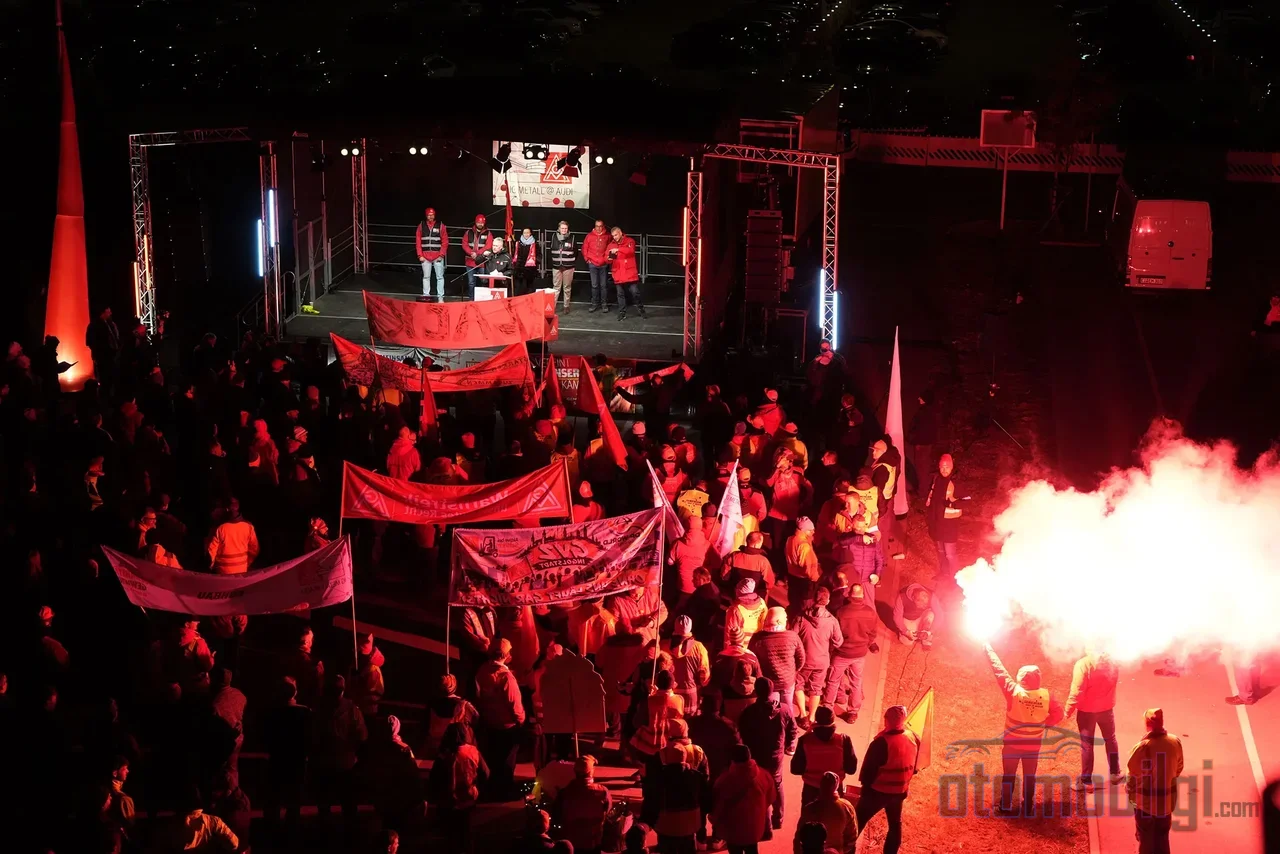
The familiar rhythm of German automotive history ran quite differently on the evening of Monday, November 2, 2026. In Ingolstadt, Audi's night shift stopped for two hours at 11:00 p.m.; on the same day, workers gathered in front of the Mercedes-Benz facility in Berlin Marienfelde for a warning strike. Two of the industry's biggest premium manufacturers faced a workforce that walked off the job on the same day and for the same reason. This is a scene we are not accustomed to in this landscape.
The reason behind the actions is single and concrete: the 2026 collective bargaining round covering 3.7 million workers in the metal and electrical industries. The IG Metall union is demanding a 5 percent raise over 12 months and job security; the employer side, instead, proposes a one-time payment in 2027 and a 1.3 percent increase in July 2028. The union rejected this offer. Following that rejection, in the first two days of the week more than 25,000 German metal and electrical workers joined the warning strike; the wave extended to Audi and Mercedes-Benz as well as supplier Schaeffler.
What Is a Warning Strike, Why Did It Start Now
In the German collective bargaining system there is a principle called the peace obligation: no action can be taken while negotiations are ongoing. This obligation expired at midnight on Saturday, October 31, 2026, opening the door to warning strikes. This is not a coincidence, but the natural consequence of the calendar; following the rejection of the employer's offer, the union preferred to demonstrate the remaining gap at the table on the ground.
A warning strike, as its name suggests, is an escalation tool: it aims to exert pressure on selected companies through short-term, limited stoppages. The two-hour limit of the stoppage in Ingolstadt is the very embodiment of this logic. IG Metall is planning demonstrations at more than 2,000 workplaces throughout the week. So this is not a general strike, but a measured yet widespread pressure campaign.
Highlights
- In Germany, more than 25,000 metal and electrical workers joined the warning strike on November 1-2
- Audi Ingolstadt and Mercedes-Benz Marienfelde (Berlin) are the confirmed action locations
- IG Metall demands a 5 percent raise over 12 months and job security for 3.7 million workers
- Employer offer: one-time payment in 2027, a 1.3 percent raise in July 2028
- The peace obligation expired at midnight on October 31, 2026
Which Facilities Were Affected
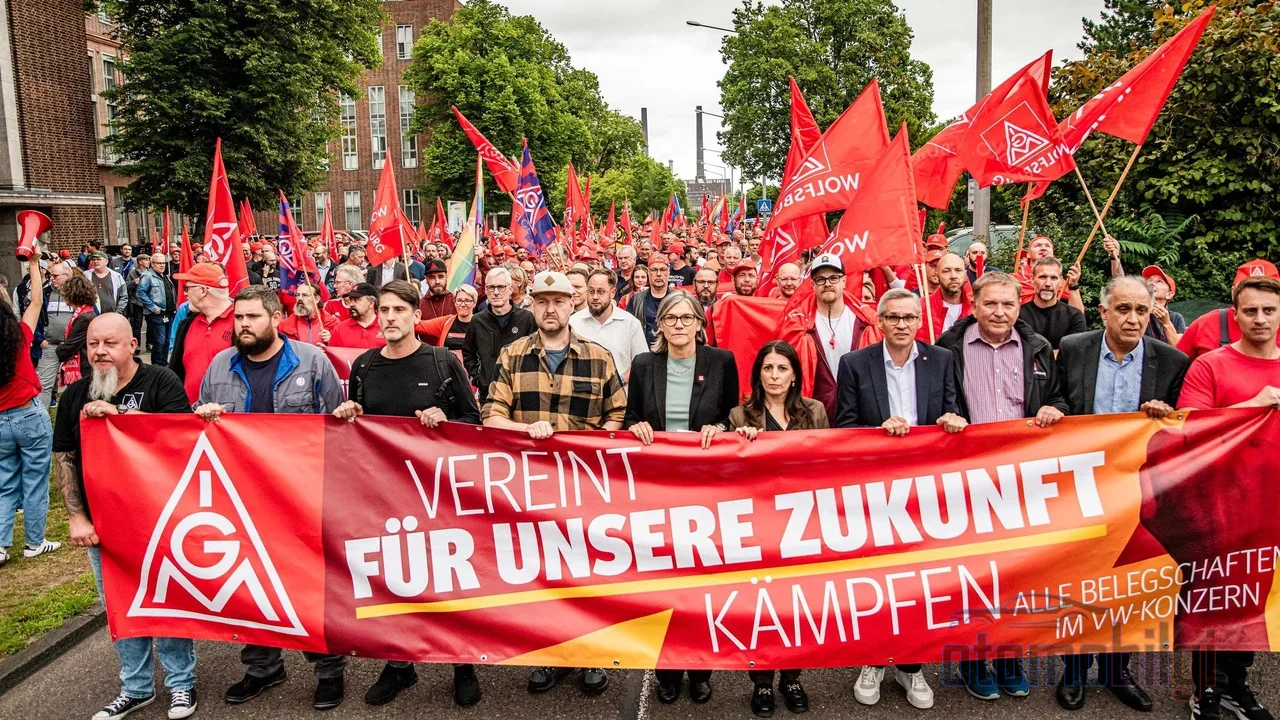
The two confirmed locations are clear: Audi's main plant in Ingolstadt and Mercedes-Benz's facility in Berlin Marienfelde. In Ingolstadt, approximately 3,000 Audi employees joined the warning strike on Monday evening; according to IG Metall's Bavaria region, a two-hour stoppage was planned for the night shift. On the same day, a total of 17,500 workers from Audi and 15 other companies across the region supported the action, and more than 15,000 people gathered at the city rally. The figures signal a regional labor movement rather than the internal affairs of a single factory.
On the Berlin Marienfelde side, the action took place on November 2. There is not yet a detailed official company statement from Mercedes-Benz about which other facilities are affected by the pay negotiations. It should also be added that the actions have spread to the supplier ring: the parallel wave also covers Schaeffler's facilities in Germany. Given IG Metall's weekly plan targeting more than 2,000 workplaces, it will come as no surprise if the list keeps growing.
Workers' Demands and the Companies' Response
The Union Side of the Table
IG Metall's list of demands is gathered under two headings: a 5 percent raise over 12 months and concrete measures to protect jobs and production sites. The second heading is as important as the first; because on the German automotive agenda, alongside the raise, there are also factory closure threats and work stoppages. Mercedes-Benz has openly stated that two German factories are at risk of closure and is demanding that weekly working hours be increased from 35 to 40 hours without extra pay. The company's supervisory board chairman Martin Brudermuller had said he found ending the 35-hour week reasonable. From the union's perspective, this is not just a pay negotiation, but an attempt to rewrite the rules of working life.
The Companies' Financial Justification
Mercedes management argues that the German plants have over the years clearly lost their cost advantage against foreign facilities, and that Chinese competitors have entered the European market with very lean cost structures. In the internal correspondence of July 2026, the company had called for more work for the same money and announced that the annual special payment for 90,000 employees (18.4 percent of the base monthly salary) was postponed. On the Audi front the picture is similar: due to cost pressure, the night shift was shortened and the company's 2026 operating margin target was lowered by one point to a minimum of 5 percent.
What Will Be the Effect on the Production Calendar
It is necessary to be measured here. Warning strikes are by nature short, and so far no permanent production loss has been reported apart from the two-hour stoppage in Ingolstadt. There is no verified data that the actions have halted the production line or caused delivery delays. So this week's balance should be read less as a direct production impact and more as a test of the balance of power at the negotiating table.
The real risk lies in the course of escalation. According to IG Metall's definition, full-day warning strikes are the next step aimed at increasing pressure at selected companies in the collective bargaining process. As long as the employer offer remains far below the 5 percent demand, the actions becoming more frequent and longer is likely; at that point, shifts at facilities such as Ingolstadt or Marienfelde could come under serious impact. More than 33,000 Mercedes employees joining protests across the country in July 2026, and 175,000 automotive workers turning out at 280 locations in September, had already demonstrated the mobilizability of this base. The question now is to what extent this energy will turn into strike discipline.
The Volkswagen Shadow and the Background of the Audi Side
To understand the tension on the Audi front, it is essential to look at the whole group. Volkswagen Group announced on September 30, 2026 that it had terminated many of the pay provisions agreed with IG Metall in December 2024; talks between the two sides will begin on November 24. This means that Audi workers are also part of the pressure group in this process. Layoffs across the group and possible plant closures are being discussed; on the Mercedes side, at least 20,000 job cuts are on the table, and 8,000 at BMW. In parallel, Schaeffler announced that 3,460 jobs in Europe (roughly 2,660 of them in Germany) will be cut and five facilities closed by 2028. Every link in the chain is being stretched in the same direction.
The Brands' Strategic Position: Where Does This Tension Come From
The numbers answer why both companies have remained tough. Mercedes-Benz's 2025 operating profit fell to 6.9 billion dollars, a 57 percent drop from the previous year; the company cut its Mercedes-Benz Cars adjusted return on sales expectation for 2026 from the 3-5 percent band to 2-3 percent. Under the Next Level Performance program, annual savings of 5 billion euros are targeted, and 3.5 billion euros in savings were achieved under it in 2025; 5,500 people responded to the departure call sent to the 40,000 people in non-production staff. A-Class production moved from Rastatt to Kecskemét in Hungary in early 2026. Audi, meanwhile, has lowered its margin target under the pressure of electric transition investments and costs. In short, both brands are in the middle of an expensive transformation, and the question of who will pay the bill for this transformation sits right in the center of the table.
Why This Simultaneity Matters
In the past, warning strikes were held at selected plants, in scattered fashion; one manufacturer's action was considered news independent of the others. Now, however, the 2026 contract round has united the entire industry under the same agenda: workers at two premium manufacturers are walking out on the same day, the supplier chain is under the same pressure, and the critical meeting between Volkswagen and the union starts in three weeks. This shows that collective bargaining in German automotive is no longer a company-by-company matter but has turned into an industry-wide test of strength.
In summary: The simultaneous warning strikes by Audi and Mercedes-Benz workers on November 2 are the first concrete on-the-ground reflection of the collective bargaining crisis covering 3.7 million metalworkers. The demand is a 5 percent raise and job security; the counteroffer is a very small increase deferred to 2028 and increased working hours. The short-term production impact is limited, but the Volkswagen meeting on November 24 and the union's weekly action plan should be watched as the two thresholds that will determine where the escalation goes.
Sources
- German metal workers step up strikes in pay dispute
- More than 900,000 warning strikers
- 2026 Metal and Electrical Industry Wage Negotiations
- German union demands 5% raise for workers
- Mercedes says German production not competitive, two plants under threat
- Audi and Mercedes-Benz workers walk out in Germany
- German unions are fighting to defend the 35-hour week
- 33,000 Mercedes-Benz employees protest cost-cutting