Wet vs. Dry Dual Clutch: Which Is More Durable?
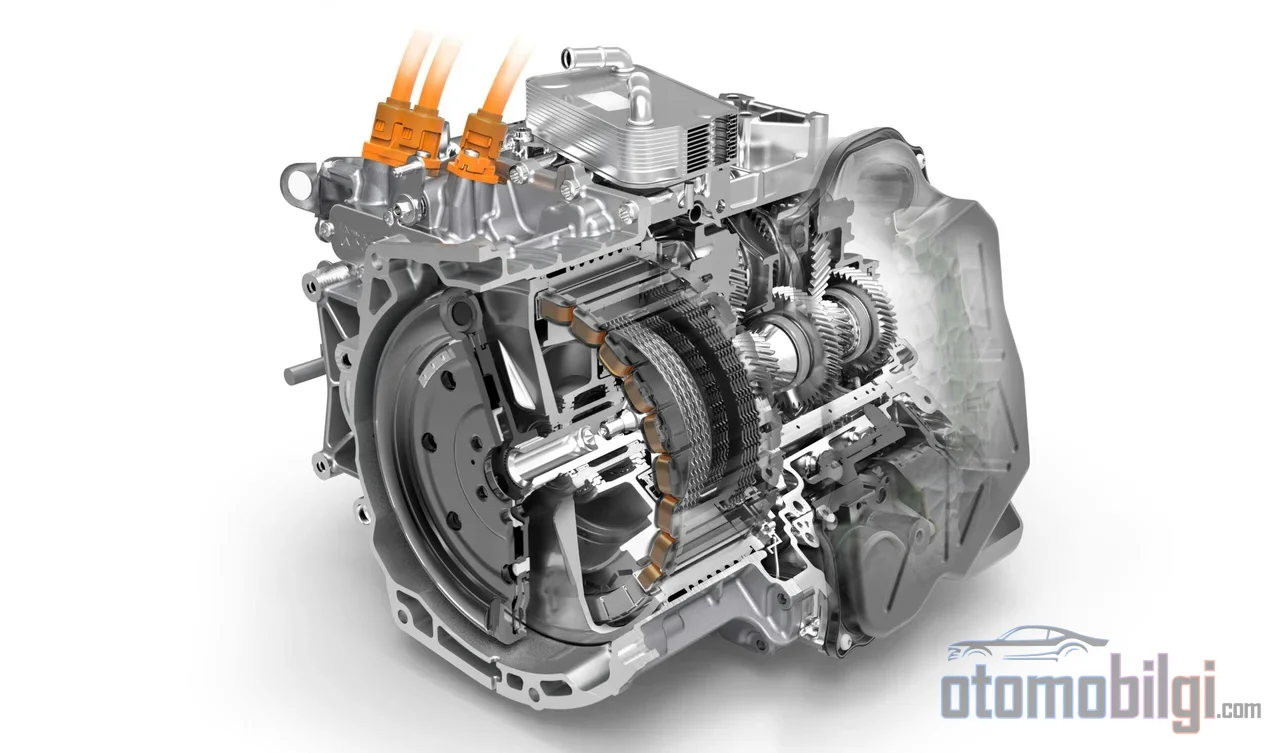
Within the same transmission architecture, two completely different characters live: in one, the clutch discs float in an oil bath, while in the other they operate in dry air. Both are called dual-clutch transmissions (DCT), both shift gears within milliseconds, but their warm-up behavior, wear rates, and long-term durability set them apart. The question of which one is more durable is actually not a question with a single answer; the answer changes according to torque load, usage scenario, and maintenance discipline. Still, mechanical physics draws a clear tendency here, and understanding this tendency is valuable for anyone thinking of owning a vehicle with a DCT.
This page builds on guides that explain dual-clutch transmissions in general terms: rather than the general DCT concept, it addresses only the operational difference between wet and dry clutch designs, the warm-up and wear mechanisms, and long-term durability questions.
What Is the Mechanical Difference Between Wet and Dry Clutches?
A dual-clutch transmission uses two separate clutches in parallel: one serves the odd-numbered gears, the other serves the even-numbered gears. While one gear is selected, the other gear is pre-prepared; gear changes occur only through the transfer of power transmission between the clutches. This structure enables much faster shifts than an experienced driver could achieve with a manual transmission and offers higher energy efficiency compared to torque-converter automatics. Among the clutches themselves, there is a fundamental design distinction: do the friction surfaces operate inside a housing filled with oil or transmission fluid, or in open air without ever touching the fluid?
Dry clutch: direct contact, fluid-free operation
In a dry clutch, the pressure plate presses the clutch disc directly against the flywheel; there is no oil film between the friction surfaces. This is the arrangement commonly found in conventional manual-transmission passenger cars. Since no fluid intervenes, engagements are sharp and instantaneous; the mechanical feel conveyed to the driver is direct. It is possible to carry the same torque with fewer plates, which means low rotational inertia and a compact structure.
Wet clutch: multi-plate structure in an oil bath
In a wet clutch, friction plates and steel plates are stacked inside a housing filled with oil or transmission fluid. The fluid does two jobs: it carries heat away from the friction surfaces and softens the engagement. The multi-plate arrangement provides high torque-holding capacity in a narrow space without the need for a single large-diameter unit. This is why manufacturers prefer the wet design in high-torque applications; for example, Volkswagen's first-generation wet DCT unit, the DQ250, is noted for its 350 Nm torque capacity, while wet clutch designs appear on roads and in the racing world with examples transmitting torque up to the 750 Nm level.
Highlights
- Thanks to its heat management, the wet clutch can carry high torque loads in the 350-750 Nm range.
- In the dry clutch, there is no fluid friction loss; fuel economy and engagement efficiency are higher.
- DCT maintenance is recommended by most manufacturers within the 40,000-60,000 km interval.
- The dry clutch is the most critical in stop-and-go traffic: air cooling manages heat buildup only in a limited way.
- Often the dual-mass flywheel (DMF) reaches the end of its life before the clutches do.
Heat Management: The Origin of the Durability Difference
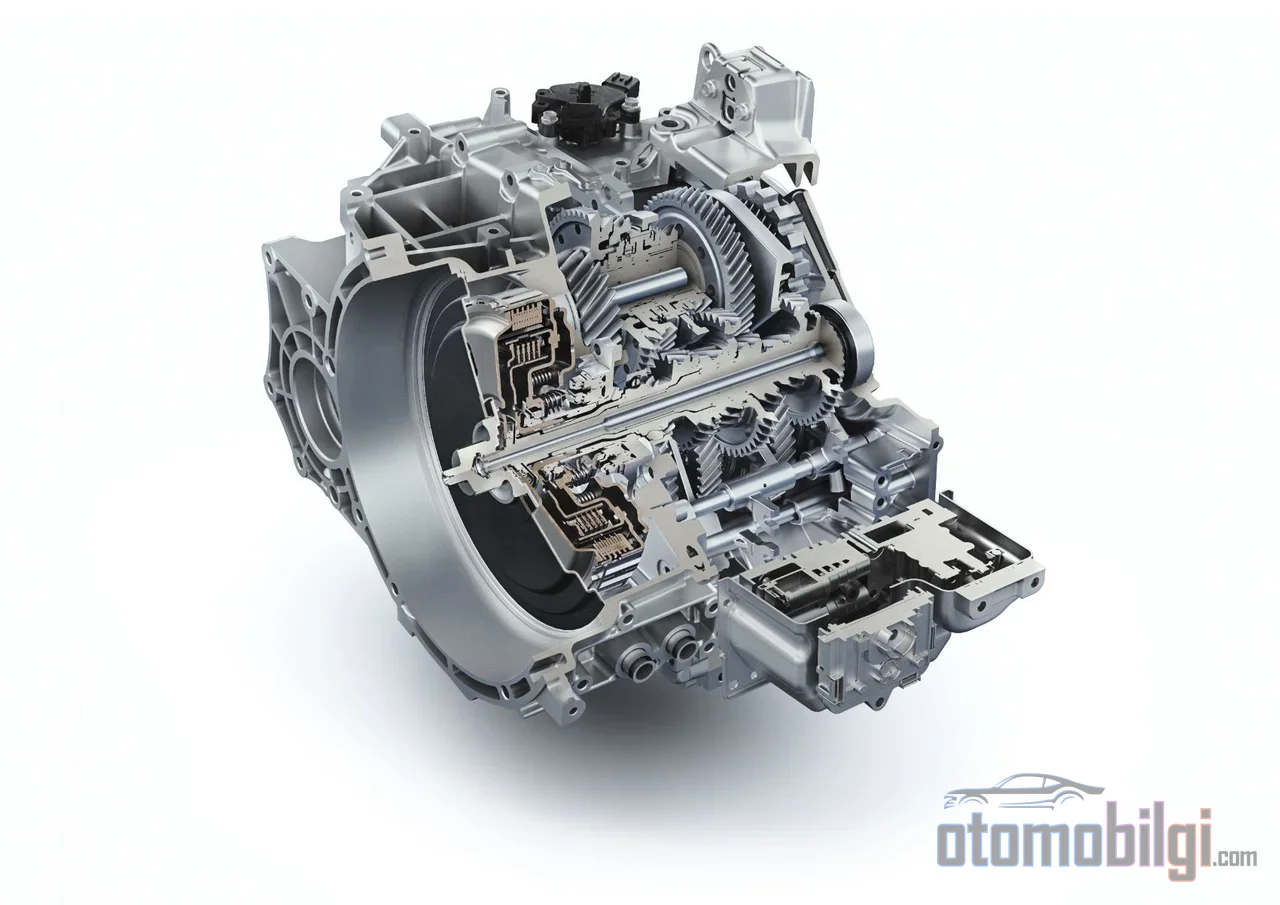
To understand the durability difference between the two designs, it is enough to look at a single physical quantity: heat. The clutch loses power through friction at the moment of engagement, and nearly all of that loss turns into heat. The question is this: where does this heat go?
With a dry clutch the answer is simple: into the ambient air. Cooling relies on passive airflow, and this falls short in traffic that involves frequent stop-and-go. In stop-and-go traffic the clutch engages halfway over and over; each half engagement produces a new packet of heat, and this heat builds up faster than air cooling can discharge it. Heat buildup reduces the efficiency of the friction surfaces, degrades engagement quality, and accelerates wear.
In a wet clutch, however, the heat is absorbed by the fluid that continuously flows over the friction surfaces and carried away outside the housing. The fluid is also the working medium of a cooling circuit. For this reason, the wet design; is the natural choice for applications that require frequent engagement, high thermal load, and automatic launch strategies. Heat management is the engineering foundation of the wet clutch's claim to longevity.
The Price the Dry Clutch Pays and the Advantage It Gains
The dry clutch's weakness is tied up in heat, but it wins on the power side. Since there is no fluid drag loss, power transfer is more efficient, and this efficiency shows up tangibly in fuel economy. Fewer plates mean lower weight and less inertia; the engine transmits power to the transmission with less resistance. The dry clutch applies less resistance to the engine, and service is also quick.
In return, the dry clutch's price is rapid wear and a tendency to overheat. Worn clutch packs produce dust; this dust accumulates inside the unit and further worsens operating conditions. The fact that dry-clutch DCTs, especially in small cars, are seen as an option approached with caution in terms of reliability is the natural consequence of this wear-heat cycle. Dry DCTs typically use manual transmission fluid (MTF); wet units, on the other hand, require an improved, dedicated DCT fluid (DCTF). Since the clutch in a wet DCT must transmit the full torque, the fluid's properties are critical.
How Does Clutch Wear Accelerate in City Driving?
A dual-clutch transmission has no torque converter buffer. In a conventional automatic, the driver's gently pressing the gas and letting the vehicle creep forward is absorbed by the torque converter's hydraulic slip. In a DCT, the same creeping motion is handled directly through the controlled slip of the clutch packs; every moment of slip means friction and heat. This is why a DCT's durability is highly sensitive to driving habits.
- Holding the brake constantly or resting on the accelerator at low speed in stop-and-go traffic keeps the clutch half-engaged and accelerates wear.
- Repeated short movements, in a pattern of two steps forward and one step back, multiply the number of clutch engagements.
- Rather than creeping along by touching the accelerator where you are about to stop, coming to a complete stop and starting fully reduces the number of engagements.
A wet clutch handles this load better thanks to heat management; a dry clutch, in the same scenario, wears out faster. However, the liquid design is not independent of use either: the driver's understanding of the dual-clutch concept and using it accordingly is one of the variables that determines lifespan in both designs.
Maintenance Needs and Lifespan Expectations
The maintenance requirement of dual-clutch transmissions is strict. Most manufacturers recommend maintenance in the 40,000-60,000 km range; in some applications it is advised that fluid and filter changes be done as early as 40,000 km intervals, and some services advocate keeping the inspection interval even shorter. In a wet DCT, the transmission fluid and filter must be changed at the frequency specified by the manufacturer; dirty or degraded fluid directly reduces engagement quality and increases wear. DCT fluid has its own specification; using the wrong fluid means an incorrect lubricating film.
On the lifespan side, the picture is as follows: a general clutch pack can wear out completely between 50,000-100,000 miles, depending on component quality and design; this range applies in the context of manual transmissions but also serves as a reference for DCTs. DCTs as a whole are more durable units requiring less maintenance than typical transmissions, but they are not faultless; routine checks and timely service prevent problems. At the extreme, DCT clutch packs in vehicles such as the BMW M3 and M4 are expected to last through a typical first-owner period and beyond.
A noteworthy detail is this: before the clutch, it is usually the dual-mass flywheel (DMF) that reaches the end of its life. The DMF stands out as a weak point in both manual and DSG-type transmissions, and the source of symptoms that feel like a transmission failure is often not the clutch but the flywheel.
Common Failure Scenarios: Heat, Shudder, Software
Recurring failure patterns in DCTs are clear: clunky gear changes at low speeds, hesitation or shudder on takeoff, clutch wear, overheating, and software-related problems. It is useful to divide this list into two: mechanical ones and those triggered by heat.
Overheating emerges particularly because repeated stop-and-go in slow traffic causes heat buildup in the transmission, and it reveals itself through transmission failure warnings. A dry DCT is more fragile against this scenario; air cooling cannot keep up with the rate of heat input. One of the main causes of overheating is also low or degraded transmission fluid; when the fluid level drops, the internal clutches cannot engage properly. This mechanism actually applies to every transmission type: fluid deficiency, cooling problems, hot weather, and solenoid and sensor failures are common causes of overheating.
On the service side, the shared problem for both DCT types is accessibility: the fluid must stay clean for the clutches to remain reliable, but servicing these packages buried inside the transmission is not always easy. In a wet DCT, the integration of hydraulic control and fluid management drives repair costs upward. In a dry clutch, since engagement is not cushioned by fluid, the shift feel is an advantage, but impact loads become an additional source of wear.
Which Is More Durable: Wet or Dry?
The direct answer to the question is this: when durability is measured on its own, the wet clutch comes out ahead, because the oil bath continuously cools the friction surfaces, softens engagement, and manages high torque loads with a compact package. The dry clutch, on the other hand, is ahead in efficiency, lightness, and fuel economy, and the price of that is accelerated wear under demanding thermal conditions.
| Feature | Wet Clutch | Dry Clutch |
|---|---|---|
| Cooling | Oil bath, active heat transfer | Passive airflow |
| High torque capacity | Examples available in the 350-750 Nm range | Lower torque range |
| Efficiency and fuel economy | Lower due to fluid friction | No fluid losses, higher |
| Engagement feel | Smooth, progressive | Sharp, direct |
| City-driving durability | More resistant to heat loads | Prone to wear and overheating |
| Maintenance dependency | Strong dependency on special DCT fluid | MTF, a simpler fluid regime |
| Repair cost | High due to hydraulic integration | Faster service options |
In conclusion, which one is better depends on the use case. If high torque, heavy city traffic, and long service life are the priorities, the wet clutch is a strong choice; if efficiency, lightness, and low rotational inertia are the priorities, the dry clutch makes sense - as long as stop-and-go loads stay limited and maintenance intervals are not missed. Meanwhile, there is also an honest uncertainty: long-term reliability data beyond 100,000 miles has not yet accumulated for the relatively new generation of wet DCTs. Mechanical physics speaks in favor of the wet design, but real-world durability is always built with the right fluid, clean filters, and conscious usage habits.
Sources
- Dry vs. Wet Clutches: Pros, Cons & Use Cases - Clutch Masters
- Dual-clutch transmission - Wikipedia
- Special oil from TotalEnergies for dual-clutch transmissions
- Shifting technology - Infineum Insight
- On the Energy Efficiency of Dual Clutch Transmissions - MDPI (Vacca, 2017)
- Wet Dual-Clutch Transmission - Bitauto wiki
- Kia DCT Driving Habits & Maintenance - Kia of Beavercreek
- How Often Should You Service a Dual-Clutch Transmission - Dodson Service
- Common Dual-Clutch Transmission Issues - Premio Wipers
- 5 Reasons Your Transmission May Be Overheating - AAMCO Lake Forest