A Guide to Automatic Transmission Types: From Dual-Clutch to CVT
Share This Page
When it comes to automatic transmissions, it is not a single technology that should be understood, but three main families with radically different operating principles: the hydraulic torque converter automatic, the dual-clutch transmission (DCT), and the continuously variable transmission (CVT). All three leave the job of changing gears to the driver; but one does it with a pair of wings floating on oil, the second with two pre-prepared gear sets, and the third with a cone system made of friction discs. The result is three completely different driving characters behind the wheel.
Highlights
- With gear shift times dropping to as low as 80 milliseconds, a DCT can shift faster than even a manual.
- According to one manufacturer's statement, a 7-speed DCT can offer 6% fuel savings compared to a 6-speed manual and 20% compared to a hydraulic automatic.
- The first DCT concept dates back to 1939, and the first modern mass-produced DCT to 2003.
- While the CVT alone is efficient in stop-and-go traffic; the DCT gains the advantage on the open road.
- A manual transmission is not always more economical; modern automatics have moved beyond that myth.
How a DCT Works: The Marriage of Two Manuals in a Single Housing
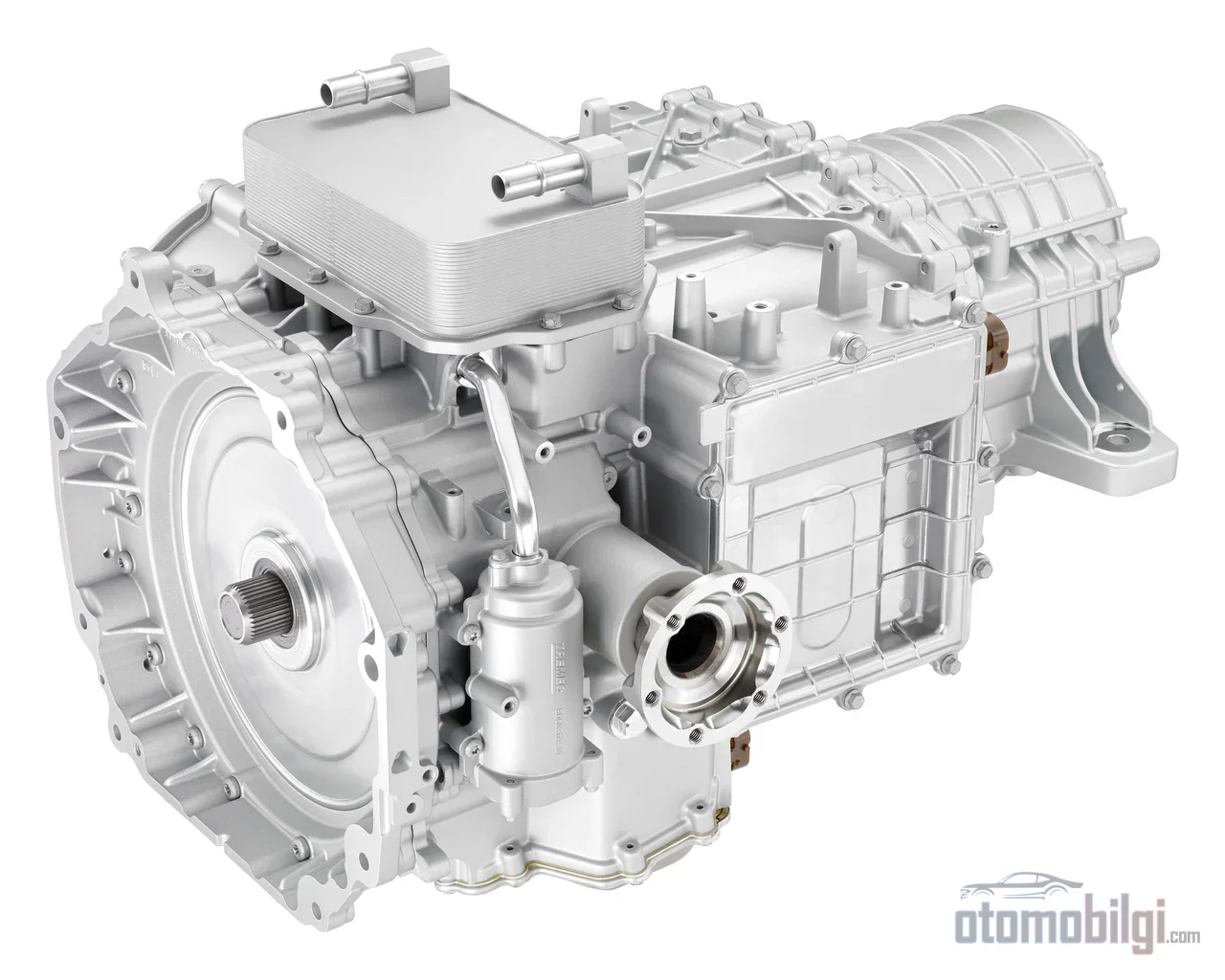
In its simplest definition, you can think of a dual-clutch transmission as the union of two separate manual transmissions in a single housing. Odd-numbered gears (1, 3, 5...) are connected to one clutch, and even-numbered gears (2, 4, 6...) to the other. While the car moves in 1st gear, the transmission control software has already synchronized 2nd gear; at the moment of shifting, one clutch disengages while the other engages without ever interrupting the flow of torque. This is the secret of the DCT's speed: there is no waiting to change gears; the next gear is always ready and waiting.
The design shares common parts with manuals: it includes synchronizers and shift forks; the only difference is that the forks are moved not by the driver, but by the engine control unit. The clutches can also be wet (in an oil bath) or dry, as in manuals. Wet clutches handle high torque; the transmission of the Bugatti Veyron, which produces 1,250 Nm, was designed with this approach. The DCT's efficiency advantage, on the other hand, eliminates the two strongholds of loss in a classic automatic: the slippage of the torque converter before lock-up, and the power the hydraulic pump consumes from the engine. These losses do not exist in a DCT.
Numerical examples are the concrete form of the claim: the 7-speed DCT in the Ford Mustang Shelby GT500 is introduced with gear shift times dropping to as low as 80 milliseconds; the 8-speed DCT of the Corvette C8 gave the mid-engine sports car exceptional shift speed for the first time. The Volkswagen Golf R32, meanwhile, brought this technology to road cars in 2003 with its first modern mass-production DCT (DSG).
A short but rich history
The concept is not new at all. French engineer Adolphe Kégresse designed the DCT for the Citroën Traction Avant in 1939, but lack of funding prevented it from reaching a prototype. The first production attempt was the Easidrive with an electromagnetic clutch in the Hillman Minx in 1961; its reliability however fell short. Porsche developed its own DCT in the late 1970s to prevent pressure loss during gear changes in turbo engines; PDK was first used in the 1985 962 C race car and won the World Sportscar Championship the following year. Later, the 7-speed Getrag 7DCL750 with a 750 Nm torque capacity powered the Ferrari 458, Mercedes-AMG GT and Ford GT; Mitsubishi Fuso brought the DCT to trucks in 2010, and Honda brought it to motorcycles with the VFR1200F in 2009.
Torque Converter Automatic: Power Transmission Through Fluid
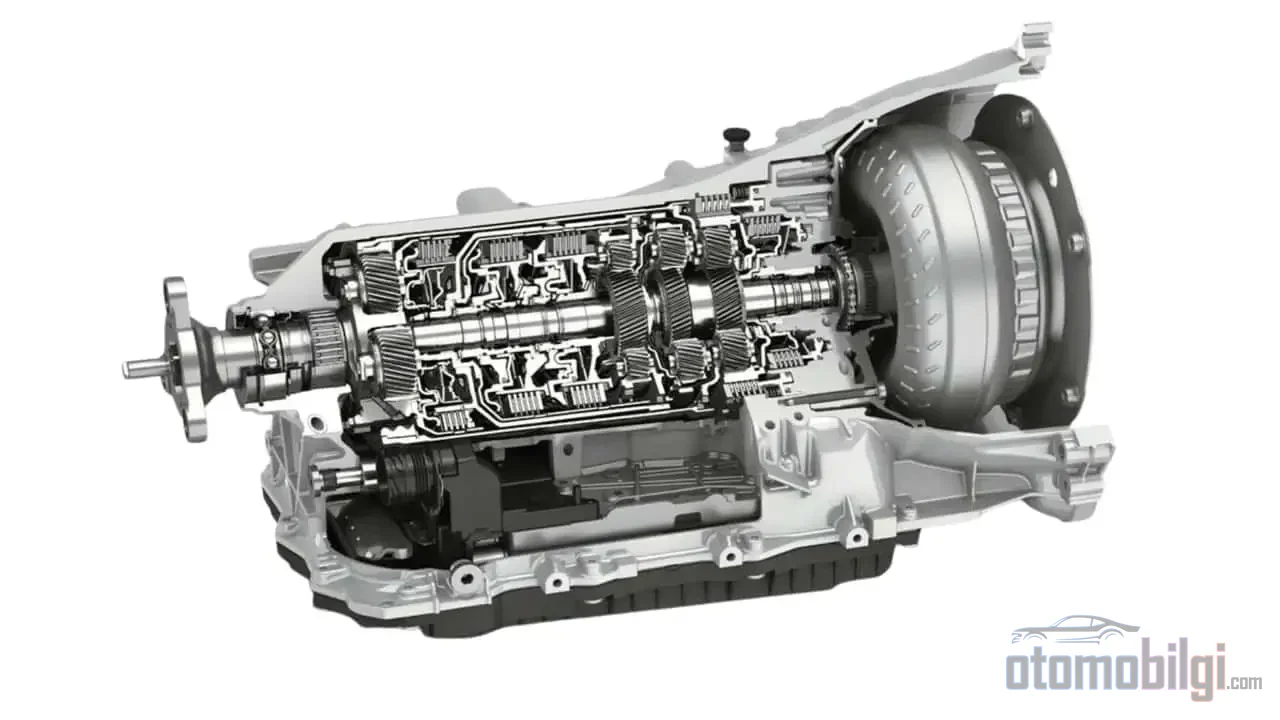
The classic automatic is the sum of three components: planetary gear sets, a torque converter, and clutch packs controlled by hydraulic pressure. The torque converter is a fluid clutch that transmits rotational power; it contains two sets of blades: an impeller connected to the engine and a turbine connected to the transmission input shaft. As the engine accelerates, it spins the fluid turbine, and revs rise until the two speeds approach each other. Thanks to the fluid connection, shifts are naturally smooth; at constant cruising speed the converter locks up and provides a direct 1:1 ratio. At stops, it allows the vehicle to remain stationary without stalling the engine; the torque converter's slip is not a flaw, but a design feature that smooths power delivery.
The price of this smoothness is efficiency: pre-lockup losses and the hydraulic pump's constant draw are a source of loss that the DCT does not have. On the other hand, the ability to slip complements the DCT's greatest weakness at low speeds. There is a fine example of a hybrid of the two: the 2015 Acura TLX tried to eliminate the low-speed judder of DCTs by adding a torque converter to its 8-speed DCT.
CVT: Stepless Revs, Variable Character
The continuously variable transmission eliminates gear steps entirely. Instead of fixed ratios, it adjusts engine revs infinitely according to the vehicle's speed; the engine can stay at its ideal revs while the vehicle keeps accelerating. This is theoretically a perfect scenario for efficiency, and it generally provides better fuel economy in stop-and-go traffic. It also has an expensive side: when you floor the throttle, a delay can be felt between the engine reaching the requested revs and the speed increasing; the power seems to miss its sync with the acceleration.
The driving feel is debatable. There is almost no sensation of gear changes; some drivers describe this as comfort, others as outright boredom, and complain about the increasing engine noise. Among evaluators, the CVT is the transmission type that leaves the most negative impression in terms of perception; yet its technical efficiency and its perception are not the same thing. The critical point in reliability is maintenance: CVTs typically fail due to overheating or failure to change the transmission fluid regularly.
Which Automatic Transmission Type Suits Whom?
| Feature | DCT | Torque Converter | CVT |
|---|---|---|---|
| Gear shift | Up to 80 ms, very fast | Smooth, fluid-linked | No clutches, no steps |
| Efficiency | Strong outside the city | Lowest of the three | Excels in stop-and-go |
| Weak point | Low-speed shudder | Torque converter slip | Delayed downshift response |
| Maintenance risk | Clutch wear, software | Complex hydraulics | Warm-up, oil neglect |
| Proper use | Sport/driving-focused | Comfort and heavy loads | Urban traffic |
The practical summary of the comparison is this: in bumper-to-bumper city traffic, a CVT generally offers better fuel economy and a smoother ride; a DCT may lag behind the CVT in congested city driving but catches up with or overtakes it on open roads. According to the manufacturer's claim, a 7-speed DCT delivered a 6% fuel economy improvement compared to a 6-speed manual, and 20% compared to a hydraulic automatic; independent evaluations suggest that a DCT offers a 6-10% efficiency gain over a standard automatic and an improvement of about 6% in 0-100 km/h acceleration. Although some users on social media have reported differences of up to fourteen or fifteen liters in single-digit consumption figures between their own vehicles, this is not verified test data; it should be evaluated with caution.
On the maintenance side, the general tendency is clear: DCTs can be more expensive to repair and maintain than CVTs; automatic transmissions are more complex than manuals and maintenance costs can run higher. Common problems with DCTs include struggling at low speeds, clutch wear, software failures, and unusual noises; some users have reported that DSGs switched to safe mode due to high oil temperatures. On the other hand, there are also strong user opinions arguing that wet-clutch DCTs are very reliable in demanding, high-torque use. This dilemma is real: stop-and-go strain feeds on the early-year problems of mostly small, dry-clutch DCTs.
Manual Is Not Dead Yet
The belief that "manual always saves fuel" is widespread but now a myth. Modern automatics can offer the same or better fuel economy than manuals. What remains for the manual is a different value: more direct control and a more driver-focused experience. Automatics are more complex and have potentially higher maintenance costs; in return, they reduce driving fatigue in daily use. The choice is no longer a question of efficiency, but a question of the driving relationship.
Injection Technology: Not the Transmission, But the Key to the Engine Side
Transmission choice takes on meaning together with the engine's character; that is why it is necessary to know fuel injection technologies. Port injection (MPI) sprays fuel into each cylinder's intake port; it is less efficient than direct injection because not all of the injected fuel enters the combustion chamber, but since the fuel passes over the valves, no carbon buildup occurs on the valves. Direct injection, on the other hand, sprays fuel directly into the combustion chamber at a much higher pressure and controls the injection pattern; gains efficiency, but since fuel does not pass through the intake valves, valve carbon buildup forms over time. A practical side note: MPI engines are simpler and more predictable for LPG conversion. Which injection type the engine uses affects the torque curve and therefore the rev range in which the transmission will operate; an efficient transmission is only meaningful together with an efficient engine.
Conclusion: Three Families Based on Your Driving Profile
The right transmission starts with defining your needs. If you want daily urban use and the smoothest progress, a CVT is the right choice; if comfort and lack of jolt are your priority, a torque converter automatic; and for driving dynamism and quick shifts, a wet-clutch DCT. There is no single right answer; the three families are different solutions to different engineering dilemmas. Before buying the car, do at least one stop-and-go city tour and one out-of-town trip: the difference in character says more than any number in the brochure.
Sources
- Dual-clutch transmission
- The Differences Between a DCT and a Traditional Automatic Transmission - TREMEC Blog
- Torque converter
- Continuously variable transmission
- What is a CVT, or Continuously Variable Transmission? - JD Power
- Ultimate Transmission Guide: Manual, Auto, Dual-Clutch, CVT - AutoExpert
- CVT Transmission vs. DCT: What's the Difference? - Kemimoto
- DCT vs CVT vs AMT | Choose The Best Transmission - GoMechanic
- What is a Torque Converter in an Automatic Transmission? - Arnold Motor Supply
- Five Myths About Stick Shifts - Edmunds
- Multi point injection (MPI) vs. Direct injection (DI) - Abrites
- How Direct Injection Engines Work - UTI
- MPI vs Direct Injection LPG Installation - TOPGAS