Why Does the Number of Gears Keep Increasing?
Share This Page
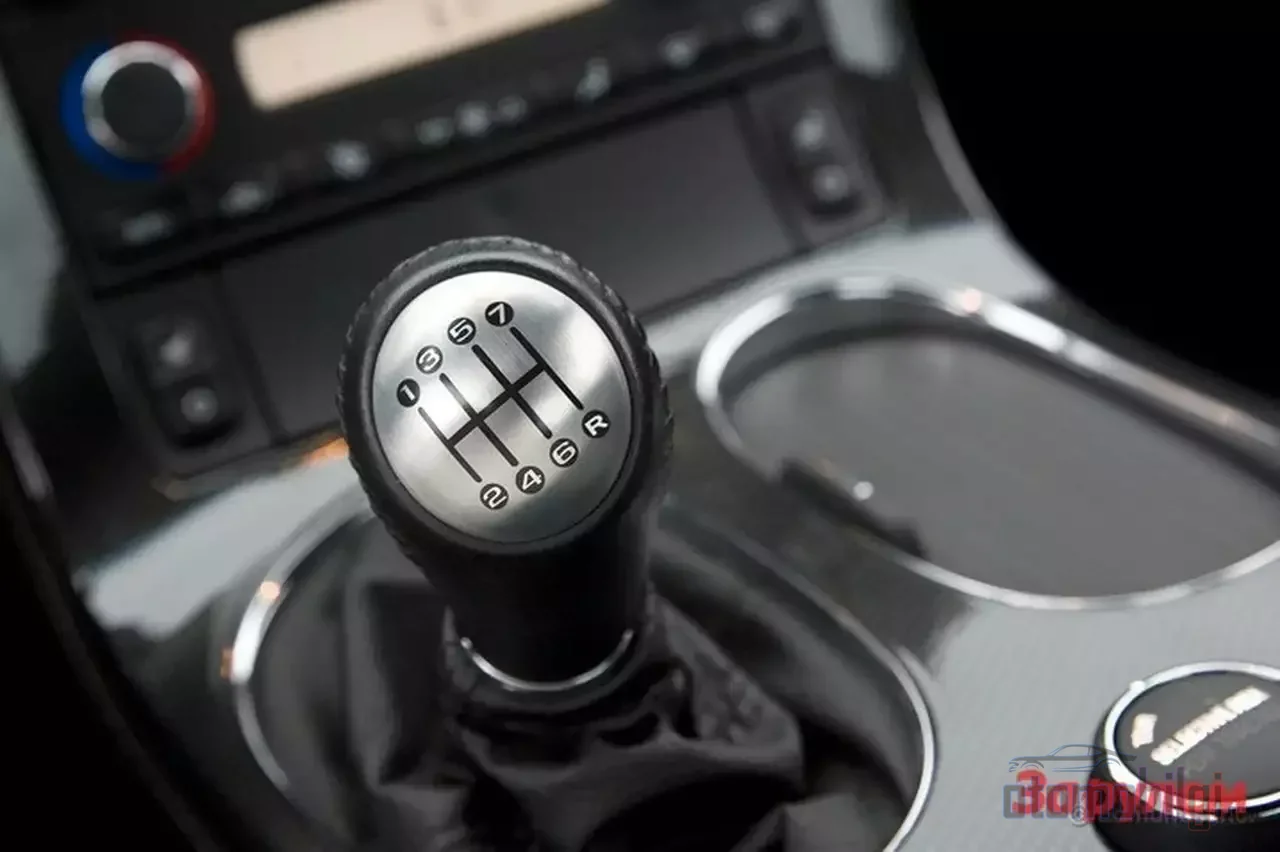
The number of gears keeps increasing in order to keep the engine within the narrow RPM range where it produces its power and torque most efficiently: Ratios that get shorter toward first gear multiply torque at takeoff, while ratios that get longer toward the higher gears reduce engine speed and fuel consumption at highway speeds. While typical cars in the 1990s had 3-5 forward gears, in the last two model years that number has reached at least 6, and up to 10 in some models.
Highlights
- The ZF 8-speed automatic delivers 21-24% better fuel economy than a 3-speed automatic.
- In the 2017 Ford F-150, the switch from 6 speeds to 10 speeds shortened the 0-60 mph time by 0.2 seconds.
- Starting from model year 2016, automatic transmissions overtook manual transmissions in fuel efficiency.
- Ford and GM engineering admit that 10 forward gears is the useful upper limit.
Why Is the Number of Gears Increasing? The Engine's Efficient RPM Range
Consider the operating map of an internal combustion engine. Whether gasoline or diesel, the engine has a relatively narrow RPM range in which it consumes the least fuel while producing its maximum power and torque. That is precisely the job of the transmission: To keep the rotational speed delivered to the wheels within this ideal zone of the engine. As the number of gears increases, the engine operates within this optimum range more often; each gear offers a more finely tuned ratio for maintaining engine speed.
In a vehicle with few gears, however, the engine is forced to settle for the gear closest to the current speed. The result is running at higher RPMs than needed. High RPM means more fuel per unit of time, and it also wears the engine out more. If we build a rough chain of logic: More RPM means more engine work, more fuel, more stress and wear. Reversing this chain is the fundamental driving force behind the gear-count race.
The roles of low gears and high gears are completely different from each other. A short-ratio first gear enables takeoff and hill climbing by multiplying torque at the wheels. Long-ratio overdrive gears, on the other hand, reduce engine speed at highway speeds, cutting both consumption and the noise heard in the cabin. Here's the issue: The more intermediate ratios you pack between these two extremes, the less engine speed drops and the more efficient it stays.
Ratio Spread: The Engineering Logic Behind the 10-Speed Transmission
When the number of gears increases, it's not just the intermediate steps that multiply; the total ratio range, that is, the ratio spread, can also widen. In modern 10-speed transmissions, first gear has a much shorter ratio for aggressive takeoff, while the top gear is much longer than before for low-RPM cruising. The steps in between, meanwhile, remain small. A high numerical ratio at takeoff, a long top gear at cruise: Wanting both performance and efficiency from the same transmission is no longer a contradiction, but a design goal.
The shorter steps have a second benefit: The disruption during gear changes is reduced. When engine RPM drops too much within a gear, the shift is felt and acceleration is interrupted. As the steps narrow, this transition both softens and speeds up; modern 8- and 10-speed automatics, with fast clutch swaps and intelligent control software, can skip four or five gears at once. For example, the control computer of the 10-speed transmission jointly developed by Ford and GM contains more than twice as much code as the previous 6-speed - over 1 million lines - and can make sudden downshifts based on throttle pedal movement.
What changed in numbers?
Concrete examples make the effect of gear count measurable. The 2017 Ford F-150 achieved one mpg better fuel economy in the city and on the highway, and two mpg in the 4x4 version, with the 10-speed transmission compared to the previous year's 6-speed version; its 0-60 mph time was reduced by 0.2 seconds. In the same model year, the towing versions reached 12,200 pounds of towing capacity with 375 hp and 470 lb-ft of torque. A similar picture exists on the sedan side as well: In the 2017 Chevrolet Malibu, moving from 8 to 9 speeds increased fuel efficiency by roughly 3%.
Data shared by ZF in 2012 shows just how dramatic the relationship between gear count and consumption can be: An 8-speed automatic promises a 21-24% improvement over a 3-speed automatic; compared to a 6-speed, the saving is about 11%, and 14% compared to a 5-speed. The ZF 9-speed targets up to a 16% improvement over the 6-speed. The values in ZF 8HP's technical sheets point in the same direction: 12% less consumption than the 6-speed 6HP, and 14% less than a 5-speed. From an engineer's perspective, these numbers are no coincidence - they are the direct mathematics of ratio steps.
| Transmission | Comparison | Fuel economy improvement |
|---|---|---|
| ZF 8-speed | vs 3-speed | 21-24% |
| ZF 8-speed | vs 5-speed | 14% |
| ZF 8-speed | vs 6-speed | 11% |
| ZF 9-speed | vs 6-speed | up to 16% |
| GM 9-speed | vs previous 8-speed (Malibu) | 3% |
The Price of Many Gears: Complexity, Weight and Cost
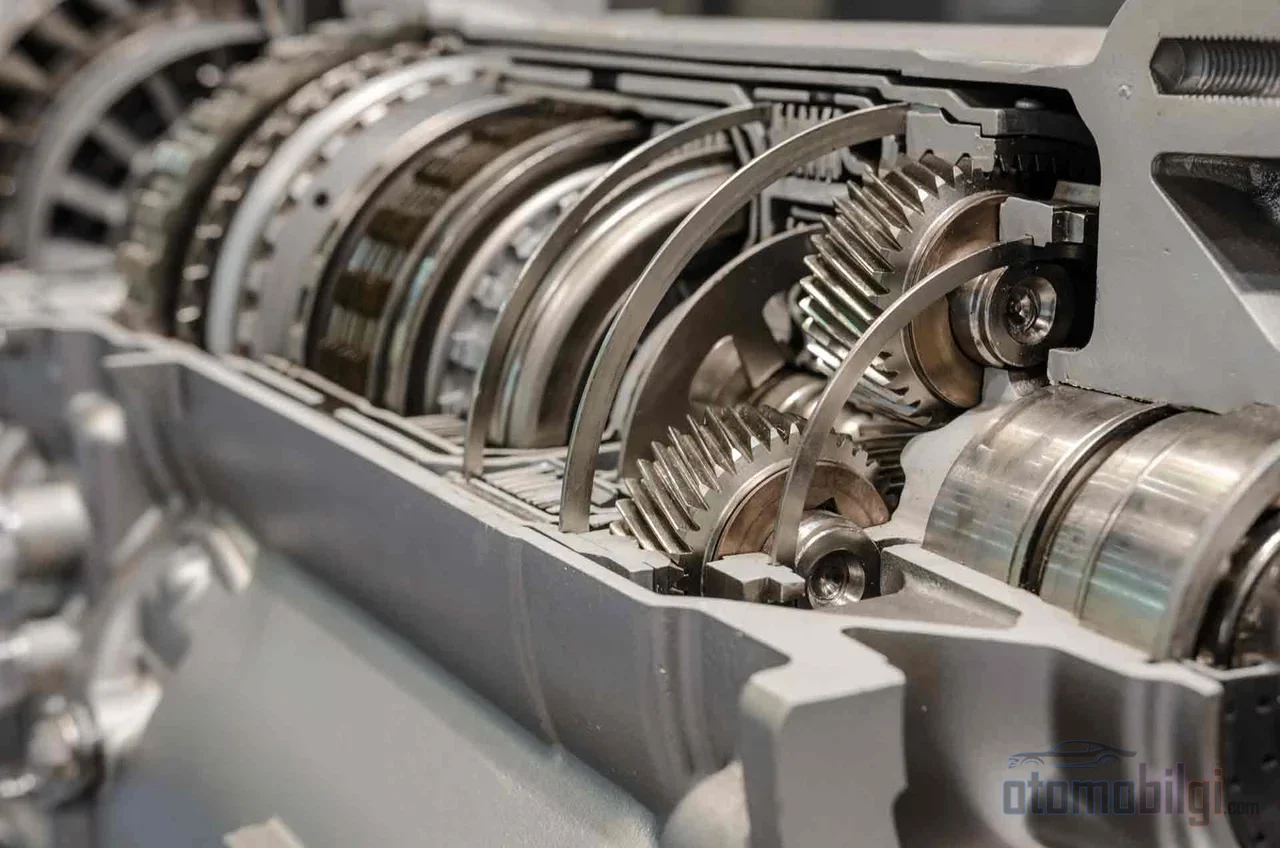
Every additional gear means extra clutch elements, more complex valve body components and more computer control. More moving parts inevitably brings greater potential for mechanical problems and a more expensive transmission unit. GM invested $323 million in its high-gear-count transmission plant in Romulus, Michigan; this figure is a measure of just how serious an industrial investment multi-speed automatics require.
Weight is also at the center of the debate. Here is a critical perspective: Weight is the enemy of performance; rather than adding more gears, manufacturers should look for ways to make vehicles lighter. This criticism is not unfounded, because every gain is bought with mechanical complexity. On the other hand, diminishing returns are inevitable: while benefits can still be seen beyond 8 and 9 speeds, when moving to 11-12 speeds, diminishing returns kick in, leading to architectural problems. Ford and GM engineering teams see 10 speeds as the sweet spot of this benefit curve.
There is also a continuity issue. 10-speed is not the optimal solution for every vehicle; regional markets are expected to keep 6-speed transmissions in place for a long time. On its side, GM calculates that its 9-speed transmission for front-wheel-drive models can jointly cover the premium high-gear-count market, and emphasizes that both transmissions are designed as leak-free, maintenance-free units for life.
8-Speed or 10-Speed? An Alternative Solution to Ratio Spread
The 10-speed is not the only perspective in this contest. The ZF school advocates an 8-speed transmission with a wider ratio spread instead of close steps, and the 8HP is widely accepted as a unit fast and refined enough to serve both sports cars and luxury sedans. A practical comparison confirms this: In a comparison of 8-speed and 10-speed versions conducted on the 2020 Chevrolet Silverado Z71, no clear advantage of the 10-speed over the 8-speed was found; ZF's wide ratio spread was doing the job.
The lesson here is that the ratio spread and step closeness matter more than the number of gears itself. 10-speed stands out as a strong choice especially in towing and heavy load scenarios; for light vehicles and daily use, a well-tuned 6-8 speed is often sufficient. The formula "the more gears the better" rarely holds true in the engineering world.
CVT and DCT: Alternatives to Gear Count
Multi-speed automatics are not the only path. A CVT, with its belt and pulley system, can offer an infinite number of ratios, keeping the engine at its efficiency sweet spot without shifting gears at all; in most cases it delivers better fuel economy than a conventional automatic. In return, the driving character imposed by the belt-and-pulley design does not appeal to everyone, and durability questions arise in high-torque applications. Dual-clutch transmissions (DCT) offer a valid path not only for performance-focused vehicles but also for models seeking to balance speed and efficiency.
An interesting turning point is the historical superiority of automatics over manual transmissions: Starting from model year 2016, automatic transmissions caught up with or at least matched manual transmissions in fuel efficiency. Until a decade ago, the assumption that "manuals burn less fuel" was valid in nearly every class, but the tight ratios of multi-speed automatics reversed this equation. The real goal of the gear race was not performance but fuel efficiency; it is clear that the Corporate Average Fuel Economy (CAFE) standards in the US were the driving force behind this trend. The performance gain, meanwhile, comes as a byproduct of a short first gear and quick shifts.
Why don't electric vehicles count gears?
Electric motors have a feature that invalidates this entire debate: They produce nearly constant torque from zero up to maximum rpm. There is no need to look for a narrow region called the efficient rev range; the engine shows almost the same character everywhere. That is why electric vehicles make do with a single-speed transmission. The increase in gear count was a solution to the internal combustion engine's narrow efficient range; once the narrow efficient range disappears, the need for ratio multiplication disappears too. The lever comparison is also illuminating: In pedal bicycles, human power is produced within a very narrow force range, so 18 or more gears are needed; trucks can also have 18 forward gears due to heavy loads. The number of gears bridges the gap between the engine's character and the vehicle's task.
How Many Gears Are Enough? The Right Ratio of Diminishing Returns
So what is the ideal number? There is no clear, measurable answer, but the boundaries are known. In low-power, lightweight vehicles, 5 forward gears may still be sufficient, both in terms of production cost and the vehicle's performance potential. For heavy trucks, 18 forward gears make sense because the ratio requirement between loaded and unloaded states is a chasm. In passenger cars, 6-8 forward gears cover most scenarios; 10 forward gears gain meaning in large-engine vehicles that simultaneously target full-load towing, rapid acceleration, and low cruising consumption. On the manufacturer side, Ford and GM see 10 speeds as the sweet spot, while the opposing view finds the weight and complexity burden of many gears unnecessary. Both sides are partly right: The correct answer depends on the vehicle's task, and the gain in fuel economy must justify the cost of every extra gear. Otherwise, the gear count becomes a feature that looks good on paper but exacts a price on the road.
Sources
- High-Gear Transmissions: How Many Gears Are Enough? - Automotive Fleet
- A Shift to High MPG - Green Car Journal
- ZF 8HP transmission - Wikipedia
- FOTW #1127: Since Model Year 2016 - U.S. Department of Energy
- The Need for 10-Speeds - MOTOR Information Systems
- Chevy Silverado Z71 8-speed vs. 10-speed - TFLtruck
- CVT vs. Automatic Transmission - MotorTrend