Low RPM or High RPM? Reading Engine Character
Share This Page
There is no single universal answer to the question of low RPM versus high RPM; which one is "better" depends on where the engine's torque curve peaks across the rev range and on the vehicle's intended use. In short: an engine that produces torque at low RPM is comfortable and economical for everyday use, while an engine that produces power at high RPM is performance-oriented. In this article, we take a step-by-step look at the relationship between the rev band and power and torque, the mechanical factors that determine engine character, and how to read these values in technical specifications.
Key Takeaways
- In petrol car engines, the power band typically starts at around 4,000 RPM and continues up to 6,200-6,800 RPM .
- Diesel engines usually produce maximum torque below 2,000 RPM, and peak power at approximately 4,000 RPM or below.
- Power is a calculated value: kW = Nm × RPM / 9549 it is derived from torque using the formula.
- In most engines, the torque peak occurs 1,000-2,000 RPM below the power peak.
What is a power band, and why does it determine engine character?
The power band is the RPM range in which an internal combustion engine can produce its maximum power. This range is usually a slice smaller than half of the engine's total rev range and defines the region where maximum acceleration is achieved. What we call an engine's "character" is largely about where this band begins and ends: an engine with a band set at low revs feels full and meaty at low RPM, while an engine with a band shifted higher comes alive as revs rise.
In a petrol road car, the power band typically starts in the mid-range, at around 4,000 RPM - where maximum torque is also produced - and ends below the redline, after the engine reaches its maximum power. On the diesel side, the picture is very different: diesel car and pickup engines usually develop maximum torque below 2,000 RPM , and peak power at approximately 4,000 RPM or below. In other words, the same "power band" concept corresponds to two rev regions far apart from each other in the two different fuel types.
A small but important technical distinction needs to be made here: torque and revs are quantities measured at the engine's crankshaft; power, on the other hand, is a calculated value. In metric units, it is found using the formula kW = Nm × RPM / 9549 . This formula is the essence of the mathematics behind the character debate: an engine that can sustain the same torque at higher revs produces more power.
What does the torque curve mean in everyday driving?
In a typical vehicle engine, torque is low at idle, reaches its peak value in the 1,500-6,500 RPM range and drops off noticeably toward the redline. The physical reason for this is clear: below peak torque, intake air velocity and therefore the air-fuel mixture are not ideal; above it, increasing friction, valve timing limits, longer combustion duration and insufficient intake flow restrict torque.
In everyday use, torque has a concrete meaning: the abundance of torque at low revs makes it easy to move the car without revving it high. Getting off the line, pulling power on a hill, and carrying heavy loads are torque's domain; top speed and sustained performance are the domain of power. For this reason, in city driving a wide and low torque plateau is often more noticeable than a high power peak.
The shape of the curve is as important as the peak value. A flat and wide torque curve means consistent power across a wide rev range, while a curve with a sharp peak traps the engine's power in a narrow band. In track use, the advantage of a flat torque curve is clear: you get similar pulling power on corner exit regardless of which revs you are at. Engines with a narrow power band, on the other hand, need more closely spaced gears to compensate for this narrowness - and that is precisely the functional summary of a CVT transmission: keeping the engine at optimal revs, freed from being trapped within a narrow band.
Long stroke or short stroke: how does stroke change engine character?
In a given engine displacement, the ratio between the cylinder bore and the piston stroke is the mechanical variable that most affects where the rev band will sit. In a long-stroke engine, the cylinder bore is small and the piston travels a longer distance for the same volume; this means higher inertia stresses on the moving parts. In return, you get a naturally full low-rev torque.
A short-stroke engine makes the opposite trade: because the piston travels a shorter distance per revolution, piston speed drops and the engine allows higher rev limits. This is the logic behind preferring a wide bore and short stroke in racing use - the rev limit can be raised easily. Short stroke also has its price: a wide and flat combustion chamber makes good mixture formation difficult. For this reason, long stroke for torque, short stroke for power is an engineering-sound starting point as a summary.
The examples that demonstrate this principle most strikingly are high-revving ones: 14,000 RPM Motorcycle and Formula 1 engines that rev above this figure reach such revs thanks to light pistons and rods and a short stroke. As engine displacement grows, and especially as stroke lengthens, the power band shifts to lower revs. The role of the number of cylinders in this picture is separate: cylinder count affects not the amount of torque, but the smoothness of power delivery.
Why do diesel engines produce torque at low revs?
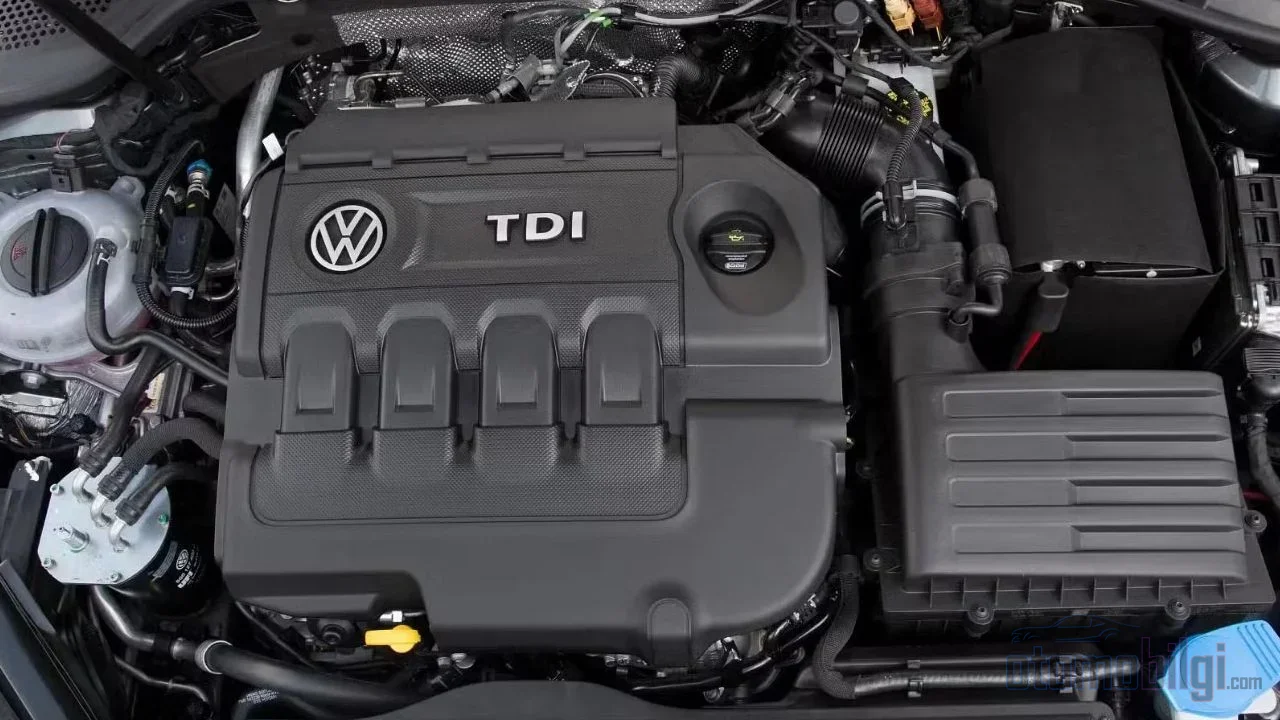
Three main factors stand behind the diesel character: stroke length, turbocharger boost pressure, and mean effective pressure. Diesel engines generally have a longer piston stroke; a long stroke provides more leverage to the crankshaft and translates into higher torque at low revs. High compression ratios and the large combustion pressure applied to the cylinder also feed this torque output.
The redline difference, on the other hand, largely stems from fuel atomization limits. Injecting diesel fuel into the cylinder and mixing it is a slower process than burning a prepared mixture like gasoline; for this reason, diesel road cars typically 4,500 RPM end around, while gasoline engines can reach up to the 6,500–8,000 RPM range. In summary, the profile of a typical road diesel is as follows: peak torque at 1,500–2,000 RPM, peak power at 3,500–4,500 RPM, and power falling off rapidly above these speeds.
| Feature | Gasoline engine | Diesel engine |
|---|---|---|
| Peak torque region | Around 4,000 RPM | Usually 1,500–2,000 RPM |
| Peak power region | Around 6,200–6,800 RPM | Around 3,500–4,500 RPM |
| Typical redline | 6,000–7,000 RPM | Around 4,500 RPM |
| Character | Rev-happy, high-revving focused | Focused on low-end torque, narrow band |
How are power and torque figures read from technical specifications?
The lines "maximum torque: X Nm @ Y RPM" and "maximum power: Z hp @ W RPM" in a brochure are a brief summary of the engine's character. Look at the speed difference between the two numbers: the distance between the torque and power peaks gives a clue about the width of the engine's power band. The torque peak is known to usually occur 1,000–2,000 RPM below the power peak; if the two peaks are close to each other, the band is narrow, and if the speed range between them is wide, the engine has more flexible usability.
The transmission also reads the curve
Reading the torque curve alone is incomplete, because the transmission plays a multiplier role in this equation. Low gears (around 3.5:1) mechanically multiply torque at startup; overdrive gears (around 0.8–0.9:1) provide cruising at low speeds on the highway. Historical development also confirms this: the two-speed automatics of the 1950s required a wide power band from engines; today's 8–9 speed transmissions, on the other hand, allow the engine to be tuned in a narrow, efficient range. For this reason, bands that appear narrowed in today's engines, when combined with multi-speed transmissions, do not turn into a loss of flexibility in daily driving.
The meaning of the redline row
The redline is the maximum speed at which the engine can operate without damaging its components; it depends on factors such as stroke length, part mass, and balance. Considering that the record for piston road cars is at the 12,100 RPM level, one understands how cautiously an ordinary road car's 6,000–7,000 RPM band is designed. A low redline alone does not mean low performance; the limits of old OHV designs, which regressed to 4,800 RPM due to valve float, created no deficiency in large-displacement, high-torque engines. Entering the redline does not mean instant failure, but it increases the risk of damage - and it is no coincidence that manufacturers usually set the redline just above the point where power output falls.
How do turbocharging and naturally aspirated induction affect the speed band?
Forced induction makes it possible to extract more power from the same engine displacement; the really interesting part, however, is its effect on the torque curve. In turbocharged and supercharged engines, the intake pressure regulation system usually limits torque to an almost constant value across the rev range - both to reduce engine stress and to ensure consistent behavior. The result is a flat torque plateau rarely seen in naturally aspirated engines; it is achieved without sacrificing peak power.
On the side of naturally aspirated (NA) engines, there is a different trade-off: simpler design, fewer parts to fail, generally longer life, instantaneous throttle response, and a linear power band. NA engines tend to produce more power at the highest revs, but their torque curves are not as flat, and in refined engines, displacement is often enlarged to compensate for the lack of forced induction. The cost of the forced-induction side is complexity and a narrowed power band due to the lag (turbo lag) seen in most turbo engines. There is also the altitude factor: supercharged and turbocharged engines perform better than naturally aspirated engines in high-altitude environments with low air density, while NA engines are more sensitive to altitude. The debate over turbo versus naturally aspirated goes on and on because both sides have valid points - the right question is not "which is better" but "which trade-off suits your use case."
What balance should you look for when choosing engine character?
Giving a single answer to the question "is horsepower or torque more important" is to misread the question itself. Launch and pulling power are the domain of torque, while top speed and sustained performance are the domain of power; in terms of daily driving and fuel economy, the recommendation is a balance of the two. As a rule of thumb: the lower the peak torque revs, the more comfortably you use the car in the city; the higher the peak power revs, the more performance-oriented the engine is tuned.
When you look at the technical price line, you can now read four things together: peak torque rpm, peak power rpm, redline, and how close these three are to each other. Close peaks and a high redline tell of an exciting but gear-sensitive engine; an early torque peak and a wide plateau indicate a comfortable and flexible character. Engine character is no accident - it is the result of deliberate engineering decisions on stroke, displacement, induction, and transmission; once you learn to read it, every technical spec sheet starts telling you how the engine is meant to be driven.
Sources
- Power band
- Power vs Torque in Engine Performance Explained
- Horsepower vs. Torque: Which Is More Important?
- Long Stroke Vs Short Stroke Engines: Differences Explained
- Long- Vs Short-Stroke Engines: What Are The Differences?
- Why Diesels Make So Much Torque
- Understanding Torque And Horsepower - with Tractive Force
- Maximum Acceleration: Peak Power Vs Peak Torque
- Engine Power Delivery - What is Torque Vs. Horsepower
- Turbos, Superchargers and Naturally Aspirated Engines