Cylinder Deactivation Technology: Putting Half the Engine to Sleep
Share This Page
Cylinder deactivation is an efficiency technology that disables specific cylinders by closing their valves during moments when the engine does not need full power, effectively allowing the engine to run with a smaller displacement. At idle, during highway cruising, or under light throttle, fuel is not injected into the inactive cylinders; this way, the engine does not burn fuel to produce power that is not needed. In modern implementations, this transition is smooth enough that most drivers cannot notice it, and depending on conditions, it delivers measurable improvements in fuel consumption.
Highlights
- Cylinder deactivation typically shuts down half of the engine: a V8 drops to four cylinders, and a four-cylinder engine falls to two.
- The U.S. Department of Energy estimates the fuel economy improvement at roughly 7.5%; under highway conditions, the reduction 8-25% can range from
- In deactivated cylinders, an air spring effect occurs; the trapped exhaust gas places no net load on the engine.
- The technology has matured alongside electronic control since the Cadillac V8-6-4 attempt in 1981.
- Official recalls (Mercedes, Mazda) show that the system can be serious when it malfunctions.
How does cylinder deactivation technology work?
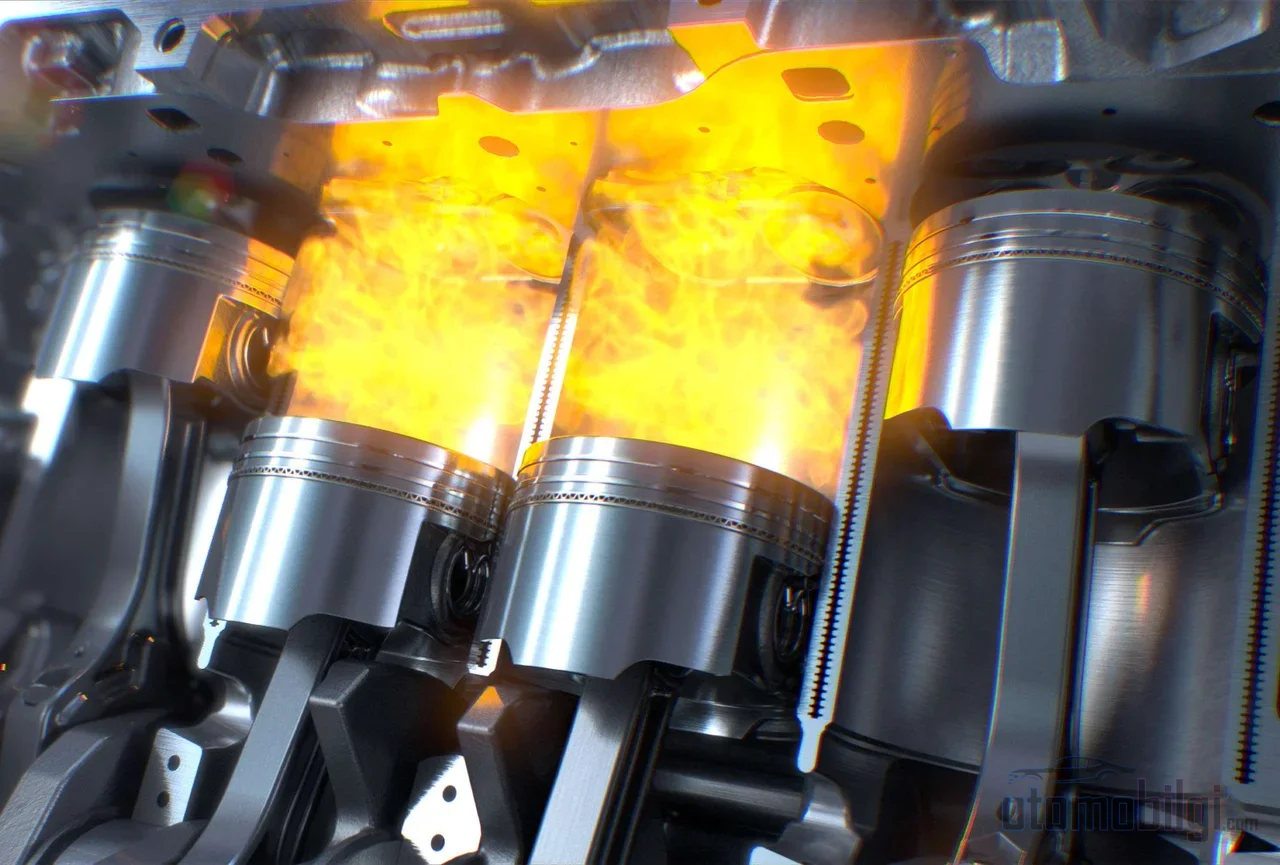
The basic logic is simple: the entirety of a multi-cylinder engine often needs only a fraction of its power. Four or six cylinders are more than enough to keep a vehicle moving at a constant speed on a flat road. Cylinder deactivation systems kick in at exactly this point, holding the intake and exhaust valves of certain cylinders closed and cutting off fuel injection to those cylinders. When the valves are closed, the relevant cylinder drops out of the firing cycle; the engine runs as if it had a smaller displacement.
So what does the piston inside a cylinder with closed valves do? The exhaust gas is trapped in the combustion chamber and compresses as the piston moves up, then expands again as it moves down. This "air spring" effect balances itself in both directions; the deactivated cylinder places no net load on the engine. In other words, instead of braking the engine, the deactivated cylinders are quietly excused from duty.
The decision-maker is the engine control unit (ECU). Continuously monitoring sensor data such as speed, engine load, and throttle position, the ECU deactivates cylinders under low-load conditions; when the driver presses the accelerator, the system re-fires all cylinders within milliseconds. In gasoline engines, the goal is to reduce throttle pumping losses: under light load, the throttle is nearly closed, and the engine does unnecessary work to draw in air. When fewer cylinders are running, each cylinder works harder, the throttle needs to stay more open, and the engine operates in a more efficient region.
In diesel engines, the purpose is different
The real motivation behind cylinder deactivation in diesel engines is heating the exhaust. Diesels struggle to bring exhaust temperatures to sufficient levels under low load; when the remaining cylinders operate under higher load, more heat is produced. This heat brings the exhaust after-treatment system to operating temperature faster and reduces emissions. In heavy-duty applications, switching from 6 cylinders to 4 cylinders can achieve an improvement of 14-18% in idle consumption.
Under which conditions are which cylinders deactivated?
Most systems deactivate half of the cylinders at once: a V8 engine drops to four cylinders, a V6 to three, and a four-cylinder engine to two. The goal is to preserve the engine's firing interval without upsetting its balance; therefore, balanced pairs are chosen rather than an irregular distribution. Still, every manufacturer's approach is not the same.
Even early examples show this variety. Mitsubishi MD (1982) deactivated cylinders number 1 and 4 at speeds below 70 km/h, at idle and during deceleration; consumption improved by roughly 20% but the engine ran roughly in two-cylinder mode. Honda's VCM system (from 2003 onward) can switch between six, four and three cylinders by shutting down cylinder banks. More interesting is GM's 2018 introduction of Dynamic Fuel Management: Based on Tula Technology's "Dynamic Skip Fire" approach, this system can deactivate any number of cylinders in different combinations as needed - meaning every cylinder in the firing order can be skipped individually.
Mazda, on the other hand, chose to keep the middle cylinders firing in its 2.5-liter naturally aspirated engine: under light load, cylinders number 1 and 4 are deactivated, while 2 and 3 continue to operate.
Does the driver notice? Vibration and NVH engineering
The answer to this question has changed considerably depending on the technology's history. In first-generation systems, noticing it was not difficult, in fact it was easy. Cadillac V8-6-4 (1981) exhibited harshness and hesitation during transitions; despite 13 software updates, it was discontinued after a single model year, and the system was permanently disabled in vehicles sold the previous year. Mitsubishi's early MD system also had to struggle with the roughness of two-cylinder mode: measures were taken such as specially hydraulically damped engine mounts, a flexible exhaust pipe section, a flywheel 70% heavier, and the system not engaging until the coolant reached 70°C.
Mitsubishi's second-generation MIVEC-MD system from 1993, thanks to advanced electronic control, made the transition from 4 to 2 cylinders almost imperceptible - the ancestors of today's systems took shape at this point. In modern systems, transitions are nearly instantaneous and are smoothed with ignition advance, cam timing and electronic throttle adjustments. In V6 engines, however, serious NVH (noise, vibration, harshness) challenges persist due to the firing order and torque changes, making these configurations among the most demanding from an engineering standpoint.
How are V engines deactivated?
The mechanism varies depending on the engine's valve arrangement:
- Pushrod engines: The solenoids vary the oil pressure sent to the locking pins in the lifters; when the pin disengages, the lifter collapses and the valve stays closed.
- Overhead cam engines: A pair of interlocking rockers is used for each valve; when solenoid-controlled oil pressure releases the locking pin, one follows the cam while the other remains stationary.
- Mazda's solution: A key added to the hydraulic valve adjusters stops the valve from moving by changing the rocker's pivot point.
How realistic are the fuel consumption gains?
The figures vary over a wide range depending on implementation and conditions. The US Department of Energy estimates a fuel economy improvement of approximately 7.5%; manufacturers, however, claim efficiency gains of up to 20%. On highway conditions, consumption reductions of 8-25% are said to be possible. On the diesel side, with CDA and early exhaust valve closing techniques, a consumption reduction in the range of 5-25% is targeted.
Real-world tests can produce more modest results. In a heavy-duty diesel, standard fuel tests measured 2.76%, and on a distribution route 2% savings were measured - in daily driving, mixed traffic, load and climate conditions make it harder to reach the upper end of the laboratory range. Historical claims paint a similar picture: the Cadillac V8-6-4 promised improvements of up to 15%; the Alfa Romeo Alfetta CEM (1983) measured a 12% reduction compared to the non-variable displacement version, and nearly 25% compared to the carbureted vehicle. In short: the gain is real, but its magnitude depends entirely on how long you can cruise with cylinders deactivated - a driver who frequently accelerates and brakes in heavy city traffic will benefit far less than one cruising at a constant speed on the highway.
Differences in application between naturally aspirated and turbo engines
Cylinder deactivation, in a way, offers an alternative approach to small-displacement turbo engines: both aim for "powerful when needed, efficient when not." The turbo approach uses a small engine from the start; cylinder deactivation takes a powerful engine from the start and effectively shrinks it at light loads. While both have their advantages and disadvantages, deactivation technology offers a different balance point from the lag and response issues inherent in turbocharging.
The scale of application has also expanded surprisingly. The three-cylinder Ford EcoBoost introduced in 2016, with one deactivatable cylinder, is the smallest known engine to carry this technology. The Mazda Skyactiv-G 2.5, meanwhile, became one of the examples of cylinder deactivation in a naturally aspirated engine starting in 2018. On the diesel side, it has been shown that deactivation can be applied at low loads without compromising torque and power capability, and no negative effect on engine response was found.
A concrete measure of the technology's prevalence: approximately 15% featured cylinder deactivation; most of these were Mazda, GM, Honda and FCA products.
Long-term reliability: does the system really wear out the engine?
The most honest approach under this heading is to draw a twofold picture. On one hand, all cylinders operating regularly makes the system's existence a non-issue for most users; on the other hand, the system itself, with its additional mechanisms, brings new failure points.
What do official recalls say?
Two major examples illustrate the system's possible failure modes. Mercedes recalled 26,200 units of 2021-2023 model S580 and Maybach sedans: if the Camtronic system failed, the injectors could spray too much fuel and damage the catalytic converter, and in the worst case there was a risk of the engine stalling. Mazda, meanwhile, recalled 262,000 vehicles including the CX-5, Mazda 6 and Mazda 3; a fault occurring during the transition from deactivation mode to full operation could stop the vehicle and make it impossible to restart.
User complaints and the maintenance reality
Problems reported from the field are more common but with a lower level of verification. Lifter collapse in GM's AFM systems is a frequent complaint; it is said to cause the pushrod to bend if not caught early, and repair costs can reach thousands of dollars. Other reported problems include excessive oil consumption, carbon buildup and vibration at the moment of transition - some Mazda CX-30 owners report noticing the harsh transition between 2- and 4-cylinder modes as sound and feel. Since these are forum-based, individual user experiences, generalizing them to every vehicle would be misleading.
There are a few practical points to know on the maintenance side. In some systems, the computer does not engage cylinder deactivation as a safety measure if the vehicle's maintenance is overdue - meaning the system is not the problem, the maintenance status can be the determining factor. Disabling the system via software, however, is a double-edged decision: while it may seem to eliminate the risk of lifter failure, having all cylinders undergo every firing cycle could theoretically shorten part life. The most reasonable attitude is to accept the system as it is, not skip periodic maintenance and check the oil level regularly; mechanisms based on lifters and oil pressure are among the parts most affected by dirty or insufficient oil.
Conclusion: A clever idea come of age
Cylinder deactivation is the product of a long maturation story, stretching from the "hit-and-miss" engines of the late 19th century, through the disastrous 1981 Cadillac experience, to today's systems that work unnoticed in millions of vehicles. Its basic logic - not producing power that isn't needed - is perfect common sense; everything else was engineering detail that made the transition imperceptible, and modern electronic control has largely overcome that obstacle. Realistic gains vary by conditions: notable in highway cruising, modest in the city. The reliability debate is entirely valid but should be read without going to extremes: although the official recalls were serious, they were fixed, and the technology lives on today as a standard solution across a wide range of vehicles.
Sources
- Cylinder deactivation (gasoline and diesel engine) - Eaton
- Variable displacement - Wikipedia
- Is Cylinder Deactivation Bad for Your Engine? - Popular Mechanics
- Cylinder Deactivation - Cummins Inc.
- Cylinder Deactivation Systems - Clemson University
- Cylinder Deactivation - How does it work? - Driving.ca
- What You Should Know About Engine Cylinder Deactivation - CarParts.com
- Cylinder Deactivation Explained: AFM, DFM, and MDS - Holley
- Comparative study of engine dynamics for rolling and selective cylinder deactivation - ScienceDirect
- 4 Common Problems With Cylinder Deactivation - Yahoo Autos