How Does Variable Valve Timing Fine-Tune the Engine's Breathing?
Share This Page
Variable valve timing (VVT) is the continuous readjustment of the moment when the intake and exhaust valves open and close according to engine speed and load. Since a single fixed timing cannot be efficient across the entire rev range, VVT simultaneously improves performance, fuel economy and emissions by preserving torque at low rpm and power at high rpm.
Highlights
- With VVT, a typical output improvement of 5-10% is achieved at the extremes of the torque and power curves.
- Late or early intake valve closing strategies can reduce pumping losses at partial load by up to 40%.
- An optimal valve timing strategy for a port-injected engine offers more than 8% .
- The first VVT application in a production car was seen in 1980 on the Alfa Romeo Spider; VTEC arrived in 1989.
- The first patent date goes back surprisingly far: 1903, Cadillac Runabout.
Why Is a Single Timing Not Enough?
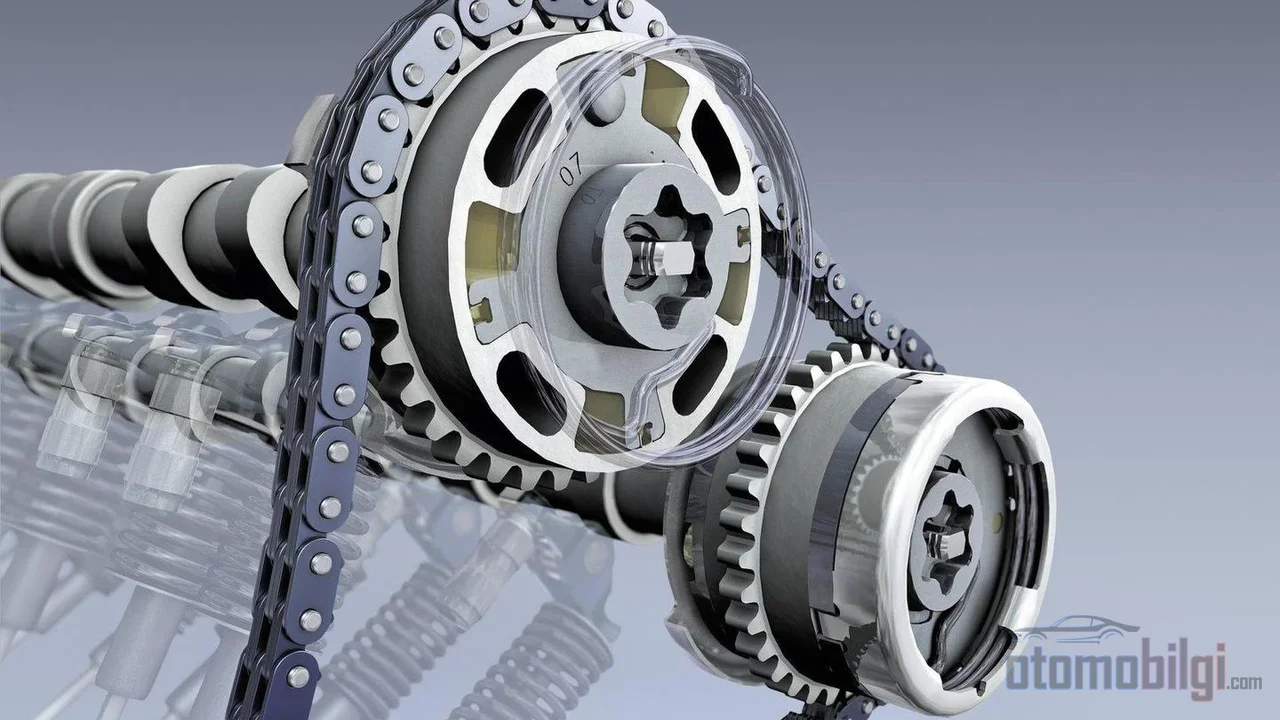
In a piston engine, the valves are opened by the camshaft. The camshaft is driven from the crankshaft by a belt, chain or gears, and each lobe on its profile determines exactly when, for how long, and how far the valve will be lifted. The problem is this: this profile is a fixed piece of metal, but the engine's needs are not constant.
At high rpm the engine demands a very large amount of air. If the intake valve closes before the cylinder is sufficiently filled, performance is lost. Conversely, a profile with long open durations, such as a racing cam, is a headache at low rpm: if the intake valve opens while the exhaust valve is still open (this condition is called overlap), the high pressure of the exhaust can push the fresh intake charge back out and contaminate the intake manifold with waste gas. In the words of engineer David Vizard, this means fuel leaving with the exhaust during the window when both valves are open.
One number is enough to grasp the scale: at 3000 rpm the camshaft rotates 25 times per second. For the valve events to work, they must occur at precisely the right moment in such a fast cycle. This is exactly VVT's job: by independently shifting the camshaft timing relative to the crankshaft, the engine control unit readjusts the overlap duration under all conditions.
How Does Variable Valve Timing Affect Power, Torque and Fuel Consumption?
The direction of the timing shift determines what you want to gain. When the camshaft is advanced, the valves open and close earlier; this increases low-rpm torque and fuel economy - at the expense of high-rpm power. Retarding it extends the power curve at high rpm. The modern system continuously balances these two ends according to engine speed.
The result is measurable: with VVT, a typical output improvement of 5-10% is seen at the extremes of the torque and power curves, and low-rpm torque can increase by 5-15% in many engines. Beyond being a theoretical top curve, this means an engine that upshifts earlier in daily use and requires fewer small throttle inputs.
The gain on the fuel consumption side
The real silent victory occurs at partial load - that is, in the region where the car spends most of its time. Late closing of the intake valve (late IVC) reduces pumping losses by up to 40% while cutting NOx emissions by 24% at a cost of only 1% in peak torque. Early closing of the intake valve also cuts pumping losses by 40% and improves fuel economy by 7%; however, it can increase hydrocarbon emissions by significantly lowering the combustion chamber temperature. This early-closing strategy is the standard tool of Miller cycle engines with forced induction. A theoretically optimal timing strategy for a port-injected engine projects a fuel economy improvement of over 8%; studies focusing on partial load conditions have reported improvements of up to 5%.
The Technology Ladder: From Cam Phasing to Variable Lift
"VVT" is not a single technology, but a ladder extending across different levels of control. The lowest rung is cam phasing: the camshaft is rotated forward or backward relative to the crank; the valves open earlier or later, but lift and duration remain unchanged. Early systems were stepped - such as different timing for below and above 3500 rpm. The first continuous (infinitely variable) system was the VarioCam in the 1992 Porsche 968; even that worked only on the intake valves.
The second rung is switching between two cam profiles. The actuator, usually at a specific rpm, jumps from a low-lift profile to a high-lift profile. Lift and duration change, but the adjustment is coarse. The first production application was Honda VTEC : a pin is moved by hydraulic pressure, and the high-lift rocker arm locks onto the adjacent low-lift arm.
The third rung is oscillating cam systems: BMW Valvetronic, Nissan VVEL and Toyota Valvematic adjust lift and duration continuously; however, lift is proportional to duration, the two cannot be set independently, and these systems act only on the intake side. More exotic solutions have been tried as well: we can cite eccentric disc systems that vary lift independently of duration (MG Rover's VVC) and the swash-cone cam concept with profiles varying along the eccentric axis - although the latter is associated with Ferrari, it is not known to have been used in production.
The theoretical peak is camless systems: controlling the valves directly with electromagnetic or pneumatic actuators gives complete freedom in timing and lift. Koenigsegg announced it would offer this with Freevalve in the Gemera; however, the camless three-cylinder option was canceled before production due to low demand, and the car hit the road with a V8. Cost-effective production remains the wall in front of this idea.
Timing or lift?
Here lies the conceptual confusion: VVT typically targets emission and timing control, while variable valve lift (VVL) targets performance improvement according to rpm and load. Mercedes Camtronic this pairing summarizes the approach well: variable cam phasing improves low and mid-range torque, while variable lift plus duration improves high-rpm power; the price is a somewhat more complex structure. There are also VVL systems that use two different cam profiles on the exhaust side.
VTEC, VVT-i, VANOS: Different Names, Same Principle
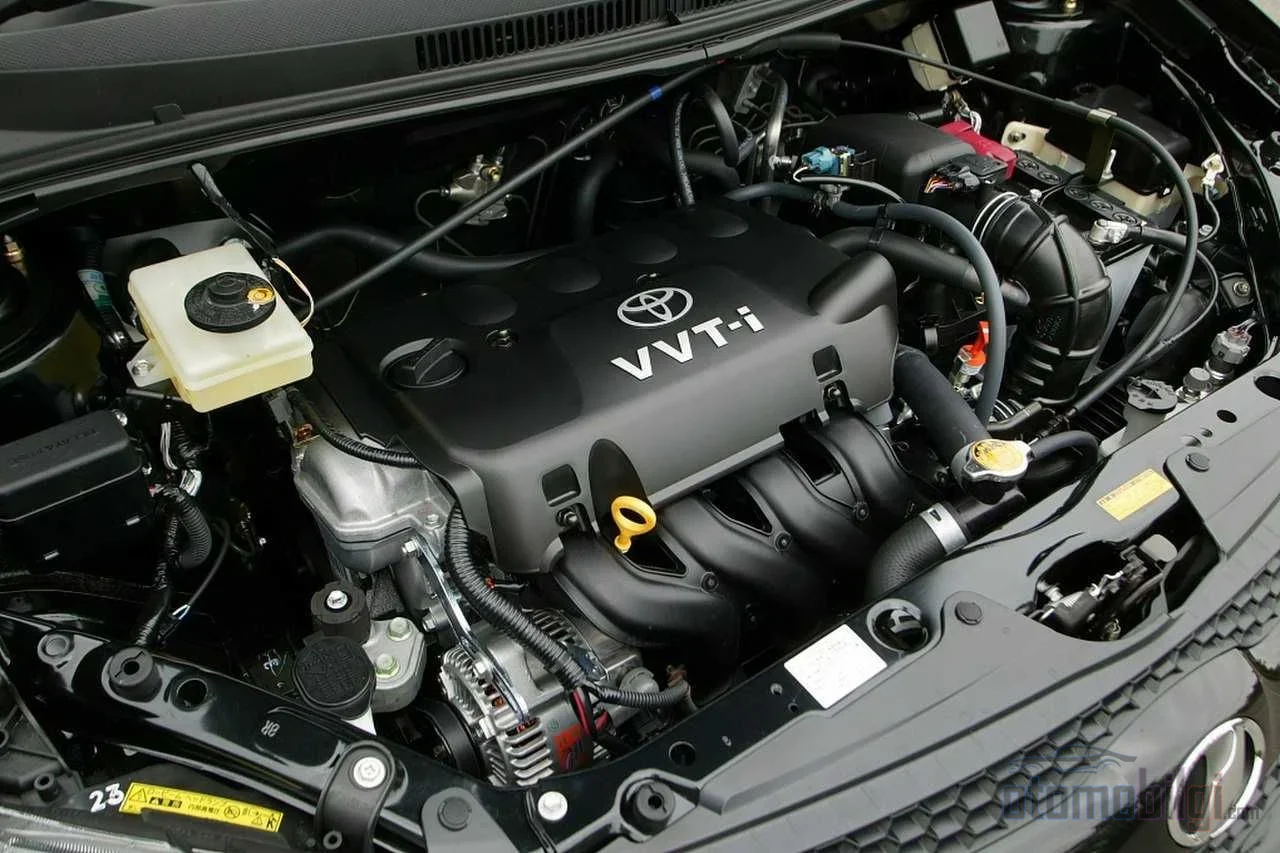
Every manufacturer has its own acronym, but the same physics lies beneath them all. The difference lies in where and how the control is done. VTEC switches cam profile at around 6000 rpm - a sudden, clear transition. VVT-i advances intake timing continuously without any jumps. VANOS moves both intake and exhaust and works continuously across the entire rev range; single VANOS is effective in the roughly 1200-4000 rpm band, while VTEC typically engages above 4500-5000 rpm. Modern i-VTEC is actually a combination of VTEC's lift mechanism with VVT-i-like cam phasers (VTC).
| System | Manufacturer | Method |
|---|---|---|
| VTEC / i-VTEC | Honda | Hydraulic transition between two cam profiles; together with a phaser in i-VTEC |
| VVT-i / VVTL-i | Toyota, Lexus | Continuous cam phasing; VVT-i handles the intake side |
| VANOS / Valvetronic | BMW | Continuous phasing (intake+exhaust); Valvetronic variable lift |
| VarioCam | Porsche | First continuously adjustable system (1992, Porsche 968) |
| MIVEC / VVL / VVEL | Mitsubishi / Nissan | Combinations of variable lift and phasing |
| Ti-VCT | Ford | Dual independent variable cam timing |
| MultiAir / Valvelift / CVVT | FCA / Audi / Hyundai-Kia | Manufacturers' own lift-phasing solutions |
Different Roles in Naturally Aspirated and Turbo Engines
In a naturally aspirated engine, air enters the cylinder under its own suction; efficiency rests entirely on the precision of valve events. That is why modern naturally aspirated engines are equipped with direct injection and VVT almost without exception. They need larger displacement to reach power, but in return they offer a simpler, more predictable character and more predictable fuel consumption.
In a turbo engine, VVT's role shifts somewhat: a turbo can deliver the low-rpm torque of a large-displacement naturally aspirated engine; even with a perceptible lag, the car can feel faster. VVT is one of the developments that smooths this transition precisely by feeding torque in the low-rpm region before the turbo kicks in. The price is more heat, more stress, more moving parts, and electronics. In forced-induction engines, early intake valve closing (the Miller cycle) is also the standard way of keeping the compressed charge under control.
How Does the Driver Feel This Technology in Everyday Use?
The most noticeable effect is the increase in low-end torque: when the clutch is released, the engine runs with less stalling, the need to downshift on hills is reduced, and even the maximum engine speed can be pulled higher. The difference in character is also felt: while an engine equipped with VVT-i progresses linearly and quietly, classic VTEC stays calm at low revs and becomes noticeably more aggressive at the profile transition. Choosing between these two philosophies is a classic forum debate; while some drivers find the sudden VTEC transition in city driving tiring, the cam profile transition remains one of the most recognizable moments in engine culture. Advocates of linear phasing, on the other hand, defend a continuous and smooth character.
The historical perspective explains this maturity well. The first VVT patent is known to have been filed by Alanson Partridge Brush in 1903, granted in 1904, and used in the Cadillac Runabout and Tonneau; the need for variable timing produced its first patents in the 1920s, as maximum speed limits rose. Giovanni Torazza's late-1960s Fiat patents, which varied the cam follower pivot using hydraulic pressure, were the first functional automotive VVT design including variable lift, and typically offered a 37% change in opening. In 1980, the Alfa Romeo Spider 2000, with its fuel-injected models, became the first manufacturer to use VVT in a production car; in 1989, Honda VTEC (the first engine being the B16A) increased peak power with a separate cam profile. The technology then spread to motorcycles (2007, Kawasaki 1400GTR) and in 2010, with the Mitsubishi 4N13 1.8, to the world's first VVT-equipped passenger diesel; in fact, in 2007, Caterpillar reduced NOx with VVT instead of EGR in truck engines following EPA requirements.
The maintenance side: the system lives on oil
VVT systems are controlled by oil pressure; cam phasers and VVT solenoids are at the center of both operation and diagnostics. Low oil level can cause problems in the timing chain, the solenoid, or the gear transmission; therefore, regularly checking the oil level and following the manufacturer's maintenance plan is the most practical step in preventing VVT failures. When the system does not operate properly, the first signs are usually a deterioration in performance and fuel economy.
Conclusion: Shaping the Engine's Character with a Single Valve Mechanism
VTEC, VANOS, or VVT-i, whatever the name, the underlying idea is the same: adjusting the timing of valve opening and closing according to the engine's needs. A fixed cam profile may be perfect at one engine speed but must compromise at another; VVT eliminates this compromise. Each step from cam phasing to variable lift is a finer calibration of the balance between low-end torque and high-end power. Although camless systems have not yet overcome the cost barrier, most of the engines on the road today run on the mature products of this century-old principle - and the driver feels it, unknowingly, with every smooth acceleration.
Sources
- Variable valve timing
- Variable Valve Timing Explained - Car and Driver
- Variable Valve Timing Advantages - Hot Rod
- V-TEC Vs Vanos Vs VVT-i: How Do They All Work? - Car Throttle
- VTEC vs VVT-i - Diffen
- Mercedes Camtronic - Autozine Technical School
- VVL vs VVT differences - Motor Authority
- Fuel economy analysis of part-load variable camshaft timing - ScienceDirect
- What Is Variable Valve Timing - RepairPal
- Pondering Variable Valve Timing - Snap-on
- Variable Valve Timing Maintenance - Strut Daddy's