Manual Transmissions Aren't Dying: A Guide to Clutch, Gears and Driving
Share This Page
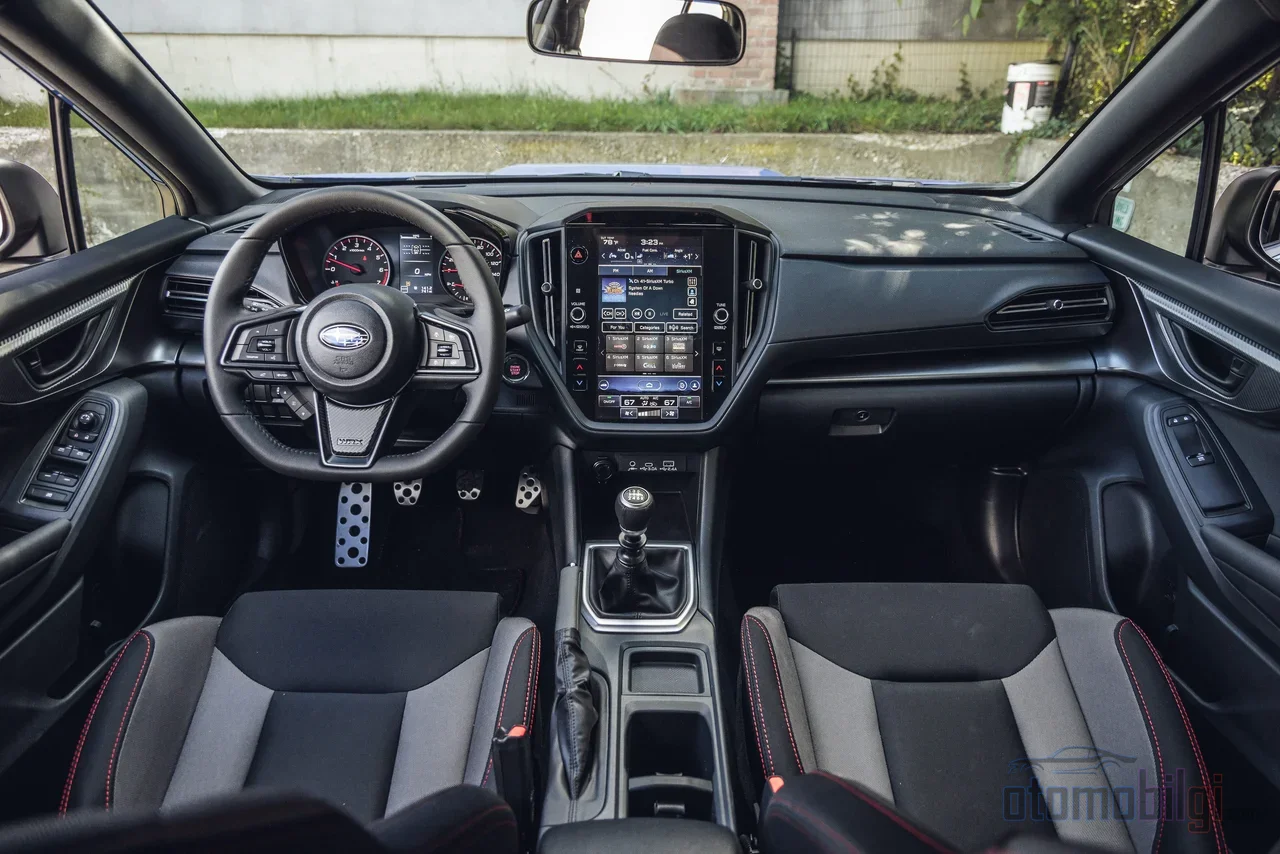
The manual transmission isn't dying. Despite the spread of automatic gearboxes, dozens of new models are still sold with a gear lever and three pedals in the 2026 model year. So what makes this technology so durable? The short answer: A manual transmission is a drivetrain system in which the driver selects the gear ratio themselves using the clutch pedal and gear lever, operating through gears and a synchromesh mechanism; when used correctly, it has a simple, robust structure directly connected to the driving experience. This guide explains in plain language what's inside the gearbox, the habits for using the clutch correctly, and the most common mistakes.
Highlights
- The synchromesh was first used in Cadillac production vehicles in 1928; in 1952, the Porsche 356 became the first car to offer synchromesh on all forward gears.
- The first seven-speed manual transmission arrived in 2012 with the Porsche 911 (991).
- In 2026, 19 manufacturers have a manual vehicle in the US market; the number of new manual models has dropped from over 35 to 24.
- Riding the clutch is normal when used briefly at the right time; when used continuously, it is one of the fastest causes of wear in the clutch system.
How a manual transmission works: the clutch, gears, and synchromesh
The modern manual transmission is based on the constant-mesh design: all forward gear pairs rotate permanently meshed with each other, and engaging a gear is accomplished by locking the corresponding gear to the shaft via dog clutches that lock the gear to the shaft. The selector fork is connected to the gear lever; when you move the lever, the correct dog clutch engages. The dog clutch offers a slip-free, solid connection but is not suited to intentional grinding - which is why shifting is blocked until the revs are equalized.
The entry point of the system is the clutch. The flywheel is connected to the engine's crankshaft and rotates at engine speed. The clutch disc is squeezed between the flywheel and the pressure plate and makes contact with the transmission's input shaft. When the pedal is up, the connection is engaged: the engine turns the transmission. When you press the pedal, the pressure plate is pulled back, the connection is cut, and the relationship between the engine and the wheels is temporarily broken. It is precisely thanks to this disconnection that shifting gears becomes possible.
What does the synchromesh do?
When shifting gears, if the speed of the input shaft and the gear you want to select differ, the dog clutch won't allow the shift, or the gears will grind against each other. The synchromesh, thanks to its conical rings, automatically equalizes these speeds; this way, the driver doesn't need to double-clutch as in older vehicles. The mechanism was invented by Earl Avery Thompson in 1919 and first appeared in Cadillac production vehicles in 1928. Brass and steel are common in the rings; high-performance transmissions may use wear-resistant coatings such as molybdenum or carbon.
Reverse gear, in most gearboxes, uses the old sliding-mesh arrangement without synchromesh. That is also where the characteristic whine heard in reverse, caused by the straight-cut teeth, comes from. While the typical arrangement in today's passenger cars is 5 or 6 forward gears plus 1 reverse, trucks and heavy equipment can have arrangements of 8 to 25 gears in order to maintain the optimal power band.
Mistakes that wear out the clutch: riding the clutch and beyond
The clutch is the most wear-prone part of the entire drivetrain, and its lifespan is largely determined by driver habits. The most common culprit is riding the clutch: with the pedal half-pressed, the clutch disc rubs against the flywheel, the friction generates heat, and the disc wears out. Brief use of half-clutch in situations such as hill starts or maneuvering in tight spaces is normal, even necessary. The problem is the habit of holding the car on half-clutch continuously in heavy traffic; this is identified as one of the fastest ways to wear out the clutch system.
- Resting your foot on the pedal: The clutch pedal is not a resting point like the brake pedal. Keeping your foot on the pedal constantly puts unnecessary strain on the bearing and components.
- Using the clutch like a brake: Slowing down by holding the clutch halfway and letting it slip to control speed heats the disc directly.
- Releasing the clutch too early: The car jolts, and the engine and gearbox are subjected to excessive stress.
- Leaning on the gear lever: Resting your hand on the gear lever at stops puts pressure on the selector fork and mechanism; using neutral during stops protects the gearbox.
- Trying to shift gears without pressing the clutch: This causes the gears to grind against each other; the crunching heard in poorly timed shifts is the audible form of wear.
- Unnecessary gear skipping: For example, shifting from 2nd to 4th causes the clutch to slip for longer in order to close the large gap in engine speed in between.
The side that extends lifespan is the opposite of the same items: taking your foot off the pedal unless a gear change is necessary, applying throttle smoothly, rev-matching on downshifts, and avoiding over-revving. Small habits make a noticeable difference in the replacement mileage of the clutch set.
Hill starts: techniques with and without the handbrake
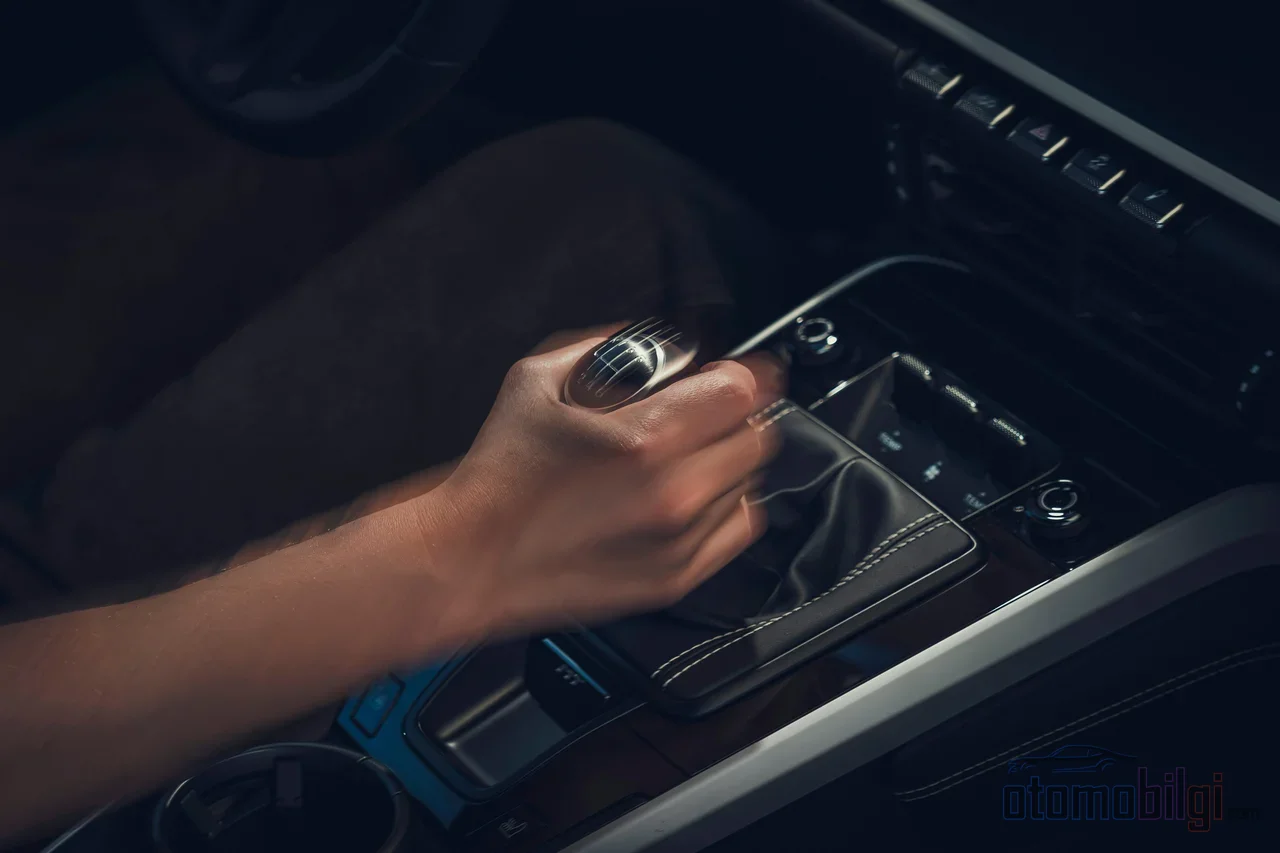
Starting from a stationary vehicle on a hill requires coordination between the clutch, throttle, and parking brake. The traditional and safest method is to use the handbrake (parking brake): the handbrake holds the car steady, the right foot moves to the throttle, and once the required engine speed is reached, the clutch is brought to the biting point while the handbrake is released. The car neither rolls back nor stalls.
Can a hill start be done without the handbrake?
Yes. The most common technique is this: while holding the brake with your right foot, you bring the clutch to the bite point (friction point) and hold it there, and the car is supported with throttle the moment the brake is released. Among experienced drivers of the older school, this method is also applied by quickly moving the right foot from brake to throttle while slipping the clutch at a minimal level to prevent rolling back; it requires skill, but the loss to clutch life is negligible. Moreover, many cars today do this for you: hill-start assist systems that automatically release the brake when power begins to reach the drive wheels have become widespread as the modern form of the hill-holder idea first introduced on a Studebaker in 1936.
Manual or automatic: driving feel and fuel consumption
The difference in driving experience is the least controversial part of this comparison. In a manual gearbox, gear changes are your decision and your timing; you build a direct connection between engine revs, the clutch's bite point, and throttle response. In an automatic, a hydraulic torque converter, a dual clutch, or a continuously variable mechanism makes this decision on your behalf. Comfort and ease of use in traffic are on the automatic's side, while active engagement and mechanical simplicity are on the manual's side. In terms of maintenance, manual gearboxes are generally considered simpler, with lower parts costs.
The old rule about fuel consumption no longer holds. Conventional torque-converter automatics could consume up to around ten percent more fuel than their manual counterparts; modern automatic technologies have largely closed this gap. Today, in many cars the fuel consumption difference between manual and automatic is minimal, usually staying below 1-2 mpg. A practical compromise can be summarized as follows: a manual driven with an eye on economy is always more efficient than an automatic driven aggressively - and the reverse is also true. Ultimately, what is decisive is the driver's behavior as much as the gearbox type. If the manual's advantage is still real anywhere, it is in the freedom to shift gears at the optimal engine speed; in the hands of a conscious driver, this can turn into an efficiency advantage.
| Feature | Manual Transmission | Automatic Transmission |
|---|---|---|
| Gear selection | Driver selects | System selects |
| Use in traffic | Requires pedal coordination | Easier |
| Fuel consumption difference | Minimal in modern vehicles | Up to 10% higher in older generations |
| Maintenance and parts cost | Generally lower | Generally higher |
| Driver engagement | High | Limited |
In which segments is the manual transmission still preferred?
The manual's market share is shrinking but not going to zero. In 2008, 75.2% of vehicles produced in Western Europe were manual; today the picture has changed considerably, with automatic gearboxes now the default choice. Even so, in the 2026 model year, the US market has manual vehicles from 19 manufacturers, and the number of new models has fallen from over 35 five years ago to 24. This shrinkage does not mean the manual is dead; what is disappearing are the manual options in the economical mass-consumption segment.
Manufacturers keeping the manual alive share a clear profile: Porsche, BMW, Mazda, and Honda consistently stand out on this list. Among the standout manual models for 2026 are Honda Civic Type R, Mazda MX-5 Miata, Honda Civic Si and Nissan Z . The pattern is clear: the manual survives either in models centered on performance and driving pleasure, or in light, modest sports cars. In the Canadian market too, four Toyota models offer a manual option for 2026; the GR86 at 32,695 CAD is one of them. On the other hand, some models have dropped the manual: the VW GTI has not offered a manual option since the 2024 model year, while its sibling the GLI can still be bought with one.
How much damage do mistakes made while learning manual vehicles cause?
A vehicle wears a bit while a new driver is learning; this is normal and requires no panic. The most common sources of damage are prolonged half-clutch and incorrect gear timing. In modern gearboxes with synchronizers, it is the synchronizer rings rather than the gears that are stressed in a bad shift - meaning early timing mistakes are a correctable learning cost, but if they become a habit, synchronizer repair gets expensive. The route is simple: short clutch holds, clean shifts, no unnecessary waiting on the pedal, and managing the risk of stalling with the handbrake.
Conclusion: the advantage of simple mechanics
The reason the manual transmission has lasted until today is not its complexity but its simplicity. This arrangement of flywheel, clutch disc, gears, and synchronizer does not place a machine between the driver and the engine; on the contrary, it puts the engine in the driver's hands. Using the clutch correctly - short holds, no resting foot on the pedal, no hand leaning on the gear lever - directly extends the life of this mechanism. Even in an era where the fuel consumption difference has become minimal and the comfort of automatics is unquestionable, the manual continues to strongly maintain its presence in the segments that prefer it.
Sources
- Manual transmission
- Seven things you should never do in a manual car
- 10 Mistakes to Avoid While Driving a Manual Transmission
- How Not to Damage a Manual Transmission
- 5 Driving Habits That Could Extend the Life of Your Clutch
- Understanding How Your Driving Affects Your Clutch
- How to Extend the Life of Your Clutch
- 7 habits that can damage the clutch
- How To Do Hill Starts in a Manual Car Correctly
- Do You Always Need the Handbrake for a Hill Start?
- Manual vs. Automatic Transmission Pros and Cons - Five Myths About Stick Shifts
- Automatic vs. Manual Cars: Which one is more fuel efficient?
- Myth-Busting: Manual transmissions are more fuel efficient
- The Best Cars That Still Offer a Manual Transmission in 2026
- Every US Model Year 2026 Manual-Transmission Car
- Manual Transmission Cars 2026: Only 24 Models Left
- Every new vehicle available with a stick-shift in Canada in 2026
- What Is Riding the Clutch? What Are Its Harms?