What Is the Overtime Rule in NASCAR and How Does It Extend the Race?
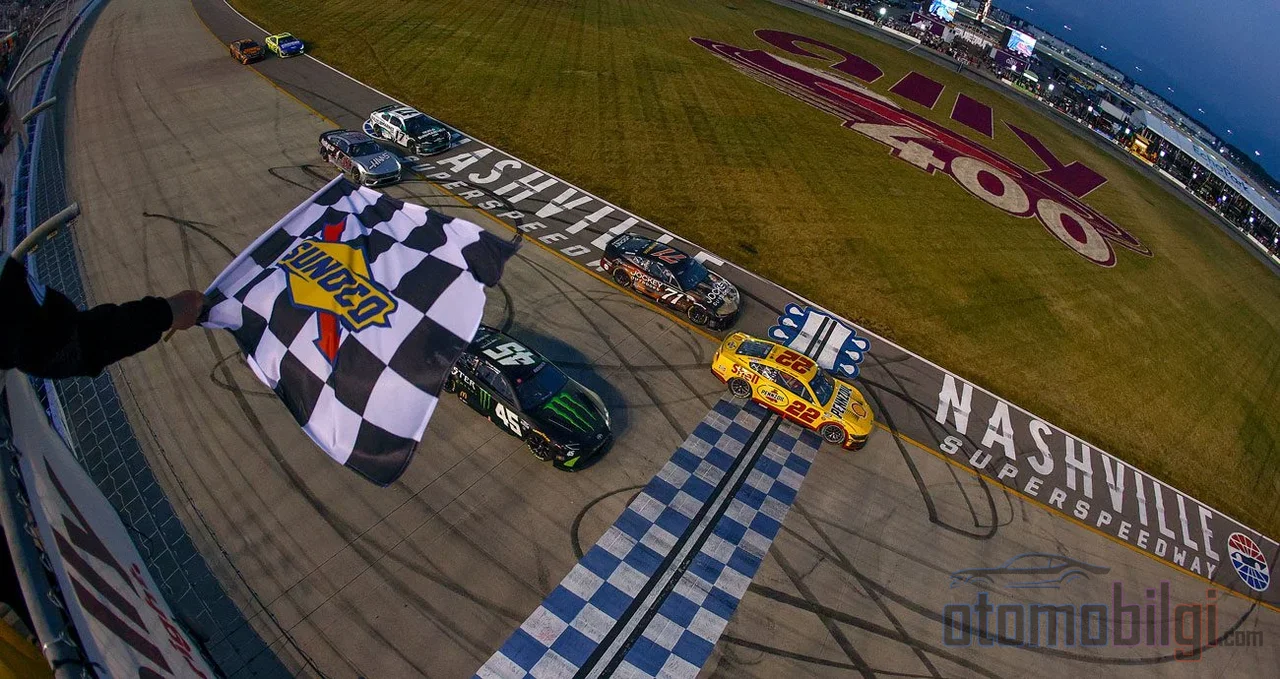
A crash happens on track as the race enters its final laps, the yellow flag waves, and in that moment thousands of spectators are half out of their seats. Everyone is asking the same question: Is the race really going to end like this? NASCAR's answer is no - and this is exactly where the green-white-checkered rule, officially known as NASCAR Overtime, comes into play. So how exactly does this overtime work, what happens if a second caution comes out, and why does this rule sometimes spark serious debates? Let's take a look step by step.
Key Takeaways
- NASCAR Overtime restarts the race as if there are 2 laps remaining after the caution: green, white, checkered.
- The rule was introduced to all three national series together in July 2004; the attempt limit was removed in 2016.
- After the white flag waves, any flag that comes out - including a caution - ends the race.
- 2020 Daytona 500 ended in overtime; Denny Hamlin won back-to-back after a last-lap crash.
- Of the last 18 races at Daytona, only one was completed without overtime, under green.
How Does NASCAR Overtime Work? Green-White-Checkered Sequence
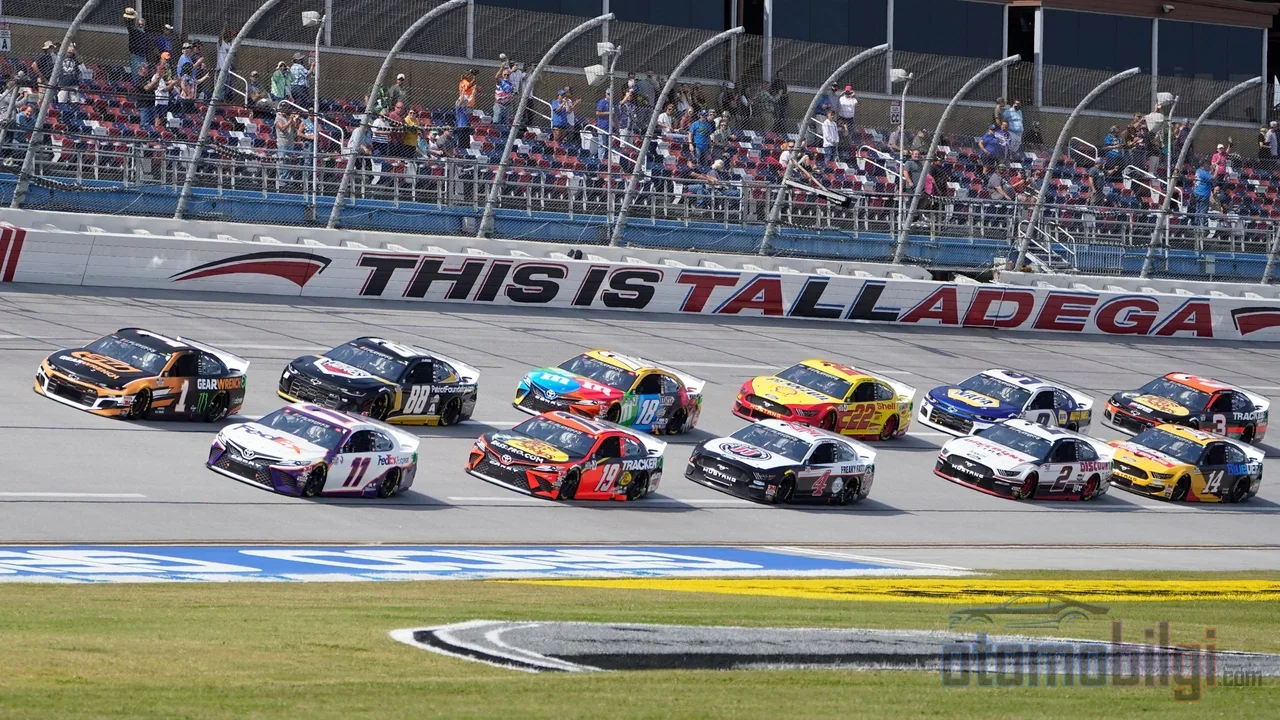
The logic isn't as complicated as you might think. If a caution comes out near the end of the scheduled distance, NASCAR restarts the race once the track is clear - but as if there are 2 laps remaining. That's why the name comes from the sequence of the three flags:
- Green flag: Restart. The race is running at full speed again.
- White flag: Waved when the leader completes the first lap - meaning the final lap has begun.
- Checkered flag: Comes when the second lap is completed, and the winner is decided.
So for two laps, everything flows like a normal race; the schedule simply extends beyond the announced distance. The main goal is very simple: to prevent the race from ending under the yellow flag, in a state where racing is frozen. Just imagine how unsatisfying it would be if the final act took place in waiting mode on hot concrete? NASCAR tried this before and the fan reaction was far from pleasant - but I'll get into the details of that story shortly.
There is one critical nuance: No overtime is held unless the caution comes out within a certain proximity of the scheduled finish. In other words, not every caution extends the race; only a caution that comes out in the final laps opens the overtime door.
What Happens If a Second Caution Comes Out?
This is the most frustrating or the most exciting aspect of the rule - depending on which side you're on. If a new caution comes out after the restart but before the white flag waves, the process starts over: green again, white again, checkered again once the track is clear. And until the white flag waves, this cycle can be repeated; there is no published maximum number of attempts in the rulebook. As long as the caution persists, NASCAR tries to finish the race under green.
After the white flag, however, the rule hardens: When the leader takes the white, the first flag that follows - whether it's a caution caused by a crash in the green segment, or directly the checkered - ends the race. In other words, once the final lap begins, there are no more overtimes. In races ending under caution, the running order is determined by reviewing video footage and scoring loop data; if the leader was in front at the moment of the caution, that driver is the winner. The 2007 LifeLock 400 was a wild example of this: when the caution came out on the final lap, leader Greg Biffle ran out of gas - the car couldn't even hold pace car speed, but he coasted across the finish line on his own momentum - and the victory was still awarded to him. That's just how the rules work - not always like a polished postcard.
Why Does This Rule Exist? The History of Controversial Finishes
For many years, NASCAR was very strict: the race lasted exactly the advertised distance, no more. The only exception was the All-Star Race, a non-points exhibition event. A caution in the final laps usually ended the race under the yellow flag. Instead, officials sometimes threw a red flag to stop the race and tried to finish it under green once the track reopened - but this practice was inconsistent and every time sparked controversy like an ambush:
- 1993 Winston 500 (Talladega): A restart with 2 laps to go packed up the field, leading Dale Earnhardt to hit Rusty Wallace and send him airborne and tumbling.
- 1997 Pepsi 400 (Daytona): A multi-car crash on the final-lap restart; Mark Martin was injured.
- 2002 Pepsi 400: The red flag wasn't expected and the race finished under caution - fans rained cans and cushions onto the track.
- 2004 Aaron's 499 (Talladega): The combination of a red-flag final lap and the new "lucky dog" rule put Jeff Gordon into the lead, and he won; the grandstands again threw debris onto the fence.
It was this string of finishes that finally broke the resistance: In July 2004, all three national series adopted the green-white-checkered rule. Races could no longer end under the yellow flag.
Attempt Limit: From One Attempt to Unlimited
The rule hasn't stayed the same since 2004; the number of attempts changed over time:
| Period | Rule | Note |
|---|---|---|
| 2004-2009 | 1 attempt | First GWC era |
| 2010-2015 | Up to 3 attempts | Began with the 2010 Budweiser Shootout |
| February 2016 - August 2017 | Unlimited attempts + "overtime line" | The line was at the halfway point of the second-to-last lap |
| Since August 2017 | Unlimited attempts, overtime line removed | Effective from Watkins Glen onward |
Let me explain the 2016 overtime line experiment, because it was an interesting idea: If the leader crossed the line under green, the restart counted as "valid"; if the caution came before the line, a new attempt was created. But two years later, NASCAR moved the line to the start-finish line, returning to the 2010-2015 approach - the difference being that this time there was no attempt limit. The event that played a part in the move to unlimited attempts was Talladega 2015: Kevin Harvick, in a damaged car, made moves to slow the track in order to protect his playoff position, and the race descended into chaos through the GWC restarts. This incident played a direct role in the rule change.
But what about a second caution, a third caution... Is this endless overtime fair? That question is still being debated; whether the rule is applied with three attempts, one attempt, or no limit at all is still on the table among fans. So if it were up to you, which one would you choose?
Pit Strategy and Fuel Calculation: The Invisible Side of Overtime
Overtime is not just the story of the final two laps. A GWC finish affects teams' fuel calculations from the very start, because it carries the race beyond the planned distance. The critical point is this: A driver cannot take fuel without giving up their track position - meaning they have to accept the risk of losing their place in the pit stop order. Making the gasoline last through the planned distance plus a possible overtime is entirely the job of the team strategists. It's like trying to reach the last station before the gas station closes: Either you keep your position and take the risk, or you get in line and let those ahead pass.
If track clearing takes a long time, NASCAR has another card up its sleeve: the red flag. By stopping the race with a red flag while the cars are on track, fuel from being wasted on caution laps can be prevented. Otherwise, the story of the leader who runs out of fuel at the restart - like in the 2007 LifeLock 400 - could never be written again.
There are also small differences between the series. For example, the ARCA Menards Series uses a two-stage version: If the restart falls on the final lap, the green and white flags are waved together, only one lap remains, and the number of attempts is unlimited. The purpose of this system is to reduce the extra crashes and team costs in overtime restarts. At superspeedways like Daytona and Talladega, a similar line of thinking led to a one-lap overtime being adopted in 2018 - because there, every restart is a gamble with dozens of cars locked together.
Championship Calculations: The Effect of Overtime in the Playoffs
Overtime can shake not only the race winner but also the season standings. In the elimination-style playoff years, a single overtime lap could end or save a driver's season; the Harvick example at Talladega in 2015 is the most concrete proof of this. The 2022 All-Star Race, on the other hand, showed the gray areas of the rule: Because caution laps are not counted, Ryan Blaney ran the overtime laps even though his fuel range fell outside the safe window, technically violated the window net rule, but still won; Ricky Stenhouse Jr., meanwhile, hit the wall on the final corner.
In the 2026 season, NASCAR's playoff system returned to the old Chase championship format, but overtime's effect on the race finish is the same: In the championship battle, a caution in the final laps turns into a gamble box that changes all the calculations in an instant. And according to some fans, the officials are relatively slow to call a caution at the finish - because everyone wants the race to end under the green flag. This perception is the most talked-about aspect of the rule.
Unforgettable Overtime Finishes: The 2020 Daytona 500 and Beyond
The most famous scene of overtime is without a doubt the 2020 Daytona 500. In the final lap, while Ryan Newman was involved in a horrific crash, Denny Hamlin passed Ryan Blaney and claimed back-to-back Daytona 500 victories. Blaney finished second, with names like Chris Buescher, David Ragan, and Kevin Harvick behind him. That moment stands as proof of just how much drama the rule can generate.
There are other striking examples as well:
- 2007 Daytona 500: The rule's first use in the Daytona 500; Jeff Gordon passed Kurt Busch and Dale Earnhardt Jr. to win for the third time.
- Kansas Speedway: Kyle Larson beat Chris Buescher by a margin of 0.001 seconds - the closest finish in Cup Series history, and under overtime to boot.
- 2018 Xfinity Daytona 300: A full 5 overtime attempts; restarts failed in sequence on laps 122, 130, 133, 138, and 142. On lap 142, the race finally ended under green.
- Two separate GWC attempts in a single Daytona 500 pushed the total distance to a record 520 miles up to that day.
There is also a striking statistic showing how intertwined Daytona is with overtime: Only one of the last 18 Daytona races was completed without overtime, under the green flag section. So in the "Great American Race," the excitement of the final lap is crowned with an overtime performance almost every year.
In summary: What Is the NASCAR Overtime Rule, and How Does It Extend a Race?
The short and clear answer: When a caution comes out in the final laps, NASCAR restarts the race as if two laps remained - a green flag restart, a white flag for the final lap, and the checkered flag for the finish. Every new caution that comes before the white flag is waved restarts the process, and the rulebook sets no limit on attempts; once the white flag has been waved, however, the first flag to appear ends the race. The goal is single: to ensure that a race watched by millions around the world finishes at full throttle, not under the shadow of a yellow flag.
My reading is this: The rule is not perfect but it is indispensable. Unlimited attempts occasionally test our patience, and every restart at the superspeedways quickens our heartbeats. Still, no one wants to give back the tension of the overtime moment - and judging by Daytona's statistics, it will be there again next time. Like everyone else who is awake at those hours, I will be glued to the screen.
Sources
- Green-white-checkered finish - Wikiwand
- What is a green-white-checker? - RACER
- Watch the full last lap of the 2020 Daytona 500 - NASCAR.com
- Memorable 'Great American Race' moments in the Daytona 500 - NASCAR.com
- Memorable moments at Kansas Speedway - NASCAR.com
- How NASCAR Overtime Works: The Rule That Decides Races - Heavy.com
- 2-Headed Monster: Should NASCAR Change the Overtime Rule? - Frontstretch
- In quest for simplicity, NASCAR moving to traditional green-white-checkered rule - ESPN
- Racing Insights: New postseason format, same Daytona mystique - NASCAR.com
- NASCAR returns to the Chase championship format for 2026 - NASCAR.com