Why Are NASCAR Cars Slowed Down at Talladega?
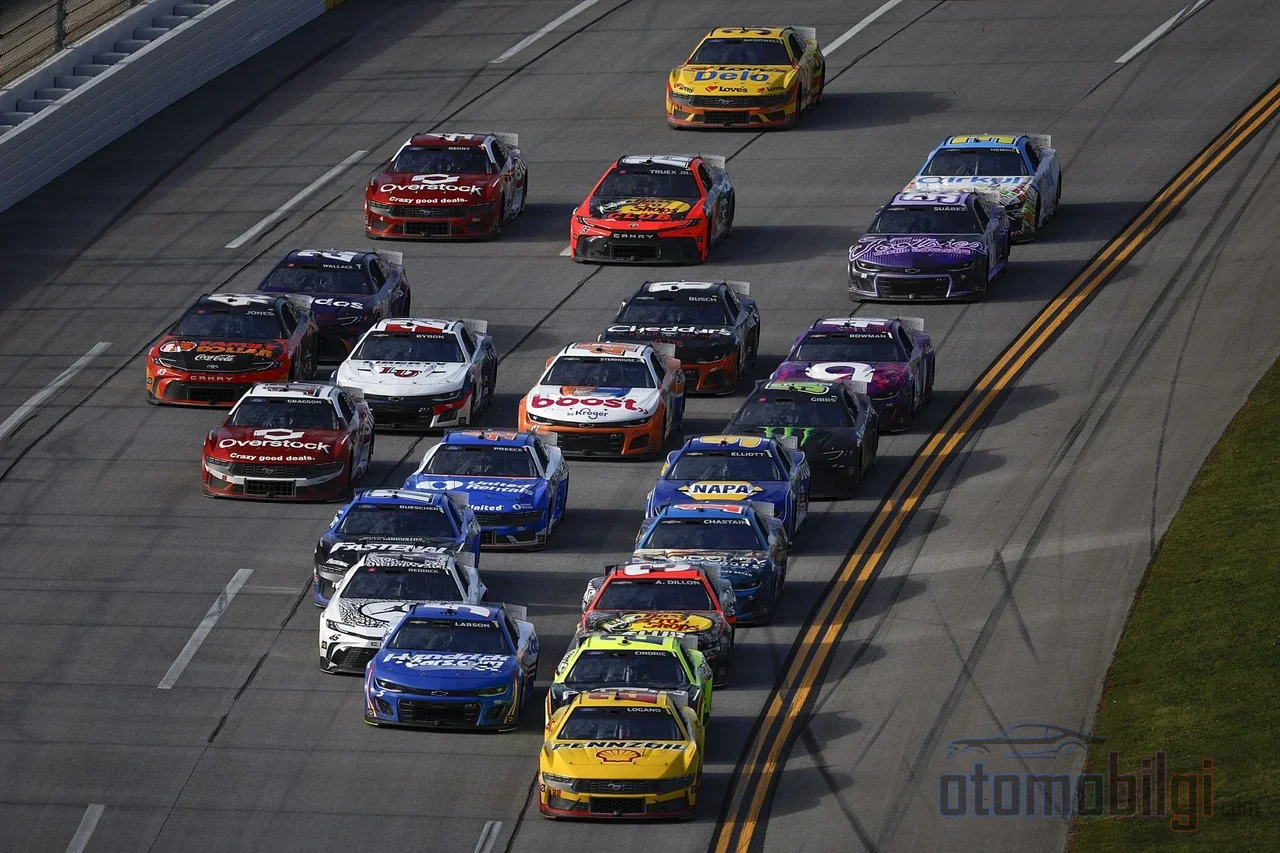
Why would you deliberately slow down cars traveling at over 200 mph on a 2.66-mile oval? It sounds absurd, I know. But in NASCAR history, speed has been a problem at Talladega Superspeedway for exactly that reason. One of the fastest, steepest, and equally most chaotic tracks in the world drove drivers to boycott and pushed management to change the rules from top to bottom. So how did the story begin, and why can't the cars still run at full power today?
1969: A Massive Boycott at the Very First Race
Talladega Superspeedway, actually built under the name Alabama International Motor Superspeedway, was constructed on the grounds of an air force base in Lincoln, Alabama, and opened its doors in 1969. NASCAR's longest oval track: 2.66 miles (4.28 km) in length, a tri-oval with 33-degree banking. It can hold up to 175,000 spectators at full capacity. In short, they designed a massive speed machine. The problem is that the tires were not ready for this speed machine.
The first race was scheduled for September 14, 1969, but the tires started to fall apart during testing. The rivalry between Firestone and Goodyear, known as the "tire wars," had produced compounds that compromised safety in the pursuit of speed. Harder tires were brought in, but the problem was not solved. The result? Members of the Professional Driver Association, led by Richard Petty - nearly all the NASCAR stars of the era - boycotted the race over safety concerns. For the first time in NASCAR history, a group of drivers was boycotting a race.
Things got heated. The drivers wanted the race postponed, but management refused because the track had only just been completed and the investment needed to be recouped. The atmosphere became so tense that track owner Bill France drove a lap at roughly 160 mph to calm the drivers - which was far below the speed the drivers would be running, and it was perceived as an insult. The tension reached a point where LeeRoy Yarbrough threw a punch at France. Exactly 36 drivers withdrew from the race.
Still, around 62,000 spectators came to the grandstands. Only a handful of Cup regulars (such as Bobby Isaac and Tiny Lund) ran; the field was completed with Grand American drivers. Bobby Isaac took the pole at 196.386 mph, and Richard Brickhouse won the race in a Dodge Daytona - the only Grand National victory of his career. The validity of this result was contested by Jim Vandiver; conspiracy theories were even produced, but they were never proven. The aftermath of the boycott turned out to be interesting: The PDA soon fell apart, NASCAR introduced winner bonuses and prime systems for independent drivers, and France began gradually handing leadership over to his son, Bill France Jr. One small note: this boycott gave Richard Childress, who would later become a legendary team owner, his first Cup career start opportunity; he finished 23rd. History sometimes opens strange doors, doesn't it?
Highlights
- Talladega is NASCAR's longest oval: 2.66 miles with 33-degree banking.
- The first race in 1969 resulted in the first driver boycott in NASCAR history; 36 drivers were entered.
- The 1987 Bobby Allison crash brought mandatory restrictor plates starting in 1988.
- In 2019, the plates gave way to the tapered spacer.
- In 2026, Next Gen cars turned laps over 200 mph at Talladega for the first time.
The 1987 Bobby Allison Crash: The Birth of the Speed Limit
So where did the idea of slowing the cars down come from? The answer lies hidden in a terrifying crash at the 1987 Winston 500. Bobby Allison started from second place with an average of 211.797 mph and suffered an engine failure during the race. Engine parts cut the right rear tire, Allison's car spun out of control, and it flew off the track, nearly reaching the grandstands. Try to imagine the disaster: there was only a wire fence between the spectators and the track that day. This crash became a turning point for NASCAR, and starting in 1988, a restrictor plate became mandatory at Daytona and Talladega.
A restrictor plate is a simple thing: a plate fitted over the carburetor that restricts the air entering the engine. Less air, less fuel, less horsepower. Think of it as putting an orthopedic shoe on the car - it walks but it can't run. An interesting detail: that same 1987 race was also the scene of Davey Allison's first career victory. For the Allison family, that day held both a nightmare and a celebration.
The plate rule lasted for years, and in the 2000s it came back into the spotlight under the shadow of fatal crashes (including Adam Petty and Kenny Irwin). But in 2019, NASCAR turned another page.
From Restrictor Plate to Tapered Spacer: The 2019 Transition
In October 2018, NASCAR announced it would retire the restrictor plates with the 2019 rules package. In its place came the tapered spacer. Both do the same job - restricting the air entering the engine and reducing power - but their designs differ. The tapered spacer is about 1 inch (2.5 cm) thick with tapered walls; it provides a more consistent airflow compared to the plate. Think of it this way: the plate is like a piece of cardboard you put in front of a door, while the spacer is like a funnel that narrows the doorway. Both restrict the passage, but one delivers a smoother flow.
Under the new setup, cars produced about 725 hp on tracks shorter than 1.33 miles, while more aggressive restrictions were applied at superspeedways. The 2019 Talladega race was the first Talladega race NASCAR ran without plates. So technically the plate era came to an end, but the restriction of speed never ended - it just changed its vehicle.
| Feature | Restrictor Plate | Tapered Spacer |
|---|---|---|
| Purpose | To restrict the engine's air intake | To restrict the engine's air intake |
| Design | A flat plate fitted on top of the carburetor | A part about 1 inch thick with tapered walls |
| Airflow | Sharper restriction | More consistent flow |
| Period | 1988-2018 | Since 2019 |
How Did the Restriction of Speed Change the Race?
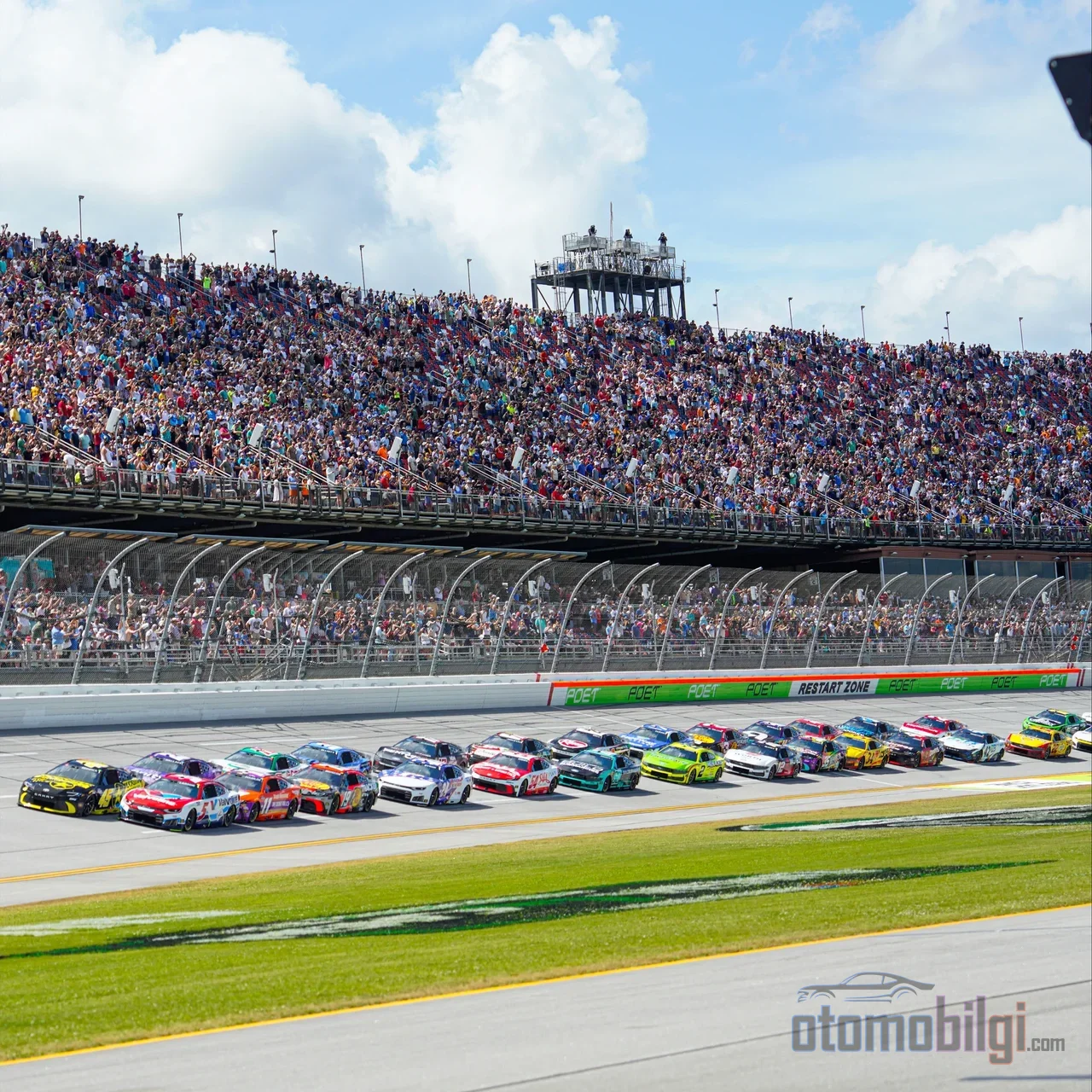
This is where the real debate begins. When horsepower drops, the cars slow down but get very close to each other. The result is what NASCAR calls "pack racing" - forty cars flying side by side, with millimeter-wide gaps in the bumper zone, pure chaos. Drafting - the tactic of speeding up by slipping into the air pocket left by the car ahead - is life itself at Talladega. But the same packed-together racing feeds the track's most feared phenomenon: the Big One - when contact or a spin starts up front, the dozens of cars behind pile into a chain-reaction crash. Sometimes 10, sometimes more than 25 cars get damaged at once.
The 2026 Talladega spring race saw an interesting backlash: extreme fuel-saving tactics slowed the field so much that fans complained, and NASCAR stepped in by shortening the final two stages of the race. In the fall race, the "Big One" struck exactly 15 cars; Joey Logano and Riley Herbst suffered heavy damage. In other words, even when speed is curbed, chaos never lets go. Some experts are debating precisely this point: they argue that slowing cars down hasn't solved the real problem at superspeedways, because the cramped pack racing is itself a product of the rule packages.
The Next Gen Era and the 2026 Rule Change
The Next Gen car, used in the Cup Series since 2022, crossed a new threshold at Talladega: in the 2026 YellaWood 500, six cars turned laps above 200 mph for the first time; Chase Elliott led the list at 201.405 mph. These are numbers that would have been unthinkable in the restrictor-plate era - the taper is still there, but engineering keeps pushing the boundaries upward.
Ahead of the October 2026 fall race, NASCAR once again revised the rules: the blade on the rear wing was shortened from 4 inches to 3.5 inches at Daytona, the package retained its 465 horsepower configuration, and stage lengths were revised to 98/45/45 laps. The goal is to give drivers more control within the pack and more opportunities for side-by-side passes. Driver assessments of the rule change's real on-track effect have not yet become clear.
So Why Exactly Are Cars Slowed Down at Talladega?
Here's the clear answer you're looking for: Safety is the only reason for the speed limit at Talladega. The 1969 tire crisis and boycott were the track's birth trauma; and in 1987, when Bobby Allison's car nearly flew into the grandstands, NASCAR was forced to mandate restrictor plates at Daytona and Talladega from 1988 onward. In 2019, the tapered spacer, which offered more consistent airflow, replaced the plate, but the goal remained the same: to keep speeds above 200 mph under control on this 2.66-mile track with 33-degree banking, and prevent cars from flying into the grandstands.
In summary: At Talladega, NASCAR is not trying to slow down speed itself, but the price of speed. The lower the price, the more often the storm breaks - the 15-car Big One in the 2026 fall race is living proof of it. The real question on this track is not "how fast?" but "how safely fast?", and every year NASCAR seeks a new answer to that question with a fresh rule package.
Sources
- 1969 Talladega 500 - Wikipedia
- 'We are going home': An oral history of the 1969 Talladega 500 driver boycott - The Athletic/NYT
- How a 1969 NASCAR Driver Strike Helped Richard Brickhouse Win at Talladega - Autoweek
- 1987 Winston 500 - Wikipedia
- How Bobby Allison's 1987 Horrific Talladega Crash Led to Restrictor Plate Birth - Autoweek
- Restrictor plate - Wikipedia
- Monster Energy Series to forgo restrictor plates - NASCAR.com
- The 2019 Rules Package: The Tapered Spacer - Building Speed
- NASCAR announces changes to Talladega rules package - NASCAR.com
- Track Facts - Talladega Superspeedway