How Is Bump Drafting Done in NASCAR, and Why Is It Risky?
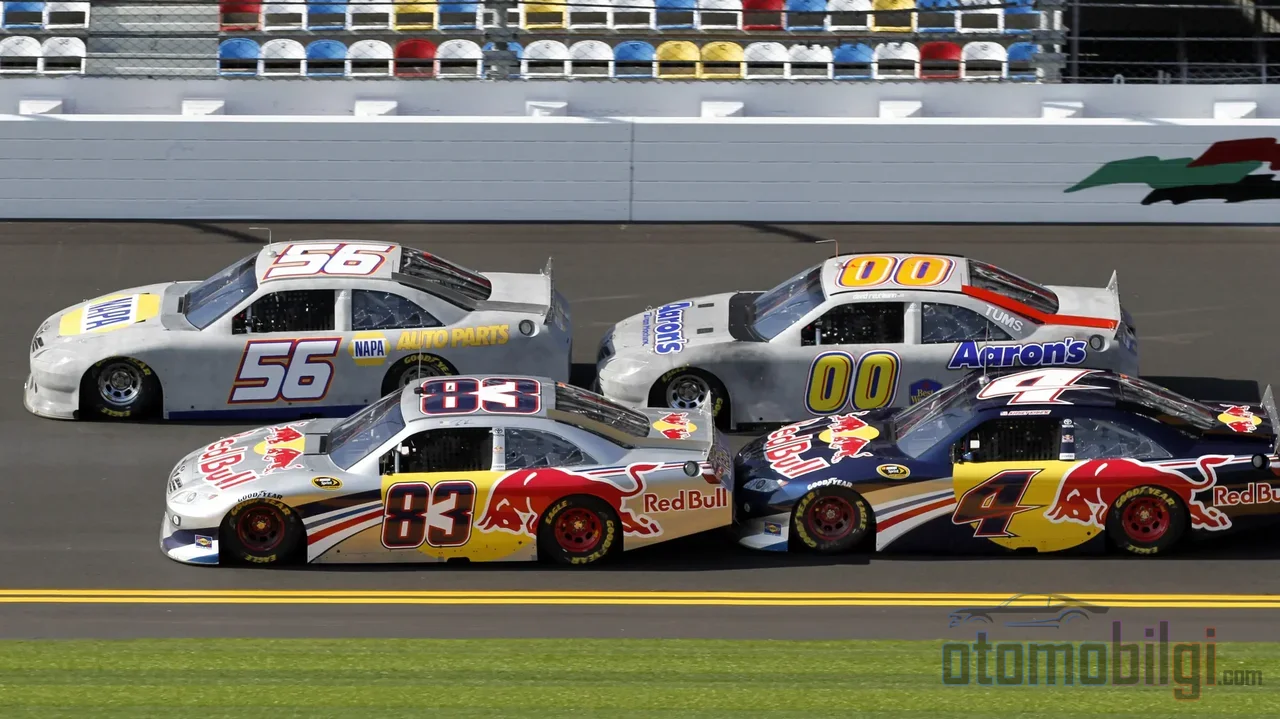
Suppose you're going 300 km/h and rear-end the car ahead - yes, you heard that right. A crash? No, a tactic. On NASCAR's superspeedways, bump drafting is exactly this: hitting the rear bumper of the car ahead with a controlled touch to launch both cars forward. Sounds like madness, doesn't it? But at Daytona and Talladega, it's an art form that determines the difference between victory and last place. So how is this art performed, where is it done, and why does it sometimes turn into a massive 20-car pileup? Let's get started.
What Exactly Is Bump Drafting?
First, let's set aside the classic drafting concept; in normal drafting, the following car simply slips into the air pocket opened by the car ahead, reducing its drag. Bump drafting is one step beyond that: the follower makes light contact with the rear bumper of the car ahead and physically pushes it forward. The result? Both cars speed up, because while the pushed car is carried forward, the pushing car accelerates in its slipstream, almost shielded from drag. When done correctly, a speed gain of up to 20 mph is possible in some cases.
Let's think of it with an everyday analogy: when riding a bike, if you tuck in right behind your friend, they block the wind for you. But if you lightly touch and push your friend with your hand, you both go faster. That's bump drafting - the version of this done at over 300 km/h with steel bumpers.
Key Takeaways
- Bump drafting is a pushing technique that accelerates both cars by making contact with the car ahead.
- When done correctly, it can deliver speed gains of up to 20 mph.
- The golden rule: it's only done on the straights, never in the corners.
- The big crash on lap 15 of the 2021 Daytona 500 is the most famous proof of the risk. NASCAR restricted the practice in the past, then freed it up;
- Next Gen cars changed the game. Why Is It So Effective on Superspeedways?
Bump drafting doesn't work on every track.
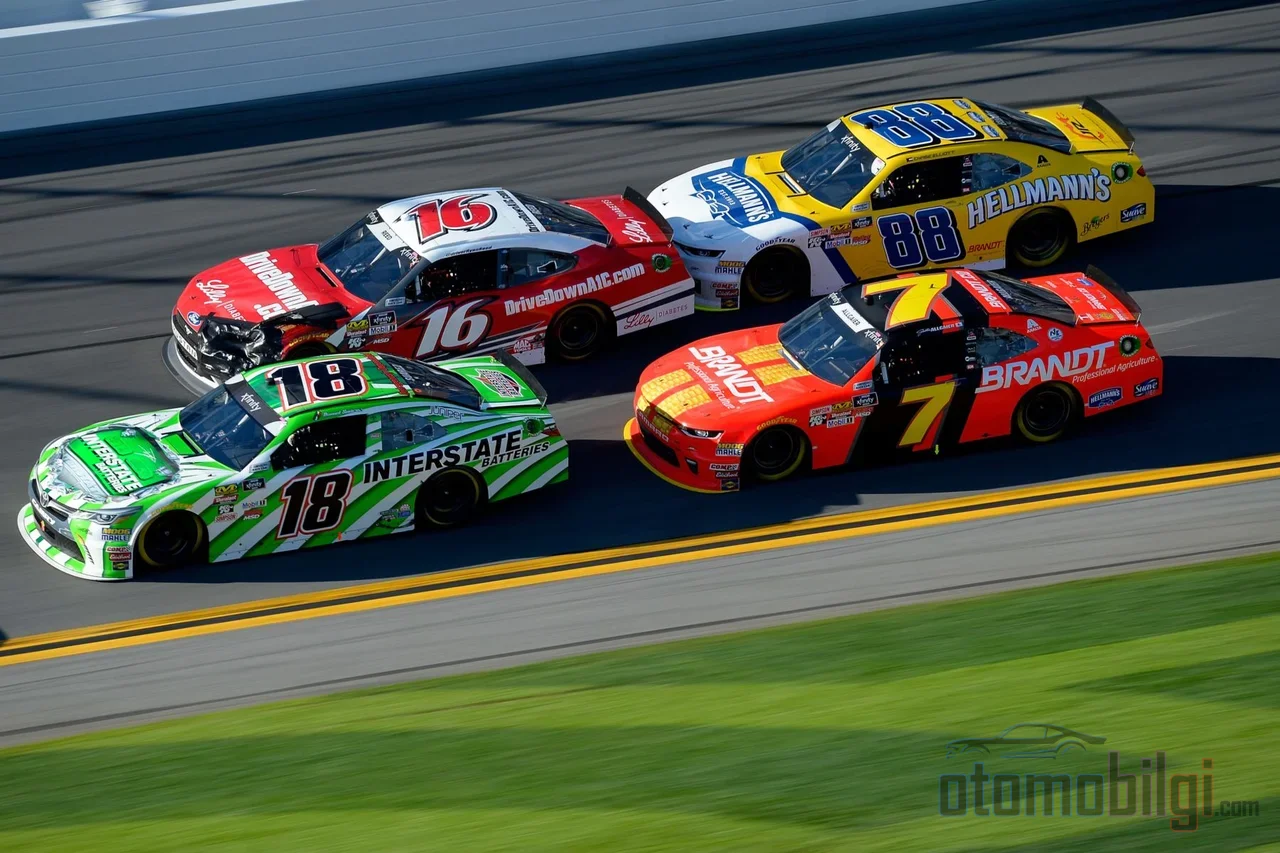
This technique loves long straights, high speeds, and tracks packed with tightly bunched groups of cars. In other words, superspeedways like Daytona and Talladega are the natural home of this technique. Atlanta is sometimes also placed in this category. There's also a historical side to the story:
in 1988, as speeds and dangerous crashes climbed, NASCAR mandated the restrictor plate at Daytona and Talladega. In 1988, as speeds and dangerous crashes climbed, NASCAR mandated what is called the restrictor plate at Daytona and Talladega. This plate, which restricts the engine's air intake, locks the cars to approximately the same speed level. The result: everyone is moving at the same speed, stuck together, and the only way to speed up is contact with the air. Superspeedways turning the cars into a pack made bump drafting a necessity.
The Subtleties of Contact So what does the correct way of doing this look like?
So what does a properly done version of this job look like? First of all, everything needs to be perfectly aligned: while both cars travel in a straight line, on level ground and at a steady speed, the following car makes a balanced, short and measured contact with the rear bumper of the car ahead. The goal is not to crash, but to push. Because a good push carries the car ahead forward, pulls the follower along in its slipstream, and even enables the whole line of cars behind to speed up. The car ahead feeds on this push until the moment of the pass; then the follower, with the speed it has gained, seizes the opportunity to overtake it.
The critical point here is where and how the contact comes. At the moment of the push, the front car's front wing and drag balance are upset; the pushed car's rear wheels can lose traction and a spin risk arises. That's why bump drafting is a matter of complete trust and precision: the driver ahead must know what the person behind is doing, and the driver behind must calculate exactly how much force to apply. Footage showing Joey Logano's reaction to a big bump draft from behind on his number 22 Ford at Talladega lays bare the tension in the driver's seat.
Where and When Is It Done?
The unwritten golden rule is clear: bump drafting is used only on the straights. It is never done in a corner or at corner entry, because in corners cars operate at the limit of traction and a badly timed push multiplies the spin risk. The fact that some sections of Talladega are bumpy and worn causes the cars to bounce and the contact to become unpredictable; there, pushing inside corners turns into chaos.
The Risk Side: How Does a Small Touch Turn Into a 20-Car Crash?
Now for the dark side of the matter. A badly timed or overly hard push can cause the car ahead to lose control, spin, or lead to multi-car crashes. Moreover, if the front car spins, the risk multiplies at typical track speeds; the cars behind have nowhere to escape and the crashes grow in a chain. NASCAR even has a nickname for crashes of this kind: The Big One, meaning the massive crash. The assessments of veteran names on this subject are also harsh: such moves are absolutely and indisputably foolish. Sometimes drivers even get angry after a bump drafting incident and try to drag their rival into a crash; the etiquette debate doesn't end in the pit lane.
The most vivid example from history is the 2021 Daytona 500. In just the 15th lap of the season opener, while the drivers were lined up side by side as if still on the back straight, shoving each other, a massive crash erupts and several favorites are eliminated from the race. The Big One strikes so early that, with rain added on top, the cars are pulled off the track for hours. The massive crash triggered after Denny Hamlin's light touch on leader Justin Allgaier and unfolding before everyone's eyes is the clearest lesson of what a single contact can do.
NASCAR's Rule Journey: Ban, Freedom, Ban Again
NASCAR's approach to this technique swung back and forth over the years. Before 2007, NASCAR management banned bump drafting in the corners at Talladega and issued stern warnings to drivers before races. Then in January 2010 it changed direction: bump drafting restrictions at Daytona and Talladega were lifted, and in the 2010 season drivers were granted freedom everywhere, corners included. The reason for this freedom was partly observational; two-car tandem lineups, locking the cars together, were pulling viewers away from dull pack racing. In 2014, NASCAR made a move once again and announced it would penalize teams for the tandem drafting approach in both of its national series. Then a period began in which the restrictions were lifted entirely, but a new factor entered the scene.
The name of that factor: the Next Gen car. The seventh-generation car that entered the Cup Series in 2022 reduced the effectiveness of tandem drafting with its aerodynamic structure and design. According to experienced names like Brad Keselowski, teams turned back from the tandem arrangement toward slam and bump drafting; the cars perceive contact differently, the aerodynamic effect works differently. As rules and technology change together, the technique changes too.
Why Is There No Bump Drafting in Formula 1?
Good question! The answer lies in the structure of the cars. NASCAR stock cars are built to withstand collisions; reinforced bumpers tolerate contact. In a Formula 1 car, however, the fragile front wing takes serious damage from contact, and the cars are designed to avoid contact altogether. In open-wheel series, in F1 and IndyCar, such contact is completely dangerous and forbidden. An interesting example from the sim racing world: When Lando Norris tried to push Max Verstappen at Daytona, a spin occurred at the moment of contact due to the car's unstable design. So the feasibility of bump drafting depends largely on the structural suitability of the car.
In summary: How Is Bump Drafting Done, and Why Is It Risky?
Let's wrap it up: bump drafting is a pushing technique specific to the straightaways of superspeedways like Daytona and Talladega, in which the following car touches the rear bumper of the car ahead with measured contact and accelerates both of them together. Done correctly, it brings serious speed and passing opportunities; done incorrectly, a spin, a chain-reaction crash, and The Big One are just around the corner. The rule is simple but ruthless: on the straightaway, in a straight line, with balanced contact. In a corner, in bad alignment, or in impatient hands, this technique is not a move - it is a catastrophe.
Next time you watch the Daytona 500, look at the cars clinging to each other on the straightaway: that contact is no accident - it is a tactic polished for years, leaned on and released, one that burns and breaks its lovers too. What do you think - how does a driver choose a rival they can trust at their back at 300 km/h? The answer to that question is the most human side of superspeedway competition.
Sources
- Stock Car Bump Draft
- Why Bump Drafting Doesn't Work in Formula 1
- Multi-car crash snares Daytona 500 contenders early
- NASCAR to penalize tandem drafting
- NASCAR backs off on bump-drafting rules for 2010
- NASCAR bans bump-drafting in Talladega turns
- Drafting (aerodynamics)
- All about NASCAR's Next Gen car