What Is the Penalty for Missing the Inspection Date?
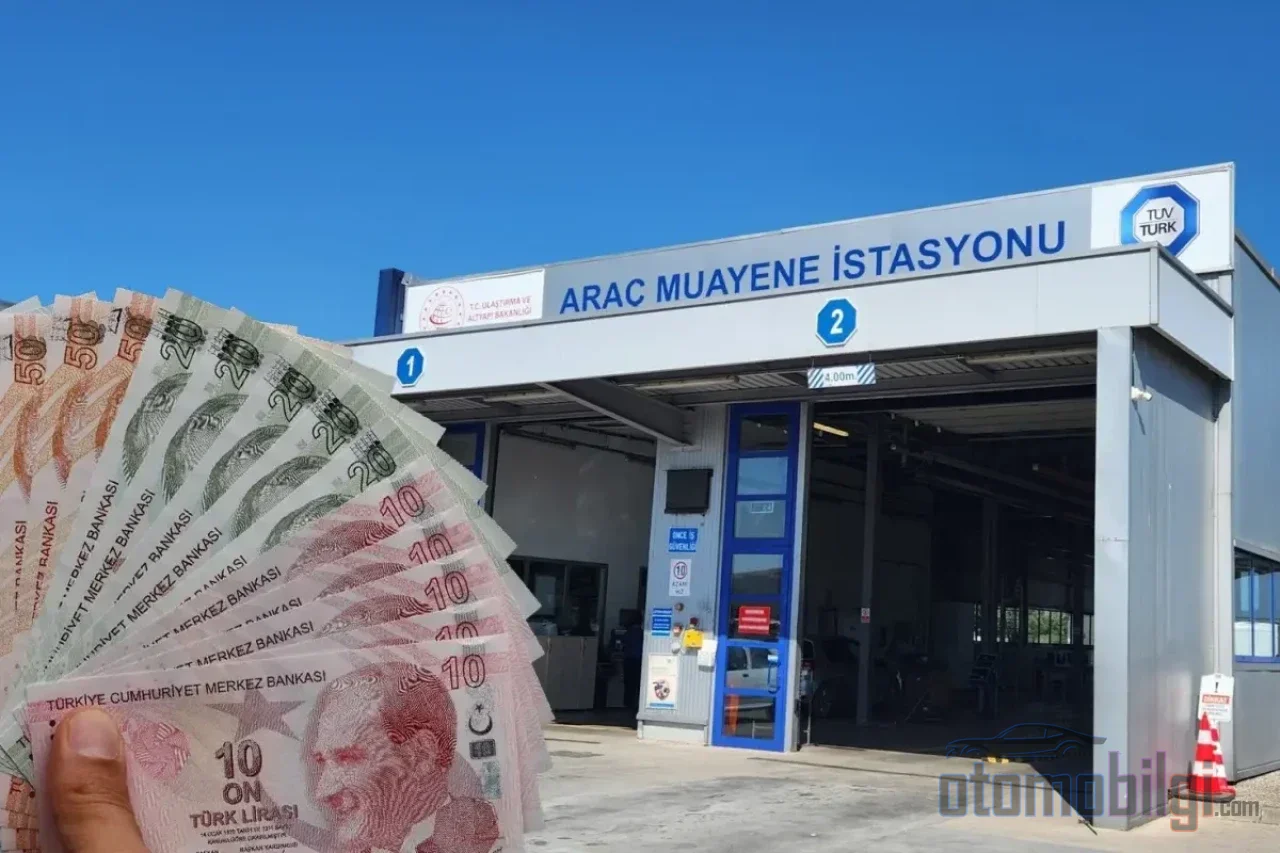
Putting off the periodic inspection appointment for a few months seems harmless; that is, until you see the plug at the station. The late fee, the fine for driving without an inspection, the exhaust emission measurement's own separate sanction, and the disruption of the insurance equation in an accident... These are four separate items, but links of the same chain. As someone who has been following this field for over thirty years, let me tell you: The most misleading point about the vehicle inspection system in Türkiye is assuming the penalty is a single figure. It is not. In this article, I examine how the late fee is calculated, what comes with how much once the date passes, and what awaits you on the insurance side with an uninspected vehicle, all within a single cost framework.
How Is the Inspection Date Determined and What Happens When It Is Missed?

Let's draw the framework first. Vehicle inspection is mandatory under Article 34 of the Highway Traffic Law, and inspections are carried out at authorized stations. The period varies according to vehicle type: private passenger cars are inspected at the end of the first three years, and then once every two years. Commercial vehicles such as taxis, buses, and trucks are checked at the end of the first year and then every year. Motorcycles follow the same calendar as passenger cars, while tractors are deemed sufficient once every three years.
The critical point is this: the moment the inspection period expires, the vehicle is legally not allowed on the road. There is no grace period here; even a single day of delay is enough to create a separate penalty item. Years ago, dates were handwritten on the back of the inspection card; today, a query can be made on e-Devlet with a few clicks. So in this era where tracking has become easier, missing the date has become a negligence that is hard both to forgive and to justify.
Highlights
- Late fee: 5% of the inspection fee is added for each month of delay; the calculation is based on full months, not days.
- Driving without an inspection carries a 2,719 TL administrative fine in 2026; if paid within 15 days of notification, a 25% discount applies.
- Delay in the exhaust emission measurement is a separate violation and can be met with a much heavier penalty.
- Traffic insurance pays for the damage, but in accidents caused by technical defects, the fault ratio may come into play; on the comprehensive insurance side, the company may request an inspection of the vehicle's condition.
- Valid traffic insurance is required for the inspection; an uninsured vehicle is not accepted for inspection.
How Is the Late Fee Calculated?
When you go to the station with a vehicle past its date, the amount you will pay is a late fee added on top of the standard inspection fee. The formula is simple: 5% of the standard fee is charged for each month of delay. With one month of delay, 5% of the fee is added; with two months, 10%; with three months, 15%; and a one-year delay increases the fee by 60%. The calculation is based on full months of delay, not days - meaning there is no difference between a 29-day and a 30-day delay.
Let's go through an example: In the 2026 tariff, the car inspection fee is 3,288 TL. The amount payable with a one-month delay is approximately 3,453 TL, and with a two-month delay approximately 3,618 TL. Since the amounts are updated every year with the revaluation rate, make sure to confirm the current figure; what remains constant is the formula itself.
A detail nobody knows: the full inspection fee
Vehicles that fail the inspection have the right to a free second inspection at the same station within one month. However, this right does not apply to an overdue vehicle. For delays exceeding one month, the full inspection fee is charged again. In other words, a delay brings not only the percentage increase but also the loss of a second chance.
There is also an exceptional case: if the vehicle has been off the road for a long time, this period can be proven with an off-road certificate, and as long as the vehicle remains off the road, no late fee is applied. If the delay period cannot be proven at all, a harsh rule kicks in: the calculation is made starting from January 1, 2005. This is where the documents in your hand really pay off.
Taking to the Road Without an Inspection: A Separate Penalty, A Separate Risk
Many drivers confuse the late fee with the penalty for driving an uninspected vehicle. The two are completely separate sanctions. The late fee is collected at the station; if you are caught on the road with an uninspected vehicle, you face a separate administrative fine. As of 2026, this fine is 2,719 TL, and if paid within 15 days of notification, a 25% discount applies. Since the fine amounts are updated every year by decree, it is better to keep the mechanism in mind rather than the figure.
Moreover, this fine is not a one-time thing. If you are caught a second time within the same year, the fine is issued again. The vehicle caught on the road may also be barred from traffic until it is inspected, and may even be towed away. Add to the five percent increase at the station the traffic fine, the risk of the vehicle being grounded, and the loss of your day; only then is the true cost of the delay complete.
Exhaust Emission Measurement: A Separate Sanction on the Same Calendar
The exhaust emission measurement is a requirement separate from the inspection but one that usually fits on the same calendar. Tractors, motorcycles, and mopeds are not subject to this measurement; all other vehicle classes must pass the measurement. Since the measurement can be done in the same place as the inspection, the practical solution is to be at the station an hour or two before your inspection appointment - two jobs done in one trip.
If you miss the date, things change: an exhaust emission delay is a separate violation and is met with a much heavier penalty than an inspection delay. Another point to watch out for is modifications. When changes are made to the engine, chassis, or fuel system, a new measurement must be performed even if the measurement period has not expired. If the vehicle has been touched, the calendar starts over - don't forget that.
What Does Insurance Do in the Event of an Accident?
This is the most debated aspect of the matter. Since the fundamental purpose of traffic insurance is to prevent harm to third parties, the insurance company pays for damages regardless of the vehicle's inspection status. In other words, if you have an accident with a vehicle whose inspection has expired, the other party's damages are, as a rule, covered. However, with an uninspected vehicle, if the accident stems from a technical deficiency, the insurance company may act by taking the fault ratio into account; the form and amount of the payment may change.
On the comprehensive coverage side, the common understanding is that damage to an uninspected vehicle is covered and only the statutory traffic fine is paid. Even so, you should know that insurance companies may demand a thorough examination by claiming the vehicle is unfit for traffic; such examinations can prolong the payment process and affect its outcome. In short, your rights remain on paper, but an uninspected vehicle puts your relationship with your insurer on a negotiable footing. Moreover, a valid traffic insurance policy is also a prerequisite for being admitted to inspection: a vehicle without insurance is not admitted to inspection, and in 2026 the penalty for driving an uninsured vehicle is 1,246 TL, with the vehicle barred from traffic until insurance is obtained. If one link in the chain breaks, the other breaks too.
Practical Methods That Make Tracking Inspections Easier
The cheapest way to escape this entire cost chain is to never miss the date. If you are one of those who used to jot reminders in pencil on the edge of the calendar back in the day, your job today is much easier. You can query the inspection date and status via e-Devlet; the vehicle inspection status query, inspection appointment registration, and my vehicles services reduce this task to a few minutes. The vehicle inspection query page on the authorized station's own website also leads to the same information.
- Book the appointment free of charge via the station's website or phone line; when going to the inspection, have a document showing your Turkish ID number with you. have a document showing your ID number with you.
- To combine the exhaust emissions measurement with the inspection, be at the station an hour or two before your appointment time.
- If you have had engine, chassis, or fuel system modifications done, remember that a new emissions measurement is required even before the period expires.
- When you fail the inspection, note in your calendar that you have the right to a free second inspection at the same station within one month; if the period is exceeded, the full fee applies.
- Confirm the current fee and the late charge using the station's calculation tool; tariffs are updated every year.
A little care is needed for new vehicle purchases too: in the inspection calendar, the factory production date, not the registration date, may be used as the basis. When buying a used vehicle, querying the inspection status is the quickest way to prevent surprises after the transfer.
Total Cost Table: What Do You Pay When You Miss the Date?
Placing the items generated by the delay side by side best conveys the scale of the matter. The table below has been prepared based on the 2026 tariff; since the amounts are updated every year through revaluation, confirm the current values.
| Item | Status | 2026 amount |
|---|---|---|
| Standard inspection (automobile) | Inspection within due date | 3,288 TL |
| Late fee | 5% of the fee for each month of delay | An additional 5% per month |
| Fine for driving without inspection | Caught in traffic | 2,719 TL (approximately 2,039 TL with a 25% discount) |
| Exhaust emission measurement | All vehicle classes | 460 TL |
| Exhaust emission delay | Caught in traffic | Administrative fine at the level of tens of thousands of TL |
| Lack of traffic insurance | Caught in traffic | 1,246 TL and the vehicle is barred from traffic |
I deliberately avoided giving the exact amount of the exhaust delay fine: the applied amount varies by year and official guide, and it amounts to multiples of the inspection delay fee. The lesson here fits in a single sentence: The essence of the late fee calculation is 5% of the inspection fee multiplied by the number of full months of delay; the traffic stop fine and the exhaust emission penalty are added as separate items.
Conclusion: The Cheapest Fine Is Not Paying Any at All
Although missing the inspection date may seem like a small delay on its own, it is followed by a list of items: five percent monthly surcharges at the station, a traffic fine reduced within 15 days but still serious, a far heavier penalty on the exhaust emission side, and the possibility of the insurance process being prolonged in the event of an accident. Their total far exceeds the cost of a regular inspection. For those who want to keep old habits, my only advice is this: trust your e-Devlet account, not your calendar; make the appointment, schedule the emission measurement for the same day, and see that receipt before the first month of delay. The real cost of this business is the cost you never pay.
Sources
- Vehicle Inspection Late Fee Calculation
- How Is the Vehicle Inspection Delay Fine Calculated?
- Vehicle Inspection Fees and Delay Fine Calculation
- Vehicle Inspection Prices
- How is the vehicle inspection late fee calculated?
- TÜVTÜRK Inspection Status Inquiry - e-Devlet
- If You Have an Accident with a Vehicle Whose Inspection Has Expired, What Does the Insurance Do?
- Exhaust Gas Emission Measurement Tracking System
- 2026 Traffic Administrative Fine Guide