What Is Vehicle Depreciation Compensation and Who Can Claim It?
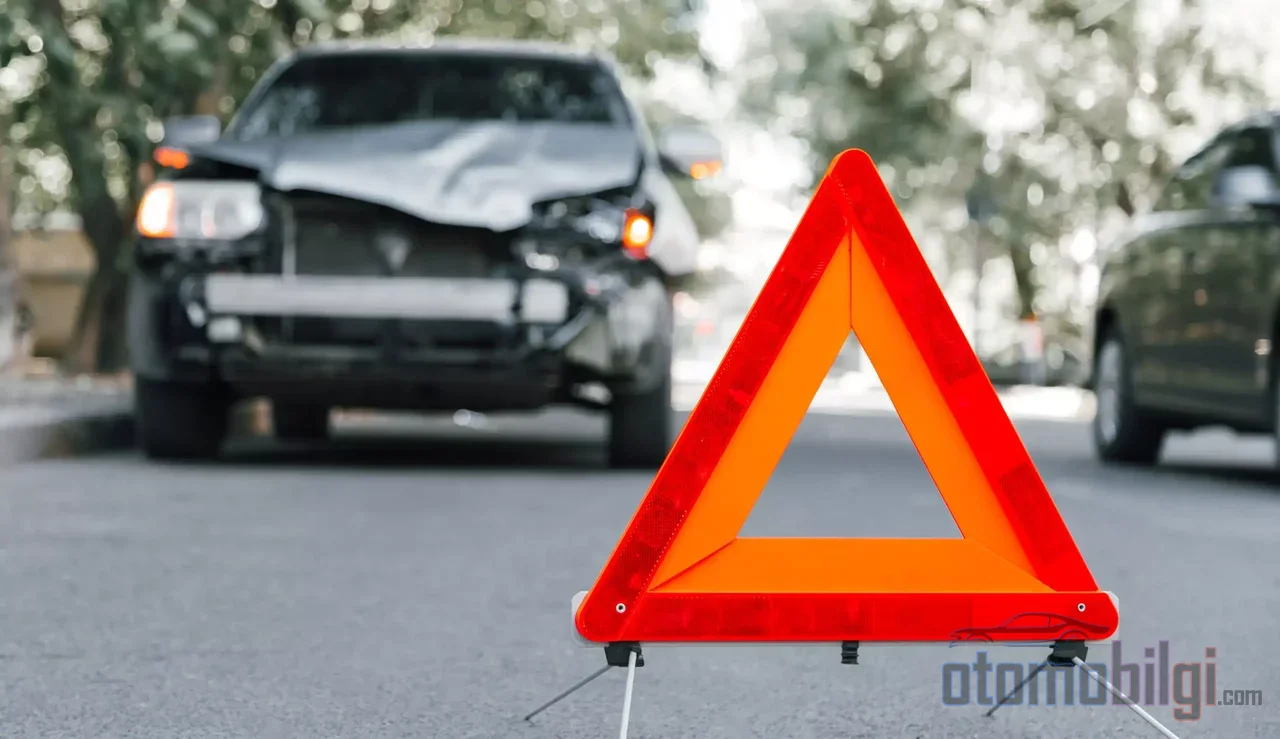
Anyone who buys and sells cars knows: someone looking at a used-car listing approaches a vehicle with an accident record one step behind. Even if the bodywork has been repaired, repainted, or original parts replaced, the vehicle no longer carries its day-one price. This invisible difference has a name in law: vehicle depreciation in value, commonly known as vehicle value loss compensation. The at-fault party in an accident is also obligated to pay this permanent loss of value, beyond the repair costs. So who can exercise this right, under what conditions, and within what time frame? Most vehicle owners have their damage repaired, take the money from the insurance company, and close the file; yet inside that closed file there usually stands a second, unclaimed receivable.
What Is Value Loss Compensation, and Who Can Claim It?
Value loss refers to the permanent drop in the second-hand market value of a vehicle that has been in an accident and repaired. The repair cost is one damage; the loss in the vehicle's market value is a separate damage; the two are not interchangeable. Value loss compensation is a legal claim that secures this drop in market value, apart from the repair expenses. In sources, the expressions "value loss compensation" and "vehicle value loss compensation" refer to the same institution; there is no legal difference between the two.
The first condition for filing a claim is not being entirely at fault in the accident. If the accident is 100% your fault, you cannot claim value loss from the other party. Whatever your fault percentage is, the compensation will generally be reduced by that same proportion. The second condition is that a previously undamaged part of the vehicle must have been damaged in this accident. The third condition is that the vehicle must not have been written off as a total loss (pert).
Key Highlights
- Value loss is the permanent drop in market value beyond the repair cost; it must be claimed within 2 years.
- For a claim, the vehicle's damage ratio must exceed 10% and the claimant must not be 100% at fault.
- Payment is sought from the material damage coverage of the at-fault party's mandatory traffic insurance; comprehensive insurance usually does not pay.
- No value loss arises for a total-loss (pert) vehicle; in that case, the difference between the market value and the scrap (sovtaj) value is claimed.
- In the Insurance Arbitration Commission, decisions up to 35,000 TL are final.
In Which Cases Can a Claim Not Be Filed?

In the past, when a damaged vehicle was sold, the matter was settled with a verbal agreement between buyer and seller; now every damage record can be seen on e-government, and this record permanently affects the vehicle's value. According to the Court of Cassation's consistent case law, value loss claims are barred in certain situations. Knowing these is necessary to avoid wasting time in vain.
No Value Loss for a Total-Loss Vehicle
After an accident, no value loss compensation arises for a vehicle written off as a total loss (pert). Chamber 17 of the Court of Cassation, in a 2013 ruling, explicitly states this principle. The amount claimable for a total-loss vehicle is the difference between the vehicle's pre-accident market value and its post-accident scrap (sovtaj) value; value loss is not added on top of this difference.
The Same Damaged Area Cannot Be Claimed a Second Time in Recurring Damage
If the damaged area of the vehicle has previously been repaired in another accident, diminished value cannot be claimed again for that area. The Court of Cassation is consistent on this point. However, local courts have issued decisions granting diminished value even for vehicles previously damaged in the same area, taking into account the make, model, and mileage; in other words, case law is not fully settled at this point, and each case is evaluated according to its own circumstances.
How Is the Expert Valuation Performed?
The document that effectively concludes diminished value cases is the expert report. According to the established practice of the Court of Cassation, diminished value is determined as of the date of the accident, as the difference between the vehicle's undamaged market value on the accident date and its market value after the accident. This calculation method was confirmed by the 17th Civil Chamber of the Court of Cassation in its 2016 and 2017 decisions, and has also been reflected in the Ministry of Justice's model expert appointment decisions.
When preparing the expert report, fault ratios are examined, the appraisal report is evaluated, and the vehicle's age and mileage are taken into account. Courts and experts may use different methods in the calculation; each method has its own advantages and limitations. That is why the report is the part of the case that deserves the most attention. A judgment cannot be issued based on a general assessment; the court must have the vehicle's pre- and post-accident values determined through an expert.
There is also an option before filing a lawsuit: Evidence determination can be carried out to establish the damage to the vehicle and the diminished value caused by this damage. This is an important safeguard for a vehicle owner who is considering selling the vehicle or is in a hurry; even if the damage is repaired or the vehicle is disposed of, the determination remains in the case file. If the report is to be objected to, the objection petition must be written within the deadline based on the date of notification; the report and the case file are read together and the objections are listed point by point.
Can a Claim Be Made for Minor Damage?
This is the most debated point in practice. The vast majority of traffic accidents are minor collisions, and vehicle owners think that repairs worth a few thousand lira are not worth the hassle. Yet in practice, the door to diminished value claims is opened in cases where the vehicle's damage ratio exceeds 10%; the condition is that this loss must be documented with an appraisal report. A seemingly minor body damage can create a serious loss of market value depending on the vehicle's model and age. Conversely, in cases with very low damage ratios, both insurance companies and experts may be hesitant to acknowledge the existence of the loss. The rule is this: the damage ratio will appear as a figure in the appraisal report; for cases below the 10% threshold, the difficulty of the claim should be known from the start.
Does Traffic Insurance Cover Diminished Value?
Yes, it does; but you need to knock on the right door. Diminished value is claimed under the material damages coverage of the compulsory traffic insurance of the party at fault in the accident. The commonly misunderstood point is this: your own comprehensive insurance policy is usually not the right address for this claim. A separate diminished value application is made not to your own insurance company, but to the other party's traffic insurance. The accident report and damage documents are attached to the application.
The process works for you as follows: After a damage file is created and the application is submitted, the insurance company is obligated to pay within 15 days. If the offered amount is low or the claim is rejected, you are not obligated to accept this offer; appeal channels are open. Also, one distinction needs to be clarified: under traffic insurance general terms, moral compensation claims are excluded from coverage; vehicle diminished value compensation, on the other hand, is a material loss and is covered. Confusing these two means setting up the file incorrectly from the start.
A development related to this field has also been recorded: Press reports indicate that in the new period, diminished value after an accident will be calculated by the loss adjuster and the application will be automated. This should be read not as a finalized regulation yet, but as a trend to be followed.
What Is the Statute of Limitations?
The period taken as the basis for a diminished value application is 2 years from the date of the accident. A vehicle owner who misses this deadline loses the right to claim; even if the repair cost has been paid, diminished value can no longer be requested. Some insurance companies hold the view that the tort statute of limitations periods in the Code of Obligations apply to these claims. My practical advice is simple: there is no need to debate which view works for you, do not wait 2 years from the accident. The most common mistake in such files is to wait until the repair is finished, the vehicle is sold, or "things settle down"; the deadline quietly expires within that waiting.
Lawsuit or Insurance Arbitration Commission?
If the other party's traffic insurance rejects the claim or offers a low amount, there are two paths: the Insurance Arbitration Commission or the court. Arbitration is not a mandatory route; the right holder can also file a lawsuit directly. But both cannot be pursued at the same time for the same claim; a choice is made, and if the chosen path is abandoned once, it may be too late for the other. Claims outside the scope of arbitration, such as moral compensation, can only be brought before a court.
The advantage of the arbitration route is speed and cost: expenses are low and a decision usually comes in a shorter time than the court. The disadvantage is that the file's scope is limited. It is also known in practice that the arbitration process does not take as short a time as thought, and the appointment of an arbitrator can be delayed; the "fast and cheap" label does not carry the same meaning in every file. There is also a procedural requirement: before applying to the Commission, a written application is made to the insurer and a 15-day period is granted. Also, the dispute must not have previously been brought before a court or a consumer problems arbitration committee. Decisions regarding disputes up to 35,000 TL at the Commission are final; this amount and above can be appealed. If lawyers agree on one thing, it is this: arbitration is preferred when the amount is small and the evidence is clear, litigation when the amount is large and there are many legal disputes.
Who Can Claim Vehicle Diminished Value Compensation, and How? Short Answer
In summary: A vehicle owner who was not 100% at fault in an accident may claim the permanent value loss of a previously undamaged region that was damaged, where the damage rate exceeds 10%, from the at-fault party's mandatory traffic insurance, within 2 years of the accident date, documented by an appraisal and, when necessary, an expert witness report. If the insurer's offer is insufficient, arbitration or litigation is available.
Court of Cassation 17. 2015 and 2016 rulings set the framework for case law in this field: the loss is determined as of the accident date based on the difference in market values, and no judgment can be made through a general assessment. There is also a fact worth knowing: some expert opinions carry the argument that no additional value loss arises when the damage is calculated based on the vehicle's market value; because this view goes against established practice, it becomes a subject of dispute in case files. Therefore, do not leave this matter to chance: keep the report, the fault report, and the deadlines right from the start. Diminished value is the invisible label of every accident you leave behind; pursuing your right means making the at-fault party pay the price of that label.
Sources
- Conditions for Claiming Diminished Value Compensation
- Vehicle Diminished Value Amount and Court of Cassation Case Law
- Court of Cassation 17th Civil Chamber Ruling
- Vehicle Diminished Value Expert Witness Report
- Objecting to an Expert Witness Report
- Insurance Arbitration Commission Frequently Asked Questions
- How to Claim Diminished Value After an Accident?
- Damage Amount Compensation