How Much Will Comprehensive Insurance Cover Vehicles Damaged in the Istanbul Flood?
Share This Page
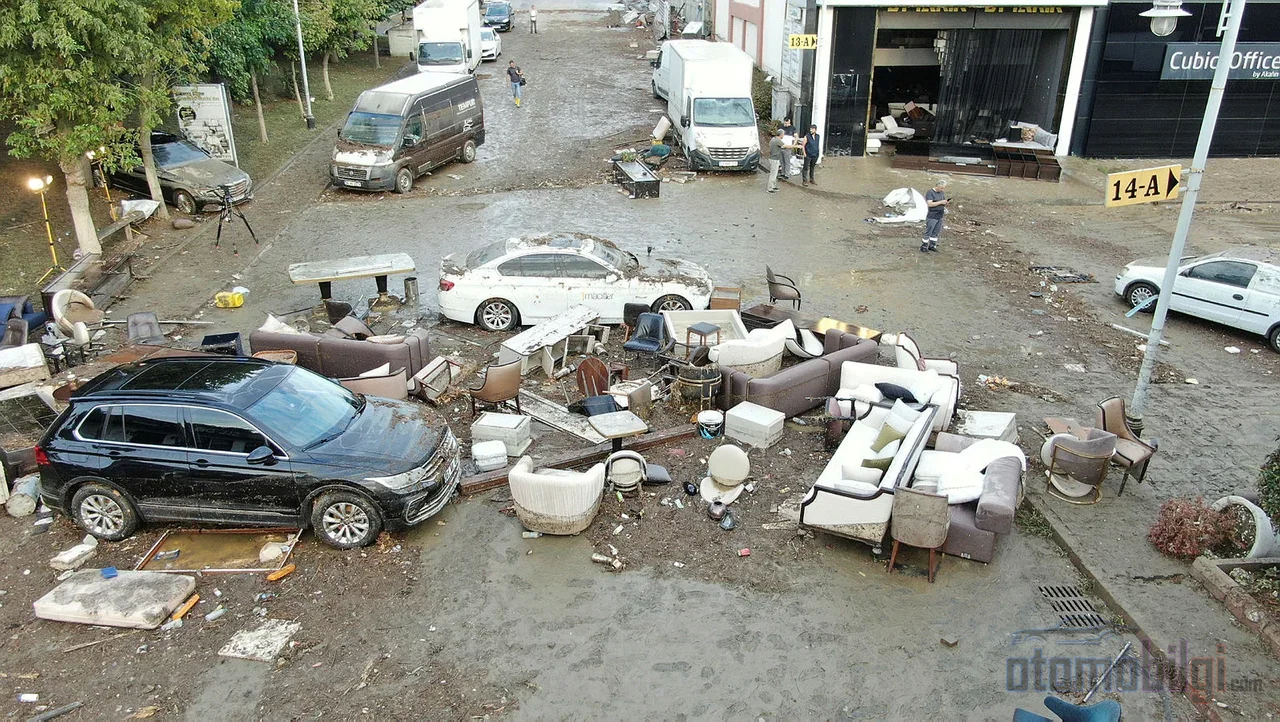
In a flood-damaged vehicle, comprehensive (kasko) insurance only pays if flood and water damage coverage was purchased via an additional agreement; standard kasko does not automatically cover this damage. Mandatory traffic insurance, on the other hand, does not pay for any damage caused by natural disasters. In the heavy downpour that hit Istanbul on October 14, 2026, 1,277 flooding incidents were recorded, and 76 flood-damaged vehicles were among the reports; a similar picture unfolded in Sakarya. Now it is time for the reckoning in the garages where the water has receded.
Highlights
- Flood and water damage coverage is not standard in kasko, it is purchased via an additional agreement.
- The damage claim must be filed within at most 5 business days from the moment the damage is discovered.
- If the repair cost exceeds 60% of the vehicle's value, it is considered heavy damage; if it exceeds its value, it is considered a total loss (write-off).
- The insurer is obligated to pay within 10 business days of the expert report being submitted.
- Owners of uninsured vehicles may seek compensation from the administration by proving service fault.
Does kasko cover flood damage? The answer lies hidden in a line of the policy
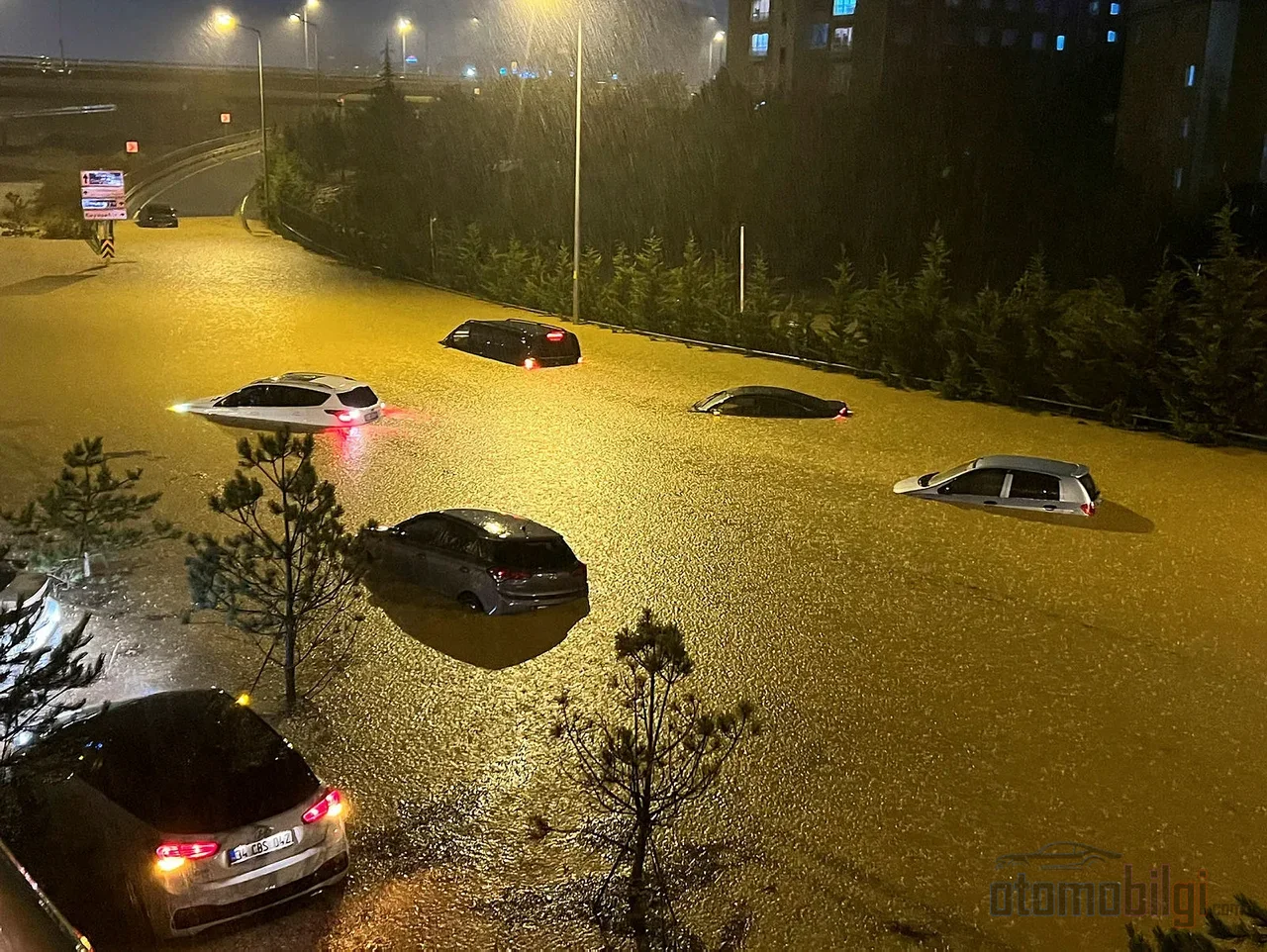
According to the General Conditions of Motor Vehicle Comprehensive Insurance, flood and water damage is a risk that enters the coverage only through an additional agreement. In other words, the vehicle owner's policy must explicitly state this coverage; either directly as flood and water damage or under the natural disasters heading. Drawing conclusions from the product's name is misleading: although the distinction between narrow kasko, extended, or full kasko exists in the general conditions, the product name alone does not indicate that flood coverage is provided.
There is another trap well known to those who have been through this: the coverage may exist but be limited. If a separate limit is defined for natural disaster coverage in the policy, the damage remains capped at that amount. For those affected by the flood, the first task is to open the policy and find that line. Years ago, such details were often learned at the moment of loss, after the damage was done; today, thanks to digital policy access, the same check can be done in a few minutes.
If the coverage exists, kasko covers flood-related damage such as interior upholstery, seats, carpets and floor mats, and electronic systems. The critical point is the situation involving the engine. The general conditions contain no specific provision for engine water intake; mechanical, electrical, and electronic failures are essentially outside the coverage. However, if the failure results from an event covered by the policy, it may be covered. Water flooding in while parked versus deliberately entering a waterlogged road are treated differently in the expert assessment; this distinction is the most contentious heading in such files.
How much do traffic insurance and DASK protect in this scenario?
In short: not at all. Mandatory traffic insurance only covers damages caused to third parties; your own vehicle's flood damage is outside the scope. DASK also only pays for earthquakes and earthquake-related damage; flood is outside this scope. For home or workplace flood damage, the relevant policy must also include flood coverage. To summarize the limits of the three insurance types in terms of natural disaster risk:
| Insurance type | Vehicle flood damage | Scope |
|---|---|---|
| Comprehensive (Casco) insurance | Covered if there is an additional flood clause | Your own vehicle |
| Traffic insurance | Does not cover | Damages caused to third parties |
| DASK (earthquake insurance) | Does not cover | Only earthquakes and damages caused by earthquakes |
The real tragedy of the table lies in the insurance rate. The truth that the industry has voiced for years and that repeats itself after every natural disaster is this: in Türkiye, the vast majority of vehicles have no coverage at all against natural disaster risks such as floods. After the Samsun Havza flood in May 2026, the chairman of the board of the insurers' confederation pointed to the figures, noting that the rate of natural disaster insurance outside of comprehensive coverage was only around 5 percent. An extremely low rate; and that is precisely why the same segment suffers the same disappointment after every flood.
First 5 business days and the expert appraisal process: Which step should be taken when?
According to the general terms, damage notification must be made within at most 5 business days from the moment the occurrence of the risk is learned. The notification can be made through the call center, mobile application, an agent, or the Alo 193 Joint Damage Notification Center, which comes into service on September 1, 2026. Alo 193 operates as an additional alternative to the existing channels for traffic and comprehensive insurance damage notifications; a practical channel that distributes the load in events such as floods, where a large number of files arise at the same time.
Beyond the notification, behavior in the first hours directly affects the size of the compensation. The vehicle must not be started before the appraiser arrives; if water has entered an engine that is cranked, the damage grows and the policyholder may be deemed to have violated the obligation to prevent loss. The general terms explicitly regulate the obligation to prevent or reduce the damage; in case of violation, if the damage has increased, a deduction proportional to the fault can be made from the compensation. With hybrid and electric vehicles the matter is even more delicate: due to the high voltage risk, the electrical system must not be touched spontaneously, and the vehicle should be transported to the service center by tow truck.
The legal framework of the process is also clear. The insurer is obliged to report any additional documents it requests within 3 business days. Payment must be made within at most 10 business days from the delivery of the appraiser's report; the compensation debt becomes due 45 days after the damage notification. If the policyholder wishes, they may appoint their own appraiser, and the reasonable appraiser fee is covered by the insurer. If there is an exemption/deductible, the requirement that it be written in at least 14-point font in the policy is also a regulation introduced to prevent loss of rights.
What happens if the vehicle is declared a total loss, and which rights are forfeited?
The concepts of heavy damage and total loss were clarified with the regulation effective from 2025. If the repair cost including VAT exceeds the vehicle's value at the date of damage and the vehicle cannot be repaired, it counts as a total loss. If the repair cost exceeds 60 percent of the value, the heavy damage definition comes into play. There is one more step: if critical parts such as the main electrical installation, electronic system components, the electric vehicle battery or main power line, airbags and safety systems are damaged, the vehicle can be considered heavily damaged even if the ratio stays below 60 percent. Since contact of exactly these parts with water is inevitable in flood claims, frequent application of the rule in practice should be expected.
In a total loss, payment is made based on the market value at the date of damage, and a scrap certificate or traffic withdrawal document is requested. For policyholders who want to keep the vehicle in its damaged state, a method called salvage value applies: the difference between the market value and the damaged value is paid. The risk of losing rights arises here; if the objection to the equivalent vehicle list used in determining the market value is delayed, the payment can be locked in at a low value. In this period when assessments are subject to audit, keeping one's own documents ready is the simplest measure that preserves the negotiating margin.
Roadmap if a rejection comes: Arbitration, court, and statute of limitations
If the insurance company rejects the claim, a written application should be made first. If the company rejects the claim or does not respond in writing within 15 business days, the Insurance Arbitration Commission can be applied to for comprehensive coverage disputes. The institution's circular dated August 5, 2026 clarified the application conditions: if the company has appointed its appraiser on time, the incompleteness of the report alone does not constitute grounds for arbitration. This means the path of using the missing report as an excuse to slow down the process has been closed.
If no result can be obtained through arbitration, the court route is open; the insurer's headquarters court, its agency court, or the court of the damage location has jurisdiction, and the statute of limitations is 2 years. For vehicles used for personal purposes, consumer courts can also come into play in comprehensive coverage disputes. Unlike old files, deadlines and authorities are now clear from the start; only document discipline makes the policyholder's job easier.
If you don't have comprehensive coverage: Is the compensation route through the administration realistic?
For vehicle owners without comprehensive coverage, the insurance route is closed, but the door is not completely shut. Compensation can be requested from the administration on the claim of the administration's fault in service. According to the Administrative Procedure Law, a preliminary application to the administration is mandatory within 1 year from learning of the act, and in any case within 5 years; in case of rejection or no response within 30 days, a full remedy action is filed in the administrative court within 60 days. There is also a precedent: in the 2020 Izmir flood, material compensation with legal interest was awarded to a vehicle owner against the metropolitan municipality, the water authority, and the Ministry.
Yet this road is narrower than it appears. Heavy rainfall alone does not prove a service defect; the inadequacy of the drainage condition, storm drain blockages, and the causal link are each examined separately. Automatically holding the municipality liable after every flood is far from legal realism. The cases that are won are generally those where it is concretely demonstrated that the infrastructure could not carry the expected load on the day of the event.
The impact of flood-damaged vehicles on second-hand value
A vehicle repaired due to flooding pays a price on the second-hand market. Vehicles with a severe damage record find buyers at lower prices in the market, and buyers' habit of querying damage history grows stronger every year. Nevertheless, the legal framework operates differently from what is commonly assumed: loss of value due to flood damage is not assessed under the same regime as traffic accident depreciation claims. A flood damage claim under a comprehensive insurance repair does not automatically mean that additional depreciation will be paid separately. If third-party or public authority liability exists, the reduction in market value can also be claimed; however, double recovery is not permitted, and the insurer may exercise its right of recourse to the extent of the amount it has paid.
The industry has begun to fill this gap partly on the product side. From 2026 onward, some insurance companies are adding vehicle depreciation coverage to their policies. On the other hand, with the regulations entering into force on July 1, 2026, damage claims now cover depreciation claims, a standardized expert report and a central expert system have come onto the agenda; assigning an expert is not always mandatory for files with damage amounts below 40 thousand TL. These three headings will speed up post-flood processes compared to the past; however, the sale of severely damaged vehicles has not been banned, conditions have merely been introduced for compensation to be claimed.
Conclusion: A single line in the policy makes a fortune of difference after a flood
The lesson this flood left vehicle owners is written not in record books but in the policy text. Flood and water damage coverage is a protection obtained through a separate contract; traffic insurance and the DASK, meanwhile, pay nothing in this scenario. Filing notice within 5 business days, not operating the vehicle before the expert arrives, and knowing the total loss thresholds of 60 percent directly determine loss of rights. In this message spanning over thirty years, the picture I see has not changed: the segment that remains under-insured against natural disasters knocks on the same door with every downpour. Reading your policy today is always cheaper than reading it tomorrow in front of the expert.
Sources
- Insurance and coverage guide for flood-damaged vehicles
- Compensation for Flood-Damaged Vehicles: Comprehensive Coverage, Total Loss and Application Channels 2026
- General Conditions of Motor Vehicle Comprehensive Insurance (TSB)
- SEDDK Circular - expert assessment in motor vehicle insurances
- What Changes on July 1, 2026 in Vehicle Damage and Diminished Value
- Does Traffic Insurance Cover Flood Damage? Lessons from the Istanbul Flood
- Vehicle Damage in Floods: Comprehensive Coverage and Compensation 2026
- Sale of severely damaged (total loss) vehicles - Yeni Safak
- Can You Claim Vehicle Diminished Value from Comprehensive Insurance? 2026