What Should You Do If the Temperature Gauge in Your Vehicle Rises?
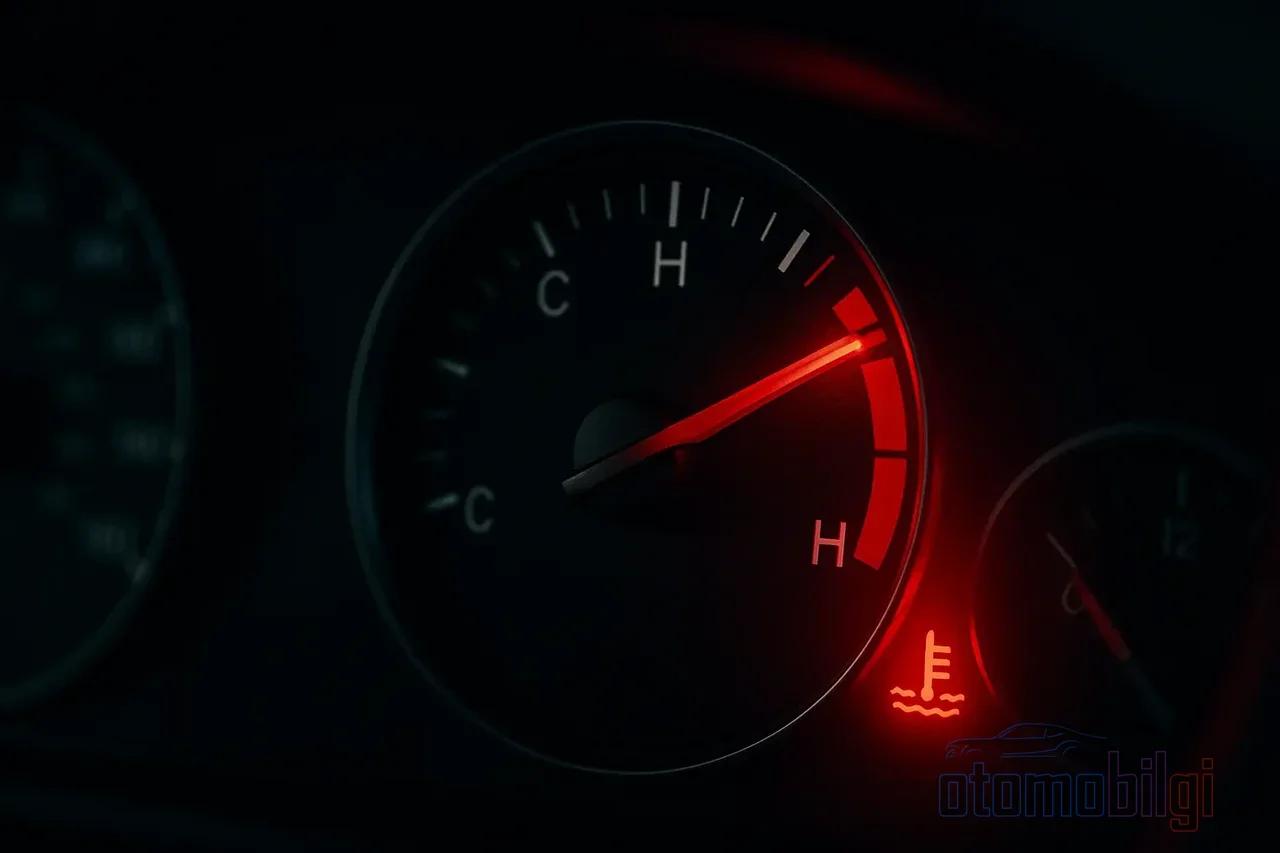
The moment the temperature gauge on the dashboard nears the red zone or a warning appears on the screen, the driver's first reaction determines the vehicle's future. The right intervention can resolve a small cooling problem right at the roadside; the wrong reflex, on the other hand, can escalate a fault that would have ended with a thermostat replacement to the level of a blown head gasket and a seized engine. The difference often comes down to a single decision, or even a single minute. In this article, we take a step-by-step look at what should be done in the first minutes of an overheating event, what should absolutely not be done, and at what point the decision to call a tow truck should be made.
The First Minutes of Overheating: What Should You Do, In Order?
The goal at the moment overheating is noticed is clear: reduce the load on the engine and buy time until you reach a safe stopping point. The steps to take consist of a few simple but order-sensitive actions:
- Turn off the air conditioning - the A/C compressor increases the load on the engine and fan; turning it off immediately reduces heat production.
- Turn the heater to full and set the fan to high - the heater radiator acts like a small second radiator and begins drawing heat away from the engine. This is not a solution, but a temporary cooling assist.
- Stop accelerating - ease off the gas, open up distance from the vehicle ahead in traffic; high revs and strain feed heat production.
- Signal and pull over to a safe spot without braking suddenly - turn on the hazard lights and shut off the engine.
- Do not open the hood while steam is still coming out - a hood opened after the steam has stopped allows the accumulated heat to escape.
The most critical decision here is to stop the engine. A running engine continues to produce heat; continuing on the road saying "it's just a little farther home" is the most common mistake that can, by itself, magnify the scale of the damage. If the temperature gauge is in the red zone or the vehicle is displaying the STOP message, the discussion is over: the vehicle does not continue on the road without being checked.
Waiting for It to Cool Down: When Should You Touch the Radiator Cap?
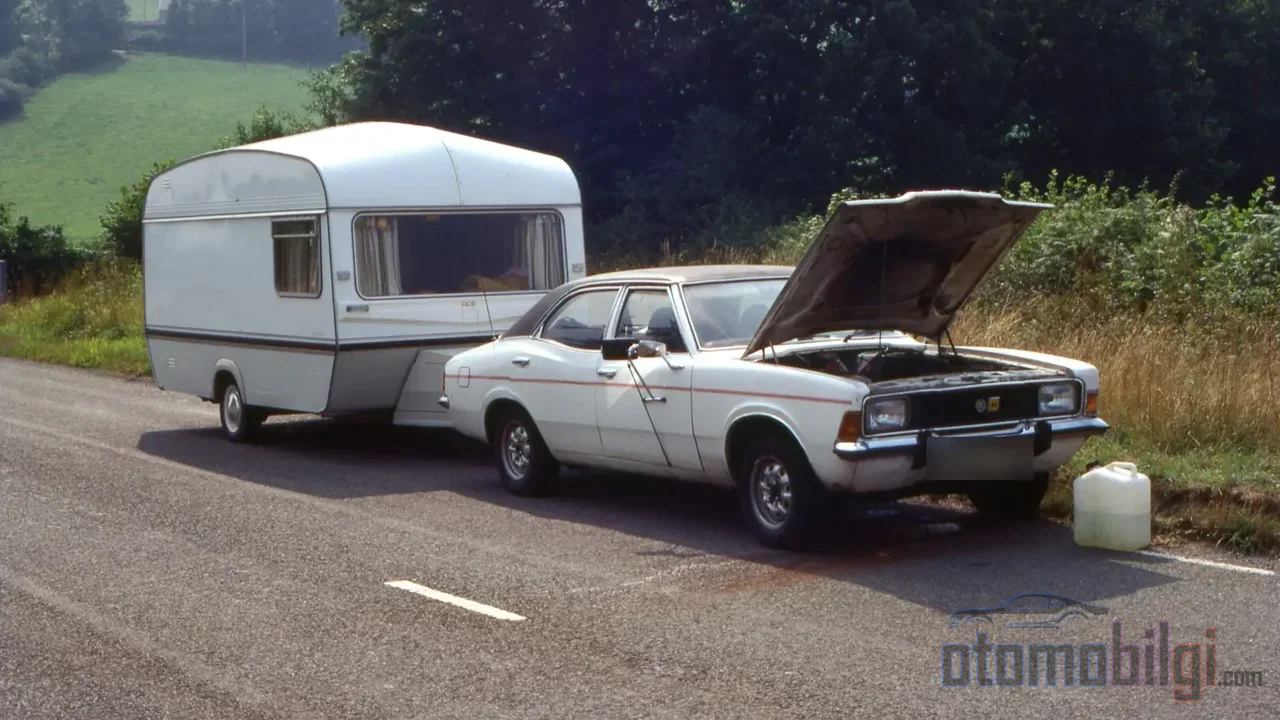
After the engine has stopped, patience comes into play. The cooling system operates under pressure, and at the moment of shutdown the liquid may be above its boiling point. Although recommendations for when to open the cap vary slightly between sources, the common ground is clear: the radiator cap and hoses should feel cool to the touch. In practice, this means waiting at least 20-30 minutes; extending this period always keeps you on the safe side.
Once cooling is complete, the inspection sequence is simple. First, read the fluid level in the expansion tank against the MIN and MAX marks; if the level is low, top it up with the coolant recommended in the manual - ideally a 50/50 antifreeze-water mixture. Clean water may be used only in an emergency and after the engine has completely cooled. Then visually inspect the system: a puddle of water at the front, a cracked hose, a broken belt, or a fan that does not spin while the engine is running will tell you a great deal about where the problem lies.
Note one point in particular: coolant does not decrease on its own. A vehicle that constantly requires water top-ups is the harbinger of a leak that will not close and should be taken to a service center without delay.
Highlights
- Turning off the air conditioning and running the heater at full blast temporarily draws heat away from the engine.
- Wait at least 20-30 minutes before touching the radiator cap; the cap should be cool to the touch.
- Pouring cold water suddenly onto a hot engine can create cracks in the engine block due to thermal shock.
- If the needle is in the red, every extra kilometer shortens the road to a head gasket engine repair.
- If the fluid is constantly decreasing, there is a growing leak in the system; coolant does not deplete on its own.
Things That Should Absolutely Never Be Done
The costliest mistakes made during overheating are usually the ones done with good intentions. Four of them are particularly dangerous:
- Never open the radiator cap or expansion tank cap on a hot engine. The pressurized system sprays boiling liquid and steam the moment the cap is opened; the result is serious burns.
- Never pour cold water suddenly onto a hot engine. The sudden temperature difference between hot metal and cold water creates thermal shock and can cause irreparable cracks in the engine block. Suggestions seen on social media such as "slowly wet the engine with cold water" ignore this risk.
- Never start a hot engine or add fluid while it is hot.
- Never drive with a red warning. If the gauge shows a red thermometer or a STOP message appears, the vehicle must not set off unmeasured, even if the message disappears.
The common logic behind these four prohibitions rests on the same laws of physics: pressurized boiling liquid and sudden temperature changes harm both people and metal. The price of ignoring the prohibition may appear within minutes in terms of burns, and thousands of km later in terms of the engine.
Why Does the Engine Overheat? The Most Common Causes
There are usually six main suspects behind overheating. The most common is a low coolant level caused by a leak. It is followed by a thermostat stuck in the closed position: in this scenario, the gauge climbs steadily within 15-20 minutes and the radiator's upper hose remains cooler than expected, because the fluid never reaches the radiator. The third suspect is an inoperative electric fan; if the vehicle behaves normally on the highway but overheats in traffic, the fan is not engaging. A worn water pump sometimes betrays itself with a drip or a squeaking sound from the drain hole on its body. The fifth group is a clogged radiator, a collapsed hose, or an old cap that has lost pressure - when the cap gasket weakens, the system's pressure, and therefore the fluid's boiling point, drops. The last suspect is the cylinder head gasket, which can be both cause and effect: white exhaust smoke, bubbles in the expansion tank, and milky-colored oil point to this picture.
These causes can be distinguished from one another according to the overheating pattern. The table below matches the most frequently encountered scenarios with the likely culprits:
| Overheating Pattern | Possible Cause |
|---|---|
| Warms up at idle and in traffic, returns to normal on the highway | Faulty fan, relay/fuse, or a radiator blocked from the outside |
| Only overheats while the A/C is running | Weak fan or clogged radiator/condenser |
| Overheats on the highway and on hills | Thermostat, water pump, or low coolant |
| Overheats even though the reservoir is full | Thermostat, pump, air pocket, internally clogged radiator, or head gasket |
| Needle jumps, heater blows cold | Low coolant or a large air pocket |
Knowing how to read the pattern also makes your job easier when you take the car to the service: a one-sentence description - such as "warms up at idle, drops on the road" - allows an experienced technician to reach the fault point much faster.
The Permanent Damage of Running Hot: From Gasket to Seized Engine
The cost of driving with an overheating engine grows as a gradual but accelerating chain of damage. The first link is usually leaks in the hoses, seals, and radiator. Then the cylinder head gasket burns; the aluminum cylinder head warps with heat, and since the gasket no longer sits flush, it begins to leak. The difference between repairing a thermostat failure and repairing an engine with a head gasket job equals a significant portion of the vehicle's value in most cars. The final link in the chain is piston wear, bearing damage, and engine seizure - at this point, the solution is most often a complete engine replacement.
A few symptoms are enough to tell whether the gasket has burned: a milky or creamy appearance on the oil dipstick, white and sweet-smelling smoke from the exhaust, rough idle, coolant visibly decreasing, and loss of power and compression. The warping that occurs on heated metal surfaces damages the gasket's sealing surface; coolant with depleted additives destroys the same surface by creating pits known as cavitation. For this reason, every additional minute of overheating measurably increases the damage. Starting an engine into which air has entered without bleeding the air can also cause localized overheating and gasket damage - that is why bleeding the air from the system after topping up the fluid is a step that must not be skipped.
The Decision to Call a Tow Truck: At Which Threshold Should You Stop?
The decision threshold can be drawn clearly with gauge and visual indicators. If any of the following conditions are present, the vehicle should be transported on a tow truck:
- The temperature needle has entered the red zone or the red STOP warning has appeared
- Steam is coming from the engine bay
- A large amount of coolant has been lost
- A burst hose or a broken belt has been spotted
There is also a gray area: if the needle rose only slightly in traffic and dropped when the heating was turned on, a short and slow drive to a safe spot is acceptable. However, this behavior is a warning that the cooling system is operating at its limit and means a postponed service appointment, not a pass to keep driving. It should also be remembered that in diesel vehicles, heat-related damage can be repaired at a much higher cost than in gasoline vehicles; in this case, the right decision is to turn to a specialist service without wasting time.
The safety protocol while waiting for the tow truck is simple: get behind the barrier, put on a reflective vest if it is night, and set up the warning triangle reflector. Taking a photo of the warning messages the vehicle displays, and noting observations about sound, smell and power loss, directly contributes to the later diagnostic process.
Frequently Asked Questions
My engine has overheated - can I add water right away?
No. Opening the cap and adding fluid before the engine has completely cooled carries both a risk of burns from boiling fluid and a risk of thermal shock. Wait at least 20-30 minutes; if the cap is cool to the touch, top up with the mixture recommended in the manual.
I am almost home - can I keep driving a short distance?
If the needle is in the red, no. The last few kilometers of a short drive can turn a small cooling problem into a cylinder head or gasket problem; the tow truck fee is a negligible cost next to a gasketed engine repair.
Why does it overheat at idle but return to normal on the road?
In a stationary vehicle, only the fan provides airflow through the radiator. If the fan, its relay or fuse is faulty, exactly this pattern appears: it cools at speed, overheats at a standstill.
Why does the engine overheat even though the expansion tank is full?
There may be fluid, but it might not be circulating. The thermostat may not be opening, the water pump may not be turning, an air pocket may remain in the system, or the inside of the radiator may be clogged; in some cases, a gasket failure disrupts the system with pressure.
Is the overheating related to the air conditioning?
Partly. The AC condenser loads extra heat in front of the radiator and strains the engine; a vehicle that overheats only when the AC is on indicates the cooling system is operating at its limit.
Preventing Overheating Before It Starts
More valuable than a roadside intervention is not getting caught with an overheating system. For this, the periodic checklist is short and clear: regularly checking the antifreeze level and mixture properties, completely renewing the coolant at the manufacturer's recommended interval - approximately 48,000-96,000 km for many manufacturers, inspecting radiator hoses for hardening and cracking, verifying that the cooling fan engages at the correct temperature, and checking the accuracy of the coolant temperature sensor and the instrument panel.
On the usage side, a single rule stands out: not exceeding the vehicle's overload and towing capacity eliminates one of the main sources of the scenarios where the engine is most strained. Every driver determines the path between a fault that could be glossed over with a thermostat replacement and an engine replacement at their own decision speed. When the gauge rises, the correct sequence is simple: reduce the load, stop safely, wait, then check - and in every case of doubt, don't hesitate to call the tow truck.
Sources
- Why Does an Engine Overheat and What Should Be Done?
- What to Do First When Your Car Overheats
- Vehicle Is Overheating: What to Do Immediately and What Causes It?
- Red Engine Fault STOP Message: What Should You Do?
- What should I do if my car is overheating? - RAC
- What to Do (& Not Do) When Your Car Overheats - Firestone
- What to Do When Your Engine Overheats? - Toyota Blog
- Blown Cylinder Head Gasket: Symptoms and Causes - Vaden
- Engine Cylinder Head Assembly: Failure, Replacement, Maintenance - Vaden Original
- The Hidden Dangers of an Overheating Engine - Olympic Auto Care