Why Does an Engine Overheat? How Does the Cooling System Work
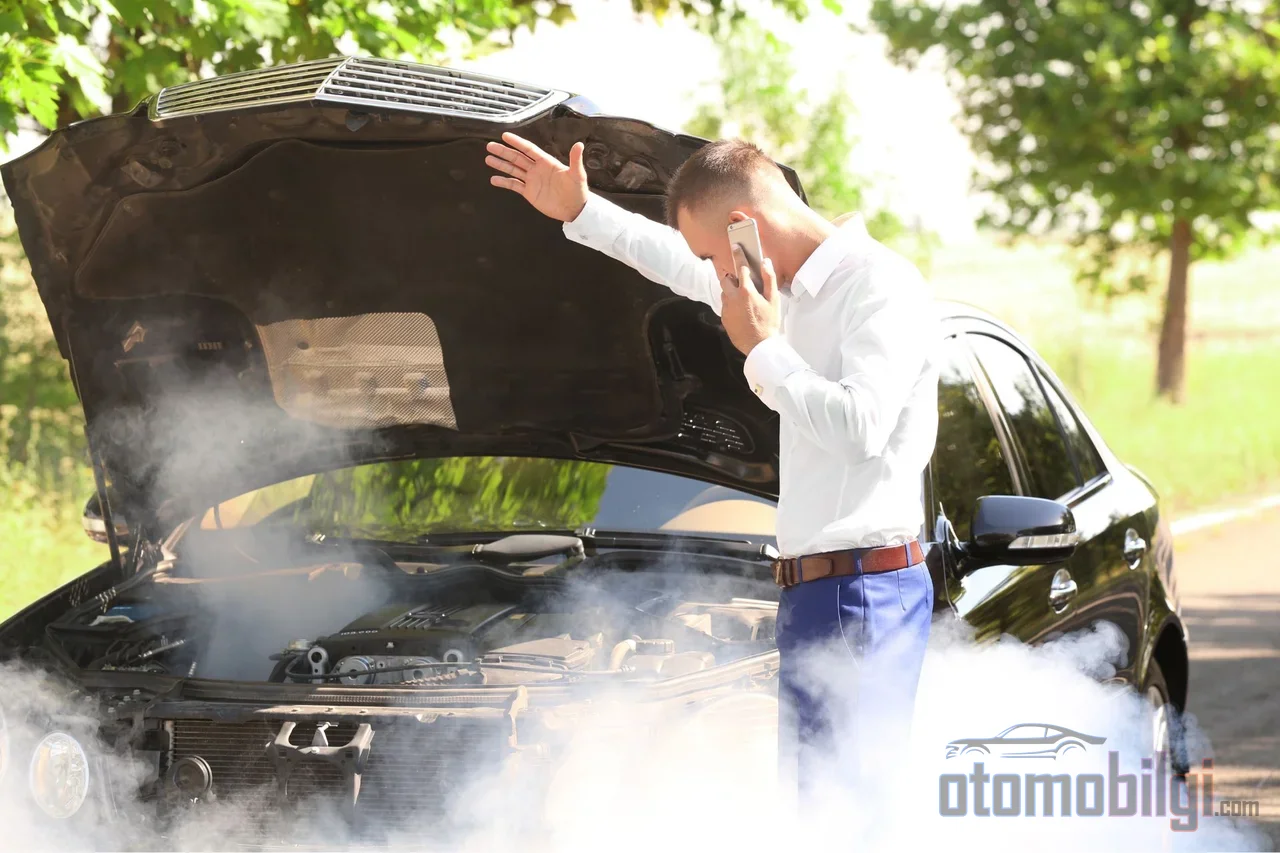
In an ordinary car traveling at 80 kilometers per hour, the gasoline ignites inside the cylinders roughly 4,000 times every minute. Each ignition converts part of the heat trapped between gaskets and metal surfaces into work; the rest keeps heating the engine like an oven. So why does an engine boil over - that is, what exactly happens when this balance is disrupted? The real question is not boiling, but not boiling: why doesn't the fluid in the radiator boil under the hood, even though it would boil in the open air? The answer lies in how the cooling system's components are connected to one another.
What Does the Engine Cooling System Do?
The cooling system's job is not just to cool the engine. The system's main task is to keep the engine at its optimum operating temperature: to warm up a cold engine quickly, then hold the temperature at a steady balance. This distinction matters because a cold engine is harmful; parts wear out faster, efficiency drops, and more pollutants are released. It is more accurate to think of the system as a thermostat: it removes excess heat and stores heat when there is too little.
When the balance is disrupted, the consequences gradually worsen. If heat cannot be removed, the oil film weakens first, and then the pistons can literally weld themselves inside the cylinders. Overheating can blow the cylinder head gasket; in the worst-case scenario, cracks form in the engine block. In short, the cooling system is the only line of defense against the engine's most expensive failures.
Highlights
- A radiator cap rated at 15 psi raises the coolant's boiling point by about 25 degrees Fahrenheit.
- The thermostat is a paraffin expansion valve that does not send coolant to the radiator until the engine is ready for it.
- Most engines run on a 50/50 ethylene glycol + water mixture.
- For fluid replacement, most manufacturers recommend an interval of 30,000-50,000 miles or 3-5 years.
Main Components of the System: Water Pump, Radiator, Thermostat and Fan
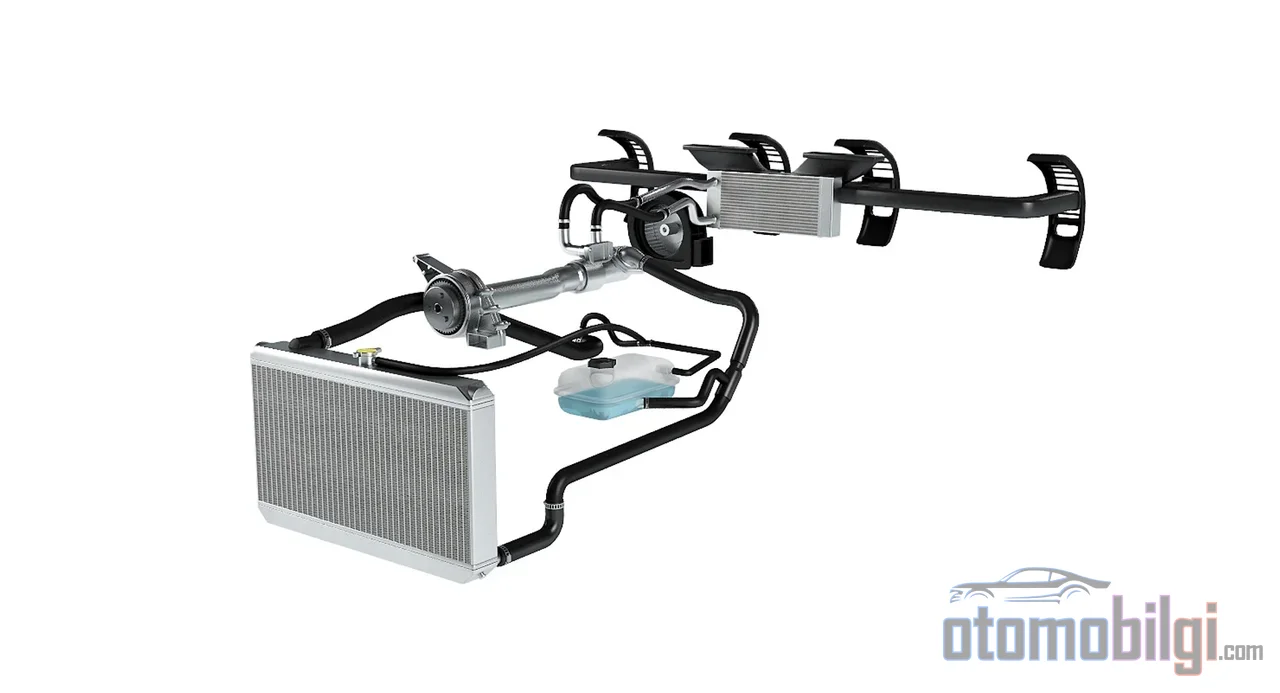
The circuit that carries the heat: water pump and radiator
The heart of the cycle is the water pump: it sends the fluid cooled in the radiator back to the channels in the engine block, the cylinder head, and the heater core that feeds the cabin heating. As the fluid circulates through the block, it absorbs heat, then travels to the radiator through the upper hose. The radiator is a heat exchanger; it is usually made of aluminum and consists of many thin tubes connected to fins. Thanks to the large surface area, the heat of the hot fluid is transferred to the air passing through the radiator, and the cooled fluid returns to the engine through the lower hose. The cycle closes, and the heat stays outside.
The Thermostat: first heat quickly, then hold steady
The thermostat is the simplest and smartest part of the system: an automatic valve that opens once a certain temperature is reached. Inside it is paraffin wax that expands at a specific temperature; when the wax expands, the valve opens, and when it cools, a spring closes it. While the engine is cold, the thermostat is closed and the fluid bypasses the radiator and returns directly to the engine. This allows the engine to warm up quickly using the heat it produces itself. When the temperature reaches approximately 90°C, the valve opens and directs the liquid to the radiator circuit. The thermostat and water pump together also control the flow rate of the liquid between the engine and the radiator; that is why removing the thermostat does not cool the engine - it makes it unstable.
Fan: the second cooler that kicks in when there is no airflow
The radiator can only reject heat when there is airflow. In city traffic or at idle, speed decreases and the airflow becomes insufficient; that is when the fan comes into play, pulling air through the radiator to provide additional cooling. Electric fans in modern vehicles operate independently of engine speed: they switch on and off according to coolant temperature and the engine control unit, and they do not steal power from the engine. Mechanical fans, on the other hand, draw mechanical energy from the engine; this means a parasitic loss of horsepower. Mechanical fans with a viscous clutch limit this loss by engaging according to the air temperature coming from the radiator. In heavy-duty vehicles, under extreme conditions requiring high airflow, the clutch fan is still preferred; in everyday use, however, the precise control of an electric fan is a major advantage.
Pressurized System: Why Doesn't the Water in the Radiator Boil?
Basic physics is simple: open to the atmosphere, water boils at 100°C. The system under the hood, however, is closed and pressurized; as pressure increases, the boiling point of the liquid rises and boiling becomes much harder. The radiator cap is actually a pressure valve. Common stock cap values are in the 0.9-1.1 bar (13-16 psi) range, and this pressure raises the boiling point by about 45 degrees Fahrenheit, allowing the maximum operating temperature with a suitable mixture to climb from 212°F to 268°F. The flow restriction before the thermostat opens also supports the same effect by increasing the pressure in the system.
The system's pressure management is not one-directional. When pressure exceeds the rated value, the spring in the cap opens and the excess pressure is released, along with liquid, into the auxiliary expansion tank; when the engine cools down, vacuum draws the liquid back from the tank. That is why the level in the expansion tank is the clearest indicator of the system's health at a glance. It is true that a high-pressure cap (such as 18-21 psi) would raise the boiling point even further, but it is generally not recommended: the performance gain is, in most cases, not worth the extra load placed on the entire system, including the hoses and gasket.
| Component | Function |
|---|---|
| Water pump | Circulates the coolant through the block, head, and heater core |
| Radiator | Transfers the heat of the hot liquid to the ambient air |
| Thermostat | Keeps the radiator out of the circuit until the target temperature is reached |
| Fan | Pulls air through the radiator when airflow is insufficient |
| Radiator cap | Holds system pressure and releases the excess into the auxiliary tank |
| Expansion tank | Stores the expanding liquid and returns it as it cools |
Why Do Engines Overheat? Typical Causes
Every engine heats up due to combustion; what leads to overheating, however, is poor maintenance or a mechanical failure. In practice, the most common causes fit within a short list:
- Low coolant level or leaks in the system
- A stuck thermostat (neither opening nor closing)
- A faulty water pump or a broken belt
- A non-functioning radiator fan
- A clogged or cracked radiator, a faulty radiator cap
- Worn or leaking hoses
- Low engine oil, an incorrect water/fluid mixture
The instructive part of this list is that overheating is not always caused by a fluid shortage. Even if the fluid level looks normal, the temperature rises if the fan is not working, the thermostat is locked, or there is air trapped in the system. Temperature rising in stop-and-go traffic or during long idling is a typical scenario and usually points to the thermostat, the water pump, or air pockets in the system. Idling is a test that reveals the system's weak point: because there is no external airflow there, everything is left to the fan and the pump.
Coolant Maintenance: Mix, Type, and Change Interval
The system's blood circulation, in most engines, is a 50/50 ethylene glycol + water mix. Ethylene glycol is a dense base that makes freezing difficult; the name antifreeze describes this concentrated form, while engine coolant usually refers to the ready-made mix. The fluid's job is not only to carry heat: it raises the boiling point, protects against freezing, and provides corrosion protection for the system. According to additive chemistry, there are two main camps: organic acid-based OAT fluids and inorganic additive-based IAT fluids.
The change interval varies by manufacturer and fluid type; the common recommendation is around 30,000-50,000 miles or 3-5 years, and some long-life formulas are changed at longer intervals. The vehicle's owner's manual should always be the reference for the exact figure. Visual inspection also provides guidance: if the fluid has lost its bright, clear appearance and has turned brown, rusty, or cloudy, the system needs to be flushed. If the engine is running hotter than normal, the fluid should be written at the top of the suspect list.
Mixing is the area where the most practical mistakes are made. Mixing incompatible fluid types can cause chemical reactions that affect the system and can weaken the protective properties of the additive package. Different brands of the same type can usually be mixed with each other; color alone is not decisive, because color carries different meanings from one manufacturer to another. The safe rule is simple: if possible, use the same type; if you are not sure, flush the system completely and fill it with the correct fluid.
Heat Balance in Turbocharged Engines
The turbocharger visibly increases the cooling system's workload. Exhaust gas temperature inside the turbo can reach 537°C; part of this heat is transferred into the system through the oil and coolant lines. One of the coolant's tasks is to absorb and dissipate this excess heat generated by the turbocharger. A water-cooled turbo design increases mechanical durability and turbo lifespan; the damage that occurs without water lines would be beyond what lubrication can compensate for. Additionally, while the turbo does not place a direct mechanical load on the engine, it increases pump losses through exhaust back pressure; meaning every power gain comes with a bill on the heat side. Load differences of this kind between diesel and gasoline engines rest on the same cooling physics but determine component sizing.
Conclusion: Heat Balance Is a Maintenance Discipline
The answer to why an engine boils is not a single fault but a broken chain: the pump circulates, the thermostat directs, the radiator and fan reject heat, the cap holds pressure. When there is a fault in the first link of this chain, temperature quickly exceeds the system's design limit. A pressurized system raises the boiling point to widen the margin, but the margin is not infinite. The practical result is a three-point discipline: check the level regularly, renew the fluid within the manufacturer's range and with the correct type, and think of the fan, the thermostat and air in the system when the temperature gauge rises to an unusual value. That way the engine keeps its cool even at 4,000 explosions per minute.
Sources
- Engine cooling system: how it works and main components
- Why Does an Engine Cooling System Have a Thermostat
- Why is the cooling system under pressure?
- Understanding Engine Thermostats
- Why is My Car Overheating
- How Often Should Your Coolant Be Changed?
- Mechanical vs Electric Cooling Fans
- Water Cooling For Your Turbo
- Engine Coolant Basics
- The Dos and Don'ts of Mixing Coolant