Dry Sump or Wet Sump? Two Approaches to Lubrication
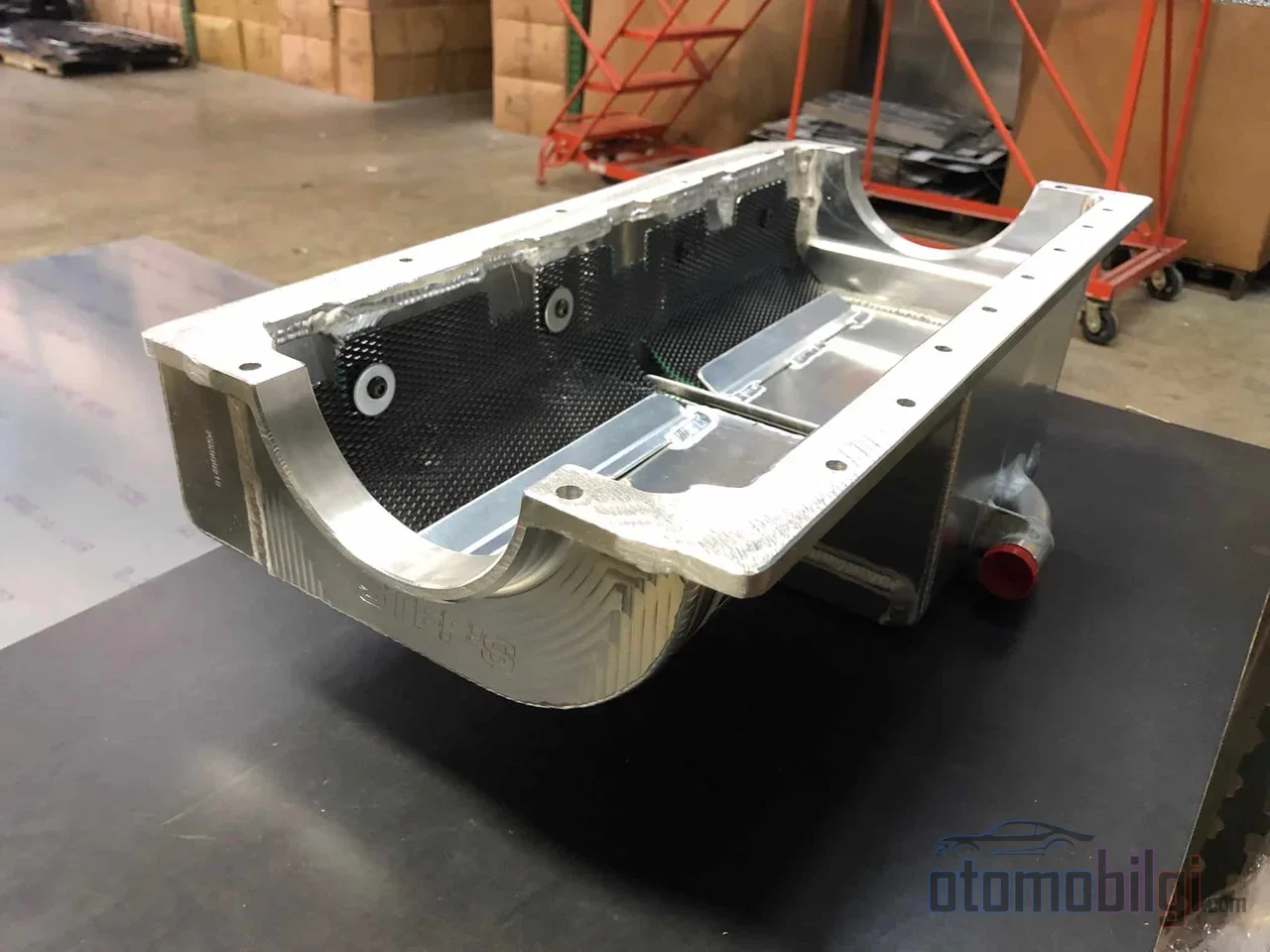
Where does an engine's oil sit? The question sounds easy: of course at the very bottom of the engine, inside the oil pan. Until you enter a hard corner. When lateral forces increase, the oil collects on one side of the reservoir, the pump's pickup tube can be left without oil, and within seconds the rotating components begin running with no oil support. The reason the dry sump system exists is precisely this moment, and the difference between it and a wet sump is one of the most fundamental points in the design difference between a road car and a racing machine.
In the lines below, we examine component by component how the two lubrication approaches work, the physical logic of the risk of oil starvation in corners, and which vehicle prefers which system and why. The question seems simple; the answer, however, is an engineering chain extending from pump stages to the center of gravity.
How Does a Wet Sump Work? A Closed Circuit Where Oil Turns by Gravity
The wet sump is the standard lubrication arrangement used by nearly all passenger cars on the road today. Its logic is extremely simple: a few liters of oil sit in the oil pan at the very bottom of the engine, a pickup tube extending to the bottom of the pan carries the oil to the oil pump attached to the engine, and the pump distributes the oil to the channels that feed the crankshaft, connecting rods, and valvetrain. Having completed its job, the oil drips back down into the pan by gravity over the components, and the cycle closes.
The system has four basic components: the oil pan, the oil pump, the pickup tube, and the lubrication channels. The pickup tube is positioned so that about a quarter of an inch remains between it and the bottom of the pan; in other words, for the pump to draw oil, the pickup tube must remain submerged in oil at all times. When the engine is stopped, the oil stays inside the engine, integrated with the pan. This integrated design holds the system's greatest advantage and its greatest risk at the same point: the oil tank and the oil reservoir are the same place, and the system cannot determine where gravity will pile the oil.
How Does a Dry Sump Work? Separate Tank, Multi-Stage Pump
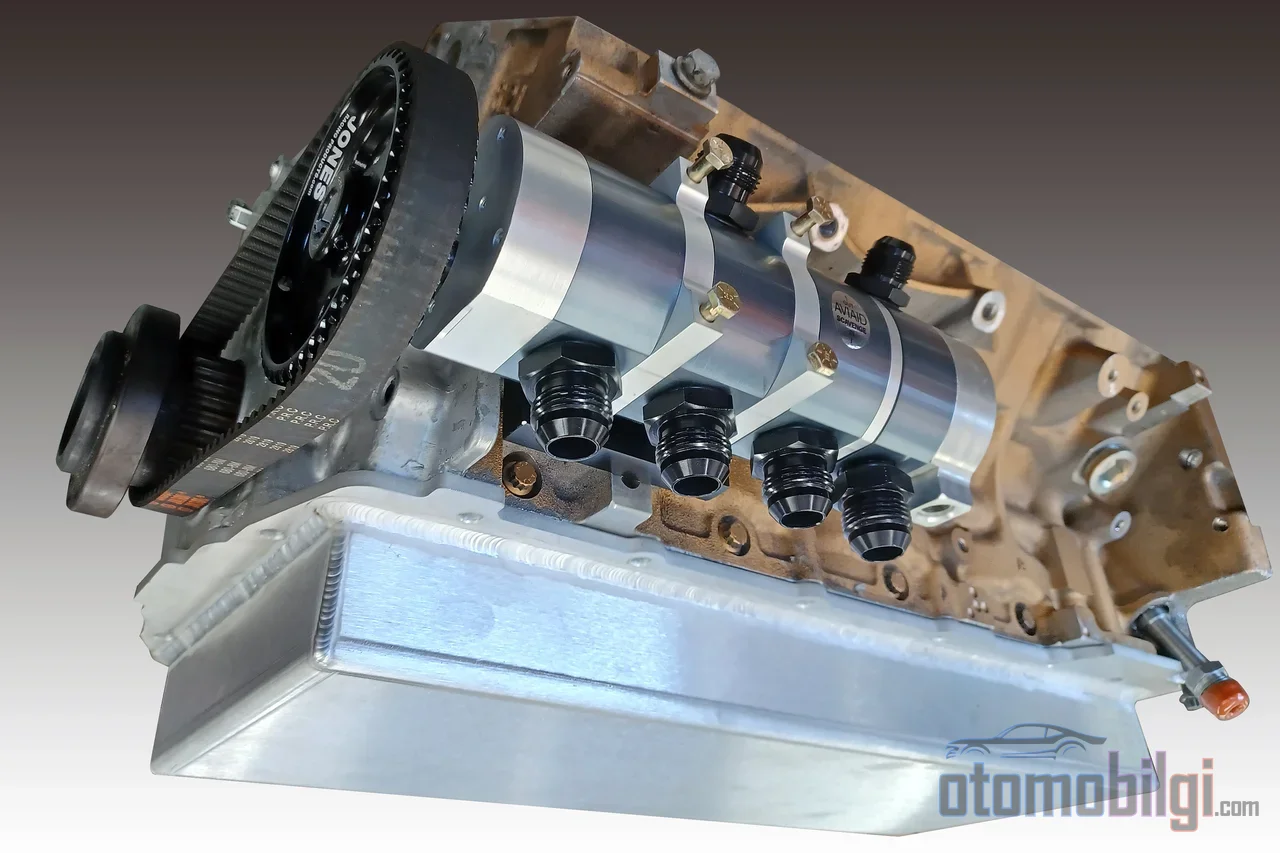
In a dry sump, this closed circuit is split in two. The oil is no longer stored in a shallow pan under the engine; a pump system driven by the engine but whose body sits externally, pumps the oil to the engine from a separate reservoir. As the name suggests: when the engine is off, the reservoir below stays dry; the oil is inside the tank.
The pump usually has three or four stages, and the stages work in parallel. One of the stages is the pressure stage: it takes the oil from the reservoir and sends it to the engine's lubrication channels. All the remaining stages do the pulling work, that is, the scavenge job: they continuously suck the oil that drips into the pan out of the engine and carry it to the reservoir. In simple setups there are at least two pumps; in some systems four, even five scavenge pumps are used. The pressure and scavenge pumps are usually combined on a common crankshaft.
The reservoir is also designed to do its own job: a long and narrow, cylindrical form is preferred. The oil outlet is at the very bottom, and on the outlet there are baffle splash partitions that prevent the oil from being thrown around when the vehicle enters a churn condition. The reservoir also acts as an air-oil separator: it de-aerates the foamy oil entering it by swirling it and passing it through a series of baffles. The result is an uninterrupted oil supply even under churned conditions.
| Feature | Wet Sump | Dry Sump |
|---|---|---|
| Oil reservoir | Integrated pan under the engine | Separate external reservoir |
| Pump | Single, inside the engine | 2-5 stage, external |
| When the engine is stopped | Oil sits in the pan | The reservoir stays dry |
| Share in road vehicles | Approximately 99% | Only top segment |
| Cost and complexity | Low | High |
Oil Starvation: What Happens to the Engine in a Hard Corner?
The wet sump's weak point arises from the system's own logic. If the oil sits in the pan by gravity, when the vehicle enters high lateral acceleration the oil also obeys the command of gravity and inertia: it collects toward the outside of the corner. If the pickup tube stays on the inside of the corner, the mass of oil moves away from it. The pump starts drawing air instead of oil, and oil pressure suddenly drops.
This condition is called oil starvation, and it is one of the most common causes of engine failure in racing environments. Under track conditions where hard cornering, hard acceleration, and hard braking stack on top of each other, the factory wet sump design is not sized to carry this load. Sustained lateral force can remove the oil entirely from the pickup tube; some parts remain oil-free for seconds. In track cars, this scenario leaves permanent damage at the heart of the engine, from crankshaft bearings to piston pins.
It is easy to show that this is not an abstract danger but a concrete problem: it is reported that in rear-wheel-drive, low center-of-gravity compact coupe models, oil pressure drops are experienced especially in right-hand high-g corners. Another striking detail is this: even in high-performance models that come with a dry sump, the debate over oil supply at very high lateral g forces is not entirely closed. The effect of a low oil level also plays an amplifying role; aggressive driving when there is already little oil in the pan shortens the distance to the starvation point.
Highlights
- Approximately 99% of road vehicles use a wet sump; the dry sump is specific to racing and top-segment models.
- In a wet sump, the pickup tube extends to within about a quarter of an inch of the pan floor; once the oil is collected, it draws air.
- In a dry sump, the pressure and scavenge stages work in parallel; some systems have 4-5 scavenge pumps.
- All Formula 1 and Indy cars use a dry sump.
- The dry sump de-aerates the oil; in a wet sump, churn can turn the oil foamy.
What Does a Dry Sump Provide? Six Advantages from Power to Center of Gravity
Insurance against churn and increased oil capacity
The reason the dry sump was invented is to prevent oil starvation. Even if the oil collects in the pan under high g forces, the scavenge pumps continuously suck it up and carry it to the reservoir; the reservoir's narrow cylindrical form and baffles keep clean oil ahead of the pressure stage even during sloshing. The external reservoir also increases total oil volume; an amount of oil that would be impractical in a wet sump can be carried, and this volume provides extra resistance to heating. Since the tank is positioned away from the engine, oil cooling is also improved.
Power gain: windage and vacuum effect
When there is no excess oil in the pan, no work needs to be done against the oil mass while rotating the crankshaft and counterweights; this effect is called windage and it is reduced in a dry sump. In addition, the extra vacuum created by the external pump inside the crankcase improves ring sealing. Both effects together mean an increase in the engine's output power. The issue of foaming is also tied to this: in a wet sump, oil hitting the rotating parts can turn it foamy like a milkshake in a blender; pressurized lubrication cannot do what foamed oil does. Because the dry sump rids the oil of air in the reservoir, it offers more consistent and adjustable oil pressure; external pumps are also more accessible for maintenance and replacement.
Lowered engine, changed weight distribution
When the deep pan is removed, the engine can be mounted lower in the chassis; the center of gravity drops. The position of the external reservoir, meanwhile, is a tuning tool by design: by placing the mass of the oil at the point you want, you can optimize weight distribution. These effects on handling make the dry sump not only a safety but also a dynamics decision.
So What Is the Cost? The Cost and Complexity Balance of the Dry Sump
Facing this list of advantages stands a real price tag. A dry sump means extra pump stages, an external reservoir, a drive system and longer oil lines; cost, complexity and total mass increase. Finding room for an external tank and pumps in the engine bay is not possible in every chassis. The maintenance side is also full: in belt-driven systems belt replacement comes into play, the pumps may need revision, and the system requires more oil.
There is also a hidden engineering risk: in case of extreme oil withdrawal, the pin joints and valve mechanism may not be lubricated adequately. Piston oil squirters solve this problem but increase the cost one more notch. In short, the dry sump is not a system that solves every problem, but one that makes its problems manageable.
Which System Is Preferred in Which Vehicle?
The answer emerges from the usage profile. All Formula 1 and Indy cars use a dry sump; the same logic applies to aerobatic aircraft, large marine diesel engines, high-performance watercraft and many motorcycles: reliability, increased oil capacity and the elimination of the risk of oil starvation at high g loads. In aviation, dry sump tanks are always larger than the oil volume to leave room for thermal expansion. On the road side, the C6, C7 and C8 generations of the Chevrolet Corvette Z06 are famous examples that come with a dry sump; the system is so critical that the first oil change on these generations is recommended after only about 800 kilometers.
So why is the wet sump still around on the track? Because it can be modified. High-capacity pans, extended pickup tubes, and baffle and trap-door partitions reduce sloshing considerably. The experience in the racing world is this: these measures reduce the risk but cannot fully replicate the advantages of a dry sump. For a car that takes the track seriously, the most permanent solution is to move the oil to a reservoir where sloshing cannot reach it.
Wet or Dry? The Answer Lies in the Use Case
The entirety of the question we asked at the beginning of the page comes down to this: With its simplicity, low cost, small size, and low mass, the wet sump is the right answer for road use; the dry sump, on the other hand, is a prerequisite for safety in any environment where high g-forces make oil management impossible - track racing, aerobatic flight, endurance racing. The fact that almost all road cars use a wet sump is no coincidence but an engineering decision: on highway conditions, an oil starvation scenario does not occur in practice, and the cost of a dry sump cannot be justified for this use.
The dividing line is also clear. Only the most exotic and high-performance road cars justify a dry sump on the street; in purpose-built track cars with sticky tires, the system is effectively mandatory. For your own car, the question comes down to three things: what is your budget, where is your performance need, and how do you really use the car? The answer tells you on its own how deep the oil pan needs to be.
Sources
- Wet Sump Vs. Dry Sump - Which Is Best For You? | Dart Machinery
- Dry sump - Wikipedia
- Wet Sump vs Dry Sump Oiling Systems - Moroso (PDF)
- Technical Explanation of a Dry Sump System - drysump.com
- Lubrication - CFI Notebook
- Pros and Cons of A Dry Sump Engine Oiling System - EngineLabs
- Subaru Oil Starvation: Track-Day Causes and Prevention - Crawford Performance
- Understanding Oil Starvation in Corners - SneedSpeed
- Car Oil Starvation: The Silent Engine Killer - Pedal Commander
- Is A Dry-Sump Oiling System A Good Upgrade For A Street Car? - Chevy Hardcore