Why Don't GM and Stellantis Give Up on Pushrod V8s?
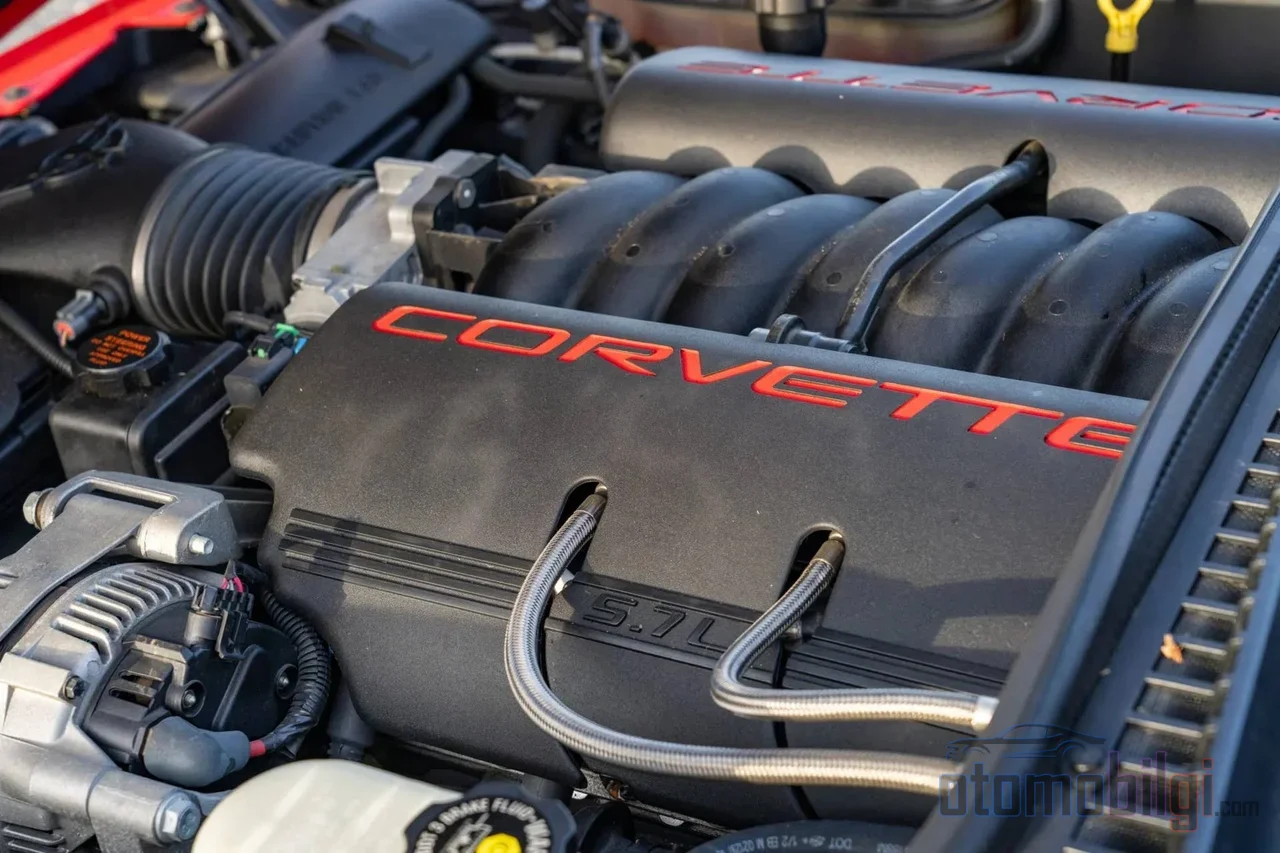
If you look under the hood of a V8 engine today, you expect to find camshafts at the top of the cylinder heads. Yet in the current V8s of General Motors and Stellantis, the camshaft is still inside the cylinder block, and the valves receive their commands via thin rods. Most of the automotive world switched to overhead camshaft (OHC) architecture in the 1980s and 1990s; in the eyes of many, the pushrod, that is the valve-in-block arrangement, is a relic of the past. So why are two giant manufacturers still insisting on this architecture?
The answer is not nostalgia, but physics and packaging math. The compactness, low center of gravity and low-end torque character provided by the valve-in-block arrangement are still a serious engineering advantage for full-size pickups, muscle cars and performance vehicles. But the architecture also has its price: a high rev limit is difficult to achieve, as are variable valve technologies. In this article, we will compare the two architectures starting from their working principles and clarify which one suits which engine character.
How Does the Pushrod (Valve-in-Block) Arrangement Work?
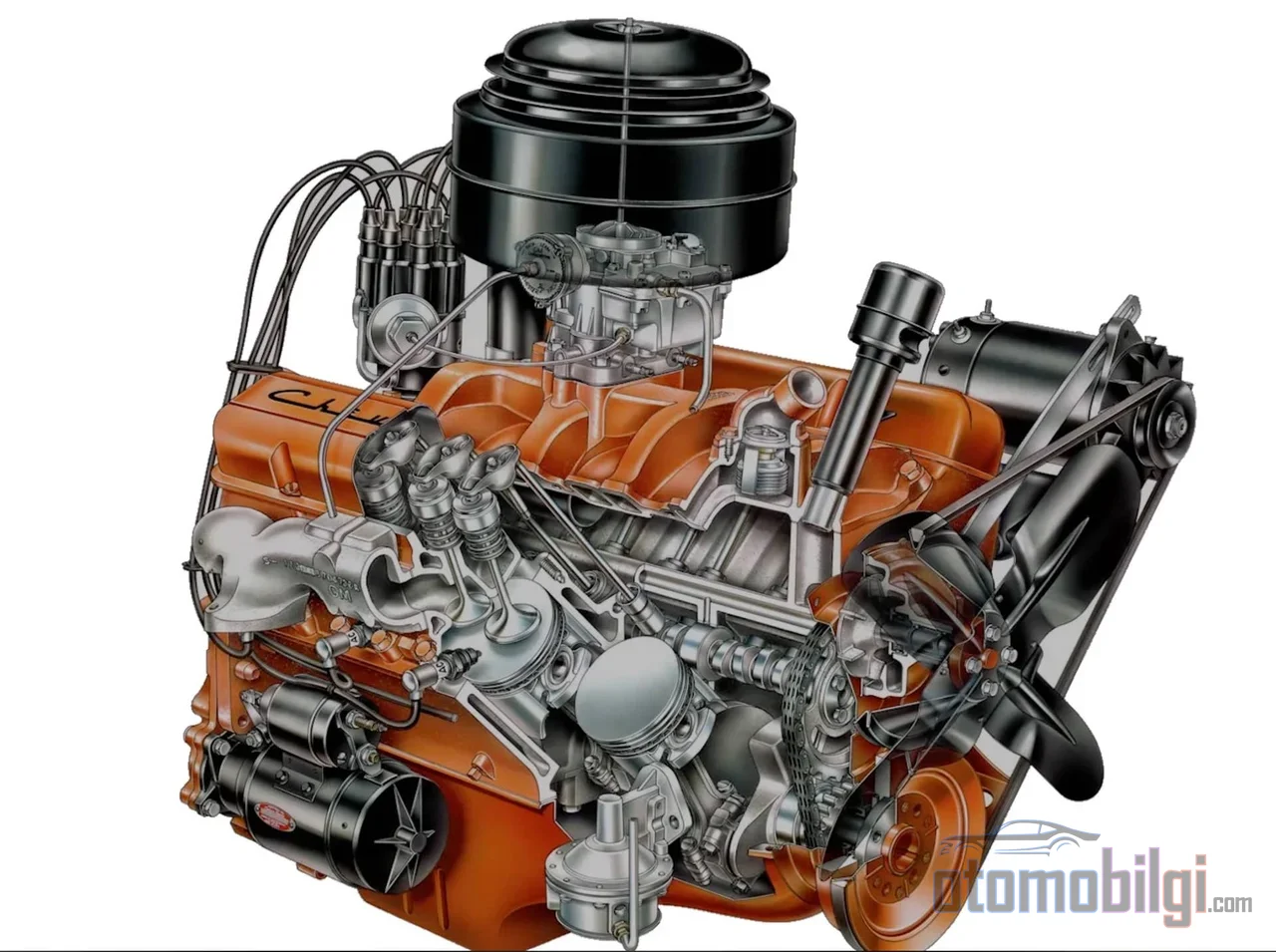
In valve-in-block engines, an arrangement also known in English literature as OHV (overhead valve), the camshaft is inside the cylinder block. Driven from the crank by a short chain or directly by gears, the camshaft's cam lobes lift the hydraulic lifters; the lifters push up the pushrods, that is the push rods; and the rods open and close the valves via rocker arms. The power flow has four stages: cam lobe, lifter, pushrod, rocker arm, valve.
In overhead camshaft architecture, this chain is much shorter. The camshaft is located directly inside the cylinder head and operates the valves either directly or via short rocker arms. If there is a single camshaft per head, the arrangement is called SOHC; if there are two, it is called DOHC. The difference is not just the number of parts, but the entire geometry of the engine.
The valve-in-block arrangement is not a new invention either. This approach, which keeps the camshaft in the block, has existed in the automotive world since the Buick Model B, which entered mass production in 1904. Starting in 1911, Chevrolet joined the brands that used OHV in almost all of their engines; overhead camshaft designs spread from the 1950s to the 1990s and, at the start of the 21st century, became standard in virtually all automotive engines except for a portion of North American V8s.
Why Do GM and Stellantis Insist on the Valve-in-Block Arrangement?
The choice of the two manufacturers cannot be reduced to a single reason; the advantages come together in four headings that feed one another.
Compactness and Low Center of Gravity
Since the camshaft is in the block, there is no need for space above the heads for a camshaft, a cover and a wide timing drive. The engine is both short and low; the hood line can be lowered, and the engine can be mounted lower in the vehicle. Since the center of gravity is lowered, road holding improves, and room is left in the engine bay for other systems. A concrete comparison: The 6.2-liter LT1 is physically smaller and lighter than a twin-turbocharged 4.4-liter V8; nevertheless it offers more power, more torque and better fuel efficiency. It is a striking example that summarizes the packaging advantage of the pushrod architecture.
Simplicity, Durability and Cost
A single camshaft, a short drive chain and few moving parts; means fewer points of failure. Part of the long belt or chain, tensioners and springs found in overhead cam engines is unnecessary in this architecture. Lubrication also stays simple: only rocker arm lubrication at the head is sufficient, and this oil can be delivered through the hollow pushrods. On the maintenance side, valve adjustment can be done by removing the valve cover, and spare parts are cheap and easy to find. In truck, SUV and towing use, this simplicity is written directly into operating costs.
Low-End Torque
The classic two-valve-per-cylinder valvetrain produces high intake air velocity and in-cylinder swirl flow at low rpm. The result is a full torque curve at low rpm; this is exactly the character sought for full-size pickups and vehicles working under heavy loads. GM's current Gen V LT family was developed to further widen this torque band with variable valve timing (VVT).
Highlights
- 6.2L LT1: 460 hp, 465 lb-ft of torque and a more compact body than the twin-turbocharged 4.4L V8
- 6.6L L8T V8: 401 hp (299 kW), 464 lb-ft of torque, 6564 cc
- 5.3L EcoTec3 V8: SAE-certified 355 hp and 383 lb-ft
- While most pushrod engines experience valve float above 6,500 rpm, OHC engines can rev out to 7,000-9,000 rpm
- The first VVT-equipped production pushrod engine was introduced in the fourth-generation Dodge Viper in 2008
The Price of the Valvetrain Architecture: Rev Limits, Valve Count and the VVT Limit
The architecture's weak points also stem from the same geometry. The moving masses in the pushrod-lifter-rocker arm chain cannot keep the valve under control at high rpm; as the cam lobe rotates back, the valve spring cannot keep up with the closing speed and valve float begins. While overhead cam engines routinely see 7,000-9,000 rpm, most pushrod engines suffer reliability problems above 6,500 rpm. In addition, at high rpm two valves cannot provide sufficient airflow; the engine cannot reach higher revs due to air hunger.
The second limit is the number of valves. Since pushrods take up space in the head casting, two valves per cylinder is almost the standard; OHC designs commonly use four valves, providing much better breathing at high rpm. The third limit is technology: The mechanical chain between the camshaft in the block and the valves in the head complicates the application of variable valve timing and variable valve lift (VVT/VVL). In OHC engines these systems are integrated naturally. On the pushrod side, VVT is possible but is a more technically intricate application. In aging valvetrain engines, mechanical noises such as lifter tick can also increase.
Despite all of this, manufacturers have advanced while staying within the limit: Many of GM's and Chrysler's pushrod V8s use cylinder deactivation to reduce fuel consumption; GM's Gen V LT family, on the other hand, is described as highly advanced pushrod V8s offering a broad torque band with VVT, with no thought given to the end of their production.
Current Examples: GM LT Family and Dodge HEMI
Two manufacturers' current engines demonstrate the theory in the field.
General Motors: Gen V LT Small-Block Family
GM's current V8s all come from the Gen V LT family, which features pushrod architecture throughout. The official and certified figures for selected models are summarized in the table:
| Engine | Displacement | Power | Torque |
|---|---|---|---|
| 5.3L EcoTec3 V8 | 5.3 L | 355 hp (SAE certified) | 383 lb-ft |
| 6.2L LT1 | 6.2 L | 460 hp | 465 lb-ft |
| 6.6L L8T V8 | 6564 cc | 401 hp (299 kW) | 464 lb-ft |
| 5.7L (L76) | 5.7 L | 402 hp | 428 lb-ft |
A notable point: The 6.2L LT1 surpasses its predecessor, the Gen IV LS3's figures of 430 hp and 474 lb-ft, with 460 hp and 465 lb-ft; higher power from a similar displacement shows how far modern pushrod development has come. GM is reported to have confirmed a 6.6L and a new 5.7L V8 for its 2027 half-ton pickups; however, the official power, torque and consumption figures of these new engines have not yet been announced by the manufacturer.
Dodge and Stellantis: The Return of the HEMI
The story is more eventful on the Dodge side. Stellantis is bringing back the HEMI V8 option in the 2026 Dodge Ram 1500 and aims to produce 100,000 HEMI engines in 2026. While the standard output (SO) HEMI offers approximately 420 hp and 469 lb-ft of torque, the familiar 5.7L HEMI sits at around 395 hp; these figures are approximate reported values, not exact certifications.
The HEMI itself is also closely tied to architecture: the combustion chamber's hemispherical (hemi) shape, a smooth and unobstructed design, allows the placement of two opposing valves per cylinder, and Chrysler's 5.7L, 6.4L and 6.2L Hellcat engines are considered part of the pushrod family. Caution is needed here: the HEMI is sometimes kept outside pushrod lists in sources as well; the general consensus is that these engines belong to the valve architecture family that houses the camshaft in the block.
The return has not convinced everyone. Stellantis had actually turned to the engine family called Hurricane, which is more suitable in terms of emissions targets; the HEMI's return to the stage is interpreted as a response to market demand and is met with criticism from an emissions perspective. In other words, the future of the pushrod V8 is not purely a technical choice, but a decision intertwined with marketing.
Valvetrain or Overhead Cam: Which Architecture Suits Which Character?
The areas where the two architectures excel are clearly distinguished.
- Pushrod valvetrain architecture: performance vehicles that want a low center of gravity, pickups and SUVs that prioritize low-end torque, and uses where maintenance and production costs are critical. This architecture still dominates NASCAR, NHRA, and GM's LS/LT-based performance vehicles.
- Overhead cam (OHC/DOHC) architecture: high revs, four-valve-per-cylinder breathing, easy VVT integration, and a priority on peak power. Ford's Modular and Coyote engines used in Mustangs since 1996, the Toyota 2JZ, and the Honda K-series are the iconic names of this approach.
There is also a critical view that considers the pushrod design inefficient and outdated; this view argues that the architecture is at a disadvantage in terms of airflow, combustion, and thermal characteristics, while at the same time being compact and cheap. In short, the architecture should not be read as a contest of superiority, but as a choice made according to the engine's mission profile.
Clear Answer: Why Do Chevrolet and Dodge V8s Still Have Pushrods?
In short: the pushrod layout makes the engine shorter, lower, lighter, and cheaper; it produces full torque at low revs and offers long life with fewer parts. GM and Stellantis combine these advantages with V8 character, producing modern engines exceeding 400 hp with VVT and cylinder deactivation. The price, however, is the practical upper limit of around 6,500 rpm and the difficulty of implementing variable valve technology. If you are looking for a high-revving sports engine, overhead cam is the right answer; if low-end torque, compactness, and robustness are the priorities, the pushrod V8 is still a strong engineering solution.
In summary, the question is not which architecture is better, but which character serves whom. Chevrolet and Dodge's insistence on pushrods is not nostalgia; it is a deliberate, calculated engineering choice that still works today.
Frequently Asked Questions
Why can't pushrod engines rev high?
The moving masses in the pushrod-lifter-rocker arm chain cannot act faster than the valve spring at high revs; the valve opens again before fully closing, and valve float begins. In addition, two valves per cylinder are insufficient to meet the air demand at high revs.
Is the 5.7 HEMI a pushrod engine?
Yes; Chrysler's 5.7L HEMI is considered part of the V8 family with pushrod architecture that houses the camshaft in the block. Although there is occasional confusion about the classification in sources, this is the general consensus.
Pushrod or OHC: which one is better?
There is no absolute superiority. Pushrod; superior in compactness, weight, cost, and low-end torque. OHC; superior in rev limits, four-valve breathing, and variable valve technology. The right question is in which vehicle, and for which task, the engine will operate.
Sources
- Overhead valve engine - Wikipedia
- Pushrod vs. Overhead Cam Engines: Which One Rules the Road?
- What Is a Pushrod Engine? How It Works, Pros & Cons
- Explaining Pushrods vs Overhead Cams
- 6.6L V-8 L8T Gasoline Engine | GM Powered Solutions
- GM Gen V Engine Guide | LT & EcoTec3 Engine Specs
- New GM V-8 Proves Pushrods Still Rock
- Why don't pushrod engines have high redlines?
- 5 Drawbacks Of Pushrod Engines
- The Reborn Hemi V-8 Makes Zero Sense